Archive for the ‘Advent’ Category

An angel made me do it

December 21, 2013

Advent 4 – 2013

Matthew 1:18-25

Marian Free

 In the name of God whose ways are not our ways and whose thoughts are not our thoughts. Amen.

 There is a wonderful line in the mini-series of “Pride and Prejudice” when the overly religious and moralistic Mary states – in response to Lydia’s elopement: “As difficult as this situation is, it is a useful reminder to us that a woman’s virtue, once lost, is irretrievable.”  She reflects a common view. Her cousin, Mr Collins has already commented something to the effect that the situation would not have been as bad had Lydia been dead. All the blame, all the responsibility for her loss of virtue fall on her. Mr Wickham, the man who has persuaded Lydia to run away with him, will have a reputation of not being a “respectable man”, but it is Lydia and her family that will bear the censure and the social isolation that will result from her reckless behaviour. No one will want to socialise with the family after this and the four other sisters will now be tainted by association. As Elizabeth says: “She is ruined, and her family must share in her shame and disgrace.” Sexual indiscretion on the part of the woman seems to have been seen as something that was contagious. It was considered to be so morally wrong that no one would want to be seen to be condoning it by maintaining a friendship with the family.

These sorts of attitudes regarding chastity make Joseph’s reaction to Mary’s pregnancy quite extraordinary. In many cultures even today, a woman who shames her family or her husband can be cast out of that society or even worse, put to death. A respectable man would want nothing to do with her and would certainly not want to raise someone else’s child as if he or she were his own.

So far as we can tell, in the first century, as in some places today, young people were engaged at a very young age. They didn’t necessarily live together and were not actually married until they were older. This seems to have been the case with Mary and Joseph. When Mary fell pregnant she and Joseph were not married and not living together. You can imagine his shock and disappointment when he discovered that Mary had become pregnant to someone else. In the normal course of events he could have caused a commotion. Mary’s pregnancy would have been a source of great humiliation, shame and embarrassment to him. In normal circumstances, he would want nothing more to do with her, he would not want to be associated with someone who was not chaste and he almost certainly would not want to raise someone else’s child – especially in a culture in which a son was required to carry on the family name.

Mary’s parents have let him down. They have not kept their side of the bargain that would have been to ensure Mary’s chastity – any commitments they made with regard to the betrothal have been broken. Now that Mary is pregnant, she is “spoiled goods”. Joseph is within his rights to ask for compensation and not to marry her.

However, he resolves not to make a fuss, to demand recompense or to make an example of Mary. Instead he decides “to dismiss her quietly” and to release her and her parents from any arrangement they have made. Perhaps, as tradition has it, Joseph is an old man who with the wisdom of age understands why a young woman might choose someone else or perhaps he just likes to keep to himself and does not want to draw attention to the situation. Whatever the reason, Joseph presumably thinks that this episode in his life has been dealt with and put behind him. Not so – God, in the form of an angel intervenes with an outrageously unbelievable story. “The child conceived in her is from the Holy Spirit. She will bear a son, and you are to name him Jesus, for he will save his people from their sins.”

Assuming the account to have some truth in it, Joseph is asked to make a huge turn around. He has to reverse his decision, he has to come to terms with marrying Mary, he has to accept and raise a child that is not his own, he has to confront the fact that his neighbours may view him with contempt and that his only explanation for behaviour which will make no sense at all to those around him – will be: “An angel made me do it”.

Unfortunately, we cannot go back in time, so can only guess at the scenario and wonder how much license the author of Matthew has taken with the story. It is possible, as Matthew suggests, that Joseph was held in such esteem in the community that his behaviour would have been seen as further evidence of his goodness and generosity. He is protecting a young woman from life-long isolation and shame. All the same, we cannot underestimate what a huge decision this would be for Joseph and risks he was taking in marrying a woman who was already pregnant. His own moral codes would be called into question and his social standing compromised as a result.

It is possible that the culture of the time was more open to God speaking to people in dreams or to angels appearing apparently out of nowhere with messages that turn a person’s life upside down. Even so, few, I imagine would believe that God was asking Joseph to do something that was so socially unacceptable. In effect, Joseph would have had to convince his family and friends to accept that God was asking him to do something that would compromise his (and God’s) moral standards and to behave in a way that was contrary to the principles and values that his community held in common. Joseph had to be absolutely convinced that he message that he had dreamt did indeed come from God, absolutely sure that the risks he was taking were worth the end result and that going against his own moral code was, in this instance, the right thing to do.

Some people make the mistake of confusing Christianity with morality. Being a Christian, they believe, has to do with being good (as opposed to being in union with God). This allows them to make moral judgments and to censure those who do not live up to their particular set of standards. The reality, as we know, is much more complex. When we strip away the sentimentality from our Christmas stories we find a different point of view. Beneath the romantic story of angels and dreams and of Mary and Joseph and the baby, we discover that God is not bound by our ideas of right and wrong or by our set of moral principles. The central characters of the Christmas story are a woman who has become pregnant out-of-wedlock and a man who is prepared to risk his own character and to ignore the accepted morality of first century Palestine. Each, in their different ways, respond to an angel who asks them to behave in ways contrary to the social mores of their time and to act in ways that will expose them to derision and disdain. Yet their relationship with God is such that they are able to place their trust completely in God, to put their own hesitations behind them and to take risks that make them vulnerable to censure and to social exclusion to ensure that God’s purpose can become a reality.

The example of Mary and Joseph is not an excuse for us to ignore moral values or cultural norms, but it is a reminder to us that we should build our relationship with God such that not only do we know and do what is right and proper, but that we also know when we are called to step beyond cultural boundaries and social constraints so that God’s presence might be known in the world.

Equal measures of anticipation and trepidation

November 30, 2013

Advent 1, 2013

 Isaiah 2:1-5, Psalm 122, Romans 13:9-14, Matthew 24:36-44 

Marian Free

 In the name of God who both comforts and disturbs, who has come among us and who will come again. Amen.

During the week I conducted a limited survey to see what sort of event or activity made different people both excited and terrified at the same time. Sally thought it would be getting ready for a parachute jump, Jon said that it was his impending ordination. Michael said that for him it would be preparing for a band performance. A Facebook friend expressed both joy and fear at the prospect of moving house.

I’m sure that it is the same for all of us. When we do something new or adventurous, we are filled both with excitement and trepidation. We have a sense of anticipation that the adventure or experience will expand our horizons or bring a sense of achievement, or that the new skill, new home will enrich our lives in some way. That said, no matter how many precautions we have taken, no matter how prepared we are for the event, there is always a sense of stepping into the unknown. We cannot know the outcome until we step out in faith and because we cannot know the end result, there is always the fear that whatever it is may not work out as we had hoped, that we are not up to the task, or that something unexpected will crop up and undermine all our expectations.

There are a number of occasions that make us both nervous and excited, and which have us filled with equal amounts of anticipation and dread. I would contend that Advent is (or should be) such a time.

If we are honest, most of us at this time of year are busy getting ready for Christmas. That means that we are buying presents, thinking about menus, organizing the family get together and hanging decorations. We know that it is Advent because the church is using the colour purple, we have an Advent Wreath and the Pew Bulletin tells us what Season it is.  Sometimes, that is the extent of our Advent preparation. We are filled with anticipation because Christmas is coming, we will see our families, exchange gifts and enjoy the Christmas services. It is a wonderful time of year, filled with expectation for the future and memories of the past. Advent fades into the background, not least because in the world around us, preparation for Christmas began months ago.

Of course, we know that Christmas is really about Jesus, about God’s coming among us over two thousands years ago. At best, we are filled with a sense of wonder that God could choose to be so fully part of human experience that despite all our shortcomings God would send Jesus to save us.

However, as our readings remind (or even warn) us, Advent is much more than a warm, fuzzy expectation about Christmas. The Season of Advent has the dual purpose of preparing us to welcome once more the child of God among us and also of reminding us of our need to be ready for Jesus’ coming again. It is the former that fills us with anticipation and joy and the latter which fills us with a certain amount of trepidation and even dread. While we should be as excited to greet the returning Jesus as we are to celebrate the infant Jesus, we tend to be at least a little anxious about the thought of Jesus’ coming again, an anxiety fueled not a little by the New Testament descriptions of such an event.

In today’s readings the emotions of hope and fear are equally balanced. The Old Testament reading and the Psalm look forward in anticipation to that time when God shall come, but the New Testament readings sound a note of warning and suggest that Jesus’ return will not be so benign. Isaiah chapter 2 and Psalm 122 envisage a wonderful time when all people shall turn to God and there will be peace among the nations. However, Paul’s words from the letter of Romans teach us to temper our expectation with caution. He writes: “You know what time it is” and urges his readers to “lay aside the works of darkness and put on the armour of light”. “Salvation is nearer than when we first believed.”  It is because our salvation is near that it is essential that Jesus not find us in reveling and drunkenness, quarreling and jealousy. NOW (not next week) is the time to put our lives in order, to be confident that, should Jesus come tomorrow, we would be ready and happy to greet him.

It is the words of today’s Gospel however, that are the most ominous. We are reminded that we do not know when Jesus will come. There will be no warning. Jesus’ coming will be unexpected and many will be caught unprepared. We are told that will be getting on with our everyday lives when suddenly, without notice, Jesus will be here among us. Just as the thief catches a householder unprepared, so too Jesus will come upon us when we least expect him.

The message is this: “keep awake!” – expect Jesus’ return at any moment. Ensure that there is nothing in our lives that we would want to hide from his view. Be aware that at any moment Jesus could come upon us unawares. If there was a cause to be anxious about Jesus’ return, this would be it – that Jesus would come and we would not be ready – that there would be some aspect of our lives that would not stand up to closer inspection.

The Season of Advent provides us with a time to examine our lives; to open ourselves to God’s scrutiny, to ask ourselves whether – if Jesus were to come upon us now – there be anything we would wish that we had put right beforehand.

“About that day and hour no one knows, neither the angels of heaven, nor the Son, but only the Father.” There is no reason for fear – the coming of Christ among us is a cause for rejoicing – the earth will be renewed, God’s reign will be firmly established. Jesus’ coming again will herald the dawn of a new day when pain and suffering will cease and there will be harmony between the nations. Jesus will come again as he did before – to save and not condemn. Our task is to lead lives worthy of Jesus’ love for and trust in us.  Confident in that love we will welcome his return with the same joy and enthusiasm with which we rejoice in his birth.

The God-child, the child-God

December 22, 2012
Baby Jesus

Baby Jesus

Advent 4

Hebrews 10:5-10

Marian Free


In the name of God, who as Jesus, became fully human in order to fully redeem human beings. Amen.

There is a television programme which I do not watch, but which I have caught glimpses of in advertisements. It is called something like: Our embarrassing bodies. From what I can glean from the promotions it is about ghastly and disfiguring afflictions and, I presume, it is about ways to deal with them. It is a reminder that the human body is a fascinating and complex organism and it has many parts, functions and characteristics that we tend to consider unspeakable, embarrassing and even disgusting.

Somehow, it is much easier to believe that baby Jesus is a real baby than it is to accept that the adult Jesus was flesh and blood like us.  It is difficult to accept that God could really inhabit a human body, to believe that Jess really did experience all the bodily functions. It would be more palatable to imagine that Jesus, even as a human being somehow occupied a different plane form the rest of us, that somehow his humanity was tempered by a body that didn’t behave in the same way as ours – that Jesus had no primal urges, that he didn’t sweat or burp or do anything that might be considered improper or unbecoming.

The problem of Jesus’ humanity is not a new one. The early church was torn apart by controversy regarding the nature of Jesus. There were some who thought Jesus was just a supremely virtuous person whom God adopted as the “Son of God”. Others believed that Jesus remained God even though he appeared to be human. Still others thought that it was only when he was resurrected from the dead that the human Jesus became God.

In the fourth century matters were brought to a head by a popular preacher from Libya called Arius who denied the divinity of Christ. His ideas were so compelling that they convinced many of the bishops of the time. The Emperor, Constantine was so dismayed by the disunity in the church that he called the Council of Nicea and demanded that the bishops come to some agreement as to what Christians believed. The result was the declaration expressed in the Nicean Creed that:“ We believe in one Lord, Jesus Christ, eternally begotten of the Father, God from God, light from light, true God from true God, begotten, not made, of one being with the Father through him all things were made … he was incarnate of the Holy Spirit and the Virgin Mary and became truly human”.

Jesus’ fleshly nature was already an essential component of New Testament theology – it was not an invention of the Council of Nicea. Writers as different as the apostle Paul, the writer of the gospel of John and the author of the book of Hebrews all attest to an early belief that Jesus truly inhabited human flesh, just as he was truly God on earth.

That Jesus was fully human, that he did really take on human flesh is important for a number of reasons which are different but complementary.

It was only as a human being that Jesus could work salvation for humankind. The obedience of the human Jesus’ was the only way to undo Adam’s disobedience. In the flesh, Jesus was able to redeem the flesh. By taking on human form, Jesus demonstrated that it is possible for human beings to be all that God created us to be. If Jesus as fully human can submit to God, we know it is not our flesh that prevents us from being obedient, but what we choose to do with it. Jesus’ humanity reminds us that, despite all the evidence to the contrary, human beings, inhabiting human flesh can be truly godly.

The fact that Jesus became fully human means that Jesus redeemed human flesh with all its weaknesses, its urges and its passions. Jesus’ humanity is evidence that our whole person is redeemed not just that part of us which might consider untainted and sinless. Our whole person is redeemed not just a part of it. Jesus’ being fully human demonstrates that God values our physicality as well as our divinity.

Jesus’ becoming human confirms that we cannot pay God off or placate God with sacrifices. God wants us – heart, soul and body not our deeds or our gifts. Jesus as a human being gave his whole self and showed that we should give nothing less.

As we come to the end of Advent and enter into the season of Christmas, we come face to face with the child in the manger. It is not difficult to identify the baby Jesus as a real baby.  The challenge that faces us year after year is to accept that the real child in the cradle grows into a real human being – a human being with longings and desires, weaknesses and strengths, just like us.

As Jesus became one with us, so we should strive to become one with him, and through him become agents of redemption in the world.


Being aware – looking inwards

December 15, 2012

Advent 3

Luke 3:7-18

Marian Free

In the name of God whose unconditional love challenges us to accept ourselves for who we are so that we may seek to be made whole. Amen.

 You will have gathered by now that I am a great fan of the writings of C.S. Lewis. Unfortunately, while his ideas are sometimes quite simple, his writing is complex and it is not always easy to re-frame his thoughts in a way that accurately captures what he is trying to say. Lewis was a late comer to Christianity and he used his great intellect to write not only books on theology, but also children’s books, as in the Narnia series, science fiction and imaginative theology. One of my favourites in the latter category is a light-hearted but deadly serious look at sin. The book is called The Screwtape Letters[1] and it takes the form of a number of letters written by a senior devil to a much younger devil who is just starting out. The ultimate goal of these devils is to weaken a believer’s connection to God while at the same time convincing them that their faith and their practice of that faith is just as strong as it ever was.

Among other things, one of the achievements of the book is to illustrate how difficult it can be for human beings to adequately identify sin. In particular it demonstrates how often and how easy it is for us to convince ourselves that what we are doing is selfless, humble and abstemious when in fact we are being selfish, proud and greedy. Screwtape (the senior devil) urges his nephew Wormwood to exploit these weaknesses – to encourage the believer to pursue those things that make him or her feel virtuous but which in fact increase the distance between themselves and God. He uses an example of a person who thinks that his or her modest diet is evidence of their economy and self-control when in reality their apparent virtue lapses easily into an obsession with food and into attention seeking behaviour. “No, no, I couldn’t eat all that, just bring me a dry biscuit.”

Screwtape also encourages Wormwood to make use of those supposed virtues which, if engaged in simply for the sake of being virtuous, tend to lead to bitterness and resentment – the exact opposite of their intention. For example, he suggests that Wormwood take advantage of what he calls the petty altruisms – the affected unselfishness which hides a person’s true needs and feelings and which creates, instead of satisfaction, feelings of resentment and a sense of being unappreciated.

In today’s gospel, those who come out to John the Baptist ask the direct question in response to his challenge that they repent. “What then shall we do?” they ask. His answer is very specific. True to the Lukan communitarian values John’s answer to the crowds is that they should share what they have with those who have nothing. Tax collectors and soldiers are singled out for even more specific advice which relates to their professions. That is well and good, but for twenty-first century listeners these suggestions are not entirely helpful and the very specific nature of the advice does not allow us to generalize it to our own situation. The advice only allows us to deal with a very narrow band of sinful actions and provides only a limited number of ideas as to how to behave well.

Jesus’ attacks on the Pharisees later in the gospel make it clear that simple, rule-bound behaviour is not sufficient for entry into the Kingdom of God. He is adamant that the state of a person’s heart is just as important – if not more so – than external behaviour. The behaviours and attitudes of the Pharisees as described by the Gospels demonstrate that it is relatively easy to deal with the surface sins, to paper over deeper issues such as insincerity and a need for recognition with an outward appearance of virtue, selflessness and goodness. An example of a conflict between external behaviour and internal insufficiency can be seen in the apparent selflessness of a parent or spouse which is in fact a way of feeding their own need to be needed. Instead of helping their partner or child, such a person may be fostering the other’s dependence on themselves and, as a result, making themselves feel useful and virtuous at the expense of the other. Their own low self-esteem and deeper need for affirmation is hidden beneath a veneer of self-sacrifice which in turn becomes a burden not a relief for the person whom they claim to be assisting. To quote C.S. Lewis: “She’s the sort of woman who lives for others – you can tell the others by their hunted expression.”

Again the Gospel description of the Pharisees is evidence that religion and its practice may be another way of hiding one’s inner faults and failings with a veneer of religiosity. Asceticism, fasting, and other spiritual practices may serve not to build holiness but to disguise a spiritual emptiness. Instead of modelling a deep and meaningful relationship with God, such people can seriously damage the vulnerable seekers who come to them for guidance.

Sometimes the obvious sin is not the real problem. The real sin is not what can be seen but an underlying condition which needs to be healed and addressed before the surface behaviour can properly go away. For example the outward sin of bullying may be driven by an inward urge to be recognized and valued by others. The outward sin of greed may cover up a feeling of emptiness and reveal a belief that possessions will fill the void. The outward sin of arrogance may compensate for a deep sense of unworthiness. A person who feels that they are of little value may go to a great deal of trouble to convince others and therefore themselves that they are of some importance. If only the outward expression of such sins is managed, then the inward issues may fester and grow and be expressed in some other equally damaging or unhealthy way.

All of this should go to show that sinning is a much more complex issue than simply breaking one of the Ten Commandments, or practicing any one of the seven deadly sins. The problem with simply following rules, is that it allows us to feel OK and doesn’t force us to examine our ulterior motives, to question whether or not our behaviour assists or damages others or to face our own inner demons, insecurities and needs.

During Advent we are challenged to be awake and alert, to prepare ourselves for the coming of Jesus. In this time of reflection and preparation let us have the courage to be awake and alert to our inner selves, to have the nerve to examine not only our outward appearance but to look deep inside to see what drives us and our behaviour, to ask if our selflessness is really selfishness, if our abstemiousness covers up our greed and if our attempts to serve others lead to resentment rather than to satisfaction. To ask, in other words, what specific advice would John the Baptist offer us, were we to find ourselves in his presence.


[1] Lewis, C.S. The Screwtape Letters.

(There are a number of internet sites which offer a free PDF version of the book.)

Being Prepared – a Reflection for Advent 2

December 8, 2012

Advent 2 2012

Luke 3:1-6

Marian Free

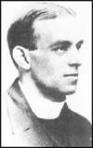
Woodbine Willie

Geoffrey Anketell Studdert Kennedy

In the name of God who is coming to call us all to account. Amen.

I wonder how you envisage judgement day? Do you see God seated on a throne with books of your good and bad deeds laid out before him? Or do you think that when you breathe your last you will simply make an easy transition to heaven? Do you think about what you might do before that day to be prepared?

I guess that I stand somewhere between the idea of the throne and of the easy transition. I am not convinced that a God who enters the world as a vulnerable baby and allows himself to be nailed to the cross, is a God that is absorbed with thinking of ways to keep us out of heaven. Neither do I think that God keeps score, for that would rob the cross of its meaning and imply that we could achieve salvation through our own efforts. I do believe however that we are accountable for how we behave in this life and that we will stand before God to give an account.

How do we prepare for such an occasion? Do we worry ourselves sick trying to reach some imaginary high standard? Do we need to become serious, moralizing, fun- destroying do-gooders? Do we put ourselves into a straight jacket so that we can be sure that we will avoid doing those things which would lead us to hell?

I don’t think so. I believe that the most important thing that we can do to be prepared for the end is to trust in God’s unfailing love and in response to that love endeavour to be the best we can. In coming to this opinion, I have found this poem by Geoffrey Studdert Kennedy to be helpful. It’s called “Well?” and it was written by Studdert Kennedy when he was an army chaplain during WWI. It is written in dialect so I apologize ahead of time if I slip in and out of the accent. It is published in a collection of Studdert Kennedy’s poems called Unutterable Beauty and can be found on the Internet if you’d like to read it for yourself. I think it speaks for itself and may give you something to think about as you prepare for the coming of Jesus.

www.poemhunter.com/poem/well-5/ (There are also recitations of the poem on You tube)


Paying attention to God

December 1, 2012

Advent 1 2012

Luke 21:25-38

Marian Free

In the name of God who was and is and is to come. Amen.

 When I was a child I remember being fascinated by a story my mother used to tell. It related to a time when she was a young mother. Apparently,  one of her friends who had recently given birth to her first child went off to the hairdressers at her regular time. When the hairdresser asked after the baby the woman realised that she had completely forgotten that she had a baby and had left the at home! Thankfully no damage was done and she never forgot again. She simply hadn’t adjusted to being a mother and presumably the baby was asleep when she was getting ready to leave the house.

Adjusting to a new situation is not always the reason that children get forgotten or neglected. In an interview aired during the week an Australian musician spoke about her father. She reported that he was both wonderful and unconventional. He did things like wake her up in the middle of the night to take her out and he treated her very much as an adult, sharing his passions with her. Those were the good times. There were times however when her father had become so drunk the night before that he couldn’t be woken in the morning to take her to school. It wasn’t that he had forgotten that he was a father, he had let other things in his life take precedence over that responsibility.

Alcohol and drugs do have the power to take over someone’s life to the extent that all other priorities – work, relationships and even children – take second place.  It is also true that it is possible to become so absorbed in something that other things get forgotten.  For example, someone might be having such a good time at a party that they don’t notice the time passing and forget to pick up their child or their spouse at the agreed time. Someone else might be so engrossed in the task that they are doing that they run late for their next appointment or commitment.

There are a number of things that distract us from more important or more central things in our lives – work, play, mind altering substances, anxiety, fear – the list could probably go on and on and of course, the potential distractions would be different for all of us.

Today’s gospel is concerned with distractions. There are three short sayings, all of which focus on Jesus’ coming  again. These are -holding our heads high, paying attention and not allowing our focus to wander.   Jesus describes the cosmic turbulence that will be associated with the coming of the Son of Man. – even the powers of the heavens will be shaken. These events will be terrifying, but Jesus urges his followers not to be anxious – to see the events for what they are. If Jesus is coming, then instead of cowering in fear, they should stand tall, confident that their redemption is near.

There may be dramatic signs of Jesus’ return but Jesus reminds his disciples that they are not to ignore the more subtle signs that he is near – signs as simple as the fig tree putting forth its blossom.  Then Jesus narrows the scene down even further – to a personal level.  He has encouraged his followers to notice the signs in the cosmos and the signs in the world around them. Last he reminds them that they need to look to their own lives and to ensure that there is nothing in the way that they live their lives that could blind them to or to take their attention away from Jesus’ return.

All three sayings deal with the theme of paying attention. The first two with what we need to attend to and the last a warning not to be distracted from these things.

The three themes are different and yet related – different in their focus, but related in their demand that we are alert at all times  to what God has done, what God is doing and what God will do.  The three sayings remind us that Jesus is going to return at a time that will not be of our choosing and that it may or may not come with a clear warning.  For this reason, Jesus says that it is essential that his followers be ready for his coming at any time. That said, Jesus cautions that our capacity to be prepared should not be compromised by fear – which would be a failure to trust God. Our capacity should not be limited by inattentiveness – which would demonstrate that we were not fully aware of God’s presence already in the world. Our capacity to be prepared should not be flawed by distraction or getting absorbed in things that take our focus away from what is important – which would demonstrate the weakness of our relationship with God.

Jesus doesn’t issue these warnings to keep us on our toes, or to have us live in a state of perpetual anxiety about the coming of the end.  Jesus will return as judge. However, to spend all our time and energy worrying and preparing for that day would in fact, be in direct contradiction of Jesus’ intention here. Being ready for Jesus’ return does relate to the future, but our readiness for that return is a task for the present.

It is in the present that we will see the signs of God moving and working among us. It is in the present that we need to hone our ability to recognise God. It is in the present that we need to be careful that we do not allow ourselves to be distracted by things which ultimately take our attention away from the reality of God in our lives. If we pay too much attention to what might or might not happen in the future, if we worry too much about how we will stand up in the judgement, if we become absorbed with trying to work out how to achieve a good outcome, then ironically we will be doing the very things what Jesus is warning against.  That is, instead of looking forward to God’s coming, instead of believing that we are among the redeemed and instead of focusing on Jesus we would actually be focussing on ourselves and living out of fear not joyful expectation – the very thing that Jesus is trying to discourage.

In our faith journey it is so important to find a balance – to be able to so trust in God, to pay sufficient attention to God’s presence in our lives, to be so confident in our relationship with God, that all else – our behaviour in the present and our expectations of the future simply fall into place. To do anything else leads us to rely on ourselves and our self absorption takes our attention away from what God is doing and what God plans to do.

During Advent we focus on Jesus’ coming into the world, Jesus’ presence with us now and Jesus’ coming again. As we reflect on this threefold coming of God among us, we are given the time to ask once again: Do we truly believe that we are redeemed? Do we pay attention to God in the little details of our lives? Do we allow ourselves to be distracted by things that ultimately do not matter?

The future is important, but if we allow it to dominate the present it will be the very distraction that causes us to miss the signs and be weighed down by the worries of this life that we do not raise our heads and recognise that our redemption is near.