Archive for the ‘Lent’ Category

Contradiction

March 2, 2013

Lent 3 – 2013

Luke 13:31-35 (Isaiah 55:1-9, 1 Cor 10:1-13)

Marian Free

In the name of God who turns our expectations upside down, who challenges and comforts us and who never, ever withdraws God’s love. Amen.

When you read the Bible, what are the passages that stand out for you? Are you more alert for the voice of judgement or the voice of love? Do you look out for the rules that you must not break and the specific directions that you must follow, or do you instead seek out the promises of growth and new creation? From start to finish, the Bible is full of contradiction.  In it we find both censure and approval, judgement and forgiveness, punishment and redemption, restraint and extravagance.

The Old Testament prophets threaten the Israelites with all kinds of penalties if they refuse to return to God then, almost without taking breath, they assure the people that God will never abandon them. Side by side in Isaiah, Jeremiah and Hosea and elsewhere we have evidence of God’s frustration and confirmation of God’s faithfulness. The Gospels express similar contradictions. Calls to repent are balanced by stories of the lost being restored. Jesus’ attacks on the righteous throw into relief Jesus’ acceptance of those outside the law.

This morning’s readings are a case in point. The generosity and free-spirited invitation of Isaiah 55 stands in stark contrast with the harsh, judgmental and condemnatory sentiments of 1 Corinthians 10.

How are we to make sense of the paradox – judgement and repeal, condemnation and forgiveness, law and freedom? It is my belief that both sides of the coin are necessary to sustain healthy individuals, healthy societies and healthy religions. Freedom is essential for creative energy to thrive, for people to love and be loved, for compassion and generosity. None of these things can be forced or legislated. On the other hand, lawlessness leads to disintegration, violence and repression. Without some sort of law no one can achieve their full potential.

There needs to be some sort of balance between law and freedom.  It is not healthy to be completely unrestrained, but neither is it good to be so restrained that we forget how to live. If we fence ourselves in with rules, we reduce our ability to be spontaneous and carefree. Somewhere in the middle is an equilibrium, an ability to self-regulate, to use the rules and the threats of judgement to control our baser instincts and to trust in God’s goodness and mercy to liberate our finer, more selfless characteristics.

Interestingly, in the Bible, it is not disobedience or even the breaking of the Ten Commandments which is the source of God’s anger and the pre-condition for punishment. What causes the prophets to proclaim God’s judgement and Jesus to condemn the people of Israel is a breakdown in the relationship between the people and God.

God doesn’t expect perfection. That much is clear in God’s choice of Jacob the deceiver, God’s selection of Moses the murderer and God’s continued love for David the adulterer. That God is not looking for flawless followers is demonstrated by Jesus’ choice of disciples, Jesus’ readiness to forgive and Jesus’ easy acceptance of tax collectors and sinners.

It appears that the primary safeguard against condemnation is not so much to be law-abiding (though that is good), but to accept God’s invitation to be in relationship, to trust God’s offer of a covenant, to believe in God’s faithfulness to God’s promises.

Jesus weeps over Jerusalem, not because its citizens have failed to keep the law _ if nothing else, the Pharisees were assiduous keepers of the law.  Jesus weeps because the people of Jerusalem, the leaders of the Jews, have demonstrated their inability to put their trust in God. The Pharisees, Chief Priests and Scribes have put all their trust in the law and their ability to keep the law. They are so sure that they can achieve perfection by their own effort that they have effectively locked God out of their lives. They have so little confidence in God’s love and faithfulness that they are using the law to paper over their imperfections. They are so afraid that scrutiny will find them wanting that they kill the prophets who hold a mirror to them and to their lives. They cannot have a real relationship with God because they cannot have a real relationship with themselves.

No wonder Jesus weeps, he understands that the Jerusalemites are so sure that God cannot love them as they are, that they not only try to become what they are not, but worse, they shrink from God, they refuse God’s invitation and will not be drawn into God’s loving embrace.

How different they are from Zacchaeus who has the courage to respond to Jesus’ invitation and who finds that his life is transformed as a result. How different from the woman who anointed Jesus’ feet, who could take such a risk because instinctively she knew that she was loved and accepted. “Law-breakers” and outsiders who already knew and accepted their imperfections welcomed Jesus’ love and invitation, entered into a relationship and allowed themselves to be gathered under his wings.

Law and freedom together create a necessary life-giving tension in our relationship with God. An over-reliance on law can have the effect of locking God out of our lives whereas an over-emphasis on freedom can lead us to believe that we don’t need God. It is important to relish our freedom, but to understand its bounds, to trust in God’s unconditional love, but not to use that love as an excuse to be unloveable, to recognise that law has its place, but not to use it as a replacement for relationship.

God invites us into a relationship that is based on mutual trust and respect. God offers us an unconditional love that sets us free to be ourselves. To say “yes” to God, is to say “yes” to ourselves and to know ourselves welcome in the shadow of God’s wings.


A matter of heaven or hell

February 23, 2013

Lent 2 – 2013

Luke 13:1-9

Marian Free

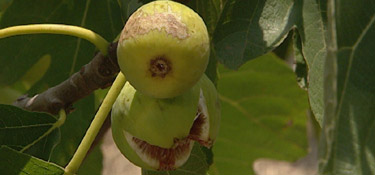
Figs

Figs

In the name of God who created all things, and saw that they were good. Amen.

Today’s gospel reading includes two discrete parts. A couple of sayings about repentance are followed by a parable about growth.  The first sayings certainly get our attention – Galileans whose blood Pilate mixed with their sacrifices and 18 crushed by a falling tower. Shocking as these events are they are not a sign that those killed were more sinful than others. All of us need to repent. Luke follows these sayings with the parable of the fig tree. Repentance alone is not sufficient, believers are called to grow into full maturity rather than to rest on their laurels for the remainder of their lives. (Salvation is not dependent on a one off decision, but process that begins when we repent and turn to God.)

Jesus’ parable about the fig tree is often misunderstood. An emphasis on keeping the ten commandments and doing good works has led to the conclusion that if the fig tree will only be spared if it produces fruit, that we will only be spared if we can manage to build up a folio of good works that can be measured on the day of judgement. However, in this instance, as in most cases in the New Testament, fruit represents much more than external deeds or measurable goodness. As the parable implies, the fig’s bearing fruit is dependent on its receiving enough fertilizer – that is, on its internal health. Fruit trees in general are very reliant on nourishment, they cannot bear fruit unless they have been properly fed and watered. (The first and only time that my parent’s persimmon bore fruit was the year after the ’74 flood had deposited a substantial amount of fertile silt on their garden.)

Many fruit trees need to reach maturity before they bear fruit. Figs generally take two or three years to be well enough established to produce figs and then they will produce best only if they have been given a good start in life – planted in the right situation and fed and watered well. Without help, a fruit tree will probably attain a reasonable height and appear to be growing well, but without the required fertiliser, no amount of growth will produce fruit.

It is possible that Luke combined the sayings about repentance with the parable of the fig tree because he understood that a change of heart (repentance) was required before growth (maturity) could occur. Conversely, repentance alone is not enough, but is a pre-requisite for future development. A change of heart – repentance – creates the sort of internal environment that allows fruit (the external evidence of change and growth) to be produced. That being the case, it becomes clear that Jesus is speaking of fruit (behaviour) which is driven by a relationship with God that is strong and healthy and which is nurtured and developed by the presence of the Holy Spirit. Seen in this light, fruit refers much less to good deeds and much more to the characteristics that result from such a change of heart.

Paul understood this when he wrote of the fruit of the spirit. When he lists the fruit he doesn’t refer to keeping the commandments or doing good deeds but to the external signs of a person at peace with God, with themselves and with the world. Love, joy, peace, long-suffering, gentleness, patience and self-control are the fruit that we are to bear. These are the characteristics that will be a sign of our growing spiritual maturity.

Jesus’ challenge to the disciples that they are not to make the mistake of believing that their turning to him (repentance) is some simplistic, easy fix that will ensure their salvation. Turning to Jesus is only the first step in a process of development that will continue for the rest of their lives and that development, as the parable indicates, will need to be encouraged, fed and nurtured.

Richard Rohr considers spiritual development in his book Falling Upward – a spirituality for the two halves of life[1]. He argues that many people never develop beyond the superficial declaration of faith. Having come to faith, they fail to feed and nurture the depths of their being such that they bear meaningful fruit as a result of their faith. Because they do not pay enough attention to what is going on internally, their external lives never really change. They cannot bear fruit because they have not developed a healthy spirituality that can drive their behaviour.

Rohr suggests that this internal growth is at the core of all religious practice and that it is essential not only for the individual but for the world as a whole. This he claims is because: “God gives us our soul, our deepest identity, our True Self, our unique blueprint at our own ‘immaculate conception’. We are given a span of years to discover it, to choose it and to live our destiny to the full. Our True Self will never be offered again”. The unique person that is ourself has this life only to be the unique person God intends us to be, to achieve the unique goals God has in mind for us and to contribute to the world the unique gifts with which God has endowed us. Our one essential task in this life is to discover and to be that True Self, that unique part of God’s creation. Rohr believes that this task is absolutely imperative for all of us. Heaven and earth, all that is, depend upon our trying to become the person God intended us to be.

Because the implications of this task are so vast, its importance cannot be underestimated. In fact, Rohr suggests, it is because so much is dependent on our spiritual health that the discussion surrounding it is accompanied by such emotionally charged words as “heaven” and “hell”. It is why the vineyard owner threatens to uproot the tree when it is not fulfilling its purpose, why the call to repentance is set in the context of such shocking stories as the slaying of the Galileans and the fall of the Tower of Siloam. The consequence of not nurturing our souls is not something to be taken lightly – it has ramifications for the future of the whole world.

If we allow ourselves grow into our souls, to become the unique being envisaged by God at our creation, God’s purpose not only for us but for the world will be achieved. If we do not grow into our own unique being we hinder God’s purpose, we fail to make our own unique contribution and we refuse the invitation to take part in bringing about the coming of God’s Kingdom.

The purpose of the fig is to bear figs. Without fruit it is taking up space, that could be used to grow something else. It is not fulfilling the purpose for which it was created. Our purpose is to grow into our full identity, that unique self that God has given us and by doing so to share with God in bringing about the kingdom, the salvation of the world.


[1] Rohr, Richard. Falling Upward – a spirituality for the two halves of life. San Francisco: Jossey-Bass, 2011, ix. Note: I acknowledge that I have used Rohr as my starting point, but I am aware that  he may not agree with my use of his premise.

The wilderness of our hearts

February 16, 2013

Lent 1 – 2013

Luke 4:1-13

Marian Free


In the name of God who longs for us to see ourselves more clearly and having done so to submit ourselves to the transforming power of God. Amen.

‘Sugar and spice and all things nice, that’s what little girls are made of. Slugs and snails and puppy dog tails, that’s what little boys are made of.’ To think that many of us used to recite this silly, sexist rhyme! But what are we made of? Beyond the obvious skin and bones, do many of us really know what lies beneath? Do we really know our strengths and recognise our weaknesses? Do we know what triggers or events might lead us to act nobly and selflessly? Alternately, can we begin to imagine forces or situations which would lead us to behave basely or cruelly?

I suspect that it is impossible to know ahead of time how we will react in situations that demand courage, resilience or moral fortitude. Fear, timidity and an unwillingness to stand out from the crowd can prevent people from acting as they should or worse, they can cause people to behave in ways that are cowardly, cruel and self-serving. History is littered with instances of good people failing to act in the face of evil. The past is crowded with examples of a mob mentality leading otherwise reasonable people to behave in violent or rash ways. The world stood silent in the face of the Nazi gas chambers and still seems unable to act against oppressive or unjust regimes.  The insanity of the mob leads to disregard for law and order and the destruction of property as was witnessed in Brixton, in Cronulla and elsewhere.

After the event, those who were silent might say: “I was too afraid to speak out.” Those who were caught up with the crowd might respond: “I thought they would kill me if I didn’t join in.” There is always a reason or justification for such behaviour. No one likes to believe that they deliberately acted in a way that led to or contributed to another’s injury or harm or which saw another abased or killed because of their failure to act. No one likes to think that they could have a propensity for cruelty or indifference, that they would join in with the crowd or that they would stand silent in the face of grave injustice.

On the other hand, the past is equally populated with ordinary people who, in the face of danger, have exhibited extraordinary courage and who have risked their own safety to save the life of another – the by-stander who pulls a person from a burning car, the surfer who without thought rushes to the aid of someone attacked by a shark, the solider who exposes him or herself to enemy fire, to save another who is injured or dying. Every day, in a variety of different circumstances, people like you and I show what they are really made of. When asked about their heroic acts, such people often reply: “I didn’t think – I just did what needed to be done.” They don’t think of themselves as heroes because their action was so spontaneous. Until confronted with the situation they may not have known that they had such courage in them.

Some among us may have faced such challenges and may have confidence to know how they will respond in the face of danger or when someone is needed to speak out. Others of us can only imagine and hope that we would meet every difficulty and danger with grace, that even at the cost of our own lives we would challenge oppression, cruelty and injustice and that we would seek to heal and be healed, to understand and forgive (even if at first sight, healing, understanding and forgiveness is impossible to imagine).

The sad reality is that apathy, cruelty and lust for power exist side by side with integrity, compassion and selflessness in every human being and until we are tested we cannot be 100% sure how we will respond. Fortunately, it is not often that we are put to the test.

For Jesus it was different. Jesus had a very particular task. Jesus was called by God to serve God in the world and to bring about the salvation of humankind. This was a task that could only be achieved if Jesus was prepared to submit his life completely to God. Anything less would jeopardise the whole endeavour. His was a weighty responsibility. Jesus (and perhaps God) had to be sure that he was up to the task. He (and God) had to know that when it came to the crunch, he would not bow down to earthly authority, he would not waver in the face of opposition and he would not give up before the job was complete.

There was no opportunity for a dress rehearsal. Jesus only had one chance. When the moment came to be strong, to speak out or to suffer, Jesus had to know that he would not back down but would continue on the path that was set before him. So the spirit led him to the wilderness – to the emptiness and silence, to a place where there were no distractions, nothing to take his mind off himself, no social structures to ensure that his baser instincts were suppressed. In the desert then, Jesus came up against the darker side of himself. Deprivation and isolation brought to the surface ideas that may, until then, have been suppressed. He could do so much with the power that was his! Given who he was and the power that was at his disposal, it would have been easy for him to be self-serving (to use his gifts to enrich himself). Given God’s love and care for him, it would have been easy for him to take risks with his own safety, to force God to always be on the look out for him, protecting him and keeping him out of harm’s way. Then again, he could use his power for his own aggrandisement, he could force the world to bow to him and not to God.

Jesus heard the voice of his “other self”, the voice of temptation whispering in his ear – what he could do if he wanted to! He knew though, that this was not the self that he wanted to be – a self separated from and in competition with God. Using the words of scripture he pushed the other voice out of the picture and demonstrated that he could withstand every test and that he was ready to answer the call of God.

Finding out who we are and of what we are capable is one of the goals of Lent. Through fasting or prayer or giving up something that we thought we could do not without we create space in our lives. We make our own small internal wilderness and we can be surprised by what longings, what emotions, what insecurities rise to the surface.

In the stillness of this wilderness it is harder to escape from who we are. In the silence of this desert it is harder to quell thoughts we would rather ignore. In this place, without our usual distractions, we can come face-to-face with who we really are.

We can spend a lifetime running away from ourselves, avoiding our deeper issues, burying parts of ourselves that we wish were not there at all or we can take time out, have the courage to see who and what we really are and with the help of God dispel the demons that drive us and build up the character that we want to define us

Dust to Dust

February 12, 2013

Ash Wednesday – 2013

Dust to dust

I have just discovered a writer – William Stringfellow. He was quoted in another book and I was so impressed that I bought one of his books immediately. In A Simplicity of Faith, Stringfellow reflects on the death of his close friend Anthony Towne – a poet. Anthony died suddenly at age 51. What is interesting is that Stringfellow makes the claim that despite the suddenness, neither he nor Towne were caught by surprise by his death.

He meant by this that he and Towne had discussed death – not in a morbid way – and had come to see death as an essential part of life. By this he meant that they had come to see death as an essential part of life. Death was not something to be feared, but neither was it to be glorified. It simply was. All living things die.

Understanding that we are to die helps us to live – knowing that death awaits us all helps us not to take ourselves too seriously, to understand our insignificance in the wider scheme of things, to value this life and to make the most of it.

Today as we receive the ashes we are reminded that we are dust and will return to dust. The intention of the ritual is not to make us feel worthless, but to understand our complete dependence on God, to understand that without God we are nothing.

Throughout Lent, our goal is to develop our relationship with God, to more properly understand our place in the scheme of things and to humbly ask God transform us so that we might more truly become the people God calls us to be.