Archive for the ‘Matthew’ Category

Moving the boundaries

August 16, 2014

Pentecost 10. 2014

Matthew 15:21-28

Marian Free


In the name of God who is constantly breaking down barriers and opening new possibilities for existence. Amen.

The account of the Canaanite woman is perhaps the most confronting story in the New Testament. Our familiarity with the Gospels means that we are not at all shocked by the way that Jesus befriends sinners and eats with them. Nor are we surprised that he allows a woman of the street to wash his feet. It seems perfectly reasonable to us that Jesus should heal on a Sabbath. But this story is shocking Jesus is rude and unsympathetic. He refuses to respond to a mother’s agonised cry for help. Worse still, not only does Jesus ignore the woman’s pleas, he adds insult to injury when he justifies his refusal by likening the woman to a household pet that does not deserve the same food as the children.

This hard, uncompromising Jesus is almost unrecognisable. Is this, we might ask, the same Jesus who only a short while ago had such compassion for the crowd that even though he needed to be alone he healed the sick and fed more than 5,000 people?

What is going on here? Such an unflattering and unexpected description of Jesus demands further explanation. Why would the Gospel writers include an account in which Jesus is so uncompromising, so rude? What is it that causes Jesus to withhold healing in this situation? Did he think that he would find the peace he was seeking outside Israel’s borders and did the woman interrupt that peace? We may not be able to find a satisfactory answer to those questions, but we can draw the conclusion that the purpose of this story in Matthew’s gospel is to explain how it is that the Gentiles have come to faith in a Jewish Messiah. – why it is that the faith community consists of both Jew and Gentile.

There are two versions of Jesus’ encounter with a Gentile woman in Mark and Matthew. A comparison between the two accounts shows that Mark’s record of the meeting is much less confrontational. Matthew has heightened the contest in a number of ways, which makes the outcome even more surprising. He elevates the position of the woman and he emphasises Jesus’ refusal to help. The woman recognises Jesus as the Son of David and falls down and worships him. This makes her a more formidable combatant than the woman in Mark’s account as she knows who Jesus is at a time when Jesus’ disciples have not yet made up their minds. The battle lines are more clearly drawn In Matthew, Jesus ignores the woman’s request not once but twice and his refusal to acknowledge her is supported by the disciples who urge him to send her away. Jesus’ response to the woman is strengthened by the assertion that his responsibility is only to the lost sheep of Israel. Matthew makes the woman stronger, Jesus harsher.

The basic elements of the story are the same in both gospels. Tyre and Sidon are on the Mediterranean Sea – a long way from Galilee and in territory that is primarily Gentile. It is Jesus, not the woman, who is out of place. The woman who seems to appear out of nowhere is desperate. An evil spirit oppresses her daughter. When Jesus rejects her plea for a second time she is not deterred. So confident is she in his authority and in his ability that she informs him that the crumbs will be enough. In her wisdom (or humility) she has understood that there is more than enough to go around and that even the left-overs will be more than sufficient to meet her need[1]. By helping her daughter, she suggested Jesus’ ministry to Israel would in no way be diminished.

Jesus is outside his territory on the woman’s home ground and she demands that he take her faith seriously. Consciously or unconsciously, the woman foreshadows the future. After Jesus’ death, the gospel will be preached in the regions beyond Israel. There the Gentiles will recognise Jesus and will demand their place in the community of faith.

In the final analysis, this account is much more than a story about one woman’s faith. It is in fact a reflection about boundaries, boundaries that turn out not to be rigid and immovable but fluid and ever-changing. The world into which Jesus was born was very clear about who was in and who was out and the lines between the two were fiercely guarded. Belonging was more than a birthright it also required adherence to strict purity laws. One could be born a Jew but still be an outsider. Anyone with a disability or skin disease was considered unclean, tax collectors and prostitutes were excluded. Temporary exclusion could result from contact with a corpse, a flow of blood or a failure to observe the purity laws. It was close to impossible for anyone from outside to be given admission to God’s chosen people. The woman’s insight and her refusal to be denied made it clear that the boundaries were moving and that Jesus’ message was intended not just for a few, but for the whole world.

Our readings today remind us that God doesn’t observe conventions or maintain strict boundaries. Genesis tells us that by default Joseph, the Hebrew slave of Pharaoh, becomes the ruler of all Egypt. In Romans Paul reminds us that, contrary to expectation, wIld olive shoots (the Gentiles) are grafted on to the rich root of the olive tree (the Jews).

The faith that grew in Jesus’ name shattered all previous boundaries and admitted as full members those who were previously on the outside or who were languishing in the shadows.

The Canaanite woman demanded and received recognition for her faith. She challenged Jesus’ narrow mind-set and forced him to think differently. In a world in which boundaries are becoming drawn ever tighter or being raised against perceived threats or new fears, perhaps it is time for us to consider where we stand and to ask ourselves whether our fences represent the mind of God or whether they are simply there to separate ourselves from others and to protect the ways of the past.

[1] An interesting insight in view of the quantity of leftovers from the feeding of the 5,000.

Taking our eyes off Jesus

August 9, 2014

Pentecost 9 – 2014

Matthew 14:22-36

Marian Free


In the name of God who stretches out his hand and holds us when we falter. Amen.


One night I dreamed I was walking along the beach with the Lord.

Many scenes from my life flashed across the sky.

In each scene I noticed footprints in the sand.

Sometimes there were two sets of footprints,

other times there were one set of footprints.

This bothered me because I noticed

that during the low periods of my life,

when I was suffering from

anguish, sorrow or defeat,

I could see only one set of footprints.

So I said to the Lord,
 ‘You promised me Lord,

that if I followed you, 
you would walk with me always.

But I have noticed that during the most trying periods of my life

there have only been one set of footprints in the sand.

Why, when I needed you most, you have not been there for me?’

The Lord replied,

‘The times when you have seen only one set of footprints in the sand,

is when I carried you.’

-Mary Stevenson


This poem adorns cards bookmarks, placemats, wall hangings, plates and a vast number of other things. It is a reminder that while we might take our eyes off Jesus, Jesus never takes his eyes off us.

Like most gospel stories this morning’s gospel reading is packed with detail.

You may remember from last week, that Jesus sought solitude after the death of John the Baptist and that he and his disciples got in a boat to go to a deserted place. His plan was foiled by the crowds who followed him seeking healing. Jesus’ compassion was such that instead of sending them away, he not only healed them, but he also fed them. It is now evening. Jesus commands the disciples to get into the boat. Then he dismisses the crowd. He himself remains behind to pray (his reason for being in the mountains in the first place).

When the disciples are a significant distance from land, the wind and waves build up and (according to the Greek) “torture” the boat[1]. This is not unusual. The Sea of Galilee is surrounded by mountains. When a wind causes the cool air from the mountains down to meet the warm air of the lake, the change in air pressure means that storms spring up suddenly and without warning. The lake is relatively shallow which means that waves build up more rapidly than they would in deeper water. We know that at least some of the disciples are fishermen and used to weathering stormy seas. This would explain why they do not appear to be afraid of the storm or the wind – even though they appear to have been battling the waves for several hours.

They are not afraid until – sometime between 3 am and dawn – they see a figure that they presume to be a ghost, walking on the water towards them. Terrified, they call out in fear, but Jesus – for of course, that is who it is – responds: “It is I, do not be afraid.” Both phrases are significant. The words: “It is I” are reminiscent of God’s words to Moses from the burning bush. I AM being the self- designation of God. Jesus is identifying himself to the disciples. At the same time he is identifying himself as divine. “Do not be afraid,” is also a familiar phrase. These are the words of the angel to Mary and to Joseph and to the shepherds in the fields. A natural response to the presence of God is fear or awe and from Genesis onwards, God’s representatives are careful always to allay that fear with the words, “Do not be afraid”.

Jesus is present but the storm continues to rage. The storm is not the source of the disciples’ fear, nor is the purpose of this story to demonstrate Jesus’ power over the storm.

Peter, who from now on, becomes the spokesperson for or the representative of the disciples wants to be sure that it is Jesus. Perhaps too he is testing Jesus’ divinity – if Jesus is “I am” then surely he will be able to empower Peter to come to him on the water. Jesus’ command: “Come!” makes the impossible possible. Peter gets out of the boat and walks on the water towards Jesus. At first all is well. Then Peter sees the wind (or more likely the effects of the wind). He loses confidence and begins to sink. Terrified, he calls out to be saved. Jesus reaches out to catch him, at the same time chiding him for having little faith and asking why he wavered or doubted. Together they get into the boat. Only then does the wind stop.

Astounded by what has happened, those in the boat realise that Jesus is the Son of God and the fall down and worship him.

The chapter ends as it began with large crowds seeking out Jesus in order that he might heal their sick.

For the ancients the sea was the place of chaos and evil. It was volatile and uncontrollable. That Peter left the boat at all is evidence of his faith and confidence in Jesus. That he faltered when he realised the danger in which he had placed himself is perfectly understandable. Jesus might chide Peter, but blind faith is not a pre-condition for Jesus’ saving grace.

Faith enables us to do extraordinary things and to face terrifying and demoralising situations. Responding to the call of God empowers us to do things we could not otherwise do – to step out of the safety of our figurative boats and to walk across the stormy seas of life. There will be times when we walk with assurance with our eyes firmly fixed on Jesus, but there may also be times when we falter. When we are overcome with confusion or grief, when we are weighed down with despair or guilt or when misfortune hits us out of the blue we can forget that Jesus is present with us or waiting ahead of us. At those times we can be sure that even if we forget, Jesus will not forsake us and that, when we call out in terror, Jesus will stretch out his hand and pull us to safety. The storm that had threatened to overwhelm us has been stilled.

We will discover that Jesus does not put limits on his compassion or his love nor does he place conditions on his help. Just as he did not abandon Peter to the sea, he will not abandon us in those times when our faith is tested or when our confidence in him has grown weak. Our faltering faith may mean that there are times in our lives when we take our eyes off Jesus, but no matter how much we waver, Jesus will never take his eyes off us.


[1] (The Sea of Galilee is not a sea at all but a large inland lake. It is formed between the steep cliffs of a wadi where the Jordan spreads out across the Rift Valley. The sea itself is 680 feet below sea level and the surrounding mountains reach up to 2000 feet in height. This means that while the valley enjoys a temperate climate the mountaintops get quite cold. When a wind rises in the east it brings the cold air down to the lake and when the cool air meets the warm the resultant change in air pressure mean that storms can spring up suddenly and without warning. The lake is quite shallow – 141 metres – and this means that it takes no time for waves to build up.)

An inexhaustible God

August 2, 2014

Pentecost 8 – 2-14
Matthew 14:13:21

Marian Free

In the name of God who never tires and who abundantly provides for us. Amen.

It is probably obvious to you that I find the study of the New Testament absolutely fascinating. It is like a giant puzzle that is just waiting for me to find the key. I am delighted to discover points of difference in the gospels or to come to a new understanding of Paul’s use of rhetoric. Such discoveries deepen and enrich my faith and give me some insight into the nature of early Christianity and into the characters who formed the faith as we know it. I am intrigued to find out why Matthew and Luke altered and added to Mark’s gospel and to learn what that says about the situation of the communities for whom they wrote. When I understand the conflict that is raging in the community behind the letters of John the letters come to life and the themes of the letters are more accessible. And so I could go on!

Today’s gospel is the account of the ‘feeding of the 5,000’. This story is unusual in that it is repeated in all four gospels and three of the four agree that the event was followed by the account of Jesus’ walking on the water and preceded by the news of the death of John the Baptist. Mark and Matthew think the event so amazing that they add a second miraculous feeding (of 4,000).

A useful exercise is to place all four (six) accounts side by side in order to see which details are included and which are left out. Some of the differences between the accounts are curious. For example, Mark tells us that there was ‘green’ grass, John that ‘there was a great deal of grass’ whereas Matthew simply says that there was grass and Luke just that the people were made to sit down. John’s account is the most complex and longest of the four. The author of John sets the story in the context of the Passover and uses it as the introduction to a lengthy discourse on the bread of life. Another notable difference in John’s account is the naming of the disciples – Andrew and Phillip – the detail that the loaves were made of barley and that the loaves and fish were provided by a boy. Mark and John let us know that bread for such a large number of people would cost the equivalent of 200 days wages for a labourer – an unimaginable sum for any group of people to have at any one time!

Mark wrote his gospel first, so it is his version that Matthew and Luke have adapted. In general terms both Matthew and Luke tidy up Mark’s Greek, correct any mistakes that he made and make Jesus more in control and the disciples less foolish. When Matthew and Mark are placed side-by-side it is clear that Matthew’s version is considerably shorter. In fact, Matthew has shortened Mark by one third. Both Matthew and Luke leave out Mark’s awkward introduction and some of the discussion between the disciples and Jesus – in particular that which emphasises the disciples’ misunderstanding (the cost of bread). Matthew uses the sentence comparing the crowd to sheep in another context so he doesn’t repeat it here. Matthew also omits any reference to Jesus’ asking for the crowd to be organised into groups. Only Matthew includes the women and children – not necessarily because he thought that their presence was important, but because drawing attention to their presence increases the significance of the size of the crowd.

All these facets are interesting, and tell us something about the development of the tradition and about those things that were held to be important by the different authors of the gospel. We can wonder about the allusions to the feeding miracles of the Old Testament, the meaning of the twelve baskets or the grouping of the people into hundreds and fifties. What is more important though is discerning what the story means for us. (Here we will focus on Matthew’s account as that is the gospel set for today).

As Matthew tells the story, Jesus seeks to be alone having heard about the death of John the Baptist. It may be that he wants time to grieve or that he needs time to absorb the implications of John’s death for his own ministry. In any case he and the disciples ‘withdraw to a deserted place’. It is clear to Jesus that if he continues on the path that he has chosen, he like John will find himself in direct opposition to Israel’s leaders and his life too will be at risk. He needs to get away to reflect. It is however, impossible for him to be alone – even though he travels by boat, the crowds ‘follow on foot’ and arrive ahead of him. Then, ignoring his own needs and sending the crowds away, Jesus ‘has compassion’ and exercises his healing ministry. (Something that must have been exhausting if the crowds were as big as they say.) Even when it gets late and his disciples press him to send the crowds away so that they can find food, Jesus insists that the people do not need to go. He tells the surprised (and unprepared) disciples that they should give the people something to eat. They don’t even have enough for themselves (five loaves for twelve disciples AND Jesus will not go far) and yet, when the bread and fish are blessed and distributed, there is more than enough for all – twelve baskets more than enough.

The miracle is one thing, but it is what this story tells us about God that is important for us today. When we are exhausted, when we have used up all of our reserves and feel that we cannot go on, God keeps on working. When we have nothing left to give, we know that we are supported by the inexhaustible God, who never tires, who never rests and who always provides more than we can ever need.

God’s future is not in our hands

July 26, 2014

Pentecost 7 – 2014

Matthew 13:44-52

Marian Free

 In the name of God whose future is not in our hands. Amen.

You have probably observed that chapter 13 of Matthew’s Gospel consists of a collection of parables that have some common themes. The parables of the sower, the mustard seed and the leaven all have to do with growth. No matter how carelessly the seed is thrown, the gospel will grow exponentially when it lands on the right soil. With little or no human input, the kingdom of heaven will grow miraculously. The parables of the wheat and the weeds and of the dragnet are reminders that good and evil exist side by side both in the world and in ourselves. We are reminded that only God can distinguish the good from the bad and therefore only God is in a position to judge. The parables about the treasure and the pearl indicate that people can come across the kingdom both by accident and by diligent searching. When someone does find the Kingdom, that person will be so entranced that he or she will give everything they have in order to possess it. Finally, the saying about the scribe suggests that in the light of the Kingdom a person’s wealth will no longer be perceived to be of any worth.

In the midst of these parables of growth and desire, there are warnings or reminders that not everyone will receive the gospel with the same passion or enthusiasm. In fact, no matter how widely the gospel is spread, there will be many that hear the Gospel, but who actively reject it. That is to be expected. The parable of the weeds and the parable of the dragnet provide a reminder that In the present, believers and unbelievers will co-exist, and an assurance that there will come a time when unbelievers no longer have a place. These two parables occur only in Matthew’s gospel and are told with Matthew’s particularly florid language: “the angels will throw them into the furnace of fire, where there will be weeping and gnashing of teeth” (13:42, 50).

In placing these parables together, the author of Matthew appears to be trying to answer the questions: “If the kingdom of God has come, why are there those who do not believe? and If the Kingdom of God has come, why does evil continue to exist in the world.” Placed together in this way the parables provide a number of answers to the question: firstly, it should be expected that the response to the gospel will be varied – some will respond enthusiastically and others will not. Secondly, those who have believed do not have to worry about those who do not – the Kingdom will continue to grow – mysteriously and secretly. Thirdly those who respond to the gospel and those who do not will co-exist in the world until such time as God chooses to separate them. There is no point in being concerned about such things because those who do believe have a gift that is beyond compare.

It is this last that is the focus of today’s gospel. Leaving aside the parable of the dragnet (which repeats the theme of last week’s gospel) we have two and a half parables all of which make a similar point about the inestimable worth of the kingdom. The treasure is an accidental find, but creates such joy in the one who discovers it that that person sells everything in order to possess it. The pearl is a treasure that has been much sought after and when at last it is found, the seeker sells everything to make it their own. Matthew seems to be implying that those who already believe need not be anxious about those who do not. The worth of the kingdom is such that those who seek it and those who simply come across it, will know its inestimable worth and do all that they can to obtain it, just as those who have already become disciples will have cast out all their treasure – the new and the old for it no longer has any hold over them.

Matthew was speaking to a time and place vastly different from our own, but he could just as well be addressing this chapter to us. We live in a time when fewer and fewer people are responding to the gospel and in which we have our own questions as to why it is that people do not believe. We are constantly looking for new ways to engage with the world around us and asking ourselves whether we can or should do things differently to make our faith and or our worship more attractive. These are important questions and we need to prayerfully consider whether what we do and how we practice our faith are consistent with the gospel. At the same time we should never despair. God’s future does not depend on us nor is it necessarily tied to that of the church. God who sent Jesus into the world is more than capable of getting the attention of humankind should that be necessary. God will continue to make the Kingdom of heaven known in the most unlikely and likely of places and where that Kingdom takes root is will continue to grow secretly and mysteriously. Good and bad, believer and unbeliever will continue to exist together until such time as God will separate one from another. Some people will continue to stumble on the Kingdom as if by accident and others will continue to seek it out and those who find it will know at once that it is worth all that they have.

If it is we who are the scribes who have been trained for the kingdom, let us truly understand the worth of what we have received and let go of anything that we value more highly than the privilege of knowing and being known by God. Who knows – if others see how much the kingdom means to us whether they might not seek it for themselves, or if, stumbling across our contentedness they might abandon their present pursuits and join us in ours.

The seeds of evil

July 19, 2014

Pentecost 6b. 2014

Matthew 13:24-30 (31-33) 34-43 (see below)

Marian Free

(It is always difficult for a blog to represent just what is actually said, and the tone with which it is said. I was unhappy with what I wrote last night and so spoke from the heart. The update – what is immediately below – represents as best I can remember, the verbal edition.)

In the name of God who sends rain on the just and the unjust. Amen.


(Sung before the reading of the Gospel:

God is love, and gently enfolding

all the world in one embrace,

with unfailing grasp is holding

every child of every race.

And when human hearts are breaking

under sorrow’s iron rod,

then they find that selfsame aching

deep within the heart of God.

Timothy Rees 1874-1939)

 No doubt you, like me and countless others, woke up on Friday to the news that flight MH 17 had been shot out of the sky over Ukraine – presumably by pro-Russian separatists. No doubt you too have spent the time since in a state of bewilderment and incomprehension. How could such a thing happen? How could anyone wantonly take the lives of nearly three hundred civilians who have nothing to do with your cause? How could a civil war so far away and in which we have no stake come all the way to our shores? The impact of the loss of life is more powerfully felt because twenty-eight of those on the flight are our fellow citizens, friends of our friends, people whom we might have known. We are not at war and yet we, and many others who are equally removed from the situation, have been affected by an act of war.

The how and why of these questions belong with a broader group of questions – how could the Rwandans, the Serbs and others slaughter vast numbers of their fellow citizens – former neighbours and friends? How can would-be lovers throw acid in the faces of the women who reject them? How can men gang rape a woman to the point of death or rape teenagers to settle a score with their family or tribe? How can men and women commit acts of torture, degrade other human beings? How can anyone force children to become soldiers? How can a person traffic others into slavery or into the sex trade? How can people stroll through a shopping mall indiscriminately shooting anyone they see? How can such evil and ugliness persist in a “civilized” world?

How? How? How?

On a day like today when there are so many questions, we have to ask ourselves what does the gospel have to say in such a situation. In particular what does today’s gospel have to say?

At first glance today’s gospel makes it easy – the devil did it. This response is problematic for two reasons. The first is this, that Matthew or someone telling the story before Matthew has radically changed the original parable as told by Jesus. In Mark, chapter 4, we find the same parables that Matthew has grouped together in chapter 13. Mark’s version however, is that of a sower who sows seed and goes to sleep and wakes and goes to sleep while the seed grows. (The sower does not know how it grows.) The writer of Matthew has added an enemy, weeds and reapers. Not only do these appear to be additions to an original, but they don’t really make sense. What enemy would go to the trouble of sowing? It would be much easier to wait until the wheat was ripe (and dry) and set fire to it. Furthermore, who would make a large collection of weed seeds (which might affect their own crop)? Finally, darnel (the weed) carries a fungus that is hazardous to the wheat. Leaving the weed to grow until the harvest is not really an option.

It appears that the original parable was adapted to answer the same question that we might well be asking at this time: What has happened to the kingdom of God that Jesus promised? Why does the world look so different from that which we might have expected as a result of Jesus’ preaching? By the time Matthew is putting pen to paper, Jerusalem has been destroyed, the Temple razed to the ground and the community for whom Matthew is writing has been forced to leave their homes. This is not what they expected. The parable is recast to enable them to make sense of the current situation.

That said, there is another reason that taking the parable at face value is problematic – for to do so would absolve us of our complicity in the affairs of the world. It would be to make the assumption that some among us were good, in contrast to the others who are not.

I can’t answer for you, but I know for sure that I am a long way from perfect and while I do not wish to share my flaws with you, I can assure you that they are many and that I am as yet only a poor reflection of the child of God I was created to be. Until I, until you, are perfect and perfectly fitted for the kingdom, the world will remain violent, unjust and cruel.

And this is where the parable as told by Matthew shines a light on our current situation. Good and evil exist side by side in the world and in each one of us and, failing a miracle, will co-exist until the end of time. It is this our brokenness that excludes us from passing judgement. Only God, who is without flaw, can truly distinguish good from evil, and as a result, only God is in a position to judge.

In the meantime, it is essential that we who are concerned with the kingdom do all that we can to ensure its presence in the world – by allowing God’s love to expose the presence of evil in our own lives, by making Jesus’ life the model for our own and by giving the Spirit free reign to produce in us the fruits of love, joy, peace, patience, kindness, generosity, faithfulness, gentleness, and self-control.

It is only when we are not part of the problem that we can be part of the solution. It is only when we allow God full reign in our lives that we can begin to alleviate the sorrow that is “deep within the heart of God”.


Matt. 13:24   He put before them another parable: “The kingdom of heaven may be compared to someone who sowed good seed in his field; 25 but while everybody was asleep, an enemy came and sowed weeds among the wheat, and then went away. 26 So when the plants came up and bore grain, then the weeds appeared as well. 27 And the slaves of the householder came and said to him, ‘Master, did you not sow good seed in your field? Where, then, did these weeds come from?’ 28 He answered, ‘An enemy has done this.’ The slaves said to him, ‘Then do you want us to go and gather them?’ 29 But he replied, ‘No; for in gathering the weeds you would uproot the wheat along with them. 30 Let both of them grow together until the harvest; and at harvest time I will tell the reapers, Collect the weeds first and bind them in bundles to be burned, but gather the wheat into my barn.’”

Pentecost 6. 2014

Matthew 13:24-30 (31-33) 34-43

Marian Free

In the name of God who sends rain on the just and the unjust. Amen.

No doubt you, like me and countless others, woke up on Friday to the news that flight MH 17 had been shot out of the sky over Ukraine – presumably by pro-Russian separatists. No doubt you too have spent the time since in a state of bewilderment and incomprehension. How could such a thing happen? How could anyone wantonly take the lives of nearly three hundred civilians who have nothing to do with your cause? How could a civil war so far away and in which we have no stake come all the way to our shores? The impact of the loss of life is more powerfully felt because twenty-eight of those on the flight are our fellow citizens, friends of our friends, people whom we might have known. We are not at war and yet we, and many others who are equally removed from the situation, have been affected by an act of war.

The how and why of these questions belong with a broader group of questions – how could the Rwandans, the Serbs and others slaughter vast numbers of their fellow citizens – former neighbours and friends? How can would-be lovers throw acid in the faces of the women who reject them? How can men gang rape a woman to the point of death or rape teenagers to settle a score with their family or tribe? How can men and women commit acts of torture, degrade other human beings? How can anyone force children to become soldiers? How can a person traffic others into slavery or into the sex trade? How can people stroll through a shopping mall indiscriminately shooting anyone they see? How can such evil and ugliness persist in a “civilized” world?

How? How? How?

Evil permeates the world in which we live. This, it seems, is the problem that confronts the community for whom Matthew writes. They know that Jesus announced the coming of the kingdom of God and yet the world of Matthew’s community does not resemble the kingdom any more now than it did before Jesus’ came. In fact the situation could be said to be worse. Jerusalem and the Temple have been destroyed and the Matthean community has been forced from their homes. Why, they might be asking, have things not turned out as they expected? Why has the kingdom not come to fruition?

At the time that Matthew is writing, some fifty years have passed since the death of Jesus. In that time Jesus’ teaching has been passed on and sometimes adapted to meet changing circumstances. This process may be reflected in the parable included in today’s gospel, that of the wheat and the tares. We can make this assumption because a similar parable occurs in Mark. The Markan version makes more sense in the context of the parable of the sower and the parable of the mustard seed with which it is told. Mark’s parable is simple, while the farmer sleeps, the seed grows though he does not know how, the farmer wakes and sleeps and the seed grows until it is ready for harvest (Mark 4:26-29).

Matthew or someone else has retold the parable in the light of their experience of the world and added new elements so that it makes sense of their situation. That this has happened, becomes clear when we realise that many of the aspects of the story do not really make sense. What enemy would think to sow weeds and at night? Even if he did think that this was a good idea, it is very unlikely that anyone would have sufficient seeds of the weed to hand? In any case, apart from the obvious inconvenience at harvest time, the weeds in the story have made little or no difference to the final crop. (In reality, darnel contains a fungus that in turn damages the wheat. It would be worse to leave the weed than to pull it out.)

We cannot know for sure in what form Jesus told the parable or whether both versions come from him. It does seem clear though that the author of Matthew uses the parable in a way that reflects the experience of his community – that, even though the Kingdom of God has been sown, evil continues to be real and effective in the world.

Nothing has changed. There is still little evidence that the Kingdom of God has come. Terror and violence persist to a greater or lesser extent in all parts of the world, and this despite the best efforts of local and international law-makers. Increased communication and better understanding of different cultures and faiths has made little difference to peace, harmony and goodwill. People continue to commit atrocities and inflict cruelty on others. Innocent men, women and children continue to be caught up in disputes that don’t directly concern them. Locally and internationally violence against individuals continues.

It would be easy, like the author of Matthew, to place the blame elsewhere, but one thing that the parable tells us is that the good and bad exist side by side and will do until God’s kingdom is firmly established. Humankind is capable of the greatest good and the basest evil. We have no need of an external power to sow the seeds of discontent, anger, hatred, greed, envy or fear. To a greater or lesser extent, all of those characteristics exist side by side with love, compassion and contentment in each one of us. In the final analysis, only God can distinguish evil from good, and only God can root out evil from the world.

Our task in this lifetime is to do our best to be part of the kingdom now – by allowing God’s love to expose the presence of evil in our own lives, by making Jesus’ life the model for our own and by giving the Spirit free reign to produce in us the fruits of love, joy, peace, patience, kindness, generosity, faithfulness, gentleness, and self-control. When, in our own lives God is all in all, we will have played our part in the coming of the kingdom.
Spreading the gospel with wild abandon

July 12, 2014

Pentecost 5 – 2014

Matthew 13:1-9,18-23

Marian Free

In the name of God who is not concerned with the where or the how, but only that the gospel is shared. Amen.

As you know, General Synod met last week. A significant proportion of the meeting – one and a half hours each day – was spent in small group discussion. There were three aspects to the process – getting to know each other across Diocesan and theological boundaries, bible study and discussion of the report of the Viability and Structures Task Force. The Report, which is available on the General Synod website, is an honest, hard look at the state of the national church.

Broadly speaking, the future of the Anglican Church of Australia looks bleak. Whereas in 1911 38% of the population identified as Anglican, today, according to the census, only 17% of Australians admit to being Anglican and these figures drop to 12.2% in the Northern Territory and Victoria. Of these a massive 62% of those who identify as Anglican are over 60. Changes in our culture over the past fifty to seventy years have dramatically changed the landscape in which we as a church operate. Many of you like me have rehearsed these changes over and over again – Sunday is no longer sacred, patterns of relating have changed to include Facebook and other online networks, Australian citizens now come from vastly different backgrounds and many of our younger citizens have abandoned the church in favour of other forms of spirituality. The days of huge Sunday Schools and full churches seem to many to be a distant memory.

Not only has the society in which we live changed, but we are hampered by other factors that are outside our control – not least of which is the vastness of our country. The Diocese of North West Australia for example covers an area as large as Europe with a population that is small and scattered. How do we offer ministry in such a situation? Changes in our rural areas mean that the populations are declining making survival difficult for rural Dioceses. Job opportunities in our major cities mean that the coastal fringes and especially the capital cities on our eastern seaboard are expanding at a phenomenal rate -so much so that it is impossible for our Dioceses to keep up the pace. Both in the country and the cities there are large areas that are not receiving ministry on a regular basis.

Given the situation on the ground it would be easy to become despondent. However, while the report is realistic, it is also hopeful and offers some suggestions for moving into the future. Using the report from the Church Growth Research Programme in the UK (which we discussed yesterday at our Synod), the report points out that there are places in which growth is occurring. The research team discovered that while there is no single recipe for church growth, there are a number of factors that are associated with growth in Parishes. These include a clear mission and purpose; a willingness to reflect, to change and adapt; freedom to experiment and to fail and intentionality in prioritizing growth and nurturing disciples. Added to these, good leadership and the culture of a Diocese/Parish are paramount. Prayer and vision are indispensable.

Doing things the way that we have always done them is no longer working. If we are going to take the gospel to a world that is vastly different, we will have to try new ways of doing things, we will have to take the gospel to the community instead of expecting the community to come to us and we will have to create an atmosphere in which those who have no experience of church are made to feel comfortable and are given opportunities to engage with the gospel.

Today’s gospel of the sower is very familiar and most readers or hearers will be used to hearing and interpreting it according to the allegorical interpretation that follows. However, it is the view of scholars that the interpretation did not originate with Jesus, but was added by the early church. There are a number of reasons for coming to this conclusion but perhaps the most convincing is this – in a country where arable land was scarce and land holdings were small, it would have been a very thoughtless or careless farmer who would scatter his seed so recklessly (or clear his land so inadequately) that his seed would fall on the rocks, the paths or in weeds. Any farmer would want the best return from his labour and his seed and would ensure that the land was cleared and that the seed fell where it was intended to fall.

The parable then, is not about where the seed falls, but about the extraordinary growth that follows[1]. A thirtyfold return would have been a significant harvest in that time and place, sixtyfold or a hundredfold would have been inconceivable. The parable then, is not about how people respond to the gospel, but to the fact that the sower spreads the seed recklessly and in every direction in the hope that it will fall on receptive ground, take root and grow. The seed is not measured out in small quantities and planted in limited and suitable places. It is thrown to the wind that it might fall where it will.

The kingdom of God then is like a sower who tosses seed on to good and bad ground with wild abandon knowing that whenever and wherever it does take root it will flourish and grow beyond anyone’s expectation.

If we would like our church, the church, to grow, we need to stop being timid and cautious, limiting what we do to the tried and true. If we believe in the gospel, if we really want to share the good news of Christ with a rapidly changing world, we need to step out in faith, to try things that have never been tried before and to go to places where we have never been. We have to have the courage to experiment and not to worry when we fail. Above all, we have to have the confidence to spread the gospel widely and wildly, allowing it to land in many and varied places – the expected and the unexpected. And we have to believe that we will know when it lands in the right place, because it will grow and increase in ways that we cannot even begin to conceive or imagine.

There is good soil out there – just waiting for us to sow the seed.

[1] An interpretation that is supported by two of the parables that follow – the mustard seed and the leaven.

Join in the dance

July 5, 2014


Pentecost 4   2014

Matthew 11:15-19, 25-28

Marian Free

Loving God, open us to the movement of your Holy Spirit in and among us. Amen.

I am not a Roman Catholic, but I don’t think that I am speaking out of turn when I say that Pope Francis is a very different style of Pope. His refusal to live in the Papal apartments is just one indication that he will not be like his predecessors. Added to that, Francis is a Jesuit. The vows that he made when he was professed and the fact that he is accountable to his order will make a difference to the way he lives out his papacy. That he comes from South America means that social justice issues will be a primary focus and we will observe other differences because he does not come from a European background. He will not look or behave like any other Pope.

What should our leaders look like? What sort of person do we expect them to be? How should they go about their lives? How do we think that they should exercise their authority? Do we want them to be “heros” – people who will carry us along in their wake or do we hope that they will be more collegial – people who will walk together with us? Do we want leaders who are distinct from ourselves or those whose lives are more like ours?

I suspect that one of the reasons that many people like the monarchy is that the Royal family (while not leaders in a real political sense) is somehow elevated and mysterious, part of a world that we cannot even aspire to. The same is true of the American presidents. To be elected they must first have sufficient wealth to campaign, and after they are elected they live in the White House, which while not a palace, does inspire a certain amount of awe.

At the other end of the scale, Australia is, or has been, an egalitarian society. Our Queen lives oceans away and our Prime Minister has nothing of the stature of the President of the United States. In Australia we have a suspicion of success and while we might show some deference towards those whom we chose to lead us, the last thing that we will allow is for them to “get above themselves”.

So the question as to our expectations is complicated. It depends on the role the leader is called to play, the culture of the nation in which they find themselves and many other factors besides. The issue becomes even more complicated when we begin to think about what we expect from our religious leaders – are they to be examples of holiness and purity or can we allow them the same frailties that we exhibit as part of our humanity. The tension is further exacerbated when we bring Jesus into the mix. Do we think of him as remote or familiar, more as a moral guardian or more as a friend? How do we want to think of him?

Jesus recognised this as a problem in his own time. In today’s gospel he names the tension. “But to what will I compare this generation? It is like children sitting in the marketplaces and calling to one another,

‘We played the flute for you, and you did not dance;

we wailed, and you did not mourn.’

For John came neither eating nor drinking, and they say, ‘He has a demon’; the Son of Man came eating and drinking, and they say, ‘Look, a glutton and a drunkard, a friend of tax collectors and sinners!’ Yet wisdom is vindicated by her deeds.”

As best we can tell, the nation of Israel was looking for a Saviour – someone to set them free, to lose the bonds imposed upon them by the Roman Empire. They were hoping for someone to rebuild the house of David and to restore their relationship with God. It is clear however that they were conflicted in this regard. Beyond the broad expectations named above, there does not seem to have been one consistent idea of what the Saviour would look like or how he would behave. Neither John nor Jesus conformed to the image that was in their mind.

To begin with, they were disconcerted by John’s piety and aestheticism. Not only did John condemn the behaviour of the people and the religious leaders, his radical lifestyle exposed their relative shallowness and made them uncomfortable. Few would have been willing to give up their personal comforts to follow in his footsteps and to adopt his way of life. Then Jesus came, but he also disconcerted them. He was too ordinary, and his lifestyle confronted them in a different way. Whereas John had tried to emulate the austerity of the prophets, Jesus’ behaviour was too wild and free for the establishment. Jesus’ behaviour didn’t match that expected of religious leaders, let alone of good Jews. If the religious leaders were looking for someone more relaxed than John, they weren’t looking for someone quite as relaxed as Jesus.

From the point of view of the religious leaders at least, neither John nor Jesus fitted the bill – the former was too serious and the latter too frivolous. One was too remote and the other too familiar. John exposed their unwillingness to reform their lives and Jesus revealed their inability to relax and enjoy life. Both John and Jesus made the establishment uncomfortable when they had expected a Saviour who would make them feel comfortable. Jesus found himself in a lose/lose situation. He knew that the religious leaders hadn’t responded to John and he could see that they weren’t responding to him. It didn’t seem that he had anywhere to go – the religious leaders didn’t want a funeral, but neither did they want a wedding. They didn’t want to mourn, but they certainly didn’t want to dance.

However, while the religious leaders may have had a problem in recognising Jesus the people did not. The people did not have minds that were clouded by ideas of what should and should not be. This meant that they were free to respond simply to whom Jesus was. Their openness to what could be, allowed them to see past the fact that Jesus did not conform. They could see Jesus for who he was. They were willing to be convinced by Jesus’ teaching and healing that he was indeed the one sent by God.

It is an important lesson for all of us – that we do not become blinded by our own ideas and understanding, but remain open to the presence of God in the most unlikely people and the most unlikely places. If we do not, we may find ourselves in the position of the first century leaders – unable to recognise Jesus when he is right in front of us.

Let us join in the dance and go wherever it might take us.

Who’s in and who’s out.

June 28, 2014

Pentecost 3 – 2014

Matthew 10:40-42

Marian Free

In the name of God who loves all that God has created. Amen.

On Tuesday evening at St John’s Cathedral the Archbishop consecrated Cameron Venables as Bishop of the Western Region. The service was wonderful but what has remained in my mind is not the liturgy but Cameron’s thanks and greetings. Needless to say there were people present from all parts of Cameron’s life – family, friends and those among whom he had served. The last of his greetings took me by surprise. Using an Arabic form of greeting, Cameron thanked two members of the Muslim community who had attended the service. In a world which seems to be increasingly fragmented along religious lines and in which groups like Boko Haran wreak terror among those who do not share their faith, Cameron’s greeting and the presence of his friends was a breath of fresh air and a reminder that possibilities other than suspicion and hatred are possible.

I am lucky, as the child of an academic I have been privileged to meet a wide range of people from different nations and different faiths. During my late teens our Parish hosted a service for the beginning of the academic year at which adherents of different faiths were present. I have attended multi-faith conferences and the Parliament of World Religions. My P.A. practices the Buddhist faith. All of which is to say that I haven’t led a sheltered or insular life. Perhaps what struck me and filled me with hope was hearing the Muslim greeting uttered in our Cathedral and knowing that it was addressed to people who, despite having different beliefs and practices, had chosen to spend two hours attending a very particular style of Christian worship for the sake of friendship.

Our news and other media sometimes seem intent on exaggerating difference and on trying to build fear of those who differ from us. For many Australians what they know of Islam comes from media reports of the actions of extremist groups and the political fear-mongering that is associated with asylum seekers or boat arrivals.

Of course, the reality is that religious conflict is based less on religion and more on politics, avarice and ethnicity, but the current unrest in the world has made a number of people anxious, suspicious and even afraid.

Today’s gospel is only three verses long, but in the context of religious difference and who is included and who is excluded, they are very significant. Jesus tells his disciples: “Whoever welcomes you welcomes me, and whoever welcomes me welcomes the one who sent me.” That’s an extraordinary thing to say – that welcoming you or I is the same as welcoming God. In this instance at least, Jesus does not demand faith, adherence to the law or Temple worship but suggests a simple welcome, an openness to who he is is all that is required. Jesus’ gospel is inclusive. It is open to sinners and to Samaritans and Gentiles and is very undemanding a simple welcome (a not turning away) indicates a preparedness to get to know Jesus and hence to know God.

In the context of first century Judaism, this would have been a radical statement because, as best as we can make out, the Judaism of Jesus’ time had drawn in on itself – drawn up boundaries to determine who was in and who was out. As a people the Jews had been under foreign rule for most of the last few centuries which led them to exaggerate those things which made them distinct – circumcision, food laws and in particular an exclusive relationship with Yahweh. By identifying and building on what made them different, they were able to hold on to the idea that they were unique and that they would survive as a people.

First Jesus and then the early church challenged the idea that God related to/was concerned for only those of Jewish descent. Jesus told parables about “good” Samaritans, allowed himself to be persuaded by a Gentile woman and mixed with those whose lifestyle put them outside the boundaries of the Jewish faith. In his teaching and behaviour he made it clear that goodness was not a characteristic that belonged to just one group of people and that God was not stringent in God’s demands, but offered love to any who would accept it. Paul in particular grasped the inclusive nature of the gospel and the fact that salvation was predicated on faith and nothing else. If belonging to the people of God was based on faith and not law and circumcision, then anyone could belong. Jesus and then Paul, broke down the barriers which had been built up to keep Judaism free from contamination by others – radically challenging the idea that one group alone had all of God’s attention.

When we are threatened or isolated from those who share our beliefs, it is comforting to draw our boundaries tighter and to strengthen our identity – to emphasise those things that make us different or special. This is a useful strategy in the face of persecution or when our culture or lifestyle is in danger of extinction. However, this behaviour can lead to the sort of arrogance that enables us to assume that we know what God wants and to presume that what we do or say, we do or say on God’s behalf. This leads to our setting ourselves apart as moral or religious guardians and believing that we are more special to God than others. It can have devastating effects – conflict, oppression and in some cases even annihilation of the other.

Jesus had the kind of self-assurance that meant that he didn’t need to impose his will on others or to tell them what or how to believe. What he wanted most of all was to open the eyes of those who were rigidly confined within boundaries of their own making and to show them that God’s abundant love was poured out on all those who would accept it not on just a limited and predefined few. Jesus’ greatest condemnation was not of sinners or those on the margins but rather of those who believed themselves to be at the centre and those who thought that they knew God’s mind and that they could judge/exclude others accordingly. He does not seem to have needed to make distinctions between people or groups of people, on the basis of faith, or ethnicity. People judged themselves according to their welcome or not of him.

Jesus, who did know God’s mind makes few demands and understands that a welcome reflects a heart that is open to possibilities and a mind that is willing to engage. How different might the multi-faith landscape be, if this was a view that was shared and promoted instead of a faith groups building fortresses and claiming right on their side?

Stand up and be counted

June 21, 2014
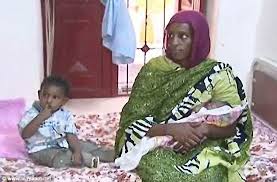
Meriam Ibrahim and her two children in jail

Meriam Ibrahim and her two children in jail

Pentecost 2 – 2014

Matthew 10:24-39

Marian Free


In that name of God who constantly reminds us that there is more to our existence than this life alone. Amen.

It is impossible not to be touched, saddened and outraged by the situation of Meriam Ibrahim a Sudanese woman sentenced to hang – ostensibly for abandoning her Muslim faith. Meriam’s Father is a member of the Islamic faith and her Mother is a Christian. Meriam claims that she has always been a Christian and that therefore she has not abandoned Islam and is not guilty of apostasy. Her claim however appears to be falling on deaf ears and it seems probable that the Mother of two small children will hang for refusing to renounce her faith. Half a world away, in the comfort of a country that has been primarily Christian since its inception, it is difficult for us to imagine the courage and the faith that would lead a young woman to risk her life rather than to deny what she believes.

We are nearly half way through the year and only now are we able to really come to grips with Matthew’s gospel. In fact, even though it is the year of Matthew, it has been three, nearly four, months since our consecutive reading of this gospel was interrupted first by Lent and then by Easter. It is then, a good time to look at the gospel as a whole so that we can begin to appreciate its parts. The Gospel attributed to Matthew appears first in the New Testament, however most scholars agree that Mark was the first to be written. The consensus is that Mark was written first and that Matthew used Mark’s work to write his own. Evidence for this is found in the fact that basic content of Matthew is the same as that of Mark. Matthew has filled out the material used by Mark in two ways. In the first instance, the author of this gospel appears to have had access to some teaching that was circulated widely enough to be known by both Luke and Matthew – they both include sayings that are not found in Mark. Secondly, as some material appears only in Matthew, it seems clear that he or his community were privy to teaching known only to them – including the parable of the ten bridesmaids and the parable of the sheep and the goats[1].

Matthew’s gospel stands out from the remainder as it is the most Jewish of the Gospels and the one that most clearly identifies Jesus as the one who fulfills the Old Testament. In Matthew Jesus is first and foremost a teacher which may be the reason that Matthew organizes Jesus’ teaching into five sermons the best known of which is the Sermon on the Mount. It is almost certain that Jesus’ preaching did not consist of a string of unrelated sayings, but rather that Matthew gathered them and placed them together. Apart from the introduction (the birth narrative) and conclusion (the passion and resurrection), Matthew’s gospel is made up of five parts each of which consists of a narrative section and a sermon. In other words, the story that Matthew is telling about the life of Jesus is punctuated with blocks of Jesus’ teaching.

Today we are reading a portion of Chapter 10 – the sermon which concludes part two of the gospel – Jesus’ ministry in Galilee. To set the sermon in context, we need to remember that at the beginning of this chapter Jesus has set apart twelve of his disciples and given them authority to cast out demons and to heal. Having done that he sends them out to proclaim that the kingdom of Heaven has come near. In other words, Jesus has shared with the twelve both his authority and his ministry. This is an enormous privilege, but it comes at a cost. If the disciples are to be Jesus’ representatives, they must expect that, like him, they will experience rejection and persecution. (“If they have called the master of the house Beelzebul, how much more will they malign those of his household!” Jesus says.)

The sermon in chapter 10 is addressed not to the crowds, or to the disciples in general – but specifically to the twelve. If they are to share his ministry they must expect to share the consequences of that ministry. Jesus says: ”I am sending you out as sheep amongst the wolves.” This does not mean that they should be timid or afraid – the Holy Spirit will give them words to say and Jesus reminds them how precious they are in the sight of God. If they remain true they may lose their life, but nothing can kill their soul – not even death can separate them from God.

For generations Jesus’ warning has seemed to be directed specifically at those early disciples or to those in the early church who faced persecution and martyrdom. How comforting it must have been to know that the Holy Spirit would be with them when they faced their accusers, that whatever situation they confronted, they were so precious to God that even the hairs of their head were numbered and that if martyrdom was to be their lot they would lose their body, but not their soul. Words such as these must have provided comfort then and they must surely offer hope and consolation to Meriam and to others in her situation today.

Times are changing. In an increasingly secular and multi-cultural Australia we can no longer take for granted the privileges and benefits that have accrued by virtue of our belonging to the predominant faith. There are challenges to our practices and beliefs on a number of fronts – religious education, the presence or not of Santa Claus in kindergartens, the presence or not of Nativity Scenes in public places and whether or not churches that provide social services are to be considered charities and receive the tax breaks associated with such practices. In some places the Christian faith is met with ridicule, in others with indifference and in yet others with outright hostility.

In a nation in which loyalties and beliefs are changing, it may be that there will be a time when we will have to defend what we believe. At best we may have to stand up and be counted and at worst we may have to consider what is more important – security in this life or in the next. Should we, like Meriam, be put to the test, let us pray that we will heed Jesus’ words to his disciples and find the strength and courage to hold fast to our faith no matter what oppositions confronts us and no matter how tempting it is to try to save our skin.

[1] An interesting exercise is to place Matthew, Mark and Luke side by side to see how they have used material known to them all, what sayings occur in Matthew and Luke and what is unique to Matthew or to Luke.

The Trinity – heresy and orthodoxy

June 14, 2014

Trinity Sunday 2014

Matthew 28:16-20, 2 Corinthians 13:11-13

Marian Free

In the name of God, Creator, Redeemer and Sanctifier. Amen.

 My childhood memories of Trinity Sunday are of my Father returning from church complaining about the sermon and in particular the use of bad analogies to try to make the Trinity more accessible for the lay people. Of course, as a child, I never really understood my Father’s problem. I liked the idea of tricycles and other tri-fold objects being used to help us get inside the concept of a God who was both three and one. As I preacher, I find it tempting to use simplistic images, but I am saved by my Father’s voice in my head and – from now on – by a humorous look at the problem as presented on Youtube by TheLutheranSatire.[1] http://www.youtube.com/watch?v=KQLfgaUoQCw

As the clip points out, the best way to speak about the Trinity is that established as long ago as 381 in the form of the Athanasian Creed[2] that explicitly states that God is both three and one[3]. Trying to oversimplify the issue leads to misunderstanding, confusion and even “heresy”. At its heart the doctrine of the Trinity tries to come to grips with the biblical language for, and understanding of, God. It is a difficult and even dangerous exercise because as Thomas Aquinas stated: “we know that God is, but not what God is”. What we are doing in creating any doctrine is trying to find human language to describe what is utterly unknowable. As a result any attempt to describe or to capture God will always be finite and limited. In fact, if God could be captured by human thought or language, God would not be God. That said human beings, however limited and finite have, from time immemorial, experienced something completely other, something outside this physical and material world that somehow is engaged with and impacts on the created world. In the Judeo-Christian experience the relationship with and impact of the utterly other is related in the Hebrew and Christian scriptures – the Bible.

It is from this record that theologians have found the raw material for the Trinitarian expression/experience of God. It is true that the Old Testament does not provide any evidence for plurality in the Godhead and would have utterly rejected any suggestion that God was other than one. The Old Testament does however use language that is later used by the New Testament writers to capture their experience of God. For example, in the Old Testament, the language of breath, or Spirit, occurs in the very first chapter when God’s spirit moves upon the waters (Genesis 1:1). In fact the spirit of God plays a large role in the Old Testament – it comes on Moses and Saul, Elijah and Elisha and on the prophets. It is never a separate entity, but always the spirit of God. Other “Trinitarian” language that is found in the Old Testament is that of God as Father (albeit as Father of the nation of Israel). Word and Wisdom are said to be present with God at creation (Proverbs) and even though they do not indicate plurality, they open the way for such language to be used of Jesus and to suggest pre-existence (John 1 for example).

Turning to the New Testament, the conclusion of 2 Corinthians provides evidence that Trinitarian language was applied to God as early as the fifth decade of the Common Era. Similar language is found in the “Great Commission” at the conclusion of Matthew, which was written probably in the 80’s. Paul regularly uses different terminology for God interchangeably. So, for example in a few verses he can speak of the law of God and the law of the Spirit of life (Romans 7:25, 8:2). Shortly afterwards he speaks of the Spirit of God and the Spirit of Christ and the Spirit of God who raised him from the dead (Romans 8:9-11 – God, Christ and Spirit).

Long before theologians put their mind to discussing the nature of God, the early church seems to have had an experience of one God in three persons. Long before the Council that produced the Athanasian Creed, early believers were using language that implied that they thought of God as both one and three. In those early years of the church, there appears to have been no attempt to create a doctrine or a creed to defend this understanding of God, nor is there a clear line of development of the idea. The simple fact is that the early church was convinced that Jesus was God and that the Spirit was God and that they could hold this belief without damaging their confidence that “the Lord our God is one”.

There will be those among us who will struggle to read theology and to come to terms with non-heretical ways of speaking about the Trinity. Most of us will be content to accept the unity and Trinity of God as a part of the incomprehensible mystery that is God and we will be satisfied that the God whom we know and relate to as Father, Son and Spirit, Creator, Redeemer and Sanctifier is both one and three –“yet there are not three Gods, but one God.”


[1] The fourth Lateran Council put the problem in this way: “Between God and creature no similitude can be expressed without implying greater dissimilitude.” In Hunt, Anne. Trinity. New York: Orbis Books, 2005, 3.

[2] p 487 of the Green Prayer Book

[3] Council of Constantinople