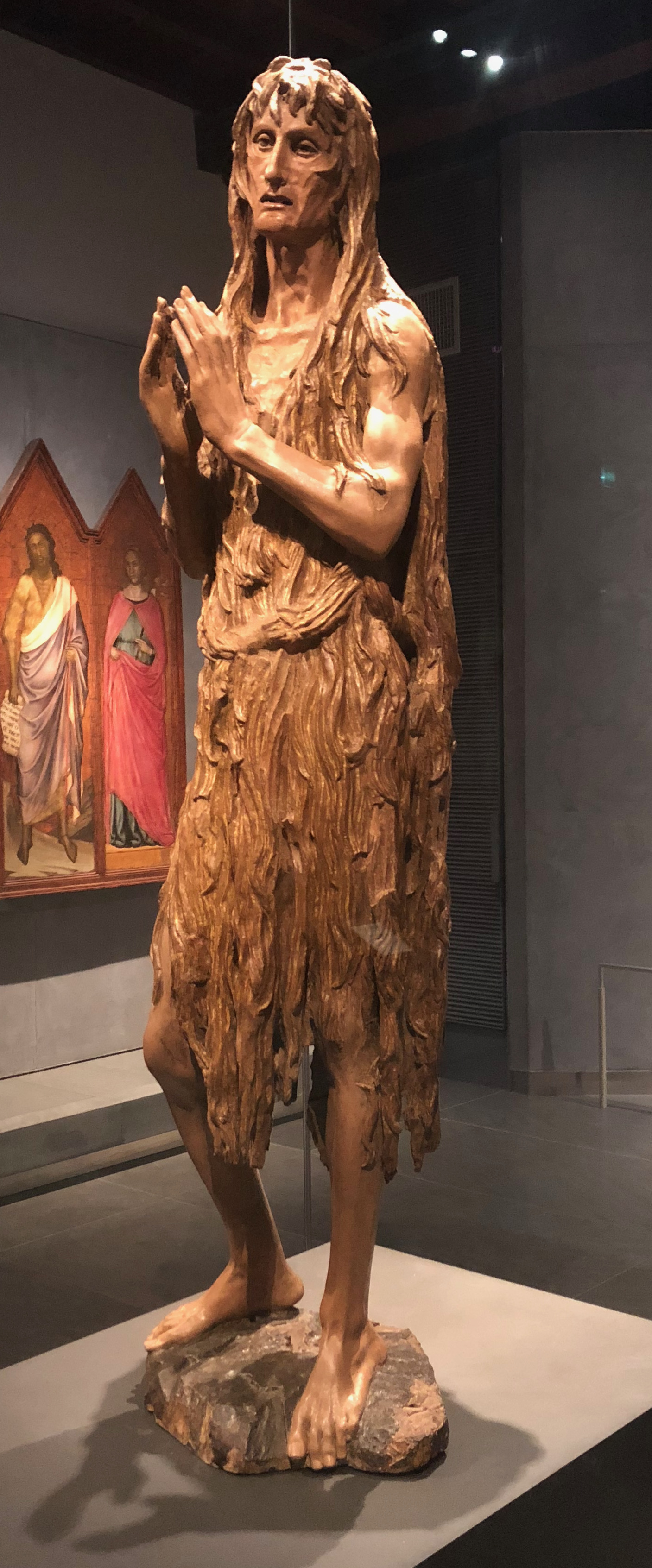
The resurrected Jesus is a scarred Jesus

April 3, 2021

Easter – 2021

John 20:1-18

Marian Free

May I speak in the name of God whom death could not defeat nor the tomb contain. Amen.

[i]At 9:45pm on Saturday May 2, 2009 seven friends – all in Year 12 – were driving home from a BBQ ten minutes from their home in Toowoomba. At some point the car drifted to the edge of the road. The young driver over corrected and steered straight into the on-coming traffic. One of the seven teenagers died at the scene and two others within the next four days. Two more were taken to hospital where they remained in a coma – one for several months. A sixth sustained serious injuries and the seventh, Lech Blaine, walked away without a scratch. After years of grief, survivor’s guilt, imposter syndrome and depression Lech has written about his experience of that night and of the years since. In the excerpt of his book, printed in the Good Weekend, last Saturday Lech writes: “We were on a hiding to nothingness, and yet I never stopped searching for the right person or the perfect words. The great genius and insanity of human beings is our ability to laugh in the face of disaster. To fall in love after heartbreak. To keep breathing when the people we need could disappear at any given moment. To make art from the unspeakable grief when they did.” 

Consciously or not Lech is using resurrection language to describe his life’s journey. Somehow, he has found a way to move on from tragedy, to move on but not to move past. No matter what, the trauma of loss and grief will remain with him in some way into the future. His life will be forever marked by the tragedy that took the life of three of his friends and changed the life of another, yet he is able to speak of “making art from unspeakable grief” and of “falling in love after heartbreak”.

At the heart of the resurrection is human experience. The Jesus who experienced the brutality and agony of the crucifixion was not some supernatural being oblivious to pain. He was flesh and blood and he hung on that cross knowing that one of his own had handed him over, that another had claimed never to have known him and that the rest had put their own safety before their friendship with him. The resurrected Jesus was a scarred Jesus. He was not miraculously brought back to life whole and unblemished. His hands, his feet and his side bore testimony to his harrowing experience. Jesus did not emerge from the grave as one to whom nothing had happened. His memory was not wiped, and his body was not restored. Jesus carried in his body and in his mind reminders of his ordeal. The pain may have diminished, the scars faded, and the betrayals forgiven but they could not be wiped out. As much as they were part of Jesus’ past, so they would be a part of Jesus’ present and future.

It is important for us to be reminded that the resurrection is no empty triumph rather it hard-won victory over cruelty and indifference, suffering and death, cowardice and disloyalty. It does not obliterate what preceded it, but rather it absorbs it into a renewed and transformed present and future.

Jesus’ resurrection is a promise for the future, the assurance that death is not final, but it is also a guarantee for the present, an assertion that somehow, someway, we will find a way to move forward even when moving seems impossible. The resurrection is not just the story of what happened to Jesus. It is the story of what happened to those who followed him – the terrified disciples who overcame their fear, the bereaved and the lost who found a way to go on and the confused and the foolish who found their feet and at the same time found their vocation. The horror of that Friday did not leave the disciples, the knowledge of their frailty and their failures, the awareness of their ignorance and their betrayals, their fear of the authorities almost certainly remained with them and informed them, but the raising of Jesus became their own resurrection to new life, their determination to do better and their motivation to spread the story of Jesus to all who would listen.

And so it is for us. The resurrection is our story. Our lives, like Lech’s, can change in a heartbeat. Fire or flood can destroy a lifetime of work. An accident can leave us bereaved or incapacitated. Disease can ravage our bodies and our minds, and a pandemic can stop us in our tracks. 

Most of us will find a way to pick up the pieces and move on. We will learn to live with grief and loss, and, with luck and fortitude, we will learn from the experience and be better and stronger people as a result. Resurrection to new life is not a magic formula that erases the past, it is a promise that we can continue to live and that our lives, while not the same, may be richer and deeper as a result. Resurrection to eternal life is a promise that gives us the courage to hold on, when holding on seems absolutely impossible.  

Like Jesus, we may not know resurrection unless we first know crucifixion. We may not know new life unless we are willing to let go of the old. This life will almost certainly throw up difficulties, heartaches and setbacks. When life throws us a curved ball, we know that the scarred Jesus has travelled the same paths, known the same betrayals and experienced the worst that life has to offer. Through it all he held onto his trust in the living God and the living God did not abandon him but brought him from death to life. In the same way when life gives us its worst, the living God will not abandon us, but will hold us and heal us until we are ready to live again.


[i] Lech Blaine. Car Crash: A Memoir (Black Inc) excerpt in Good Weekend (The Sydney Morning Herald, March 27, 2021, p 16.

Whose side are we on?

March 27, 2021

Palm Sunday – 2021

Mark 11:1-11

Marian Free

May I speak in the name of God, Earthmaker, Painbearer, Lifegiver. Amen.

I grew up in the era of protest – primarily protests against apartheid and against the Vietnam war. We lived a stone’s throw from the University and the marchers would often pass our street on their way to the city. Among our church congregation were students who felt strongly enough that they joined the marches and among our acquaintances was a long-serving police officer who was brought in to enforce the law. In any situation of  unrest there are at least two narratives – that of the government and the status quo and that of those who believe that they are standing up against injustice, oppression and/or evil. Depending on the lens through which we observe the situation, we will have more sympathy for one side or the other. We will see the police/the armed forces as brutes or defenders of the peace and the protestors as courageous truth-sayers or radical disturbers of the peace.

To take two recent examples. In Myanmar today, the army will be asserting that they are simply trying to maintain order, fight corruption and build a stable government. On the other hand, the protesters, incensed at the removal of a democratically elected government, are voicing their opposition to the coup. Whose side do you take – that of the protesters who are willing to lose their lives for what they believe to be right, or the government which is determined that right is on their side? In the UK recently, police were accused of using force to break up a protest related to the death of Sarah Eve are and violence against women. Police were anxious to prevent the spread of COVID, the women were making the point that violence against women needs to stop. Which narrative do we hold to be true? Sometimes it is easy to make a decision as to who is in the right, but sometimes we, the onlookers find ourselves conflicted – both sides are right at least in part.

I wonder where we would stand if we found ourselves in first century Jerusalem during Passover?

One could be forgiven if one thought that Jesus was being deliberately provocative when he arrived in Jerusalem for the feast. His actions seem to be deliberate and well thought out, not spur of the moment reactions to what he sees.

A closer look at the narrative reveals that Jesus has planned his entry. Whether or not he has warned the owner of the donkey that he will send his disciples to borrow the colt, Jesus has obviously determined that he will ride into Jerusalem in the manner of a King (as described in Zechariah 9). Most people will have ascended  into Jerusalem on foot, but Jesus has chosen to ride. He was not only arriving in the manner of the expected King, but he was also ensuring that he stood out from the crowd. His action assured that he was noticed by the people who have thronged to Jerusalem for the Passover and it is little surprise that they interpreted his arrival as that the one who comes in the name of the Lord, the one who will save Israel.

What is interesting is that Jesus doesn’t press his advantage. He doesn’t immediately gather the crowds and form a movement. When it gets late, he simply leaves the city and returns to Bethany.

We are left to wonder what he does overnight. Was he incensed by what he sees as the corruption and hypocrisy of the Temple priests? Does he stew over what he has seen? We will never know. What we do know is that the next day, he is in anything but a good mood. On his way back to Jerusalem in the morning he saw a fig which had no fruit and – even though it was probably the wrong time of year for figs – he cursed the tree – which will never bear fruit again. When he re- entered Jerusalem, he went straight to the Temple where, as we know, he overturned the tables of the money changers and drove the animals from the Temple precincts. Again, this does not seem to be a spur of the moment action – after all he was in the Temple the previous day. It appears as though he has deliberately come to challenge the use of the Temple as a marketplace. Then having antagonised those in power in Jerusalem – Jew and Roman alike – Jesus leaves the city once more.

On the third day he returned to Jerusalem and the Temple and when, the religious leaders engaged him in debate, he not only defeated them, but he further angered them by telling a parable against them.

In this scenario, Jesus is presented as anything but a peacemaker. In fact, he seems to be deliberately antagonising the religious and secular leaders. It is as if he has no time to lose – his critique of the system cannot wait, he must confront it head on. It is as if he is trying to force their hands, to expose their hypocrisy, to bring things to a head. In this, as we know, he succeeded. Before the week was out he had been arrested, tried and crucified. An innocent man murdered – or was he?

How one views Jesus’ death depends on the narrative that we choose to believe. Was he – as the leaders of the time thought – the subversive radical who needed to be destroyed? Or was he – as we now believe to be true – the Saviour of the world? Before we judge the first century crowds too harshly we must ask ourselves which narrative would we have believed had we been there –  that of the leaders or that of Jesus?

In today’s world when people speak truth to power, we must open our minds and hearts so that when we are disquieted and the status quo is threatened we don’t jump to the conclusion that they are radicals, trouble-makers or subversives or we may find that we too quickly join the voices that call for their (Jesus’) destruction.

How do we see Jesus?

March 20, 2021

Lent 5 – 2021

John 12-20-33 (++)

Marian Free

May I speak in the name of God Earth-Maker, Pain-Bearer, Life-Giver. Amen.

On the night before she was due to be executed, Edith Cavell – a British nurse serving during the first world war – had a visit from a chaplain. After they had spoken for a while, they prayed, and Edith asked that they might sing the hymn “Abide with me”. “Hold thou thy cross before my closing eyes, shine through the gloom and point me to the skies. Heav’ns morning breaks and earth’s vain shadows flee. In life, in death, O Lord, abide with me.” Cavell had it right – at what was her lowest point she looked – not to Jesus’ resurrection – but to the cross – for it was there that the victory had been won.   

Today’s reading from the gospel of John has been ripped from its context and presented as if it could stand on its own. While the metaphor of the seed falling to the ground makes a certain amount of sense, the surrounding text seems unconnected both to the metaphor and to the request of the Greeks. We are left in the dark as to why the Greeks want to see Jesus in the first place and indeed why the Greeks are in Jerusalem at all. Without the wider context, we are left wondering why Jesus appears to have so rudely ignored their request.

If we lived in the first or perhaps even the second century, we might have expected to hear the story as John told it from beginning to end in one sitting. In so doing we would have seen how the different parts of the story connect with and speak to each other. We would have become aware of the way in which the Johannine author winds back around on himself, reiterating and reinforcing some of the key Johannine concepts as he goes. Light and dark, life and death, joy and the relationship between the Father and the Son are all repeated over and over. By the time the reader had reached this point in the story, we would have understood that the phrase “being lifted up” referred to Jesus’ death on the cross. 

The immediate context of today’s gospel is Jesus’ entry into Jerusalem, but in order to truly understand what is happening here and where the story is going, we have to go back a little further – to the raising of Lazarus. Bethany was close to Jerusalem, so it is not surprising that some informants had reported Jesus’ actions to the Pharisees who in turn had called a council with the chief priests to consider what to do about Jesus and the threat that he posed. The raising of Lazarus had greatly increased Jesus’ stature and renown and witnesses to the event could not help but testify to it, which made Jesus even more of an attraction. According to the gospel, people were deserting the Jews and believing in Jesus – which only exacerbated the antagonism of the Pharisees and chief priests. 

It was dangerous for Jesus to come to Jerusalem for the Passover – orders had been given that anyone who knew his whereabouts should inform the chief priests and Pharisees so they could arrest him. Many wondered if Jesus would actually come, but come he did, and when the crowds heard of his arrival, they took branches to greet him, shouting “Hosanna to the King of Israel”.  At this the Pharisees despaired: “You see, you can do nothing. Look, the world has gone after him (12:19).” 

Knowing the context helps us to make better sense of this morning’s gospel. We know that people from every nation, Jew and Greek, flooded to Jerusalem for the Passover. Many of them will have heard of Jesus and will have known that he raised Lazarus from the dead. No doubt they were both amazed and curious – anxious to see the man behind the stories. It may be for this reason that Jesus didn’t respond when he was told that the Greeks wished to see him. He resented being seen as a tourist attraction. He felt that it was important that those who wanted to see him realized that they must learn to see not the miracle worker but the crucified one. In response to the request of the Greeks Jesus reiterated what he had said at the beginning of his ministry (as we heard last week) that the “Son of Man must be lifted up” – on the cross. Those who sought him out must understand that following Jesus had nothing to do with fame and fortune but rather would lead to suffering and to death. They would need to find the courage to lose their lives in order to gain their lives.

Instead of agreeing to see the Greeks, Jesus spoke about the life of discipleship. He reflected on what lay ahead wondered to himself whether he could avoid the pain and agony of the cross. But he knew that it was for the cross that he had come. He understood that it was when he was lifted up, that all who chose to, would be able to see him and would understand that he had sought, not fame and fortune, but to give himself entirely into God’s hands. In this is Jesus’ victory not that he raised someone from the dead but that he faced the worst, confident that God would not abandon him. He submitted his life to God’s will rather than seeking to create a life of his own making. The Greekswould see him but only if they had the courage to see victory in defeat, success in failure, life in death. 

We cannot have the resurrection without the crucifixion. We cannot be truly alive unless we put to death those things that are life-denying. As we draw near to Good Friday we are reminded that we follow a Saviour who was brutally crucified and whose triumph lies not in what he did, but in what he allowed to be done to him. 

Do we have the courage to face the agony and shame of the cross, or do we look past the cross to the victory of Easter Day?

Jesus and snakes

March 13, 2021

Lent 4 – 2021

John 3:14-21

Marian Free

In the name of God who gives us victory over death. Amen.

I am one of those people for whom vaccines of some sort have always been a part of my life. Apparently, I received a polio vaccine before I was six weeks old so that my mother could accompany my father to Nigeria and not face the trip alone with a newborn baby. I can still remember lining up at the City Hall to receive a free jab for something or other and the nurses who came to the school to inoculate us against something else – probably tetanus. In retrospect, my generation had a lot of needles. Still, unlike my children, I was not vaccinated against measles, chicken pox and rubella so I caught the first two though not the third. The parents of my generation had their own system of immunisation. If someone in the neighbourhood had measles, instead of being kept away we were encouraged to visit – the idea being that it was much better have these illnesses when we were young and to develop an immunity to them than to risk having them when we were adults when the disease might make us seriously unwell.

At last, the vaccine for COVID is being rolled out. President Biden has claimed that most Americans will have received their shots by Independence Day. In the UK my friends and family have all had at least one shot and even if the roll out is slower than anticipated, Australians are receiving their first does of the vaccine.

Vaccination is counter intuitive. In order to be protected against disease, we are injected with that very disease. It all began smallpox. Smallpox was incredibly infectious and out of every ten people infected with the disease three people died. Those who survived were often badly scarred. In 1796 Dr Edward Jenner noticed that milkmaids who had had cowpox did not subsequently become ill when exposed to smallpox. He experimented by taking a sample from a cow pox sore and inoculating it into the arm of the son of his gardener – James Phipps. After some time, he exposed James (on several occasions) to the smallpox virus, but James did not get ill with the disease. Dr Jenner’s methods might appal us today and they certainly would not pass the medical ethics test, but his discovery has helped us to almost eradicate polio, smallpox, measles, mumps and chicken pox. Diseases that used to strike fear into the hearts of parents are, so long as we are vigilant, a thing of the past.

We have become much more sophisticated and more ethical than Dr Jenner. When it comes to COVID for example, we are not actually injected with the virus but, as I understand it, we are inoculated with components of the virus which enable our body to recognise it and to fight it[1]. When it comes to fighting disease then, very often like cures like, the virus in effect fights against itself.

Today’s readings are complex, and sadly we don’t have time to explore why God sends snakes, or why, instead of providing the cure, God didn’t simply stop the snakes. Whatever lay behind God’s actions, the idea of the image of a snake being the cure for a snake bite is almost contemporary. It resonates with the modern science of a virus being used to cure a virus. Just as the snakes did not disappear, but that looking at the snake stopped people dying, so, while the virus will not disappear, we, once vaccinated, should not die from it.

So much for the snakes in the desert – but what about Jesus? As part of his discussion with Nicodemus, Jesus compares himself to the bronze serpent lifted up by Moses. “And just as Moses lifted up the serpent in the wilderness, so must the Son of Man be lifted up,” he says. It is a difficult image to grasp. In what way do Jesus’ contemporaries resemble the Israelites in the desert, and how does Jesus’ being lifted up on the cross bear any similarity to a bronze serpent on a pole? Jesus and a serpent have nothing in common.

To understand Jesus’ imagery, we have to first of all understand that according to the author of John’s gospel, it is on the cross that Jesus’ victory over death occurs. The cross is the key to eternal life, to Jesus’ being recognised and to Jesus’ drawing all people to himself. (3:14, 8:28 and 12:32). In the fourth gospel the cross does not represent defeat, but triumph. It is Jesus’ willingness to die that allows him to conquer death. The resurrection is important, but there can be no resurrection, no life after death, unless Jesus dies – really dies. Jesus experiences death in order to overcome death. Jesus’ death is the cure for our death, just as the bronze serpent was the cure for the Israelite’s snake bite. Jesus’ death not only inoculates him against death, but his victory over death inoculates each one of us against eternal death.

Jesus has been lifted up. He was displayed on the cross – so that all could see him and seeing him, believe and believing, have eternal life. Death has not been entirely vanquished, but it no longer has dominion over us, it is no longer something to be feared because we know that death is not the end of the story.

Jesus has been lifted up – just as Moses lifted up the serpent in the wilderness – to show us that death will not have the last word. Jesus has conquered death and so long as we hold his death before us, we can be sure that we will share in his victory over death.


[1] For an explanation go to the Centres for Disease Control and Prevention

https://www.cdc.gov/coronavirus/2019-ncov/vaccines/different-vaccines/how-they-work.html?CDC_AA_refVal=https%3A%2F%2Fwww.cdc.gov%2Fcoronavirus%2F2019-ncov%2Fvaccines%2Fabout-vaccines%2Fhow-they-work.html


Angry enough to do something?

March 6, 2021

Lent 3 – 2021

John 2:13-22

Marian Free

In the name of God who calls us to do justice, love mercy, and to walk humbly with our God. Amen.

On Friday I attended the UN Women’s International Women’s Day lunch. It was an inspiring, if somewhat gruelling experience – especially in the light of recent events. Australian of the Year, Grace Tame was the key speaker. I imagine by now that most of you know at least the outline of her story. Grace is a powerful and direct speaker, and she doesn’t spare her audience the intimate details of her ordeal. Sadly, her story is not unique, but even if you have heard other stories of abuse, you cannot help but be shocked and brought to tears as she recounts the way in which a much older man, a teacher in a position of trust, targeted her at her most vulnerable and manipulated her to the point where she felt utterly unable to refuse his sexual advances. How, in this day and age, could this man’s behaviour – in his office, on school grounds – go unnoticed? Why, in a world sensitised to child sex abuse, did no one notice or think to question what was going on? 

Equally shocking and revelatory was the speech by Dr Kirstin Ferguson who, at the beginning of her presentation provided a dramatic, visual illustration of the prevalence of sexual harassment in the workplace.  Before she began, Dr Ferguson asked those in attendance (men and women) to stand if they had ever experienced sexual harassment at work. At least two thirds of the room rose to their feet – two thirds of a room filled with professional people. Dr Ferguson went on to tell us that 1,600 hundred women a week, experience some sort of sexual harassment at work. 

Listening to the two women was a salutary and sobering experience.

What does it say about our society that a fifteen-year-old girl can be raped every day at school – in the office of a 58-year-old teacher? Who are we that one woman dies every week at the hands of someone who professes to love her? How is it that our aged care system is so broken that vulnerable older people are over-medicated, mistreated and badly fed? Why is that we cannot assume that our workplaces and schools are safe and nurturing environments? Why can’t we keep our children safe from abuse? 

Something at the very heart of human nature is broken. Countless Royal Commissions and changes to legislation have been powerless to bring about the institutional change that is required so that all people can live and work with dignity. More importantly, no amount of legislation has been able to bring about the personal transformation that is required to build a society in which all the vulnerable are protected and nurtured – not abused or exploited.

In today’s gospel Jesus is angry, very angry. He is angry that the Temple (or at least its forecourt) has been turned into a marketplace. He is angry because he can see the way in which Temple practices exploit the poor, take advantage of the vulnerable and exclude those who cannot take part in the Jewish rituals. 

This event is the most explicit description of Jesus’ anger. It is the moment at which all his frustration and rage reaches boiling point – resulting in his fashioning a whip so that he can drive traders and animals from the Temple and overthrowing tables covered with money. It is the most explicit expression of Jesus’ anger, but it is not the only time that he gets angry.

We know that Jesus got angry at the hypocrisy of the Pharisees, at the indifference of the rich towards the poor and at the apathy of the comfortable towards those who were suffering. Jesus got angry when he saw the religious leaders put the law before compassion while congratulating themselves on their own state of righteousness. Jesus got angry at the complacency, self-satisfaction and judgementalism of those who thought themselves better than sinners, prostitutes and tax collectors. Jesus got angry with those who put burdens on the shoulders of others and who created barriers which prevented them from seeing how much God loved them.  Jesus got angry at the failure of the disciples to understand, at their desire for power and at their belief that they should be rewarded for joining his cause. 

Most importantly, Jesus got angry because the religious institution of his day was broken. Despite John’s call to repentance nothing had changed. Jesus’ contemporaries still believed that the outward practices of sacrifice and ritual were sufficient. Jesus could see that what was really needed was a change of heart, repentance and personal transformation – all of which are much more difficult to achieve than simply presenting a semblance of goodness, observing rituals or consoling oneself with the knowledge that at least one is not as bad as the next person.    

Jesus got angry at injustice and suffering, at pretention and arrogance, at self-serving behaviour and at the refusal to take responsibility for one’s behaviour. Jesus got angry at indifference and inaction. 

Jesus saw a broken world. His grief and angry at what he saw spurred him into action. 

We live in a broken and damaged world, but do we get angry? Do we get angry enough about the exploitation of the poor, the disenfranchised or the refugee? Do we voice our anger loudly enough with regard to people trafficking and slavery? Do we speak out loudly enough against violence towards women or the abuse of children? Do we protest strongly enough about the neglect and abuse of the elderly or the destruction of indigenous sacred sites? Do we rage against injustice, corporate greed and the destruction of the planet? Do we rail against indifference and carelessness? Do we care enough to do something about what we see?

Our world is broken and needs from each of us a change of heart. When will we be angry enough to take action? 

.


In the name of God who calls us to do justice, love mercy, and to walk humbly with our God. Amen.

Equally shocking and revelatory was the speech by Dr Kirstin Ferguson who, at the beginning of her presentation provided a dramatic, visual illustration of the prevalence of sexual harassment in the workplace.  Before she began, Dr Ferguson asked those in attendance (men and women) to stand if they had ever experienced sexual harassment at work. At least two thirds of the room rose to their feet – two thirds of a room filled with professionals. Dr Ferguson went on to tell us that 1,600 hundred women a week, experience some sort of sexual harassment at work. 

Listening to the two women was a salutary and sobering experience.

\


Death is powerless

February 27, 2021

Lent 2 – 2021

Mark 8:31-38

Marian Free

In the name of God who invites us to risk everything in order to gain more than we can imagine. Amen.

Some of you may have seen the 2018 movie that was loosely based on Mary Magdalene. I have to admit that I found it unsatisfying and historically inaccurate. Apart from anything else, it appeared to set the story of Jesus in the period of the Jewish insurrection against Rome, in particular the time when Vespasian and his son were sent by Nero to quell the rebellion that had begun in 66 CE. At that time nearly every Jewish rebel in Caesarea and in northern Galilee was slaughtered. In fact up to 10,000 Judeans were killed or sold into slavery at that time. The movie provides vivid imagery of the butchery and of the resulting antipathy of the Judeans towards Rome. In the movie it is the character of Judas who is most convincing. Judas is depicted as a young man who is keen to rise up against the oppressors in vengeance for the losses that he has experienced. He finally hands Jesus over to the authorities because it is clear that Jesus will not be the revolutionary leader that he had hoped for.

In reality, Jesus’ ministry took place some thirty to forty years before the uprising and its suppression. While life under the Romans was difficult in Jesus’ time, it was not accompanied by the level of violence that occurred during and immediately after the insurrection. There is not even concrete evidence that there were garrisons of Roman soldiers in Galilee during Jesus’ lifetime. That said, the Romans were foreigners who had installed their own administrators and even appointed priests to the Temple. Herod was known to be cruel, and Pilate too had a reputation for brutality. Crucifixion appears to have been a common punishment for rebellion. So there was no love lost between the citizens of Israel and their Roman overlords and there were often bands of zealots and messianic figures who gathered followers to try to defeat the Romans. 

It may surprise you to know that at the beginning of the first century CE there was no fixed idea of a messiah. Despite the unified picture that we have, based on the New Testament evidence, there is no one, fixed expectation as to how God would save Israel. In line with God’s promise to David (that there would always be someone to sit on his throne), some people expected a kingly (military) figure to intervene on Israel’s behalf. Others thought that God would send a prophet of the like of Moses; or that Elijah would return. Still others hoped that God would send a priestly figure to restore Temple worship and return the hearts of the people to God. The community responsible for the Dead Sea Scrolls had a foot in many camps. They expected God to intervene in history by sending a military figure, a king and a priest.

What the people of Israel did not expect (despite the imagery of the suffering servant in Isaiah) was a saviour who would suffer and die and who would expect his followers to share in the same fate. It is no wonder that Peter is so shocked by Jesus’ announcement that he begins to rebuke Jesus. In his mind what Jesus is saying must seem to be utter nonsense. No one can save a people by dying! What is more, the disciples have witnessed Jesus’ healing power and his influence over the crowds. The evidence before them is of someone whose mission – even if it isn’t conventional – is at least successful. And hasn’t Peter recently been commended for identifying Jesus as God’s anointed (the messiah)? Peter and the other disciples must be completely stunned that Jesus is now claiming that he must suffer and must die.

Peter, it seems, has been so caught up in Jesus’ apparent “success” that he has failed to see the counter-cultural nature of Jesus’ mission. He has not seen how Jesus’ determination to associate with sinners, to support the marginalised and outcast and to critique the practices of the Pharisees has alienated and antagonised those who are invested in the status quo. Peter has been so caught up in his own hopes and dreams that he has not seen how Jesus’ commitment to show compassion in defiance of any religious tradition that might impede it, was leading him directly into confrontation with the leaders of the Judeans – a confrontation that would end badly for Jesus.

Over the last few weeks our readings have allowed us to focus on the person and nature of Jesus. We have learned that he was comfortable in his own skin, so sure of himself that he did not need to prove himself and did not need recognition, power or material goods. Jesus’ transfiguration provided evidence that Jesus was not bound by time and space, but that should lead us to lose sight of the fact that Jesus was fully human and that his full humanity is absolutely essential for our salvation[1].

At this point in Jesus’ ministry, Peter’s vision was narrow and was determined by his own hopes and dreams. After Jesus’ death and resurrection, Peter’s understanding developed to the point where he was able to follow in Jesus’ footsteps and to take up his cross and follow where Jesus had led.

If we too follow Jesus’ counter-cultural example, if we stand beside and for the marginalised and the oppressed it is possible that we too will antagonise those who prefer the world as it is rather than the world as it could be. As followers of Jesus, we are called to do justice, love mercy and walk humbly with our God. If that leads to the cross we should not flinch because, as Jesus has both taught and demonstrated, if we lose our lives we will gain our lives and that death, even physical death cannot ultimately contain us.


[1] See the sermons for the last three weeks. 

Is God masquerading as a human being or is Jesus fully human?

February 20, 2021

Lent 1 – 2021

Mark 1:9-15

Marian Free

In the name of God Earth-Maker, Pain-Bearer, Life-Giver. Amen.

I am aware that a number of people struggle with the idea that Jesus is fully human. That is not really surprising. It is an extraordinarily difficult concept to get one’s head around and yet the belief that Jesus is fully human and fully divine is at the centre of our faith – as we confess each week in the Nicene Creed. 

The significance of Jesus full humanity is clearly illustrated in two lines from this morning’s gospel. “And the Spirit immediately drove him out into the wilderness. He was in the wilderness forty days, tempted by Satan; and he was with the wild beasts; and the angels waited on him.” Something external – the Spirit of God – drove Jesus the human into the wilderness. There his true mettle was tested. Without food, water, shelter or even human contact would he succumb to the temptation to take short cuts or would he trust in God to see him through? Would he complain and wish himself at home (as did the Israelites did in the desert) or would he have faith that God would sustain him? Would he try to take control of the situation or would he allow himself to be completely vulnerable?

It is precisely because Jesus is human that the wilderness experience has any value. In the absence of any physical comfort Jesus learns that he is able to rely on God for nourishment. Without human companionship, Jesus discovers that God’s presence has followed him into the barrenness of the desert. It is as a human being that Jesus faces the privations of the desert. It is as a human being that he deals with hunger and loneliness and the voices that taunt him. It is as a human being that Jesus confronts Satan.  

If Jesus is simply God – all of this becomes meaningless. The wilderness would not be a test because God would not be impacted by hunger, fear or loneliness. Forty days would be as nothing to God who created time and space and Satan would be no match because God is strongly than Satan and it is impossible for God to be tempted. 

The whole point of the Incarnation, of God’s coming to earth among us, is that God chooses to fully share our human existence, to become one of us. It is only by fully inhabiting the human condition that Jesus is able to redeem the human condition. Jesus can save humanity from itself precisely by being human, by demonstrating in his own (human) life that our human nature is not an impediment to our divinity. Through the human Jesus, we are reminded that are we created in the image of God and we can be restored to our original place in creation. 

It is only because he is human that Jesus is able to reverse the damage done to our relationship with God inflicted by that first human – Adam. Adam was disobedient, Jesus was obedient. Adam desired to be as God. Jesus resisted the temptation to compete with God. Adam sought control; Jesus chose submission. Jesus demonstrated that we, as human beings, do not have to be determined by Adam’s misstep, but that we can choose a different way of being, a different way of relating to God. He demonstrated in his own life that it is possible to transcend the limitations of being human. 

Examples of Jesus’ humanity abound in Mark’s gospel. Jesus eats and drinks and sleeps. He is compassionate (1:41) angry and sad (3:5, 11:14,15). He expresses amazement (6:6). He becomes tired (4:38) and needs to find time and space for himself (6:30f). He sighs and groans (7:34, 8:12) and becomes annoyed (10:14). He gets frustrated and impatient with his disciples (4:40, 8:21, 8:31) to the extent of calling Peter ‘Satan’. He becomes indignant when the disciples send the children away (10:14). His miracles do not always work the first time (8:22-26) and he does not display foreknowledge (he doesn’t know who touches him). He allows the Syrophoenician woman to challenge him and to change his mind. He is disappointed in, critical of (7:9f, 8:15) and rude to the Pharisees (7). 

In the garden of Gethsemane, Jesus was distressed and agitated, he confessed to being deeply grieved and prayed that God might spare him (14:33f). He experienced betrayal at the hands of two of his inner circle and finally, he was arrested, beaten and crucified. Jesus died, really died – if he did not then the resurrection means nothing.

I put it to you that if Jesus is simply God masquerading as a human being then our faith becomes a nonsense. I don’t know about you, but I don’t want to believe in a God who just pretends to be one of us, who is play-acting sharing our experience and who does not really know what it is to be one of us. Because if God is just pretending, Jesus’ torment in the garden becomes a farce, as does his agony and confusion on the cross, not to mention his frustration, his exhaustion and his grief. If Jesus is God impersonating us his death means nothing. 

The reality is that God does not and did not need to go through the drama of coming to earth if God did not believe that by sharing our experience God could somehow enrich that experience, remind us of our true nature and awaken the divinity that resides within each one of us. God, being God could simply have waved his hands and reversed everything that had gone wrong since creation. God, being God, could simply have bent us to God’s will. From the beginning of time, God has not enforced God’s will, but has allowed us to choose our own way. 

The whole point of the salvation event is God’s identification with God’s creation. God in Jesus became one of us to show us creation at its very best and to remind us of what we were intended to be. As the orthodox would say: “Jesus became fully human so that we might become fully divine.” Can we honour that intention this Lent?

What sort of church?

February 13, 2021

Transfiguration – 2021

Mark 9:2-9

Marian Free

In the name of God whose presence in the world is independent of anything that we might do. Amen.

During the week I had the privilege of listening to Sam Wells, the current Rector of St Martin in the Fields in London. Our Diocese, in conjunction with Heartedge, an initiative of that church, has organised a number of presentations/discussions to help us think about the church after COVID and to discern the direction in which God might be calling us as we move forward[1]. In looking at the church before COVID (BC) and after COVID (AC) Sam distinguishes between “strategic church” and “tactic church”. Strategic church, he says, builds a citadel and makes occasional forays out of the citadel before returning to the safety of the base. “Strategic church” assumes, Sam argues, that Jesus ascended into heaven before he concluded his work on earth and that therefore it is up to the church to do that work for him. In this model, the church is ‘the principle and definitive way’ God continues to work (and to be known) in the world. “Tactic church” on the other hand has no fixed home base, nowhere to store it’s booty and survives through hand-to-hand engagements with those on the ground. “Tactic church” understands that Christ ‘plays in 10,000 places’[2] and is therefore not reliant on anyone least of all us. “Tactic church” does not have to be ‘the source from which all blessings flow.’

By way of illustration, Sam told the story of three women who got together to think how they might spend their Sunday mornings while their church was closed for repairs. One woman decided that she would go to a car boot sale, another to a Sunday league football games and the third to IKEA. Each Sunday they engaged with the people whom they met in those settings and learnt something about their lives. They were excited by their encounters and by what they experienced. After three weeks, when the church reopened for worship, they were genuinely unable to decide whether or not they should return. Their engagement with the community had opened their eyes to new ways of relating to and sharing the gospel with the world. They had discovered that church was not the sole source of relationship, nor the only place in which God could be encountered. In the words of one, their God was now too big for the church. Without having a name for their experience, the women had moved from “strategic church” to “tactic church”.

It could be argued that the Transfiguration illustrates the difference between “strategic church” and “tactic church”. A number of clues point in this direction. In the first instance Jesus’ meeting with Moses and Elijah is a clear reminder that Jesus is not restricted to time and place. If he is not bound by time and place, his ascension into heaven does not herald and end to his ministry – which existed before he began his earthly existence and will continue after his ascension. In other words, the church has no need to replace Jesus who continues to be present in the world – a core assumption of “tactic church”. 

Secondly, Peter’s reaction is telling and is probably a good example of the “strategic church” model. Peter (who, to be fair, is terrified) wants to hold on to the moment, to build booths for Moses, Elijah and Jesus. In other words, he seems to want to create a citadel from which ministry can be carried out – to freeze the moment in time so that it can be relived over and over. Jesus, however, is more interested in a church that is on the move, that is engaged with the world. Jesus promotes “tactic church”. He leads the disciples back down the mountain where they are immediately plunged into the fears, the hopes, the doubts and the faith of the community in which they live (9:14-29).

Then, there is the voice from heaven. You will recall that there was also a voice from heaven at Jesus’ baptism.  “You are my Son, the Beloved; with you I am well pleased.” The language here is very much the same: “This is my Son, the Beloved; listen to him!”  but there is a significant difference. On the occasion of Jesus’ baptism, the voice from heaven was principally for Jesus’ benefit. On the mountain, the voice from heaven is for the disciples – “listen to him”. 

Finally, there is Jesus’ discussion with the disciples on the way down the mountain (their return to the mundane and the ordinary, to their engagement with the world). Jesus instructs the disciples not to tell anyone what they have seen “until the Son of Man had risen from the dead.” Peter, James and John have been given a glimpse of Jesus’ true nature, they have learnt that the one whom they follow is not bound by time and place and have been entrusted with the knowledge that even though Jesus will die, he will rise from the dead (be with them always). 

When the disciples are plunged back into the world, they carry with them God’s vision for the church – the glory of God cannot be contained in booths, God’s presence in the world cannot be limited to the three years of Jesus’ ministry, and the role of the disciples (the church) is to throw themselves into the lives of the community, where they will discover that Jesus is there ahead of them.

We, of course, have no idea what the world will look like post-COVID, nor can we begin to imagine how the church will emerge from this time of uncertainty and ambiguity. What we can be sure of is this – with or without us, God is at play in the world and God invites us to join in that grand adventure.


[1] A recording of the talk is available. https://www.facebook.com/theHeartEdge/videos/424181598801239

[2] From Gerald Manly Hopkins.

Being truly oneself is to be truly God’s

February 6, 2021

Epiphany 5 – 2021

Mark 1:29-39

Marian Free

May I speak in the name of God, in whose eyes we are perfect. Amen.

When I was a child, children used to receive prizes for being the most regular attendees at Sunday School. The prizes were always books. I don’t remember how many I received, but I have clear memories of two. One was the biblical story of Ruth and the other told a story of Jesus as a little boy – as a good and obedient child. I have no idea what the content of the latter was, but one of the illustrations has stuck in my memory. Over time, the image may have shifted a little, but in essence it is the same. There is a woman in a kitchen with a child at her feet. For some reason, I remember the woman dressed in clothes that were fashionable in the 1950’s but I may have added that detail.  What I am sure of is that the toys with which the child was playing included painted wooden blocks and other toys that would have been popular in my childhood – but not in the time of Jesus. 

As an adult, influenced by that book, I searched the gospels in vain for stories of Jesus as a child. Surely, somewhere in the gospels there was evidence to back up the story. No. The only record that we have of Jesus before he begins his ministry is the account of the twelve-year-old in the Temple where, like any adolescent, he is presuming an independence beyond his years and causing his parents great anxiety.[1]

According to the canonical gospels, Jesus simply bursts on the scene after John begins preaching repentance and baptising penitents in the river Jordan. Apart from Luke’s account of Jesus’ precocious wisdom, there is no record of his childhood, his adolescence or his early adult years. Mark’s gospel simply tells us that he was a carpenter (or craftsman) and Matthew’s gospel only that he was the son of a carpenter. Beyond that we have no actual details. Based on the gospels we can conjecture that Jesus’ ability to argue with the Pharisees implies that he was well-versed in the Hebrew scriptures and we can speculate he regularly attended the synagogue. The fact that his early ministry was based in Galilee suggests that he didn’t travel far as a young man and the fact that he was in Capernaum when he called the four fishermen leads to the conclusion that he was resident there at that time. His baptism by John hints that he was one of John’s followers before he struck out on his own.

We can, I think, also conjecture that Jesus was his own person, that he was completely self-contained. Whatever his childhood was like, it seems that he grew into someone who was comfortable in his own skin and who did not need to be affirmed by the externals of power, wealth or appreciation. The evidence for this is compelling. Jesus was not afraid to speak his mind – even when to do so meant making enemies. He did not seek recognition, praise or affirmation even though that would have some easily. He did what was right with no expectation that he would be rewarded, and he gave himself completely without expecting anything in return.

From the very beginning of his ministry, Jesus made it quite clear that he was not and would not be dependent on externals to give his life meaning, or even to help him gather a following. So, when Satan tempted him in the wilderness, Jesus did not give in to the allure of power, showmanship or material gain. He did not need any of these things because he did not feel the need to prove himself to anyone. Jesus knew who he was and knew who he was before God.  Jesus’ confidence, his sense of self, came – not from anything he had or anything that he could do – but from a relationship with God that gave him the certain knowledge that he was valued and loved. This informed everything that he did. Jesus’ relationship with God meant that he was secure in himself. He was liberated from any need to feel important, freed from any desire to have power or control over others (or even over himself) and he did not require possessions, achievements or even followers to reassure himself of his own worth. 

Today’s gospel is a perfect example of Jesus’ self-assurance, of his commitment to his mission and not to his own aggrandisement and of his unwillingness to create a movement that was centred on him[2]. Mark’s gospel began with demonstrations of Jesus’ authority and power. Jesus had taught with authority, he had rebuked a demon, healed Peter’s mother-in-law, cured many and cast out many demons. By any account that would be enough to draw a crowd and to form a popular movement. It would have been so easy for Jesus to stay where he was, basking in adulation and enjoying his popularity. It certainly would have been safer. But when Jesus’ disciples tell him that “everyone is searching for him”, he insists that the good news must be proclaimed elsewhere and he, with them, moves on.  

Jesus understood that his role was to liberate, heal and restore others, not to promote or to advantage himself.

As we approach Lent, we are challenged to place our own lives under the microscope – to fast from, or free ourselves from those things on which we have become dependent. I can think of no better place to start than considering how reliant we are on the good opinion of others or how much our sense of worth is tied up in what we own and what we have achieved or how dependent we are on having control over our own lives or worse, over the lives of others.

Jesus knew who he was and knew that he was valued by God. This liberated him to think of others and not himself. If we are to truly follow Jesus, we too need to find that inner sense of worth that frees us from striving for recognition, for influence or personal gain.

Jesus freed himself from everything that might constrain and limit his ministry and his relationship with others. I wonder what we might decide to let go of this Lent? 


[1] In “The Infancy Gospel of Thomas” the child Jesus not only heals and raises from the dead, but he also strikes down (dead) those who disagree with or provoke him. The child Jesus in this gospel is disrespectful not only to his parents but also to his teachers. It is unlikely that we would want to include in our canon something that describes Jesus as a punitive, vindictive child which makes us think that the Gospel is just that “apocryphal”.

[2] Remember too, that before Jesus does anything else, he chooses others to share his ministry. Jesus was never a “one-man band”.

Truth/untruth. God/not god

January 30, 2021

Mark 1:21-28

Epiphany 4 – 2021

Marian Free

May I speak in the name of God Earth-Maker, Pain- Bearer, Life-Giver. Amen.

During the week a candidate for the Liberal Party in Western Australia was asked to resign. Andrea Tokaji had written an article on a website suggesting that there might be a correlation between the roll out of 5G Towers and COVID -19. Ms Tojaki also claimed radiation destroys human immunity to airborne viruses, a theory that is not accepted by doctors and which has not been supported by credible scientific studies. Over the past four to six years truth has become a causality of ego and conspiracy. Phrases like ‘fake truth’ and ‘alternative truth’ have been uttered by world leaders and their spokespersons who present their own view of the world, current events and scientific research as ‘truth’ even in the face of evidence that clearly points in another direction.

The internet has given us access to a vast amount of information. With a few strokes of a keypad we can settle arguments about the capital of Uzbekistan, the life span of bilbies or the composition of the sun. Within seconds we can find references to topics that forty years ago would have taken hours of research to uncover. At the same time, the internet has also provided a platform for misinformation and conspiracy theories. It is easy, as we have seen, to promulgate wild fantasies such as that promoted by QAnon (a secret group of Satan-worshipping, cannabalistic, pedophiles is running a sex trafficking ring and that high ranking Democratic Party officials are among its members). Or, less wild, that there is a link between 5G and COVID.

That said, truth has always been something  of a slippery animal. Scientific research has not always been objective –  tobacco companies have funded research into the positive effects of smoking. Before the internet, charismatic leaders could convince their followers to believe their reality – even if it led to the deaths of millions of people. When there are no objective measures (like tickets) event organizers or protesters have always been able to  exaggerate the number of attendees in order  to inflate the success of their event.

Religions, even our own, are not immune from the tendency to find evidence to support a particular viewpoint; from the emergence of charismatic leaders who convince their followers to behave in ways they otherwise would not; or to present themselves as more successful than they are.

So where does that leave us? What is truth and how do we recognise it? More particularly, how in the context of something as ephemeral as faith, can we properly discern what is real, what is true?

There is not enough time, nor am I fully qualified to answer those questions but I believe that the gospel and the reading from Deuteronomy today challenge us to consider how we discern what is of God and what is not. In Deuteronomy God promises to raise up a prophet who will speak everything that God commands. God says: ‘Anyone who does not heed the words that the prophet shall speak in my name, I myself will hold accountable. But any prophet who speaks in the name of other gods, or who presumes to speak in my name a word that I have not commanded the prophet to speak—that prophet shall die.’ It is a serious threat – one that does not seem to have been heeded by Jesus’ contemporaries. Today’s gospel is about the recognition of one who speaks as God.

So how do we know who is speaking for God, who is speaking God’s truth?

As I said, I am no expert, but I suggest that in order to answer the question we have, at the very least,  to rid ourselves of our egos, our self-interest and of everything that ties us to the minutiae of our earthly existence. In other words, to truly hear and to truly recognize God, we have to silence all the competing voices that struggle to be heard. As Jesus himself suggests, we should not even worry about ‘what to wear and what to eat’. Like Jesus, we should not be overly concerned with our personal comfort and security. We should try not to worry about what other people think about us. For only if we let go of our own desires and fears will we learn to hear the distinction between authenticity and inauthenticity, will we be able to understand whether a speaker (or the internet) is feeding our own fears or offering practical information and we will be ready to listen critically to those who are making promises and to decide whether they are feeding their egos (or ours), and to question whether their ‘facts’ are supporting one, or another, agenda.

Doing all those things might help us to discern fact from fiction, but how do we know that someone is speaking on behalf of God – is God? Here, we are more fortunate than the scribes because generations before us have affirmed that Jesus is God. If we didn’t know that, where would we begin. Again, I can only make suggestions, but it seems to me that some clues are in today’s gospel. Even though Jesus apparently introduces new teaching, his listeners recognize that he speaks with ‘authority’. This is a phrase that is repeated at the beginning and the end of section making the exorcism secondary to the teaching.  Jesus is believable because he is authentic. He is not self-serving. He has nothing to gain and nothing to lose. He speaks the truth from God even when it brings him into conflict with the forces of evil and with the religious and secular powers. Jesus has no thought for his own security, let alone advancement. His ego was ceded to God during his time in the wilderness and now he is truly free of any temptation to seek power, riches or fame. Jesus is God and speaks for God because he has rid himself of anything that might separate himself from God.

Jesus has nothing to gain and nothing to lose. He does not need to persuade or to coerce people to follow him. He can extend an invitation and give people the freedom to accept or reject him. His teaching, healing and compassion are directed outwards. He has no ulterior motive. His desire is not for himself but for others and he refused to do those things that might have saved him from an ugly death. His authority comes from his integrity, his authenticity.

So how can we discern the truth? How can we recognise God in others?

In answer to the first we should seek to liberate ourselves from any self interest that might blind us to the truth.  And in response the second we can start by asking ourselves whether the speaker is self serving or selfless, whether they are following their own agenda or whether they have the interest of the whole community[1] (the whole world) at heart.

Discerning the truth, recognizing God in the world is our purpose and goal. It might be harder than we think, but that is no reason not to try.


[1] There is not time to look at the reading from Corinthians, but you will see that putting others before oneself is a value that Paul promotes.