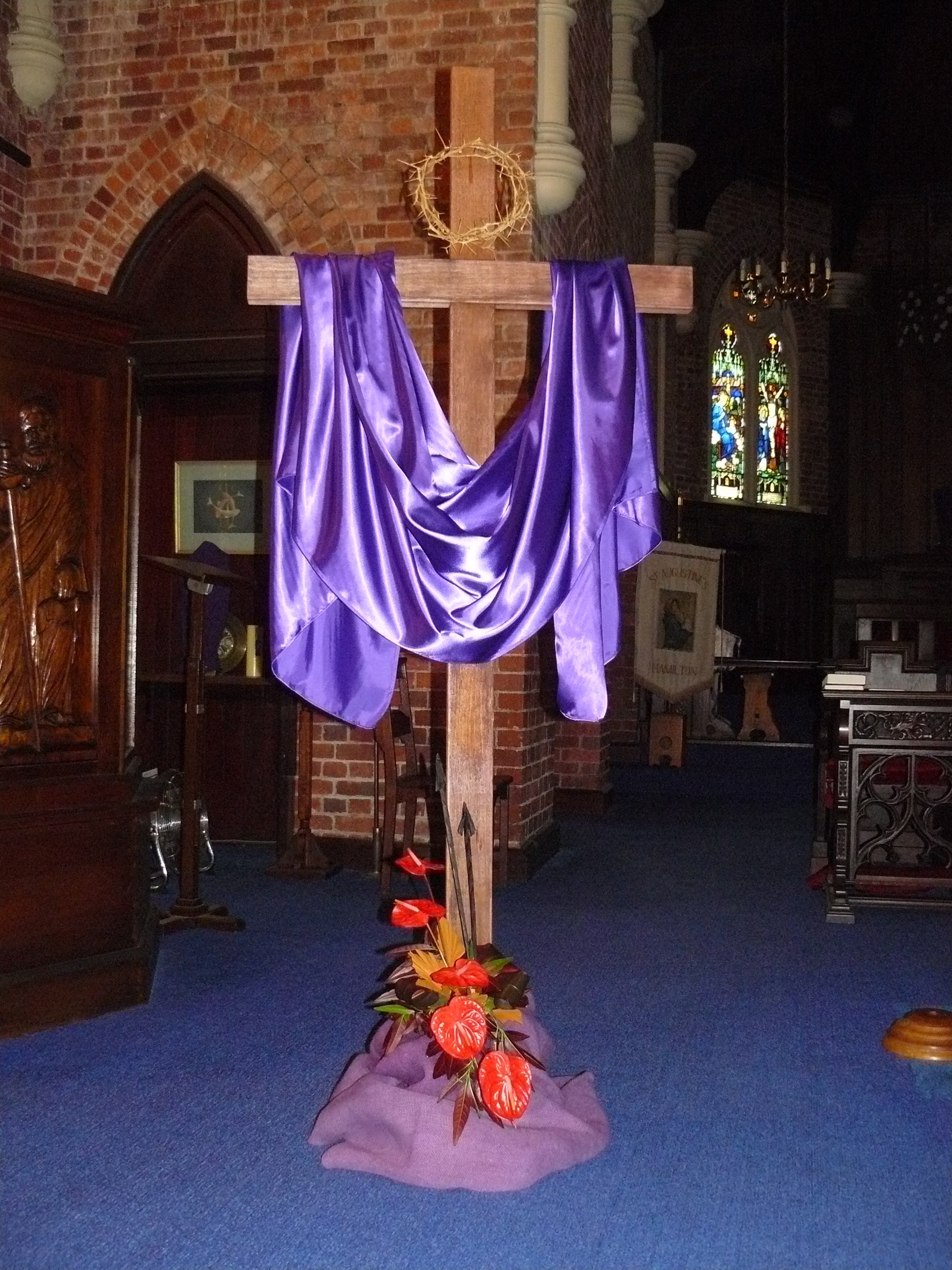
Risking everything to bring Christ to birth

December 21, 2019

Advent 4 – 2019

Matthew 1:18-25

Marian Free

In the name of God who calls us out of our comfort zone and into a world as yet unknown. Amen.

Fifty years ago many people were threatened by the emergence of feminism and some still are. Its opponents have argued that women are intrinsically different from men and have different roles and should stick to the responsibilities appointed to them. Of course, that view is no longer prominent, and most would agree that the feminist movement has had a positive impact on Western society. Not only has the movement freed women to take a fuller part in the world but, at its best, it has liberated both women and men to be themselves and to achieve their full potential. It is true that there have always been men who have taken a lead in household chores, in cooking and in childcare but, as women have been freed to join the workforce and pursue their dreams, so more men have taken the opportunity to take up roles traditionally assigned to women including those of primary child-carer and chief cook.  Because some women (and a few men) challenged the existing customs of their day, what was counter-cultural and even threatening 55 years ago has become, for many, the norm.

In their different ways both Matthew and Luke make it clear that Jesus’ birth is only possible because Joseph and Mary were prepared to act in ways that were radical and counter-cultural. Responding to God’s call on their lives was both dangerous and subversive and yet they faced the challenge with grace and courage. Despite the fact that the gospel writers make the choice look easy and imply that their decision were received by their neighbours without question, it is important to remember that only Mary and Joseph were privy to the appearance of the angels. They may have been confident that it was God who was speaking to them, but their relatives and friends would only have had their word for what had taken place. We have no idea how the small, religiously conservative village of Nazareth responded to the shocking and even immoral behaviour of two of their members. Like all change-makers Joseph and Mary risked vilification, exclusion and even stoning – Mary for becoming pregnant to someone other than her betrothed and Joseph for ignoring the social and biblical norms by taking her in marriage.

Neither Joseph nor Mary would have been able to justify their choices by pointing to history or to precedent. Nor could they defend their behaviour with reference to Old Testament prophecy. Nowhere in the Old Testament does it suggest that a carpenter from Nazareth would have a role in the birth of the Christ. I can’t imagine that anything in Joseph’s religious background or education would have led him to expect that the Christ would come into the world by means of two very ordinary people in a backwater of Palestine, let alone that he would be one of those people.

Joseph did not even have the advantage of seeing the angel face-to-face, but only in a dream. Nevertheless, Joseph, unlike Mary, asked no questions. He simply woke up and did as the angel commanded without any thought for the consequences for himself.

Joseph and Mary were free to say “no” to the angel’s request. They could have argued that responding to God’s call was simply too difficult, too dangerous or too risky. They might have been concerned about what other people might think and what the impact on their lives might have been. Instead, as the gospel writers tell it, their response was immediate and wholehearted, even reckless. As a consequence of their willingness to be God’s vessels for change, the course of history was dramatically altered. Within four centuries the child to whom they gave a welcome was worshipped throughout the Roman Empire and today, the faith that bears his name is one of the world’s major religions.

In the insignificant village of Nazareth, in the Gentile region of Galilee, Joseph and Mary could not have known how far-reaching their decisions would be. They would not have foreseen that in the name of their son hospitals and schools would be built to heal and educate the poor, that slavery would eventually be brought to an end, that wars would be won and lost and that thousands would give their lives rather than renounce him.

Joseph and Mary risked everything – their respectability, their family, their friends and even their lives – to answer God’s call. Throughout history thousands of others have refused

to be bound by cultural norms and sometimes, at great risk to themselves, have challenged the status quo in response to God’s call on their lives. Many of those whom we now call “saints” were non-conformists – people whose vision and confidence in God, led them to confront injustice and oppression and to question corrupt leadership both in society and within the church. Often, they paid for their actions with their lives.

Joseph and Mary together with saints and martyrs through the centuries remind us that, as followers of Christ, we are all called to be change agents – to hear the word of God tugging on our conscience, urging us to do what is right, to challenge unjust structures and to care for the poor and the outcast – with or without the approval of the society in which we find ourselves and with no concern for our own safety or social status.

The voice of the angel may elude us, but that does not relieve us of our responsibility to be those who through our words and actions bring Christ to birth in a world that as yet does not know how much it needs his presence.

Are you the one?

December 14, 2019

Advent 3 – 2020

Matthew 11:1-12

Marian Free

In the name of God whom we see only in part. Amen.

When David Jackson premiered his movie The Lord of the Rings, there were cries of disappointment from readers who felt that he had not done justice to Tolkien’s story. Creating a screen play from a novel involves a lot of artistic and practical choices. Screen and print are two very different medium, tension and drama are captured differently and the writers have to translate descriptive words into concrete images. There are time constraints as well. Had Jackson included the apparently well-loved Bombadill, the movie would have been inordinately long and the mounting tension would have dissipated. It is very difficult for a script writer, a movie director, or a casting agent to get inside the heads of the thousands – maybe millions who will watch the final movie.

When we read a novel we form pictures of the characters and the scenery that become inseparable from our experience of the book. We think that because we are putting into imagination what the author has described that everyone else has the same visual image. It can be very disappointing when we feel that books that we have loved do not translate well on the screen.

In first century there was not one common form of Judaism, let alone a single, consistent image of a Messiah – the anointed one whom God would send. When people heard or read the scriptures they found very different expectations of the future – from the annihilation of the world to the building of a peaceful kingdom on earth. Similarly, there were different expectations as to how this would cone about. One stream of thought focused on the promise that God would raise up someone in David’s line to be King over them. Another was that God would come as judge and destroy the wicked- especially the enemies of Israel. The community at Qumran (writers of the Dead Sea Scrolls) expected three different figures to come in the future – one priestly, one kingly and a third who would lead them in battle.

John the Baptist appears to have had a very clear idea as to the person whom God would send. He declares: “I baptise you with water for repentance, but one who is more powerful than I is coming after me; I am not worthy to carry his sandals. He will baptise you with the Holy Spirit and fire. His winnowing fork is in his hand, and he will clear his threshing floor and will gather his wheat into his granary; but the chaff he will burn with unquenchable fire.” (Mt 3:11,12). When Jesus came to be baptised John recognized him as the one whom he had expected. How disappointed and confused he must have been when Jesus did not live up to his expectations. Instead of being a fire brand and a judge, Jesus was compassionate and, by and large, non-judgemental. There is no evidence in Jesus’ ministry of the ‘winnowing fork’ or ‘the unquenchable fire’. Instead of condemning the people Jesus healed and restored them. He certainly did not stand out from his contemporaries as the one whom God had sent to separate the wheat from the chaff.

It was no wonder then that John (who was by now in prison), sent his disciples to Jesus to ask: “Are you the one who is to come, or are we to wait for another?” Frustratingly, Jesus did not answer the question. Instead he said, “Go and tell John what you hear and see: the blind receive their sight, the lame walk, the lepers are cleansed, the deaf hear, the dead are raised, and the poor have good news brought to them.” We will never know if this was enough to satisfy John. What is clear is that Jesus saw himself not as the one coming in judgement, but as one who was bringing to fruition a different promise that of Isaiah (Isaiah 42:6f).

As he languished in prison, John faced the possibility that he had been wrong – either in what he has expected orin his announcement that Jesus was the one who was to come.

John’s confusion is a salutary lesson for each of us. If John, with all his confidence! was not sure that Jesus was the one whom he had proclaimed, how can we be confident that we will recognize Jesus when he comes again? We are no more able to read the mind of God than we are able to get inside the heads of script writers. If the characters and scenes of a novel can be imagined in more than one way, how can we be certain that our reading of scripture is the only way that scripture can be read?

Advent is a time of expectation, a time of anticipation. Let us cultivate both so that we are not mired in a mire of certainty – blind to God’s presence with us now and unprepared for the way in which God will be revealed in the future.

You will be judged

December 7, 2019

Advent 2 – 2019

Matthew 3:1-12

Marian Free

In the name of God who will come in judgement. Amen.

It is difficult for us to comprehend that John the Baptist’s followers did not automatically defect to Jesus. The fourth gospel that tells us that Andrew left John to become a disciple, otherwise the gospels are silent on this matter. This seems strange. According to Matthew John recognized Jesus when he came to be baptised and, we have to presume, shared that knowledge with others. Yet, as next week’s reading will make clear, John still had disciples when he was in prison and those disciples took his body and buried it. It appears that there were still followers of John at the gospels were being written and that John’s role had to be clearly delineated and limited such that it was clear that Jesus was the more significant of the two.

The New Testament was only interested in John so far as his life intersected with that of Jesus and the New Testament writers were certainly not interested in what did or did not happen to John’s followers. Notwithstanding this we know that John the Baptist’s ideas and ministry continued to influence people. This is evidenced by the Mandaean faith that originated in Mesopotamia some 2,000 years ago[1]. The Mandaeans worship John the Baptist whom they call Yehyea Yahana. Worldwide there are 60-70,000 Mandaeans and of these 10,000 can be found in Sydney’s western suburbs. Mandaeans are gnostic, that is they believe that they have access to secret knowledge and that their soul is in exile, seeking to return to its true home.

Not surprisingly, baptism is central to the worship and practice of the Mandaeans. Unlike Christians they can be baptised hundreds or even thousands of times during their lives. Baptism for them is not a sign of entry into the faith or the means by which they receive the Holy Spirit. It is a symbol of purification, an opportunity to cleanse and refresh one’s life and soul. Members are usually baptised in a river where the water is flowing and fresh. Baptism is practiced at significant times in the church calendar and on other occasions including funerals. We know little of their teachings or whether they have records of what the original Baptist taught.

We do know that John seems to have captured the mood of his generation. He established himself on the Jordan River, preached a baptism of repentance, and announced the coming of one who was more powerful than himself. Baptism as a means of entering the Jewish faith was not common if it existed at all. First century Hebrews were familiar with washing as a means of ritually purifying themselves, but it was not related to repentance. Purification related to fitness to worship in the Temple.

The biblical John is somewhat enigmatic and elusive. His role in the New Testament is primarily as a foil for Jesus. Yet, despite their embarrassment about the significance of John – after all Jesus was baptized by him – the Gospel writers are unable to disguise the fact that John had an important ministry and a following of his own.

Like the prophets before him, John named the situation for what it was – a time in which some had lost hope that God would act, and in which others appear to have assumed that their behaviour did matter because God would not act. John’s preaching appears to have exposed the sinfulness and lacklustre faith of his contemporaries. He seems to have struck a chord with both the people and with the religious establishment. John’s call to repentance must have spoken to their hearts and exposed the poverty, selfishness and faithlessness of their lives. Something in his preaching revealed the need for them to turn their lives around. After all, we are told that all Jerusalem, all Judea and all the region of the Jordan were going out to him.

John’s message was not one of comfort and reassurance, but of judgement and condemnation, even his message about Jesus was not designed to encourage, but rather to convince the people of the need to bear good fruit, to turn to God and to be ready for the wrath that was to come. No one was spared John’s tongue. He accused even the penitent Pharisees and Sadducees of being vipers and challenged the complacency that led them to believe that their ancestry assured them of a good outcome at the judgment.

Jesus’ message was quite different. It was aimed more at the people than at the religious hierarchy and was much more conciliatory and compassionate. That said, we forget John’s warning at our peril. Jesus’ death and resurrection may have assured us of God’s love and given us confidence that our sins have been forgiven, but that does not mean that we can afford to be complacent or that we need do nothing in return. Through our baptism we have been made children of God. It is incumbent on us to behave as such. Jesus proclaimed that the Kingdom had come near. We, his followers, are called to live as Kingdom people– recognizable as members of that kingdom through all that we do and say.

Advent is a reminder that Jesus will come again and that we will have to answer to him for all that we have done and not done in this life. We will be called to be accountable for the way in which we have used or misused the gifts that God has given us. We will be challenged to consider whether we have taken God’s love and forgiveness for granted or whether the knowledge of God’s love has encouraged us to grow into the people God believes that we can be.

Even though John’s primary role in our faith was to prepare the ground for Jesus’ coming, his words echo down through the generations. We cannot afford to be complacent – repent, be cleansed of your sins – get ready for God to break into the world in judgement!


[1] Whether or not this was a direct continuation of John’s ministry is not clear.

Are we drifting apart?

November 30, 2019

Advent 1 – 2019

Matthew 24:36-44

Marian Free

In the name of God, Earth-maker, Pain-bearer, Life-giver. Amen.

I heard a tragic story the week. It concerned a young man, Brandon Richard Webster who is in Australia as a Fullbright Scholar researching how to use drones to assist farmers. Given his traumatic childhood, Brandon may never had made it this far. He only lived with his mother for the first eleven years of his life and as he tells it, the relationship was particularly toxic. For reasons that he does not understand, his mother did not want him to be happy and found the cruelest ways to make his life miserable. His only respite was a weekly visit to his grandparents and even then, they had to say that the visit was to give his mother (not him) a break. He was still quite young when his mother’s drug habit saw him spending hours alone in the houses where she bought and used the drugs. He often missed school and was frequently starving. At age eleven he took his mother to court. She lost custody and he has not seen her since (1).

Physical and mental abuse are just two reasons why relationships break-down. Tragic though the circumstances are, ending such relationships is usually the only way that the abused person is able to move forward and have any chance of happiness. Other reasons that relationships fall apart are nowhere near as dramatic and include such mundane things as ‘drifting apart’, ‘not communicating’, ‘the pursuit of different goals’, ‘having different values’ or simply ‘losing touch’.

Relationships, whether they are a marriage, a family or a friendship require an effort from both parties – taking an interest in what the other is up to, listening to their concerns, being there when times are tough, keeping in touch and ensuring the channels of communication remain open – especially when there has been a difference of opinion. Each relationship has its own peculiar properties. Marriage has to move from the heady days of first love to the building of a solid working partnership. Parenting has to shift from being in control to allowing increasing independence. Friendships must weather changes in occupation, marital status and address and must face the intrusion of partners and children. All relationships need to navigate carefully changes in circumstance especially when those circumstances involve loss or disappointment.

The break-down of a relationship – particularly of a marriage or between parent and child can be devastating. For some there is a sense of failure, for others a concern that they are being judged and for most the grief that something that once was so strong and so full of potential and hope has come to an end.

Today’s Gospel consists of a number of sayings relating to the coming of the Son of Man and two exhortations to be watchful and to be ready. The passage itself is just one small part of Matthew’s discourse on the last things which begins with Jesus’ prediction of the destruction of the Temple and concludes with three parables which reinforce the need to be prepared for Jesus’ return – the parable of the wise and foolish virgins, the parable of the talents and the parable of the sheep and the goats. Without the wider context of the gospel, these sayings and parables would be enough to put one constantly on the alert, living in terror of Jesus’ coming and of being found wanting.

That may well have been Matthew’s intention. He is writing some fifty years after the death and resurrection of Jesus. The first disciples have died, and it would not be surprising if the initial enthusiasm for the gospel had waned. Most of those in the community would be a second generation of believers who had not known the intensity of a conversion experience. Their opponents and the sceptics among their friends may well have been challenging them to explain why it was that Jesus has not yet returned. Matthew’s apocalyptic discourse may be just the shot in the arm that this community needed. However if, in our day and age, these chapters lead to a belief that God is a distant and demanding God who is just waiting for us to put a foot wrong in order come down on us like a ton of bricks then we have completely missed the point of the Incarnation – God’s presence among us in Jesus. God is nothing like the fickle, unkind mother in Brandon’s story. God, as the life, death and resurrection of Jesus demonstrates is always reaching out to us with love. God is longing to be in relationship with us.

The key is relationship.  Our relationship with God requires as much nurture and labour as any other relationship if it is going to weather the passage of time and if it is to develop and grow. Our relationship with God is at much at risk of drifting apart if we do not put the time and effort into maintaining it.

On this the first Sunday of Advent, the beginning of the church year, we might take time to stop and ask ourselves how our relationship with God is going. Are we in danger of losing touch? Have we stopped communicating or at least stopped communicating in a meaningful way? Is our relationship with God stuck in a rut, unable to move forward because of some barrier or another that we have put in the way? Or is our relationship with God limited because we are failing to grow and mature in our faith?

I can’t answer for you, but I would not want to come to the end of time or the end of my life only to discover that I no longer had anything in common with God, that I had neglected our relationship to the point of estrangement, or that I had become stuck at a certain point in my faith development so that I had only a stunted and partial relationship rather than one that was rich and meaningful.

In the end it is all about relationship – God’s with us and ours with God. It is about God’s constantly reaching out in love to us, our willingness to be embraced by that love and our desire to enter into a relationship that grows and matures such that nothing, not our death and certainly not the end of time will be able to separate us from the God who has given us everything, even God’s very self.


  1. Brandon says that if he were to see his mother again, he would tell her that he forgives her.

Will the real king stand up?

November 23, 2019

The Reign of Christ – 2019

Luke 23:33-43

Marian Free

In the name of God, Earth-maker, Pain-bearer, Life-giver. Amen.

 I imagine that even the royalists among you have been disturbed by the recent BBC interview with Prince Andrew who, in the process, revealed himself as self-centered, thoughtless and completely out of touch with the values of today’s world. This is not the first time that members of the Royal family have demonstrated that at times they are completely removed from the real world. Remember when Princess Diana died. The Queen it seems believed that as an ex-mother-in-law that it was inappropriate for her to have a part in the public outpouring of grief, but in fact, she (or her advisors) had completely misjudged public expectation and by keeping her distance, appeared as unfeeling and aloof. News media and social media as well as a growing distrust in our institutions, mean that in our times members of the Royal family can be scrutinized by all and sundry. Whereas there may have been a time when they could be protected by their position, the palace walls and by their minders, today their behavior – good and bad – is on display and open to critique.

We live in a time in which the public awareness of the damage caused by abusive sexual and other relationships has risen. The public are less inclined to turn a blind eye to the inappropriate behaviour of the rich and famous – particularly when that behaviour is exploitative or abusive. Our attitudes have changed dramatically in the last few decades and our expectations of public figures has risen. In today’s world even sporting stars are not only held to account for their behaviour off the field, but also to be a model of behaviour that their fans can emulate. Likewise the once powerful figures in the film industry have been called to account and those who once turned a blind eye to exploitative behaviour and the misuse of power are now more likely to call them to account.

Whether it is a consequence of his wealth, his position or his privilege, the BBC interview exposed Prince Andrew as having at best a lack of awareness and at worst a lack of regard for the well-being of those who do not share his social status. He may “regret his friendship with Epstein”, but his continued association with that man after he had been convicted of sex-trafficking shows a blatant disregard and a failure to grasp the suffering of people who are exploited and abused.

How different from Jesus who, as Son of God, could have made many demands on his contemporaries – rich and poor alike – but who took no advantage of the power that was his, but instead put himself at the service of others. This, despite the fact that Herod was keen to know him and I am sure that many others among the rich and powerful would have been delighted to count him among their friends. Jesus, however, chose to relinquish any privilege or influence that he could have exercised. Jesus did not live in isolation from the harsh realities of the world, but immersed himself fully in the lives of the poor and the vulnerable, the exploited and the abused. What is more rather than associate himself with the rich and powerful, of with those who took advantage of or turned a blind eye to the suffering of the weak and friendless, he confronted their heartlessness and alienated himself from those who had the power to protect him.

Jesus’ first century followers did not attach themselves to Jesus because he had power and privilege and they did not follow him because he could in some way advantage them or improve their status. He had none of the external indications of authority. He did not live in a palace. He did not have command of servants or soldiers and nor did he have wealth with which to buy allegiance from those less powerful than himself. Jesus had no obvious external authority. All that he had was himself and his confidence that he was doing God’s will. Despite this people were drawn to him – not through any use (or abuse) or power but through his wisdom, his compassion and his understanding. It was his own personal characteristics that made him a leader of people, that led them to recognize him as king.

It was not Jesus’ given authority that disturbed the Jewish and Roman leaders but his innate authority that drew the crowds to him and that therefore threatened their own hold on power and their ability to control and manipulate the crowds. This man – by all accounts a peasant from Galilee – presented a real and immediate danger to the powers and authorities. When the religious leaders failed to unseat his influence or to expose his ignorance through argument they were reduced to the use of force. If they could not discredit him in debate, they would make a public spectacle of him in the religious and civic courts and ultimately, through the degrading and painful death by crucifixion. By debasing and disarming Jesus, they would, they thought demonstrate their own power and reclaim their influence over the people.

The taunts and mockery by the soldiers, by the religious leaders and even by one of the criminals were intended to humiliate Jesus and to expose his presumption before the people: “If you are the King of the Jews, save yourself” “let him save himself if he is the anointed one”! The sign over the cross completed the picture – The King of the Jews would not be hanging on the cross dying like a common criminal. By all accounts Jesus’ power has been neutralized.

Rome, assisted by Jerusalem, had done all that they could to strip Jesus of his own power and influence. Yet their attempts to shame and embarrass Jesus backfired. Their taunts, rather than diminish Jesus unwittingly revealed the truth and reinforced the power and authority that came from no external force – King – but not of this world. One of the criminals crucified with him articulates this when he says: “Remember me when you come into your kingdom.”

Jesus, whose kingdom is not of this world, demonstrated that true leadership is that which aligns itself with those whom one is called to lead, that lifts up and does not crush the vulnerable and which wins the loyalty and allegiance of the people, through wisdom, compassion and understanding.


Endurance is not a virtue

November 16, 2019

Pentecost 23 – 2019

Luke 21:5-19

Marian Free

In the name of God who loves us unconditionally, who forgives our worst offenses and who offers redemption in this life and the next. Amen.

I have my own, slightly unorthodox, précis of the faith for the uninitiated. Though it does not include the Trinity, it sums up what I believe to be some central tenets at the core of the Christian faith and does so in such a way as might make it accessible to those who have no knowledge of it or to those whose experience has been negative or destructive. The wording came to me at a time when I was teaching a multi-level class at Grandchester, west of Rosewood. The year had been particularly rewarding for me, because these children, aged from 9-12, who might never see the inside of a church, had been insightful and challenging. I wanted to be able to leave the Year Sevens with something simple and affirming. In other words, if they knew nothing else about the Christian faith, I hoped that they would remember that: “God loves us unconditionally, that there is nothing that we can do that cannot be forgiven and nothing so bad that it cannot be redeemed.” In my mind this covers the Incarnation, the crucifixion and the resurrection.

On reflection, I realised that this basic statement needed a rider. As someone who lives in the first world, I had had blinkers on when I wrote the last phrase. I was thinking of my own experience. I live in a wealthy, first world country in which it is possible to rebuild one’s life after a disaster and in which there are resources to help most of us weather difficult times. I had failed to remember that there are millions of people throughout the world who live lives of unrelenting hardship, poverty and grief; who are subject to war, famine and terror and who are oppressed, if not by their governments, then by unscrupulous money-lenders, employers or people traffickers. For such people redemption or resurrection in the present is an impossible dream. Survival is all that they can hope for. So I have adjusted my mini-creed to: “God loves us unconditionally, there is nothing that we can do that cannot be forgiven and nothing so bad that it cannot be redeemed, if not in this world then in the next.”

I mention my little mantra today, because the excerpt from Luke 21 ends in the middle of Jesus’ reflection on what the present and immediate future might hold. It suggests that Christians are to expect unrelenting suffering and persecution. Worse, read out of context, today’s passage seem to imply that endurance is some sort of Christian virtue. Our reading ends: “By your endurance, you will gain your souls” which gives the impression, that as believers, we are simply expected to put on a smile and to hold on no matter how difficult the circumstances in which we find ourselves.

It is one thing to continue to trust in God when the world is falling down around us, or when we are experiencing unimaginable hardship or grief; however, it is quite another thing to believe that endurance – perhaps for a lifetime – is a quality desired or demanded by God. Such a view of the faith can lead to an attitude at best of resignation and at worst a smugness and self-righteousness. (‘I am suffering so much everyone must know that I am virtuous’.) When endurance is seen as a necessary concomitant of faith, it suggests that God is responsible for our suffering or even that God inflicts suffering on us so that we have an opportunity to demonstrate how well we cope.

As I have said before, and no doubt will say again, when we are reading the scriptures it is important to see our passage in context. Holding fast when the world is falling apart around us not a bad thing in and of itself but when it takes on a life of its own it can become onerous and destructive. Endurance alone does not offer hope – only more of the same which, apparently, we are to accept with grace. Thankfully verse 19 is not the end of Jesus’ saying. Today’s passage, which began with a discussion of the Temple and which lists a number of occurrences that are bound to happen is a preliminary to the main event – the coming of the Son of Man. In verse 27 we read: “Then they will see ‘the Son of Man coming in a cloud’ with power and great glory. 28 Now when these things begin to take place, stand up and raise your heads, because your redemption is drawing near.” Endurance is not an end in itself, but a way of standing firm in the chaos and disruption of this life as we wait with eager anticipation for the world to come, a world in which all of us (no matter the circumstances of this life) will be set free from those things that have bound us, damaged us and impoverished us and will be raised with Christ to a life that is free from grief, from pain and from all that limits us.

For all those who labor under unrelenting hardship and pain, the future resurrection is their only hope for release.

In today’s gospel, Jesus is not extolling endurance for endurance sake, nor is he suggesting that negative circumstances are sent ‘to try us.’ Rather he is reminding us that this world simply is a place of uncertainty, violence and natural disasters. At the same time he is pointing forward, reminding his listeners that there is always hope – if not in this life then in the life to come. When things seem impossible to bear “stand up and raise your heads, because your redemption is drawing near.”

It’s not about words

November 9, 2019

Pentecost 22 – 2019

Luke 20:27-40

Marian Free

In the name of God whose ways are not our ways and whose thought are not our thoughts. Amen.

The current debates and schisms within the Anglican Church are disturbing and confronting. Just last month The Sydney Morning Herald reported that, “Anglican Archbishop of Sydney Glenn Davies has told Anglican supporters of same-sex marriage they should leave the church rather than “betray God’s word” in a scathing speech condemning progressive elements within the faith.”1 At the Synod in the Diocese of Melbourne a number of motions were passed – in particular a motion that expressed support with a break-away church: the Confessing Church of Aotearoa New Zealand – that sent shock waves through the church because they seem to indicate that that Diocese has put itself out of communion with Canterbury and therefore with Church as a whole.

For at least the past twenty years bishops have broken with accepted protocol by crossing Diocesan boundaries to take part in consecrations in churches that have split from the communion. Most recently Australian bishops travelled to New Zealand. The NZ bishops wrote a heart-felt response. “Here we acknowledge that members of our church are very concerned to see photographs which clearly identify that among the consecrating bishops at the ordination were bishops in communion with our church who have crossed boundaries without informing either the Archbishops of this church or the Bishop of Christchurch or the Bishop of Te Waipounamu. The disrespect for the normal protocols of the Anglican Communion and the lack of courtesy show to our church is disturbing.”

The secular press runs headlines such as “Crisis Point: The Anglican Church is riven by worse divisions than ever before”.

Clearly, the past year has not been a good one for the Anglican Church of Australia. In fact, it is possible to make the argument that the past two decades have not been good for the world-wide Anglican Communion as a whole. Ever since a decision was made to ordain women as deacons, priests and bishops, cracks have been appearing. These have become wider and deeper as Dioceses such as that in the United States have approved the blessing of same sex-marriages. Protocol that has kept the diverse church somewhat united has been blithely ignored and long traditions, such as the Lambeth Conference have been undermined.

At the heart of the problem is how we understand the bible. Many Anglicans believe in what they call “the plain truth of the bible” while others argue that the bible is open to interpretation and that we must examine it carefully to understand the original intention. To give one example, if the bible says in 1 Corinthians 14:34 that women must be silent in the church, the former group believe that this cannot be seen in any other way. On the other side of the debate are those who read in an earlier chapter that “when women pray and prophesy in church” (11:5) they must do so with their heads covered. The former group back up a more literal approach by pointing to other scriptures such as Colossians 3 (which appears to encourage women to be subject to their husbands), whereas the latter can see the presence of strong women in leadership in many places, particularly in the letter of Paul.

The problem of factionalism and differing interpretations lies behind today’s gospel. In the Judaism of the first century there were a number of factions as we can see from the NT. The Pharisees were a group of devoted laymen whose concern was with the law and in particular the oral tradition that had grown up concerning the observance of the law. Zealots were a group of enthusiasts who wanted to oust the Romans from their nation. At least one group of Jews (the Essenes) were so disillusioned with the state of affairs that they withdrew into the desert where they recorded scripture, underwent ritual cleansing and lived a communal life. The Sadducees were the power base in Jerusalem. They belonged to the upper class and probably included in their number the priests (who at that time were appointed by Rome and were not of the tribe of Levi).

At one time or another, all of these came into conflict with Jesus. Pharisees accused Jesus of breaking the law and the priests, scribes and Sadducees tried to expose Jesus’ ignorance and their greater wisdom by putting to him questions that they were sure he could not answer.

In today’s gospel it is the Sadducees who attempt to bring Jesus into disrepute by presenting him with a conundrum that they believe will trip him up. The question relates to an ancient practice, according to which if a man dies childless, his brother must marry his widow to ensure the bloodline is continued. As the passage make clear, the Sadducees did not believe in the resurrection. Their line of attack was to try to show that the idea of the resurrection was ridiculous – if a woman has to marry seven times will she have seven husbands in the resurrection?! Jesus is not at all phased. He points out that it is they who are foolish. Heaven, he explains is not simply a continuation of our earthly existence, but is something entirely different – a place in which earthly standards, laws and ways of behaving simply do not apply.

In the end, it is not about words, or about who shouts the loudest, nor is it about who has the most detailed argument or the largest number of adherents. In the end, it is not about one interpretation of the bible or another. In the final analysis it is about the life that God offers to each and every one of us – a life that extends beyond our physical existence to a life that defies description, and which bears little or no resemblance to this present life. That life, as Jesus suggests is not bound or limited by our interpretation of scripture, by our earthly relationships and least of all by our ability to comprehend. It is a way of being that is beyond anything that we currently know and beyond anything that we can begin to imagine. It is a way of being that is determined by God alone and no amount of arguing about what the Bible does or does not say will make any difference in the world to come.

1 The Archbishop has since clarified his comments saying that his comments referred to Bishops of the church and not LGBTI people as a whole.

November 2, 2019

All Saints – 2019

Luke 6:20-31

Marian Free


May the words of my mouth and the meditations of our hearts be always acceptable in your sight, God our strength and redeemer. Amen.

The concept of saint is a complex one. As I pointed out in pew sheet there is no ‘one size fits all’ when it comes to defining sainthood. Those who have been identified as saints by the church have ranged from political to apolitical, from academics to those with no education, from cloistered to engaged with the world. They may have experienced torture and violent deaths, or they may have lived quietly till the end. Even the history of the word ‘saint can be problematic. In the New Testament αγιος (‘holy’) was used by Paul to describe anyone who had come to believe in Jesus as the Christ. He addresses four of his letters to ‘those called to be saints’ (Rom 1:7, 1 Cor 1:2, 2 Cor 1:1, Phil 1:1).

This does not mean that the communities to whom Paul wrote provided examples of holiness for successive generations of Christians to emulate – far from it. According to Paul’s criteria, any baptized person was holy (άγιος – a saint). Included under this umbrella were the believers in Corinth. His first letter to that community reveals that their behaviour was both divisive and immoral – not at all consistent with the image of ‘saint’ with which we are familiar. Paul has to chide members of this congregation for competing with each other, taking each other to court and celebrating the eucharist in ways that discriminated against the poor. One of their number is said to have been sleeping with his father’s wife (a behaviour apparently condoned by the remainder of the community!) and yet Paul writes: “To the church of God that is in Corinth, to those who are sanctified in Christ Jesus, called saints.” In Paul’s world, simply being “in Jesus” made a person holy.

As time passed, and the early flush of enthusiasm disappeared and the founders – the apostles and their followers – passed into memory, the church became increasingly institutionalised and the fire and the passion of the early days settled into more of a routine. Acts of courage and steadfastness were no longer the day to day experience of those who believed and behaving in a “Christian” way came to be second nature. Despite this, there were faithful people who continued to behave in extraordinary ways, to do extraordinary things and to act with extraordinary courage – whether they took themselves off to the desert to pray in solitude or had an ability to teach or to heal or had faced violence against them. These individuals stood apart from the run-of -the-mill Christian. They were sought out for their wisdom, their teaching, or their ability to heal and they were admired for their courage and their fortitude. In the absence of the apostles, such people became the heroes of the faith and they were venerated by those whose faith and the practice of it, did not aspire to such great heights. The title ‘saint’ was no longer applied to everyone, but only to these few whose lives had been an example to all.

Not only were these saints revered in their lifetime, when they died their memory was honoured each year on the day of their death. Over time the number of people revered as saints proliferated to the point that a more formal way of identifying people as such was developed. We know process this as canonization (something we have observed in recent times in the case of Mary McKillop and Mother Teresa among others). The practice of remembering saints on the day of their death continued, but now the number was limited to those recognized by Rome. Despite the Reformation, the Anglican Church continues to honour a somewhat smaller number of saints but, unlike our Roman sisters and brothers, we have not added to that number since King Charles the 1st was identified as a saint in 1660. Instead, every province has the authority to name as “holy” those who lives stand out as an example to us but who would be unknown to people in other parts of the communion.

In Australia we remember Eliza Hassal, a pioneer of the Church Missionary Society, William Broughton, the first Bishop of Australia, Sister Emma SSA, the superior of the Sisters of the Sacred Advent here in Brisbane, Frederic Barker, bishop and pioneer of Moore Theological College, Georgian Molloy, pioneer church leader and botanist and Sydney Kirkby, pioneer of outback ministry and founder of the Bush Church Aid Society.  Our Calendar also includes women and men whose impact has been felt here, even if they have lived in other countries or belonged to other denominations. These include the martyrs of Uganda, Evelyn Underhill, spiritual writer, William Wilberforce, social reformer, Mary Summer founder of the Mother’s Union and the twentieth century martyrs including Archbishop Romero and Dietrich Bonhoeffer.

All of these are remembered on the day of their death so why, you might ask, do we celebrate today as All Saints Day? According to Denis Hamm All Saints Day began as a commemoration of early martyrs who names were unrecorded and who therefore could not be remembered on the day of their martyrdom.

Whatever its origins, today provides an occasion for each of us to reflect on the lives of all those who have gone before us, especially those whose faithfulness, courage and witness have thrown a light on our tentativeness, our timidity and our silence. It is an opportunity to examine our own faith (or lack of it) and to allow ourselves to be challenged and inspired by those who allowed nothing to stand between them and Christ, who faced danger and privation, endured solitude and misunderstanding, who stood up for what is right and who were not afraid to confront injustice and oppression.

Today we thank God for the lives of all the saints – known and unknown. We pray that their lives may influence our own and that our own will not be found wanting.


‘Second half of life’ – return to the source

October 26, 2019

Pentecost 20 – 2019

Luke 18:15-30

Marian Free


Loving God fill us with the wide-eyed wonder of a child and free us from all our striving that we may learn to depend entirely on you. Amen.

I can still remember the first time that our daughter clapped her hands. I was hanging out the washing and she was sitting on the grass behind me. When I turned around, there she was, looking in amazement at her hands, filled with wonder that she could use them to make a noise. As I watched she sat there and clapped her hands together over and over as if she couldn’t believe that it wasn’t an accident. It was one of those magical moments of which there are many if you are privileged enough to have and to raise a child.

What happens to us that we lose our sense of joy in the small things of life, our sense of achievement in little things? When do we stop taking pleasure in what we can do and what we have and begin measuring ourselves against others and holding on to our achievements and possessions as markers of our identity?

Richard Rohr, who is one of my favourite writers on the subject of spirituality, has published a book called Falling Upward: a spirituality for the two halves of life. It is not, as I had thought from the title, a book to provide spiritual direction as we age but rather a handbook for the spiritual life in general. Rohr argues that there are two halves of life and that these are not related to physical age but to spiritual maturity. Many people, he contends, never reach the second half of life because they spent so much time building up the first half that they are unwilling or unable to relinquish those efforts in order to enter the second half.

In the first half of our lives, Rohr suggests, we need boundaries and rules so that we can learn self-regulation and so that we can live in harmony with others (much as a two year old needs to know where the boundaries are so that she or he can feel secure and find their place in the world). We begin as a blank slate so it is essential that we spend time learning who we are and discovering what we can do. Once we have developed a sense of identity, created a framework as it were then, Rohr suggests, we need to stop striving and begin to seek the contents that the container is created to hold.

In other words, in order to grow spiritually, to become complete and whole, we have to enter the second half of life. To do this we have to learn to let go of the externals that we have allowed to define our lives and begin to focus on the internals – why we do what we do, why we need recognition from others, why we need to build up material possessions. When we learn what motivates us, we can relinquish those superficial markers of achievement and give ourselves permission to focus more on those things that are more deeply satisfying and that lead us to end our striving, to recover our innocence and to rest in the deep peace of knowing ourselves loved and perfect in God’s eyes.

Some of us are jolted into the second half of life by a life-changing event – a heart attack, a diagnosis of cancer or worse – a deteriorative disease, a death of a family member or a close friend, a fire or a flood that destroys everything we own. Faced with the reality (and perhaps proximity) of our own mortality we take stock and work out what is really important and ask ourselves whether (for example) seeking wealth or recognition are as important as building relationships with our families and friends, whether striving for what we don’t have will really bring us happiness or whether should we learn to be happy with what we already have. We are forced, if reluctantly into some version of the second half of life.

While most of us accept and learn from the challenges and setbacks that life throws at us, not all of us take the initiative to embark on the discipline of giving up the hard-won markers of self that we have spent the first halves of our lives collecting and building. We want to hold on to both the positive and the negative aspects of our identity. We cling to both our achievements and our injuries without understanding that both of them hold us back. Our past efforts and experiences whether positive or negative, whether faith-related or purely secular – those things in which we have built our identity are the very things that turn our focus inwards towards ourselves rather than outwards towards God and that indicate reliance on our own resources rather than dependence on God.

In today’s gospel, Jesus says: “Let the little children come to me, and do not stop them; for it is to such as these that the kingdom of God belongs. Truly I tell you, whoever does not receive the kingdom of God as a little child will never enter it.”

Like many of Jesus’ sayings and the journey towards a spiritual existence, this saying contains a contradiction. Jesus is not encouraging us to return to childishness or to childish ways, but to recover the openness of childhood, the joy in simple pleasures, the willingness to rely on God and to the deep contentment of being just who we are which is just who we were created to be.


Badgering God (or not)

October 19, 2019

Pentecost 19 – 2019
Luke 18:1-14
Marian Free
In the name of God who is ever faithful. Amen.

Recently I was told a shocking story that I really hope is not true. According to my source, in a particular faith community, the Pastor assured a childless couple that if they made a donation of $50,000 to the church God would bless them with a child. When after a year the longed-for conception had still not occurred, the Pastor attributed the failure of the miracle to a lack of faith on the part of the couple. The fact of money changing hands is not something I had heard of previously, but many people report that they were informed that their answered prayers were a consequence of their lack of faith on their part.

Perhaps one of the most problematic areas of faith relates to answered (or, more particularly, unanswered) prayer. In more than one place the gospels seem to suggest that if we pray, miracles will occur. In Luke 11 Jesus states: “Ask, and it will be given you.” Later, in chapter 17 Jesus says: “If you had faith the size of a mustard seed, you could say to this mulberry tree, ‘Be uprooted and planted in the sea,’ and it would obey you.”  It seems unequivocal – if we pray, our prayers will be answered. This view seems to be confirmed by today’s parable in which the persistence of the widow (and the threat of violence) results in  her getting what she seeks.

A proper analysis of these and other texts would require more time than we have this morning. What we can note is that these verses do not stand alone as proof texts but, in every case, are part of a larger context that fills out and provides a more nuanced meaning. (For example, in Chapter 11 Jesus implies that God, who is vastly different from the unwilling, neighbour will give the Holy Spirit to those who ask and in chapter 17 the context is disciple’s request for faith – if they pray their faith will be increased).

In today’s gospel we have two parables, I will concentrate on the first commonly called ‘the persistent widow’. Neither the judge not the widow are presented as particularly attractive people here. By his own admission, the judge neither fears God or respects humankind, and the widow’s nature is such that the judge fears that she will use violence against him (the Greek word usually translated ‘wear out’ can equally mean ‘use violence against’)[1].

We do well to remember that the parables are fiction. There is no judge and there is no widow, just a story about a judge and a widow. Further, in many instances, the parables as reported in the gospels are inserted into contexts that are almost certainly different from those in which Jesus told them and the gospel writers often insert interpretative verses. In this instance Luke introduces the parable with a statement about the need to pray always and not to lose heart and he concludes with a question about whether the Son of Man will find faith on earth. A careful reading of the parable suggests that Luke is encouraging those who suffer injustice to hold fast, to continue to trust in and to cry out to God who is just and who will at the end of time grant justice to “his chosen ones”. (Luke is not promising that God will answer all prayer.

It is clear from their context that Jesus’ sayings (parables) on prayer as recorded by Luke do not promise the miraculous. Instead they suggest that if we pray our faith will be deepened and that we will receive the Holy Spirit. We are encouraged to persevere when times are tough, confident that God will hear our cries for justice and that at the end times God will make all things right. If we are honest, we know that it is foolish to believe that we can bend God’s will to our own by continually battering at God’s door (as the widow did the judge). What is more it would be an insult to God to assume that God responds to the loudest voice or the most persistent hammering.

Howard Thurman (quoted by Richard Rohr 22/7/19) reflects: “This is the miracle, the heights and depths of wonder and awe. God reveals His Presence out of the mystery of Being. With all of my passionate endeavour, I cannot command that He obey. All of my prayers, my meditation, my vast and compelling urgency or need cannot order, woo or beg God into the revealing of His Presence. Even my need and my desperation cannot command Him. There is an overwhelming autonomy here; God does move in a mysterious way His wonders to perform. But He is so full of such wonderful and heartening surprises.

In the total religious experience we learn how to wait; we learn how to ready the mind and the spirit. It is in the waiting, brooding, lingering, tarrying timeless moments that the essence of the religious experience becomes most fruitful. It is here that I learn to listen, to swing wide the very doors of my being, to clean out the corners and the crevices of my life—so that when His Presence invades, I am free to enjoy His coming to Himself in me. . . .”
Prayer is so much more than asking God for what we want. Through prayer we open ourselves to God’s presence, we form and build a relationship with God and we listen to hear what it is that God wants from us. Through prayer we learn patience and we discover how to be content with what we have and where we are. Through prayer we allow the divine within us to flourish and grow.

We persist, not because we want to force God to do what we want, but because knowing God, being formed in the image of God and finally being united with God is worth so much more than anything that is temporary, earthly and finite.

[1] It is interesting to note that Luke often uses unsympathetic characters to make a point (think for example of ‘the dishonest steward’ and the reluctant neighbor of chapter 11).