Limited and partial understanding

March 22, 2014

Lent 3 – 2014

John 4:5-42

Marian Free

In the name of God who draws us into relationship, allows us to question and reveals the truth. Amen.

 We do not need to know any history to understand that the Jews and the Samaritans regarded each other with suspicion. This is evident in the shock expressed by Jesus that the leper who is a Samaritan is the only one of ten to return to thank him for healing and that it is a Samaritan not a Jew who risks his own safety to assist the man set upon by bandits. The deep antagonism between the Jews and the Samaritans is something akin to that between the Sunni and Shia Muslims, people whose practice and form of the same faith, has, sometime in the past, taken a divergent path one from the other. Adherents of both expressions of Islam believe the others to be profoundly wrong. Such is the depth of their discomfort that the antagonism between the two group spills over into violence as is evident in Iraq and Afghanistan today. The people whom Moses brought to the promised land were one people. However, in the year 931 BCE, the kingdom split into two – the northern kingdom which, in the records of the Kings, is referred to as Israel and the southern Kingdom centred around Jerusalem which became known as Judah. From then on the two groups of people developed quite separately.  In the first century Jews and Samaritans had very little to do with each other but each regarded the other as misguided and as people who had corrupted the true faith.

It is in this context that we need to approach the account of Jesus’ meeting with the woman at the well. The story is so familiar that I am sure that you heard it as a story about Jesus’ encounter with a woman of disrepute – a story which reveals Jesus’ inclusive, non-judgemental love. Certainly that is how it has been interpreted for centuries. There are however greater depths to be discovered, particularly if we consider that despite the low opinion the Jews had of the Samaritans the gospel writer is quite matter-of-fact about the Samaritans coming to faith in Jesus. It is possible to draw from this that Samaritans had come to faith and were accepted as members of the community for whom John writes.

Sandra Schneiders believes that this story was included by the Gospel writer to explain or defend the presence of the Samaritans in the Johannine community. The account, she agrees, is a story of Jesus’ radical, inclusive love, but its meaning she argues is much broader and deeper than Jesus’ acceptance of the despised woman. Schneiders writes: “Jesus goes to Samaria, the land of the hated “other”, to confront and to heal the ancient divisions and to integrate into the new covenant  those who were not merely ignorant of, but who were unfaithful to, the old covenant.”(147) In this scenario, the woman, Schneiders argues, is representative of the Samaritan people as a whole and the woman’s discussion with Jesus puts into context and provides a theological explanation for the inclusion of the Samaritans in the community.

A secondary theme running through the story is the place of women in the Johannine community. The woman’s intelligence and strength of character coupled with the disciples’ disquiet at Jesus having a serious theological discussion with her suggests that the leadership of women is a contentious issue in the community – an issue that the writer of the Gospel is trying to address. A significant clue to this meaning is the fact that Jesus’ discussion with the woman is the longest discussion Jesus has with any person in the gospel. Elsewhere, interactions with another person provide an introduction to a monologue from Jesus. In this instance however, the woman remains a significant conversation partner, allowing Jesus to make the point that belief in him transcends that old barriers between Samaritan and Jew thus is able to form a new community – one with a shared faith. Jesus and the woman are not arguing about her morals, but about significant differences in their beliefs.

Differences between the Samaritans and Jews were many. According to the Samaritans Scripture consisted only of the first five books of what we know as the Old Testament. For this reason they placed a greater emphasis on the patriarchs – Abraham, Isaac, Jacob and Moses – than on the Kings of Israel. This meant that their messianic expectations were that God would send a prophet like Moses, not a King in the line of King David. They believed that God should be worshipped on Mt Gerizim not in Jerusalem and that when the messiah did appear, he would restore worship in Israel not in Jerusalem. Neither kingdom maintained absolute fidelity to Yahweh, but the northern Kingdom – the Samaritans – were known to have followed other gods.

These significant differences are all addressed in Jesus’ conversation with the woman.

That the discussion between Jesus and the woman is serious and theological is indicated by the woman’s first question: “How is it that you, a Jew, ask a drink of me, a woman of Samaria?” Then Jesus’ offer of living water causes the woman to wonder whether Jesus is greater than Jacob (the patriarch) who gave the well to Israel. The conversation moves to the question as to where true worship takes place. In response, Jesus claims that, with regard to faith, while the Jews have priority when it comes to salvation, the messiah will reveal that true worship will not be limited to a physical place but will be worship in spirit and truth  – neither mountain will have significant meaning. The woman agrees that the Christ will reveal all things, to which Jesus responds with the words God used to identify Godself to Moses: “I am”. At which point the penny drops and the woman realises that she has been speaking to none other than the Christ. She returns to the city to share the news with the people who themselves come out to the well. They in turn are convinced by their encounter with Jesus that the woman is right declaring Jesus to be the “Saviour of the world”.

In the context of a story about Jesus’ chance meeting with a Samaritan woman, the author of John’s gospel has provided a theological basis for the inclusion of the Samaritans in the new faith that emerged out of Judaism. If worship is not limited to the place associated with one group of people, then all people can worship the one God. Furthermore, the declaration of the Samaritans makes it clear that Jesus is the Saviour not only of the Jews, but of the whole world.

The issue of five husbands takes on an entirely different meaning when we understand that this is a theological not a moral discussion. We do not have to wonder if the woman is a prostitute or whether she has been profoundly unlucky in love, or whether she has been abused or disposed of by one man after another. If, as Schneiders argues, the story is primarily about the inclusion of the Samaritans, the imagery of multiple husbands suggests a reference to the unfaithfulness of the Samaritans. Throughout the prophetic writings and particular in Hosea, those who abandon Yahweh are accused of being “whores”, of running after other gods, abandoning Yahweh, their true bridegroom. 2 Kings 17:13-34 tells us that God rejected the northern kingdom because they worshipped calves, erected a sacred pole to Baal, worshipped all the host of heaven, made their sons and daughters pass through fire and used divination and augury. What is more, their current “husband” is not really a husband because unlike the Jews, the Samaritans are not in a full covenant relationship with God.

This, in my mind, is a convincing explanation of Jesus’ discussion with the woman. All kinds of elements now make more sense to me. In the end though, it doesn’t matter whether or not you are able to integrate these new ideas into your understanding of the story. What does matter is that you accept that every interpretation, every meaning of the biblical story comes from a human source – that is, it is open to question and to reinterpretation. The wisest among us cannot fully know the mind of God as it was expressed in Jesus. Two thousand years after Christ, we can only guess at what he was really saying.

Our understanding is always partial and limited. Just as Jesus exposed the ignorance and misunderstanding of the woman, so if we are open and if our views are not fixed and final, Jesus will meet us where we are and gently but firmly expose our failure to understand and reveal the truth to us.

Schneiders, Sandra, M. Written that you may believe: Encountering Jesus in the Fourth Gospel. New York: A Herder and Herder Book, 1999.
God loves the world?

March 15, 2014
Titus' arch

Titus’ arch

Lent 2. 2014

John 3:1-17 (Genesis 12:1-4a; Romans 4:1-17)

Marian Free

In the name of God whose love embraces a world torn apart by violence, hatred, fear and greed. Amen.

During the week I came across a graphic description of the siege of Jerusalem in 70 CE. The author, Reza Aslan imaginatively recreates the turmoil and unrest of first century Palestine, the various revolts by “bandits” against the Roman rulers and how finally this ferment boiled over in the centre of the Hebrew faith – Jerusalem[1]. Aslan records the failure of successive Roman governors, the discontent of the people, the uprisings, the factions and the focus on Jerusalem and the Temple. Then he goes on to describe the callous ruthlessness of the Roman reaction.

When the Israelites expelled the Romans from Jerusalem, Vespasian was sent to quell the rebellion and restore order. Approaching Jerusalem from north and south, Vespasian and his son Titus retook control of all but Judea. In 68 CE Vespasian was distracted by the death of Nero and his ambition to fill that role. He abandoned the battle and returned to Rome where he was declared Emperor. The people of Rome were restless and Vespasian realized that he needed a decisive victory (or Triumph) to consolidate his hold on the office and to demonstrate his authority over the whole of the Roman Empire.

The revolt in Palestine provided the perfect scenario to show of what he was made. Vespasian decided not only restore order and reclaim authority in the nation, but to utterly destroy it – its people and, more particularly its God. To this end Vespasian dispatched his son Titus to bring the Hebrews to their knees. Titus set siege to Jerusalem, cut off the water supply and ensured that no one could go in or out. Those who did escape, he crucified in full view of the city. Slowly the people starved to death. They ate grass and cow dung and chewed the leather from their belts and shoes. Soon the dead were piled high in the streets, as there was nowhere to bury them. Titus needed nothing more for victory, but his task was to annihilate the people completely. His troops stormed the city, slaying men, women and children and burning the city to the ground so nothing remained[2].

The world doesn’t change. The situation of those imprisoned in Jerusalem in 70 CE is not too different from that of those in many parts of Syria in 2014. The city of Homs has been under siege for two years now. Its inhabitants – men, women and children – have lived on grass boiled in water and killed cats for food. Schools are shut, only one hospital remains open and there is no electricity or running water. Those who emerged during the recent cease-fire were gaunt and hollow-cheeked, often caked with dirt. No one has been excluded from the horror, not the elderly, the disabled or the very young.

Syria is perhaps the most graphic example of a world gone wrong, of the way in which human beings can inflict the most horrific suffering on their brothers and sisters and of the way in which our primal fears can boil over into violence and destruction. As the world waits with bated breath to see what will be the outcome of the strife in the Ukraine, we cannot overlook the fact that Syria and the Ukraine are not isolated situations but are the face of a world in crisis – a world which reveals the very worst that humankind can be. Even to begin to list the nations at war or in the grip of civil strife would take too long. What is more, our minds simply cannot encompass the scale of suffering on a global scale. War and civil strife are just one example of a world that bears no hint of a good creator God. When we add to that human trafficking, extreme poverty, corrupt or ineffectual government, we could be tempted to ask: “Is this the world that God loves so much that he sent his Son?”

The answer is of course a resounding “yes”!

Today’s readings remind us that God’s love is not restricted to a privileged few or to those parts of the world that are free from strife and turmoil. God’s love reaches out to include the whole world.

The biblical story of God’s inclusive love begins in Genesis with Abraham and Sarah (12:1-4a). When God calls Abraham, God’s intention is clear – it is to make Abraham the Father of many nations – “in you all the families of the world will be blessed”. Initially it appears that through Abraham, God has chosen a select group of people for Godself. Certainly that is how the story plays out for centuries. All the while though there are constant hints that God’s love extends farther and embraces those who do not belong to the family of Abraham. Consider the following for example. Rahab was an outsider, yet it was she who enabled the victory at Jericho and facilitated entry into the Promised Land. Ruth, the forebear of Jesus was not a member of the Hebrew nation. God relented and saved the Gentiles city of Nineveh (despite Jonah’s objection) and the Psalmist tells us that all nations will flock to Jerusalem. Even Cyrus the King of Babylon is called God’s “anointed”. It is clear that God’s love and attention was not focused on the children of Abraham alone.

Paul picks up on this theme in both the letter to the Romans (4:1-17) and the letter to the Galatians (3:3-9). It was, he informs his readers, always God’s intention to include all people within the ambit of God’s love. No one is privileged in God’s eyes, all are equally worthy of God’s loving attention. “God is the father of all of us (Rom 4:16).”

It comes as no surprise then to read the familiar words of John 3:16 “God so loved the world that he sent his only Son”.

God’s love in not (and never was) restricted to a limited few, to those who belong to a particular group or to those who behave in a certain prescribed way. God’s love doesn’t pick and choose and it certainly does not wait until the world is ready or worthy of that love. The Palestine to whom God sent his Son was far from an ideal microcosm of human existence – far from it. In the first century, the Hebrew people were compromised, conflicted and divided, their priests were, at best, servants of Rome and, at worst, men seeking wealth and aggrandizement. Despite all this, it was to such a broken and imperfect people that God chose to send his Son.

Nothing much has changed – the world that God loves continues to be a long way from perfect but that doesn’t stop God from loving. However unlikely it seems, however undeserving the world continues to be, God reaches out in love giving us the opportunity for salvation. What it takes is for us to respond, for us to choose light over darkness, salvation not destruction.

God so loves the world – how then should the world respond?


[1] Aslan, Reza, Zealot – the life and times of Jesus of Nazareth. New York: Random House, 2013, 60ff.

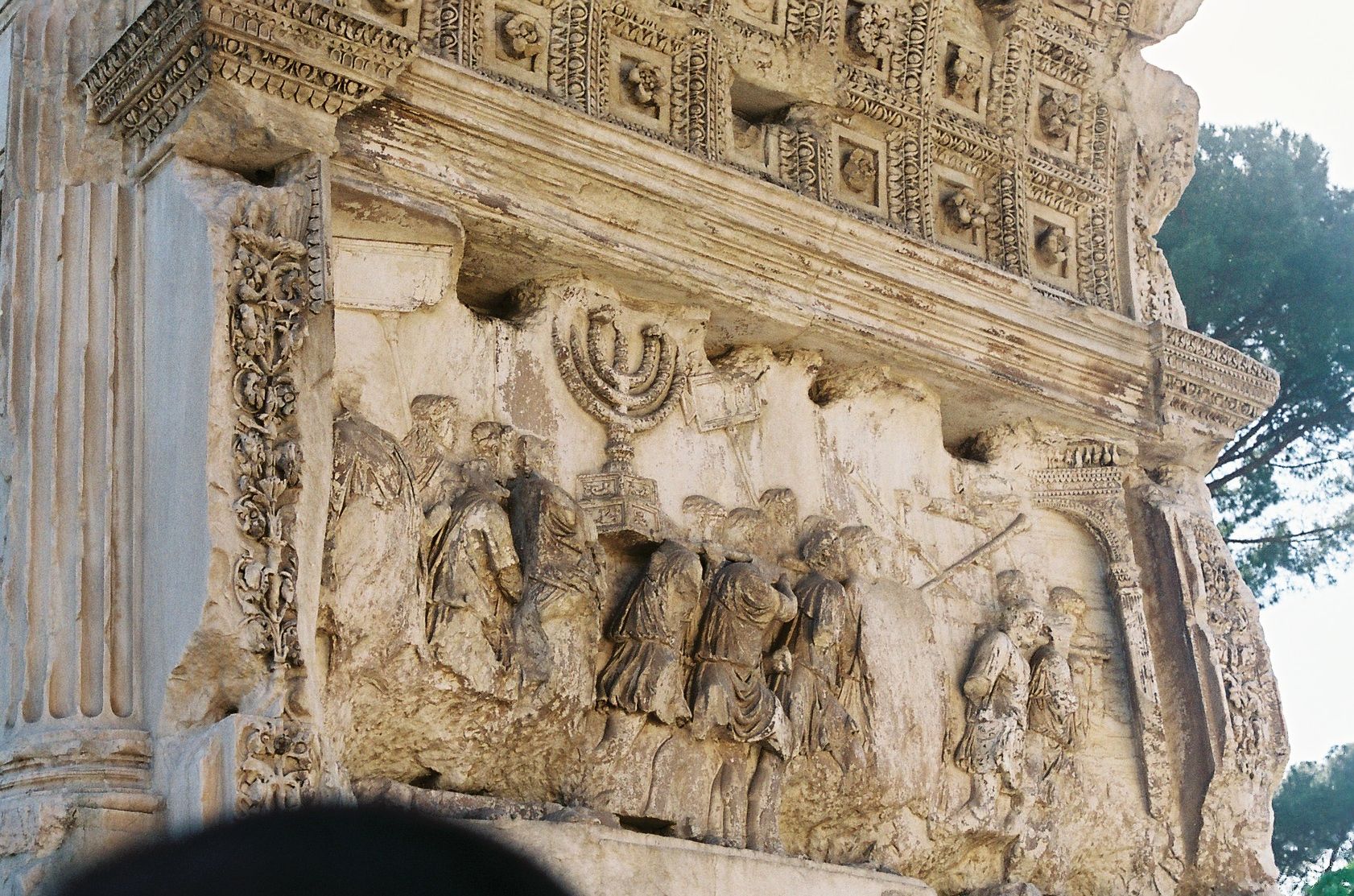
[2] Vespasian’s Triumph, the procession of slaves and spoils of war were immortalized in the arch which can still be seen in Rome today.

The world God loves.

Devastation in South Sudan

Devastation in South Sudan

Riots in Egypt in 2013

Riots in Egypt in 2013

Syrian refugees lining up for food Syrian refugees lining up for food

Destruction of HomsDestruction of Homs

Restoring creation to its true purpose

March 8, 2014

Lent 1 – 2014
Matthew 4:1-11
Marian Free

In the name of God who alone is good and holy and true. Amen.

What does one say to a father whose daughter has been brutally raped and left to die, or to a wife whose husband has been killed in a mindless attack, to a child who experiences the deprivation of a refugee camp or who witnesses the violence of war. How does one defend the notion of a God who is love in a world that is filled with hate? How can one claim that God is good, when the world that God created is anything but good? These are questions that can trouble even people of faith and which can be used as ammunition by those who want to discredit Christianity. “Why, if God is good, do such terrible things happen?” “Why, if God is all powerful, does God not step in and stop all the madness?”

These are questions that are generations old, as the Book of Genesis can attest. It is easy in a scientific age to dismiss Genesis as pure myth. For those of us who have grown up cognizant of the theory of evolution, the creation stories are just that – stories. It is difficult to defend the notion that all humanity is descendant from incestuous couplings between the off-spring of just two people. If Adam and Eve were really alone in the world, how did Cain and Seth find wives and the remaining sons and daughters find spouses?

We don’t need to puzzle over these conundrums if we accept that the account of Adam and Eve, and of their encounter with the serpent is not to tell us about the birth of humankind, but to answer the vexed question of the presence of evil in the world. The second chapter of Genesis describes an ideal world in which humanity has a perfect relationship with God. Adam and Eve, representatives of humanity have all that they need and are content until they discover that there is one thing in their world that is forbidden them. Instead of trusting that God has their well-being at heart, they form (or are led to form) the idea that God is with holding something that would empower or enrich them. Like teenagers, who think that their parents are obstructive, simply conservative or over-protective, Adam and Eve want to find out for themselves what will happen if they eat the fruit. Becoming like God is, after all a very seductive possibility – who could resist? And so do they do the one thing that they have been asked not to do. They eat the fruit and their eyes are opened. They can never regain their innocence, never again return to simple pleasures, never again be satisfied with what they have. Their lives have been blighted – thinking that they knew better than God they have put themselves into competition with God.

For the author of this story, the source of evil in the world results from humanity’s failure to trust God; their failure to accept that “obedience” to God is not intended to be burdensome or limiting, but easy to bear and liberating and their inability to comprehend that “submission” to God is not stultifying but the one thing that is required to enable us to reach our full potential as children formed in the image of God.

In the first century of our era, a similar story is played out in the desert. This time with a very different ending. In the desert, at a time when he is most vulnerable, Jesus is faced with a number of choices. He could alleviate his hunger by changing stones into bread (not too much of a stretch for someone who would shortly feed five thousand hungry people). If he jumped off the pinnacle of the temple (and was saved from harm by angels) he would draw the attention of hundreds (maybe thousands) of people – much easier than performing miracles for relatively few. Then again, why not simply take over the world – after all Jesus is the Son of God!

Surprisingly, Jesus rejects all these possibilities. Unlike his fictional forebears, Jesus understands both that “God really does know best” and that the best possible outcome will be achieved, not by taking short-cuts, but by doing things God’s way. Jesus demonstrates that a good world is a world in which God is given control. A world that is good is one that is achieved by self-denial, self-effacement and humility, not by greed or by grasping for power or desiring recognition. For the world to be the way that God intended, the world has to recognise that only God can ensure that goodness triumphs over evil, that peace reigns in place of war and that love, joy and happiness squeeze out hatred, sorrow and disquiet. If we truly want a world without despair, hardship, violence and oppression, then we must accept that only a good God can create such a world and we must allow God a free hand to rule such a world.

The account of Adam and Eve tells us that evil entered the world because humanity set itself up in opposition to God. Jesus’ temptations in the wilderness remind us that the way to heal the world is to restore it to its original condition – that of humanity in perfect harmony with its creator. Jesus demonstrates that it can be done, that our relationship with God can be restored, that it is possible to go along with rather than compete with God. It remains for us to take up the challenge and to follow his example.

Temptation has nothing to do with chocolate cake, and everything to do with setting ourselves against God. This Lent, let us examine our lives and endeavour to rid them of all that separates us from God and prevents us from restoring creation to its true purpose.

Eternity meets the present

March 2, 2014

Transfiguration – 2014
Matthew 17:1-9
Marian Free

In the name of God who reveals Godself in myriad and wonderful ways. Amen.

In Australia the highest mountain is only 2,280 meters high. In comparison, Everest is 8,850m. Brisbane is hilly, but the the “mountains” are even lower – Mt Coot-tha being only 287m in height. As a Brisbanite, it is amazing to be in Christchurch, New Zealand where the snow capped mountains appear to rise straight out of the plains to heights of up to 3754 m. The stunning view can catch you by surprise when you turn a corner. Flying over the peaks is amazing and landing on the source of a glacier makes you feel as though you are standing on the top of the world. No wonder people speak about “mountain-top” experiences. A mountain top is like nowhere else – the grandeur is overwhelming, the silence is profound and the rugged beauty unlike any other.

It is perhaps no surprise that mountains feature in both the Old and New Testaments as a place in which a person might encounter God. Elijah was in the mountains when he heard the “still, small voice of God”. Moses went up the mountain to meet face-to-face with God and it is on a mountain that Jesus meets with Moses and Elijah and is “transfigured” before his surprised and frightened disciples.

In Matthew’s Gospel, the account of the Transfiguration not only takes place on a mountain top, but it is in itself a watershed moment in the narrative. The account is positioned in such a way as to have maximum impact. Elements of the narrative point both forwards and backwards – to the beginning and end of the story as well as to the stories which form the immediate context of the account. It is as if everything that precedes the Transfiguration has led up to that moment and the Transfiguration points to everything that is to follow. The entire Gospel is concentrated in these few verses. We learn who Jesus is, his relationship to God and at the same time are confronted with the earthly reality of his impending death.

The question of Jesus’ identity has arisen in the previous chapter. Jesus has asked the disciples; “Who do people say that I am?” In that chapter there are a number of allusions or themes that recur in the story of the Transfiguration: Elijah is mentioned (as is John the Baptist), Peter is the speaker, or the spokesperson for the disciples, Jesus is identified as the Christ and the disciples have been enjoined to keep Jesus’ identity hidden. In the same chapter, Jesus reveals that he is to suffer and die and on the third day be raised from the dead. On the mountain, Elijah is present, Peter is the speaker, Jesus insists on secrecy and alludes to his death and resurrection. Peter’s claim that Jesus is the Christ is affirmed by the voice of God who speaks from the cloud.

This voice, and in particular the spoken words: “This is my beloved Son”, take us back to the beginning of the story and to Jesus’ baptism. At the same time, we are transported to the end of the story – to another mountain, to Jesus’ death, the fear of the disciples and the bystanders, the centurion’s declaration that this is the Son of God and to the white garment for which the soldiers throw dice.

As Jesus and the disciples come down the mountain, we come once again come across Elijah (and John the Baptist). We are reminded yet again that Jesus will suffer and die and once again Jesus insists on the disciples’ secrecy. By pointing backwards and forwards Matthew’s account of the Transfiguration focuses our attention on the whole of Jesus’ from beginning to end.

Not only does Matthew’s telling of the Transfiguration focus our attention on the whole gospel story from beginning to end, it also takes us back to the very beginning of God’s relationship with God’s people – the forming of a covenant in the giving of the law. The allusions to Moses and to this seminal story of the Hebrews, would have been obvious to Matthew’s Jewish readers. It was on a mountain that Moses met with God and there too that God spoke from the cloud saying: “Listen to him”. Like Jesus, Moses takes three others with him and the event occurs “after six days”. Moses is so changed by the experience that his face is radiant.

The resonances with Moses would have connected Jesus with a tradition with which Matthew’s readers would have been intimately familiar. The religious symbolism of mountain and cloud would have spoken to them of communion with God. These allusions and references would have ensured the impact of the story. Matthew’s audience would have been left in no doubt as to the identity of Jesus. He belongs in the line of the great prophets of their tradition Moses and Elijah, but he is so much more. Jesus is none other than the Son of God albeit a different Son from the one that was expected – he was to suffer and die (and on the third day rise).

From now on, both figuratively and literally, everything will go down hill. Jesus’ trajectory will lead him into conflict with the authorities, he will be brought to trial and put to death. That done, he will confound his followers and detractors alike – death will not be able to hold him, the one who is transfigured on the mountain will break through the confines and limitations of his human form and be restored not only to life, but to his heavenly existence.

The Transfiguration reveals who Jesus really is and prepares the reader for a future that will shock and confound the disciples no matter how much Jesus has tried to prepared them.

In the tradition of Elijah and Moses, and following on from John the Baptist, Jesus proves not only to be an integral part of, and development of the tradition into which he was born. At the same time, Jesus is so much more than all who have come before him. He is the pinnacle of the law, the completion and fulfillment of God’s plans for God’s people. Much of the story is yet to come, but here on the mountaintop it is encapsulated into a single moment – Jesus’ earthly life from his baptism to his death and resurrection is held in a moment of time. In that moment eternity meets the present, Jesus’ earthly presence is married with his heavenly existence, a voice from heaven confirms what the disciples already know what the centurion will soon confirm that this is indeed the Son of God.

A matter of perfection

February 21, 2014

Epiphany 7

Matthew 5:32-48

Marian Free

 In the name of Jesus our Saviour who calls us to be perfect as our Heavenly Father is perfect. Amen.

The use of non-violent resistance is usually attributed to Gandhi, who as a young English-trained lawyer, was thrown off a train in South Africa because he refused to move to the third-class carriage when he had tickets for a first class seat. This experience led Gandhi to develop “satyagraha” – a deliberate and determined nonviolent resistance to injustice. Such resistance would mean not complying with an unjust law and not reacting to the consequences of non-compliance whether it be violence, confiscation of property, angry or an attempt to discredit the opposition. The goal, it was hoped would be not winners and losers but that all parties would come to see the injustice of a particular law and that those with the power to do so, would abolish it.

In South Africa, Gandhi organised opposition to the Asiatic Registration Law. Seven years of protests and strikes finally saw the law repealed. Returning to India, Gandhi observed the injustices perpetrated by the British against the Indian people and set about trying to change the situation without resorting to violence. As we often see, it can be very difficult to ensure that protests remain non-violent and in a country as vast and as populated as India it was, at the start, difficult to prevent rioting among the people. The famous Salt March is an example of a successful non-violent protest.

Salt was a seasoning that even the poorest of Indians used. However, the British had made it illegal for anyone other than themselves to make and sell salt. In order to expose this injustice and to subvert a law that caused so much heartache Gandhi set out with 78 people to walk 200 miles to the beach. Along the way he was joined by two to three thousand more. When the group reached the beach they spent the night in prayer. In the morning Gandhi picked up a grain of salt. An act considered to be illegal. His action began a tidal wave. All over India people began to collect, make and sell salt. The British reacted by arresting those taking part.

When Gandhi announced a march on the Dharasana Saltworks he was arrested and imprisoned, but the march continued all the same. When the marchers reached the saltworks, they approached the waiting policemen 25 at a time. Watched by media from all around the world, the marchers, who did not even raise their arms to protect themselves, were beaten to the ground with clubs. When they could no longer stand, the next 25 came forward and so on, until all 2500 protestors had been beaten to the ground. Not one had shown any resistance and not one had broken the law. The news of the British brutality towards non-resisting protestors quickly spread, forcing the Vice-Roy to release Gandhi and to begin discussions with him. It took much longer for India to be granted Independence, but Gandhi had demonstrated that force was not necessary to bring about change.  (details from history1900s.about.com)

Two thousand years before another man had demonstrated peaceful resistance. In the face of charges that were false and unjust and with the prospect of a particularly nasty fate ahead, Jesus chose to remain silent. He offered no defense, he did not protest his innocence, he did not call on his disciples to fight and nor did he call on heaven to intervene.

Today’s gospel contains the second set of three anti-theses (the first of which we encountered last week). Again, Jesus is taking teaching with which his hearers would have been familiar and extending it to its logical conclusion. If love of neighbour is important, love of enemy fulfills or completes the commandment to love. Taken to its extreme love excludes no one. Just as the sun and rain do not discriminate between the good and the bad, so too authentic love does not choose who to include or exclude within its scope. After all, it is easy to love those who love us back – even the worst of sinners do that.

Inclusive “love” is expressed in a number of radical ways: by being authentic, by not returning violence with violence, by showing generosity rather than giving the bare minimum. It is this love, the going above and beyond the minimal requirements of the law that will make Jesus’ disciples more righteous than the Pharisees (5:20). Jesus’ followers will demonstrate their righteousness by fulfilling the intention rather than just the letter of the law.

Love of the kind described here is only possible if we have reached a stage in our own lives in which we no longer need the recognition and affirmation of others. It is only possible to love so carelessly and indiscriminately if our sense of self is complete and secure. We can only find the strength to be utterly selfless, if we have a true sense of who we are.

Jesus was able to speak with such authority because he was absolutely clear about who he was and what he was called to do. In our faith journey we are called to the same depth of relationship with him and with God, that we too are able to step beyond our fears and doubts, our anxieties to become perfect as our Heavenly Father is perfect (5:48).


Perfect has no part measures

February 15, 2014

Epiphany 6 – 2014

Matthew 5:21-32

Marian Free

In the name of God who loves us and expects us to share that love with others. Amen.

There used to be a playground chant used as a response to teasing or insult. I’m sure that most of you know it: “Sticks and stones may break my bones, but words will never hurt me!” I imagine it was a jingle that was taught to children by people who wanted to build their resilience and I suspect that it worked at least to some extent. That is, it taught children not to let negative comments get under their skin, but to treat them as something superficial, to have such a solid understanding of their worth as a person that the taunts could run off their back. If the child in question felt that they had been heard, the advice would have assured them that someone was on their team, recognising that the attacks were not warranted and giving them a strategy for coping[1].

The problem with the statement, “words will never hurt me” is, that in a great many cases, it is not true. Words can do as much, if not more, damage than physical attack and they leave wounds that are not immediately obvious to others – and sometimes not even to the victim.

Children who are constantly demeaned by the adults in their lives or taunted by their friends, can develop a sense of self-loathing that is difficult to turn around. Women and men who are constantly put down by their partners begin to believe that they are in fact worthless. In many cases, broken bodies heal with the proper attention, but broken minds and hearts can go unattended, often with disastrous consequences.  Thanks to social media we cannot ignore the devastating effects of on-line harassment which tragically has led young people to take their own lives. I can’t even imagine what the consequences of the current practice of “shaming” young people will have on their future lives and development.

Jesus, without the benefit of modern psychology seems to know intuitively the power of words to hurt. You have heard it said: “You shall not kill, but I say to you whoever calls their brother or sister “fool” will be liable to the Gehenna of fire.”

In this rather long selection from the Sermon on the Mount, Jesus is addressing the radical love that being his follower demands. In a series of anti-theses, “It was said – but I say,” Jesus takes the teaching of his day one step further. It is not sufficient, he suggests, to do the bare minimum. True love does not demean another person, real love is not limited to those who love us back, love that is real seeks reconciliation not conflict. Love is based on an authenticity that does not need to swear on anything, because it is always truthful.

When we think of the Sermon on the Mount, we tend to think only in terms of the beatitudes. However, the way in which Matthew has arranged his material extends the sermon from what we know as the beginning of chapter 5 to chapter 7:28. Within this section, verses 5:21-48 consist of a series of six anti-theses of which three are included in today’s gospel reading. These six anti-theses are divided into two groups of three 21-32 and 33-48. What links these six together – apart from their common structure – is the commandment to love which is implied throughout and stated explicitly in verse 43. In verse 48, Jesus’ hearers are exhorted to “be perfect as their Heavenly Father is perfect.” This conclusion makes clear that Jesus is demanding his followers to go above and beyond duty and law and to try to emulate the perfect love of God.

Throughout this section of the sermon, Jesus uses the formula: “you have heard that it was said to those of ancient times” – or an abbreviated form of the formula. It is difficult to say with certainty to which authority Jesus is referring. As there few are exact quotes Jesus could be referring to the Old Testament, to the oral tradition of the Jewish people or to the teaching of the Pharisees. One commentator, Luz, argues that on the basis of the content and the language of the sayings that the content refers to the Jewish scriptures. This, Luz argues, is consistent with Matthew’s overall view that Jesus fulfills or completes the scriptures. That does not mean that Jesus contradicts or rejects the Old Testament scriptures but rather that he expands and breathes new life into precepts that were always true. In other words Jesus rewrites what he has inherited in such a way as to bring to fulfillment or completion their true purpose.

Jesus begins with what is the only explicit quote from the Old Testament: “You have heard that it was said to those of ancient times, ‘You shall not murder’; and ‘whoever murders shall be liable to judgment.’” He then goes on to list five antitheses to this statement. In other words, Jesus takes one of the commandments (slightly expanded) and demonstrates how different it looks with love at the centre – or when a lack of love is replaced with love.

Jesus follows the commandment with three negative examples of unloving behaviour, examples of not keeping the commandment. He points out that anger and name-calling are not expressions of love. They can be just as damaging and hurtful as physical violence. He continues with two positive examples of being loving (keeping the commandment) – making peace with a fellow believer who is angry at you and coming to an agreement with someone who is taking you to court. Jesus is insinuating that while not loving is as bad as murder, loving leads to reconciliation. In other words, nothing less than unconditional love and respect fulfills the sixth commandment.

In these anti-theses, Jesus takes the law to its ultimate goal. By making clear the intention of the commandment, he introduces a radical law that is free of compromise. One is either loving or one is not.

It is relatively easy to keep the letter of the law: do not kill. It is much harder to live in such a way that no one is ever hurt by a thoughtless word or a deliberate barb. Until we are perfect, as our Heavenly Father is perfect (5:48), we must accept that our behaviour falls far short of the law, that the standard set by Jesus is one that we may never reach and that we must never judge another or consider ourselves better than another.

Perfect has no part measures.


[1] A quick look at my Facebook account tonight had two posts that I was tempted to use as examples – one on the top twenty things to say and another about breastfeeding. The latter posted on upworthy reminded me of a great response to bullying by a American broadcaster who received a nasty emai about her weight.

Wisdom and the cross

February 8, 2014

Epiphany 5

1 Corinthians 2:1-13

Marian Free 

In the name of God, whose foolishness is wiser than human wisdom. Amen.

 If someone were to ask me which of Paul’s letters was my favourite, I think I would say the first letter to the Corinthians for no other reason than it reveals Paul’s profound insight into and interpretation of the cross. The community almost certainly Gentiles so it is not surprising that, as the letter indicates, they were a little confused as to the details of this new faith. It has to be remembered that at that time, there were no Christian scriptures. New converts were entirely dependent on the teaching of itinerant preachers who did not stay long enough in the community to ensure that all possible problems had been dealt with and all questions answered. Even though Paul had spent quite some time among the Corinthians, it seems that confusion reigned once he had left the city.

Paul writes this (possibly his second)[1] letter to Corinth in response to some concerns which had been reported by Chloe’s people[2] and also in response to a letter that the community had written to him[3]. Chloe’s concerns relate to divisions and competition in the community and immoral and un-Christian behaviour. Paul’s deals with issues such as members striving to outdo each other with regard to spiritual gifts, sub-groups following different leaders, a man living with his father’s wife and believers taking one-another to court. The letter also deals with more specific issues, many of which relate to relationships and sex: how to behave towards one’s spouse (whether to have sex or not, whether one should divorce a non-believing partner) and to marry or not to marry.

Even though Paul is addressing these very specific issues, he does so in a way that is theologically insightful and which interprets the cross of Christ is such a way that he can apply it to the community life of the believers in Corinth and to his own ministry.

The Corinthians, as I have said, were a divided community who had not fully grasped Paul’s message of the gospel. Perhaps based on the religions from which they had come, they placed wisdom as the high point of their faith and competed for the distinction of being the wisest or most knowledgeable in the community. It is clear that knowledge or wisdom is at issue. More than once Paul challenges their supposed wisdom with the question: “Do you not know?” (Obviously they do not!)

In order to demonstrate that the Corinthians wisdom is only narrow and partial, Paul points out the absurd contradiction of a crucified man proving to be God’s chosen one. As he says, any self-respecting Jew would have nothing to do with such a person – let alone elevate him to the status of God’s anointed.  On the other hand Greeks would think that to have faith in such a man would be utter foolishness.  To be fair, if we were to strip away sentimentality, dogma and creed, we too would think that a crucified Saviour was both gruesome and ridiculous (and impossible to sell). God, in Christ, has done something absolutely ludicrous. This, Paul claims, this is exactly the point. Christians believe that a man who was condemned to death as a criminal was the one sent by God. God’s action begs the question: Why on earth or in heaven would God chose such a person, or allow such an awful fate to befall the one whom he sent? He provides the answer using the words of Isaiah “I will destroy the wisdom of the wise, and the discernment of the discerning I will thwart.” (29:14)

According to Paul, God’s purpose in presenting us with a crucified Saviour was precisely to confound and unsettle us, to create some sort of cognitive dissonance that would force us to rely, not on ourselves, but on God, to shake us out of our complacency and to open our eyes to a completely different way of seeing, so that instead of being limited and bound by our own intelligence and by the constraints of the human imagination, we might be freed to see and hear what God is actually doing and saying. This, the cross demonstrates, is often the exact reverse of what we expect God to say and do.

In today’s text, Paul extends his argument about the cross to his proclamation of the gospel.  Paul made no attempt to claim power or knowledge for himself as did other preachers. He did not pretend to be anything he was not but allowed the Corinthians to see his weaknesses and imperfections. Paul has no need to compete, to demonstrate that he is wiser, stronger or more knowledgeable than anyone else. He is content to be weak and inarticulate because he knows that this enables him to be used by God and to be receptive to the Spirit. What is more those who come to faith know that they have not been swayed by the power of Paul’s presence and the force of his argument, but by the power of God working through him. Their faith lies where it belongs, in God and not in Paul.

The contradiction of the cross turns everything upside down. In so doing the cross exposes the flaws in what we might have thought we knew and the limitations of human knowledge and understanding – about worldly values, wisdom and strength. Through the cross God makes us aware that our knowledge, however good, is always incomplete and imperfect. The only true wisdom is that of God and the only way to achieve that wisdom is through recognizing the vast gulf between ourselves and the creator of all – who saw fit not to stun us with a triumphant king or a military victory, but a vulnerable, friendless man who died one of the most shocking deaths of all.

The purpose of the cross is to challenge the arrogance and self-conceit that allows us to believe that we know all there is to know about God. A crucified Saviour confronts our need for certainty and our dependence on doctrine, ritual and yes, even scripture and to open us to the power of God working in us and through us.


[1] 1 Corinthians 5:9

[2] 1 Corinthians 1:11

[3] “Now concerning the matters about which you wrote” (7:1, cf 7:25, 8:1).

Eyes wide open

February 1, 2014

The Presentation of Christ in the Temple

Luke 2:22-40

Marian Free

In the name of God who opens our eyes to the wonders around us. Amen.

It sometimes seems that we live in a world of Botox, facelifts, diets and exercise programmes designed to delay aging. No one wants to grow old or to face the consequences of growing old. Youth and beauty are ideals that people want to hold onto forever. This is understandable of course. We would all like to retain our strength and vitality as long as possible and to avoid the gradual descent into dependence on others. Youth has more than good health to recommend it. Where would we be without the confidence, enthusiasm, vision and impetuousness of youth – the idealism that has yet to be dampened by the realities of the world.

This adoration of and hanging onto youth does however have a number of drawbacks the most significant of which is a failure to come face-to-face with mortality. Accepting that death is inevitable, however unpalatable that may be, has the effect of encouraging us to make the most of life. Knowing that our time is finite enables us to live more fully in the present, to accept life for what it is rather than living in constant denial and fear, focussed on putting off the inevitable rather than relaxing into the reality of our existence.

A desire to hold onto our youth may mean a failure to take on the responsibility of adulthood. We may find ourselves locked forever into a kind of teenage limbo-land, never moving forward, refusing to allow life to mould and shape us into wiser and stronger people.

In his book, Falling Upwards, Richard Rohr suggests that, spiritually speaking there are two stages of life. He makes the claim that in the first half of life we are egocentric focussed on ourselves and our own needs. At this stage of our spiritual life we are bound by external rules and regulations – only able to think in terms of black and white, right and wrong. In the second stage of our spiritual life we are able to see beyond ourselves and better able to understand that between black and white there are vast stretches of grey. Rohr argues that many people never grow beyond the first stage no matter what age they are in worldly terms. Many, he suggests, continue to put their own needs first and their ideas of right and wrong, good and evil continue to be determined by outside forces. They never manage to internalise the principles behind the rules that they learnt as a child. They are never so secure in themselves that they can let go of the need to be reassured.

Simeon and Anna are wonderful characters, and I think, examples of people in the second stage of their spiritual life. Both, in different ways, exhibit the wisdom of age, the confidence of knowing who they are, the freedom to trust in God and the willingness to see things in ways that differed from their expectations. Luke’s account is quite extraordinary. Mary and Joseph are doing something that is quite routine  – taking Jesus to the Temple in order to present him to God and make the appropriate offerings. Externally, there would have been nothing to distinguish them from the hundreds of other parents who came on a daily basis to do the very same thing. From the point of view of the average onlooker, Jesus is just another baby. Yet both Simeon and Anna recognise the infant Jesus as God’s anointed, the one who was to redeem Israel.

Unlike many others of their era, Anna and Simeon, being outward (God) focussed are not limited to one way of seeing. They expect God to send a Saviour, but they are open to God’s doing something unexpected. Neither of them is locked into one or other particular idea. They are not committed to a belief that God will send someone out of the ordinary – a king or a soldier – to lead the people to freedom. They are not taken aback by the fact that God has chosen to send a Redeemer in the form of a tiny infant – just the opposite. Their years of prayer have ensured that they are no longer self-absorbed, and they have no need for absolutes. With the wisdom of age, they know that things are not always what they seem. This is why they are able to see Jesus for who he is, even though he looks like an ordinary child of ordinary parents.

Simeon and Anna have the wisdom and patience of age. Anna has lived in the Temple for at least sixty years, Simeon seems to be aware that his end might be near.  They expect God to act, but know that God will act in God’s way and in God’s time.  Year after year, they have continued to wait and to pray, confident that God will act, content even though they do not know when.

That said, when they do see the child – God’s anointed – they demonstrate that age and wisdom have not dampened their youthful passions. They respond to the infant Jesus with all the impetuousness and enthusiasm of youth. Simeon sweeps the child away from his mother and Anna throws caution to the wind as she tells all and sundry about the child.

Anna and Simeon are among my favourite New Testament characters. They remind us that age is not something to be feared and denied but in the case of a life lived well age is liberating and ennobling – they no longer have to worry about what others might think of them and they have the wisdom and experience that can only be gained by being open to all that life has to offer. As Luke describes them, they are two people who have grown and matured in their faith to a point that their own egos and needs are unimportant, they have abandoned any need for certainty and security and have placed their trust completely in God. Lives of prayer have enabled them to allow the Holy Spirit to work through them, to make them, at the end of their lives prophets and messengers of God who announce the Saviour to the world and in so-doing have earned themselves a place in history.

Life is a progression from birth to death, certainty to uncertainty. If we hold on too tightly to youth, to security, if we try to avoid suffering and pain, we may never grow in faith and may never allow ourselves to be in-dwelt by the Holy Spirit. God will be more of an idea than a reality and we will miss the  wonders and revelations that God has in store for us.

God’s insistent call

January 25, 2014

Epiphany 3

Paul’s Conversion – Galatians 1:11-24

Marian Free

In the name of God whose insistent call draws us out of ourselves and into God’s service. Amen.

Throughout history there have been numerous accounts of people coming to faith, or coming to what they believe is a deeper and truer understanding of their faith. Many such accounts are dramatic and powerful of the sort that turn a person’s life around and lead them to serve God in ways that are risky and demanding, or that have a profound effect on the world around them and on the church in particular.

One such person was Augustine of Hippo whose spiritual quest had so far failed to satisfy him when his heart was touched by God. His own account goes like this: “As I was weeping in the bitter agony of my heart, suddenly I heard a voice from the nearby house chanting and repeating over and over again. “Pick it up and read, pick it up and read.” I began to think intently whether there might be some sort of children’s game in which such a chant is used. But I could not remember having heard of one. I checked the flood of tears and stood up. I interpreted it solely as a divine command to open the book and read the first chapter I might find. So I hurried back to the place where I had put down the book of the apostle when I got up. I seized it, opened it and in silence read the first passage on which my eyes lit. “Not in riots and drunken parties, not in eroticism and indecencies, not in strife and rivalry, but put on the Lord Jesus Christ and make no provision for the flesh in its lusts.” (Rom 13:13-14) I neither wished nor needed to read further. At once, with the last words of the sentence, it was as if a light relief from all anxiety flooded into my heart. All shadows of doubt were dispelled” (Chadwick, St Augustine’s Confessions, 152).

Much later in Germany, Martin Luther, a monk of the Augustinian Order had been going through “hell” obsessed with his own sinfulness and the impossibility of remembering all his sins in order to confess them. He tried all kinds of self-abasement to atone for his perceived sinfulness – sleeping in the snow, lying almost naked in the belfry tower at night – nothing seemed to work.

Part of his struggle was: “ to understand Paul’s expression, ‘the justice of God’ because I took it to mean that God is just and deals justly in punishing the unjust. My situation was that, although an impeccable monk I had no confidence that my merit would assuage God. Therefore I did not love a just and angry God, but rather hated and murmured against him. Night and day I pondered this until I grasped that the justice of God is that the righteousness by which through grace and sheer mercy God justifies us by faith. Thereupon I felt myself to be reborn and to have gone through open doors into Paradise. The whole of scripture took on a new meaning and whereas before the phrase ‘the righteousness of God’ had filled me with hate, now it became to me inexpressibly sweet in great love. This passage of Paul became to me a gate to heaven ….” (Bainton, R. Here I Stand – The Classic Biography of Martin Luther. Sutherland, NSW: Albatross Books, 1978, 65.)

An encounter with God not only gives relief from anxiety or opens a gate to heaven, it gives new insights, a different perspective of God and the world. An encounter with God can draw people out of their comfort zone and compel them to respond to a call on their lives that they would not have thought possible and of which they would not have believed themselves capable. The Bible is full of such figures. Abraham and Sarah who responded to a God whom they did not know and set off to a place they had never heard of. Moses who protested that he could not speak, liberated God’s people from slavery and led them to the promised land. Isaiah and Jeremiah who likewise did not believe that they were capable of the task God was asking them to fulfill challenged Kings to change their ways. Jonah who ran away, before he did what God required. Mary and Joseph who said “yes” and enabled Jesus to enter the world. Then there was the rag-tag bunch of unlikely people who left all they had to follow Jesus. People from all walks of life drawn out of their comfort zone to serve a God or a Christ whom they did or did not know who might take them who know where.

Among this great crowd of people we find Paul – that passionate, self-assured servant of God whose life radically changed direction after a “revelation of Jesus Christ”. Unlike Augustine and Luther Paul was not troubled by a search for faith or a fear that he could not please God. By all accounts Paul was a proud and confident Jew, absolutely convinced of his righteousness, his place in the world and before God. He was so sure of himself and his beliefs that he set out to persecute the misguided Jews who believed that Jesus was the Christ. He says of himself: “I advanced in Judaism beyond many among my people of the same age, for I was far more zealous for the traditions of my ancestors. If anyone else has reason to be confident in the flesh, I have more: circumcised on the eighth day, a member of the people of Israel, of the tribe of Benjamin, a Hebrew born of Hebrews; as to the law, a Pharisee; as to zeal, a persecutor of the church; as to righteousness under the law, blameless” (Phil 3:4-6). Nothing, so far as Paul could tell, was lacking in his life or faith – his credentials were impeccable, his behaviour exemplary and his actions a clear demonstration of his commitment to the faith of his fathers.

Then all this changed: “Yet whatever gains I had, these I have come to regard as loss because of Christ” (Phil 3:7). Those things of which he was so proud now count for nothing, the beliefs that led him to persecute Jesus-followers have been overturned. Now he proclaims the faith that “he once tried to destroy.” What happened? The truth is that we do not really know. Paul provides no more details than those in today’s reading from Galatians. He says only that he received a “revelation of Jesus Christ”, that “God called him through his grace and was pleased  to reveal his Son to him, so that he might proclaim him among the Gentiles,.”

We may not know what form the revelation took but we can see that the results are astounding – the one who persecuted believers is now preaching the faith he once tried to destroy. More than that, he is so convinced that there is no other way to understand God’s action in Christ that he will brook no other interpretation or accept any other view. “As we have said before, so now I repeat, if anyone proclaims to you a gospel contrary to what you received, let that one be accursed!” (Gal 1:9). Paul preaches as though his life depends on it, and in fact, he does believe that his eternal salvation is intimately bound to that of the communities who have come to faith through him.

Paul’s encounter with God sharpens and refines the faith that he has held from birth. His new, God-revealed perspective allows him to see that God always intended that Gentiles can be included in the Abrahamic faith, that believers be led by the Spirit (not determined by the law) and that God’s grace is not something to be earned, but something that is freely given. Empowered by his experience of God, driven by the conviction that he was called to share what he hd received and enabled by his passion and his great intellect, Paul became a potent force for change in the world. Some twenty years before the Gospels were written, Paul was making sense of Jesus’ life death and resurrection and finding ways in which emerging communities, made of of people who had come from different faiths and different social groupings could worship together.

Paul’s impact on the church is demonstrated by his place in the New Testament – one-fourth of which consists of letters written by or attributed to Paul. Half of the Book of Acts deals with the life and ministry of Paul which means that he accounts for one-third of the New Testament. Paul’s letters are the earliest written documents of the church and provide us with valuable information about the struggles to build community and to come to some consensus as to what faith in Jesus meant for Jew and Gentile alike.

God has ways of getting ours attention, often when we least expect it.  Whether it is a thunder-clap or a whisper, a blinding light or a moment of insight, a call to change the world or a call to change ourselves, a demand to protest against injustice or an insistence to maintain our integrity, empowerment to do something heroic for others or strength to face a personal battle. God’s insistent call will not be denied. We can run, but we cannot hide. God will find us and take us where we do not want or did to expect to go. But whatever it is, whatever God asks of us, we can be sure that God will equip us, support and sustain us and that God will never abandon us until our task is done.

A lesson in letter-writing

January 19, 2014

Epiphany 2 – 2013

1 Corinthians 1:1-9

Marian Free

In the name of God who reveals Godself in many and varied ways. Amen.

1:1 Paul, called to be an apostle of Christ Jesus by the will of God, and our brother Sosthenes, 1Cor. 1:2   To the church of God that is in Corinth, to those who are sanctified in Christ Jesus, called to be saints, together with all those who in every place call on the name of our Lord Jesus Christ, both their Lord and ours: 1Cor. 1:3   Grace to you and peace from God our Father and the Lord Jesus Christ. I give thanks to my God always for you because of the grace of God that has been given you in Christ Jesus,  5 for in every way you have been enriched in him, in speech and knowledge of every kind—  6 just as the testimony of Christ has been strengthened among you—  7 so that you are not lacking in any spiritual gift as you wait for the revealing of our Lord Jesus Christ.  8 He will also strengthen you to the end, so that you may be blameless on the day of our Lord Jesus Christ.  9 God is faithful; by him you were called into the fellowship of his Son, Jesus Christ our Lord.

John and Joan McFee have great pleasure in inviting Mark and Mary de Angelo to the wedding of their daughter Susan Maria to Joseph Anthony on July 31st at St Margaret’s Church, 4 George St, Marland, at 4:00pm and afterwards at Maryville Reception Centre, 23 Victoria St, Marland. RSVP July 17, 33458687.

Times have changed, but when I was at school children were taught how to write letters – personal letters, business letters, job applications, wedding invitations and replies and so on. Each form of communication had its own style. Even the form of letter closure differed according to how formal the letter was and the relationship between the writer and the recipient. It did (and does not) not make immediate sense that personal letters were signed “yours sincerely” and formal letters with “yours faithfully” but that is how it is done. These days there is a lot more flexibility. Text messages and emails have created entirely new and less formal styles of writing. Some forms such as Job Applications still have very structured formats – possibly even more structured than previously. So rigid are these styles that consultants exist to assist people in writing their CVs and job applications.

Given that in our more informal world we continue to have set formats for at least some style of letters, we should not be surprised that the Greek world also had criteria for writing different forms of communication. It is important to understand these forms when we read the letters in the New Testament. Paul’s letters exhibit a uniformity of style because Paul is using the letter-writing format common to educated people of his time. That said, there are some immediately obvious differences between first century Greek letters and twenty-first Australian letters. Our form of letter-writing might have an address at the beginning but with some exceptions (wedding invitations) the author is generally not identified until the end of the letter – “yours faithfully, Marian Free”. When we write a letter, we usually begin with an address to the recipient – “Dear Sam”. Greek letters reverse this pattern and begin with the name of the author and some means of identifying that person. In the letter to the Corinthians we read – “Paul, called to be an Apostle of Christ Jesus by the will of God”.

Unless we use a line that indicates what the letter is in regard to, the reader has to wait for the body of the letter to discover why we have written. In Greek letter writing and certainly in the letters of Paul, the greeting prepares us for what is to follow. In his first letter to Corinth, Paul appears to be laying claim to his authority. Not only is he “an apostle of Christ Jesus”, he is an apostle by “the will of God”. This provides much more detail than is provided in the first letter to the Thessalonians which reads very simply: “Paul, Silvanus, and Timothy”. It is only as the letter progresses that we understand that Paul is drawing on his God-given authority in order to pull the Corinthians into line. No doubt the Corinthians were immediately aware of the tone that Paul was setting. He is making it clear that he is an apostle and that his authority comes directly from God.

Having begun with an introduction to the author, the letter introduces us to the recipients. Again, if we compare 1 Corinthians with 1 Thessalonians, we notice a significant difference. The Thessalonians are addressed quite simply: “To the church of the Thessalonians in God the Father and the Lord Jesus Christ”. The letter to Corinth includes much more detail:  “To the church of God that is in Corinth, to those who are sanctified in Christ Jesus, called to be saints, together with all those who in every place call on the name of our Lord Jesus Christ, both their Lord and ours.” Compared with the Thessalonians where the address is purely descriptive, here there is not only more detail, there is a degree of flattery. Those in Corinth are described as “sanctified, called to be saints” what is more, they are skilfully connected with all the other believing communities,  “together with all those who in every place call on the name of our Lord Jesus Christ, both their Lord and ours.” How do we explain the difference in detail? Is it because the lives of the Corinthians exhibit a deeper spirituality than those in Thessalonica? As we read on, this conclusion seems unlikely. The letter reveals that the Corinthians are a divided congregation who compete with each other and whose members engage in immoral behaviour. A more plausible explanation for the long greeting is that Paul, who will later castigate this community, is using both flattery (saints, sanctified) and coercion (with all who call on the name of our Lord). Paul uses flattery because he wants them on side, open to what he has to say. At the same time, he is drawing on the practices of all the other churches to pull them into line, to make them conform.

As you can see, already, in just three verses, we suspect that Paul has something difficult to tell the Corinthians and that he will use the example of other churches to pressure them to change their behaviour. Paul follows the introduction with a standard greeting: “Grace to you and peace.” Paul adapts the usual greeting (charein – hello) to a term associated with the gospel (charis – grace) and adds the Semitic greeting of peace (shalom).

In most letters, the greeting is followed by a Thanksgiving. This serves to get the reader on side and to ensure that they are receptive to what is to follow. (The absence of a Thanksgiving rings alarm bells. For example, there is no thanksgiving in the letter to the Galatians. As we read that letter we can see that Paul has nothing for which to be thankful – he is very angry.)

Again, the content of the thanksgiving provides an introduction to the content of the letter as a whole. In this instance Paul says: “you have been enriched in him in speech and knowledge of every kind”; “you are not lacking in any spiritual gift”. As we read on, we cannot help but wonder if Paul is being sarcastic here. The Corinthians it seems put a great emphasis on wisdom, knowledge and spiritual gifts. They think that they have already achieved some sort of spiritual perfection (“Already you are rich! Quite apart from us you have become kings!” 4:8). In chapter 12, Paul tries to put their spiritual gifts into perspective – no gift is more significant than any other. Over and over again, Paul confronts the arrogance of the Corinthians, their belief in their own wisdom and knowledge and the fact that they compete with one another in areas of knowledge and spirituality. The refrain: “Do you not know?” is used repeatedly in Chapter 6 in which Paul exposes the fact that they do not know. “Do you not know the saints will judge the world?” Do you not know that we are to judge angels?” (6:2,3) and so on.

A good way to begin to understand Paul and his letters is to read the Greetings and Thanksgivings of his letters and to identify the similarities and differences between them. In so doing, it is essential to remember that Paul did not set out to write theology. He wrote letters to communities of faith, communities that – with the exception of Romans – he himself founded. Paul’s intention and deepest desire is that these communities share his faith, his knowledge of God and Christ, his conviction that faith in Jesus leads to freedom and that a life that is Spirit-led is a life that most closely conforms to the will of God. What is amazing is that these letters that were written to encourage, to chide and to correct, express the most profound theology and that over two thousand years later, these letters have become an integral part of our Holy Scriptures. Not before or since has one person’s letter-writing had such a profound effect.