Posts Tagged ‘Abraham’

Being reborn – with Nicodemus

February 28, 2026

Lent 2 – 2026

John 3:1-17

Marian Free

In the name of God who calls us out of darkness into light. Amen.

He dunks me. He leans me back into the darkening water and I go under.

I feel like I’m drowning but I know I’ve got breath. There’s something choking me, something’s trying to get out. I start to panic, and with the water flowing over me, I cough up this ball of darkness and pain and regret– this wad of sorrow and sadness, that holds every dumb thing I ever did and more – and I spit it into the water with the last of the air in my lungs. And I know I’m gonna die. The water’s gone black and I don’t know where the surface is. I got nothing left and I just want to drift away like a leaf in the current.

Then he lifts me out of the water, and I’m hacking for breath and wondering why I’m alive and I just laugh. Laugh like I’ve never laughed in my life – or not since I was a kid. Like a dam breaking. Like a chain snapping. Like a kid who’s just heard the words he’s been longing to hear all his life. 

Stephen Daughtry, in his Lenten Study Holiday – Stories of Jesus set in an Australian Landscape, imagines what it might feel like to have been baptised by John the Baptist.  For his character, baptism was a dramatic, wrenching, life-changing experience – a movement from dark to light, from death to life, a form of rebirth which changes him forever[1].

For some people, meeting Jesus or experiencing the Holy Spirit for the first time is like being hit by a train. It is an overwhelming experience – like having one’s eyes opened, seeing oneself clearly (the bad and the good) and, most importantly, knowing for certain that God’s love overlooks all their faults and that they are held, now and forever in God’s loving arms. No wonder such people talk about being born again. They have left behind the person they once were and have stepped forward into a new life in which God (Father, Son and Spirit) is the centre and the guiding force.

Not all of us have such a powerful beginning to our faith. Those of us who were born into Christian families and who were baptised as infants (without our knowledge or consent) may not have a sensational conversion experience or be able to point to a specific time and place when we knew for sure that we believed and that we were loved, it may have come upon us gradually or it may be that there was never a time when you did not believe.

For all of us though, those who have a sudden conviction that they are loved by God, those who come to that belief over time and those who always knew, faith is not a one-off event, but a journey, a growing into the fulness of Christ which involves a series of rebirths as we constantly shed our old selves, allowing ourselves to be renewed so that we might become more truly children of God.

Abram is a good example of this step-by-step growth in faith. Abraham was minding his own business in Ur, almost certainly worshiping the gods of his own people. Out of nowhere God, Yahweh, asks him to pick up everything – his wife, his servants, his animals and all his goods – and to leave behind everything that he knew and loved – his family, his friends, the customs of his people – and to travel to God knew where. Without question (at least as the story tells it), Abram does just that – a form of re-birth.

Over time Abram’s confidence wavers. He fathers a child with Hagar instead of trusting that God will bless Sarai with a child. God appears to Abram and makes a covenant with him, giving him a new name – if you like, a second re-birth. There are many twists in the story, but a constant is Abraham’s faith and his continual dying and rebirth.

Another character who illustrates the idea of faith as a journey, or as a gradual unfolding, is Nicodemus whom we meet in John’s gospel today. Even at this early stage in the gospel Nicodemus recognises that Jesus comes from God, but he is not willing to commit. He has yet to understand that faith in Jesus must be wholehearted. It means letting go of his past ways of thinking and allowing himself to be guided by the Spirit. In other words, as Jesus says, he must be born again. 

Thankfully, that is not the end of the story, Jesus has made an impression. Nicodemus might be puzzled, but he can’t dismiss Jesus. We meet him again in chapter 7. Jesus is in Jerusalem. His influence on the crowds and the content of his teaching is causing the Chief Priests and Pharisees a great deal of anxiety (it contradicts what they teach, and the enthusiasm of the crowds might capture the attention of the Romans). He must be stopped! So they send soldiers to arrest him. Only Nicodemus speaks for Jesus, reminding his peers that the law does not judge people without giving them a trial. (Nicodemus has moved from secretly meeting Jesus at night, to publicly defending him – a form of rebirth.)

We meet Nicodemus for the last time on the evening of the crucifixion. Joseph of Arimathea has received permission to take Jesus’ body away. He is met by Nicodemus who brings with him about a hundred pounds of myrrh and aloes – in today’s terms $150-200,000 worth of spices! By now he is fully committed – another rebirth. No doubt Nicodemus experiences many more rebirths before his final birth into eternal life, but we do not know the end of the story.

One way of looking at Lent is to see it as a preparation for rebirth, as a letting go of the things that hold us back so that we can restart our relationship with God, released from the burdens that have kept us apart. Whatever discipline we have taken up for Lent we have done so in the hope that we will emerge at Easter as a people who have been changed and renewed. Whether we have chosen to give something up, to let something go, to expand our minds through reading, or to deepen our understand through prayer; we will come to Easter with new insights about ourselves and about our relationship with God that will enable us to embrace more fully the life that God gives us and to be formed more completely into the image of Christ.

On Good Friday we can say ‘goodbye’ to the person we were when Lent began so that on Easter Day, we can be born again into resurrection life. And we will do this again and again, every Lent, every Good Friday, every Easter Day as day by day, year by year, we are reborn, transformed into children of God. 


[1] Daughtry, Stephen. 2025. Holiday Stories of Jesus set in an Australian Landscape. Sydney: A Mission Australia publication. The Anglican Board of Mission.
Reimagine the Divine

March 3, 2015

Imagining the Divine – God in the 21st Century

Evensong – March 1, St John’s Cathedral

Marian Free


May my spoken word, lead us through the written Word, to encounter the Living Word, even Jesus Christ our Saviour. Amen.


If you were in church this morning you would have heard a reading from Genesis 16: 1-7, 15-16. Unless you were at Hamilton, you will not have heard how the story continues. Verse 17 says: “Abraham fell on his face and laughed.” He fell on his face and laughed. God tells Abraham that he will have a son and this is Abraham’s response. He doesn’t show his disbelief by rolling his eyes or snickering behind his hand. He doesn’t wait till God is out of earshot and share the joke with his friend. There is nothing subtle or discreet about Abraham’s incredulity. This is a laugh from the depths of his being, he is so overcome by the ridiculous nature of God’s promise that he laughs out right out loud, he guffaws. Abraham is so overcome with mirth that he bends over double, falls to the ground. This is rib-tickling, thigh slapping, laugh until you are ill amusement – and it is directed at God.

Perhaps you are thinking that this is an odd place to begin a discussion on God in the 21st century – to choose a story, which if it is historical is something like 4,000 years old. You are right – what do miracles and Hebrew characters have to do with imagining the divine today. Haven’t we moved past the view of God presented in what we know as the Old Testament? Don’t we need a new and refreshing vision?

Obviously, I’m not sure. We neglect the Old Testament at our peril. Our best imaginings cannot imagine the God depicted here. In fact, I would go so far as to say that our imaginations have been severely limited, even impoverished by our distrust of the God of the Old Testament. God, as envisioned by the writers of the Old Testament is at once approachable and remote, passionate and compassionate, loving and firm, constant and unpredictable. There is almost no limit to the imagery that is called into use to try to capture something of the experience of God. God is described and imagined as breasts, as a mother bear, as an eagle, a fortress, a rock, a tree, a king and a shepherd. In order to try to capture something of the nature of God imagery from the real world – both animate and inanimate are used.

Unfortunately, the New Testament does not provide us with such a wealth of imagery. Apart from the Gospel of John which provides us with images such as light and life, the predominant way of thinking about and addressing God in the New Testament was Father. This, until the feminist objections of the 1980’s is, with some notable exceptions how God has been addressed and imagined ever since.

Language is a powerful tool, it describes our reality and defines our reality. For good and for ill our language for God determines the way in which we understand and relate to God. I would contend that for two thousand years, with some notable exceptions there has been a failure of imagination, a limit to the ways in which the institution speaks of God and therefore in the way that many people think of God. Just to give one example, the stereotype of God that is rejected by the new atheists, is a God whom we might recognise from our Sunday School days, but that is a God whom most of us (along with them) have firmly renounced and rejected.

Where to go then in the twenty-first century? How might we imagine God anew? Why are we imagining God – for ourselves or for others? Imagining the divine in the twenty-first century is a much more profound issue than I had realised when I agreed to preach this evening and has given me much pause for thought – not least that a response to the topic required a great deal more research than I allowed for. What language could begin to express the extraordinary, miraculous, ever-present nature of God? If I/we were going to try to find images to which the twenty-first century mind could relate, what would they be? Some of the biblical language might be able to be put to good use, but a great deal has become obsolete. Few of us have direct experience of a shepherd, let alone a mother bear. In today’s language of kingship conjures up ideas of, at best paternalism and at worst oppression and rocks are simply that – geological formations.

I found myself wondering what, in terms of modern experience, would be the most amazing, most indescribable, the most pervasive and the most impossible reality of today’s world? What in today’s world knows all about me, and knows where I am at any one time?

In other words, apart from God what is it about the twenty-first century that absolutely astounds me. My answer – the mobile phone. With this phone I can speak to anyone at anytime. I can even speak face-to-face with someone in another country. I can check my emails and read my bible (in whatever language I choose). I can get directions to anywhere that I wish to go and ask the phone to take me there. I can book air tickets. I can take photos and look at photos, find out what the weather is going to be – here, in Hamburg, in London or anywhere else that I choose. I can point it at the night sky and it will tell me what I am looking at. I can buy books or borrow books from the library and read them. I can draw, write, play games, listen to music, make music, watch TV. I can write my sermons and upload them to my website. If the screen is too small, I can attach a device to my television and use it as the screen. If the sound is too poor I can connect to my amplifier and my fancy speakers. AND because my devices are synched, all of this is possible on my iPad and my computer. In fact, I can do almost anything that I would wish to do – the limit is only someone else’s imagination.

All this is possible because of something that is diffuse and incomprehensible and completely invisible to me – the internet and “the cloud”.

The world is changing so rapidly that most of us cannot keep up. WE are living in a world of radical change and radical personal transformation. In fact, Prof Anthony Elliott [1] in a lecture aired on Big Ideas during the week, suggests that as a result of what he calls the “reinvention revolution” there is an increasing cultural anxiety. Women and men, he says, feel that they need to undertake a process of recalibration in order to confront the challenges of everyday living, to keep up with the latest changes. The problem is that there is always the worry that that won’t be enough for them to face the challenges of tomorrow. It is no wonder that the transformation industry is a multi-billion dollar industry.

While men and women are anxious about change and the need to keep up, they also seem to find it strangely liberating. Elliott, reporting on the work of Thrift, a British sociologist, says “women and men today are no longer blindly just following customs and traditions and pre-ordained ways of doing things. They are trying things out and trying things on as never before. They are not waiting for permission in either their personal or professional life as to how to get on to what they need to do. They are embracing reinvention societies in such a way as to engage in ongoing, incessant experimentation. These are not random, but are associated with various socio-technical systems – touch screens, virtual landscapes, location tagging, augmented realities and so on. iPhones and other things we carry strapped to our bodies are rearranging the whole social cartography.”

Reimagining God in this ever changing, inter-connected, over-anxious, app driven world is no easy task. The story of Abraham with which I began suggests that we can afford to lighten up. As we begin to explore the divine in the twenty first century, perhaps one of the things we can do is to take ourselves less seriously, stop over-thinking things. Maybe it is time to relax a bit, to allow images to form and re-form, to give ourselves some freedom to listen to and engage with the world around us and, instead of thinking so much, simply open ourselves to what is utterly other and see how that otherness is being revealed in the world today.

In a world that embraces change and yet finds the need to do so a source of anxiety, perhaps we can help women and men imagine a God who is both stable and ever-changing, both at the centre and at the periphery, who loves us as we are and yet challenges to be all that we can be. In a world driven by socio-technology it may be that we need to imagine God as personal and relational, as always present and accessible, as a source of strength and a well-spring of creativity. A God who extends us and enables us to do more than we thought possible.

In the final analysis, God simply is, and as such God always has and always will define all our attempts to reimagine.

[1] Lecture presented at ANU, aired on Big Ideas (Radio National) Tuesday 24th February, 2015.

The heavens torn asunder

January 10, 2015

Baptism of Jesus – 2015

Mark 1:4-11 (Genesis 1:1-8)

Marian Free

May my spoken word, lead us through the written Word, to encounter the Living Word, even Jesus Christ our Saviour. Amen.

It is difficult to let go of the idea that heaven is above us and that hell – if such a place exists – is below. Even though modern science has revealed the vastness of the universe, and even though we know that the nearest star is light years away, most of us still think of heaven as somewhere above the sky. One reason for such a view is that our image of heaven is formed by our biblical texts that in turn are dependent on a view of the world that dominated in ancient times. In this period of time, it was believed that the earth sat on pillars above the waters below and that the sky was a vast dome that held back the waters above. The sun, moon and stars hung from this dome and the rain fell through holes in the dome.

In Hebrew the word for this dome is raqia. This is the same word that is used for God’s chariot or for the platform for God’s throne. It seems that in Hebrew thought the sky – what was for them the roof of the earth – was for God the floor of heaven. That is not to say that they understood God to be confined to heaven or that they thought that the dome was impermeable, preventing movement in either direction. After all, God had conversations with Abraham and Moses spoke to God face-to-face. It does seem however, that communication between God and humankind generally occurred through individuals such as the patriarchs or the prophets or through intermediaries such as angels. In any event, over time the communication between heaven and earth became ritualized and instead of communication being a two-way conversation, it was limited to an action that took place once a year – first of all in the tent of meeting and then in the Temple.

The design of these places of worship is important, in particular the separation of the sanctuary, which is the place of meeting. In Exodus God says to Moses: “And have them make me a sanctuary. There I will meet you and I will give you all my commands for the Israelites.” Moses used to meet God in the sanctuary on a regular basis but, according to the Book of Leviticus this place, which was separated by a curtain from the remainder of the tent of meeting, was considered so holy that it was only entered once and year and then only by the current High Priest. On the Day of Atonement, the High Priest would enter the Holy of Holies surrounded by a cloud of incense that would prevent him from seeing God. Inside the sanctuary he would sprinkle blood on and before the mercy seat. This was to cleanse the tent of the sins of the people and to make it possible for God to continue to dwell in their midst. It was not a conversation between the priest and God as it had been in Moses’ day. The Temple, when it was built, was built on the same design as the Tent of meeting. Again the sanctuary was separated from the inner court by a curtain and entered only once a year by the High Priest. The relationship between God and the people at this time was not personal but formal and dictated by ritual.

All of this background information is essential if we are to understand Mark’s account of Jesus’ baptism.

Mark tells us that as Jesus was coming out of the water, he saw the heavens torn asunder and hears the voice of God saying: “You are my beloved Son in whom I am well pleased.” It is true that in this account only Jesus sees the heavens torn and hears the voice of God, but Mark’s audience hear the words as if they too see and hear, and the implication of what is happening is not lost on them. The violent tearing of the heavens suggests to them that the barrier that existed between them and heaven has been broken irreparably. The dome is no longer intact. God has broken through into the world and nothing will ever be the same. From now on the way in which God communicates with the world will be radically different. God will be accessible to all people, not to just a few.

That this is Mark’s intended meaning is made clear at the conclusion of the gospel when another violent tearing destroys the curtain in the Temple – that which had separated the people from the sanctuary. Mark records that when Jesus took his last breath, the veil (curtain) in the Temple was torn from top to bottom making clear that no longer is communication with God limited to just one person just once a year. All people now have access to and can communicate directly with God.

Even though Mark does not record Jesus’ birth, in only a few verses he makes it obvious that in Jesus, God has radically entered the world. God’s heaven has been opened in a way that could not previously have been imagined and the violence of the opening suggests that it will not easily be closed again. The barriers (real or perceived) between earth and heaven have been destroyed. All of humanity is now able to speak directly to God without the need of an intermediary.

God has done everything possible to open channels of communication with us. It is up to us to make good use of them.

God loves the world?

March 15, 2014

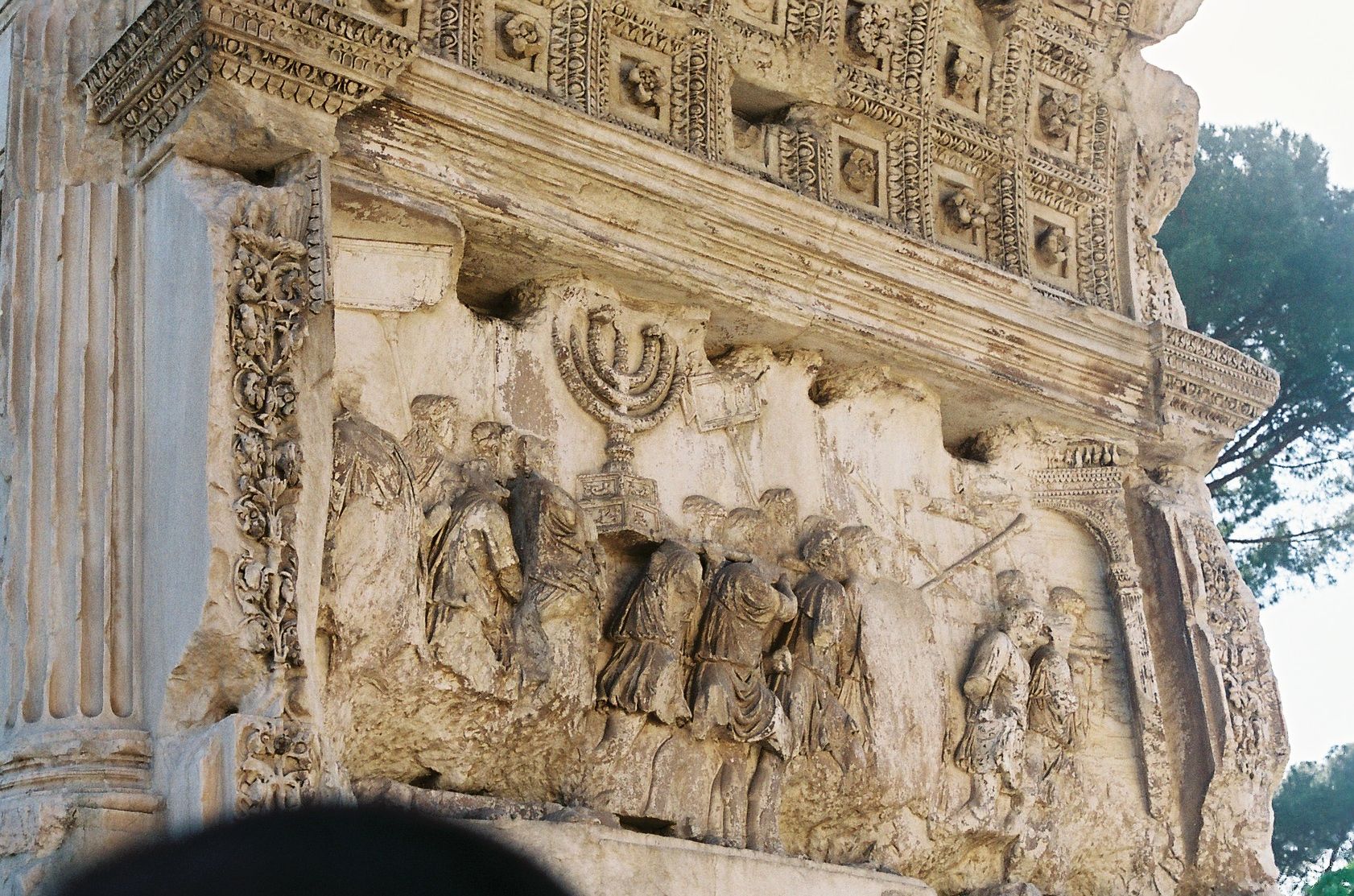
Titus' arch

Titus’ arch

Lent 2. 2014

John 3:1-17 (Genesis 12:1-4a; Romans 4:1-17)

Marian Free

In the name of God whose love embraces a world torn apart by violence, hatred, fear and greed. Amen.

During the week I came across a graphic description of the siege of Jerusalem in 70 CE. The author, Reza Aslan imaginatively recreates the turmoil and unrest of first century Palestine, the various revolts by “bandits” against the Roman rulers and how finally this ferment boiled over in the centre of the Hebrew faith – Jerusalem[1]. Aslan records the failure of successive Roman governors, the discontent of the people, the uprisings, the factions and the focus on Jerusalem and the Temple. Then he goes on to describe the callous ruthlessness of the Roman reaction.

When the Israelites expelled the Romans from Jerusalem, Vespasian was sent to quell the rebellion and restore order. Approaching Jerusalem from north and south, Vespasian and his son Titus retook control of all but Judea. In 68 CE Vespasian was distracted by the death of Nero and his ambition to fill that role. He abandoned the battle and returned to Rome where he was declared Emperor. The people of Rome were restless and Vespasian realized that he needed a decisive victory (or Triumph) to consolidate his hold on the office and to demonstrate his authority over the whole of the Roman Empire.

The revolt in Palestine provided the perfect scenario to show of what he was made. Vespasian decided not only restore order and reclaim authority in the nation, but to utterly destroy it – its people and, more particularly its God. To this end Vespasian dispatched his son Titus to bring the Hebrews to their knees. Titus set siege to Jerusalem, cut off the water supply and ensured that no one could go in or out. Those who did escape, he crucified in full view of the city. Slowly the people starved to death. They ate grass and cow dung and chewed the leather from their belts and shoes. Soon the dead were piled high in the streets, as there was nowhere to bury them. Titus needed nothing more for victory, but his task was to annihilate the people completely. His troops stormed the city, slaying men, women and children and burning the city to the ground so nothing remained[2].

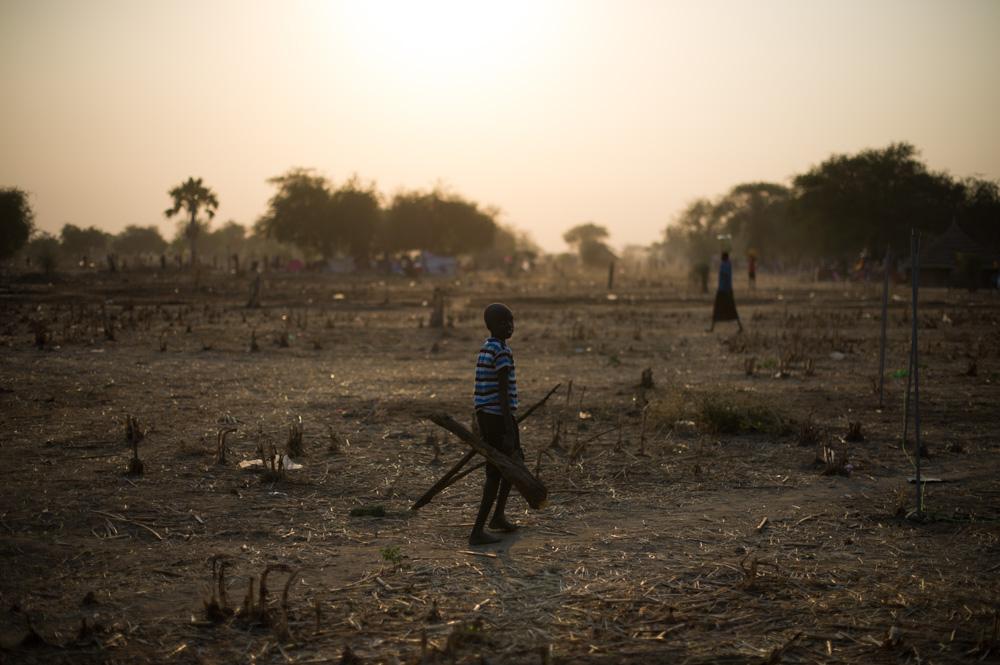
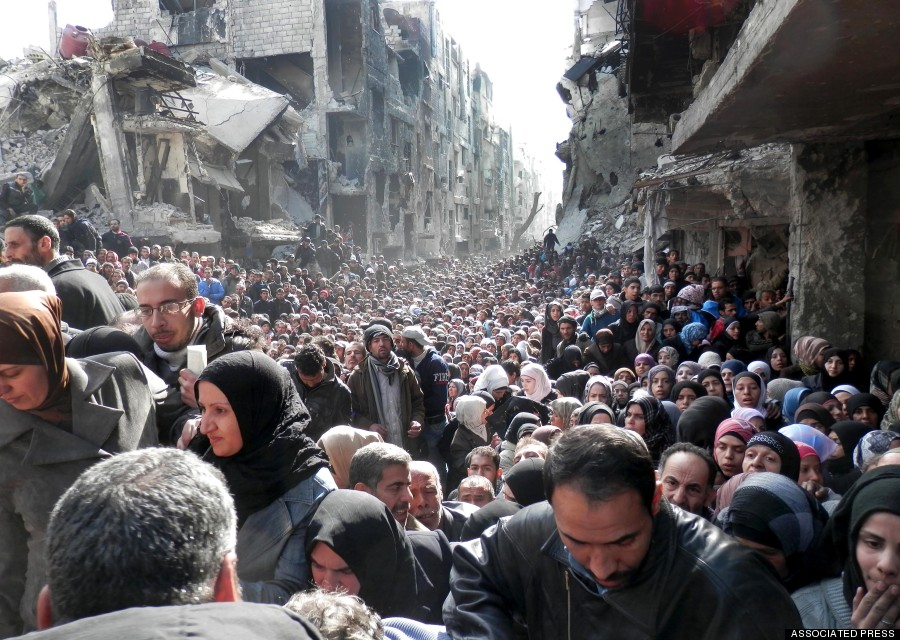
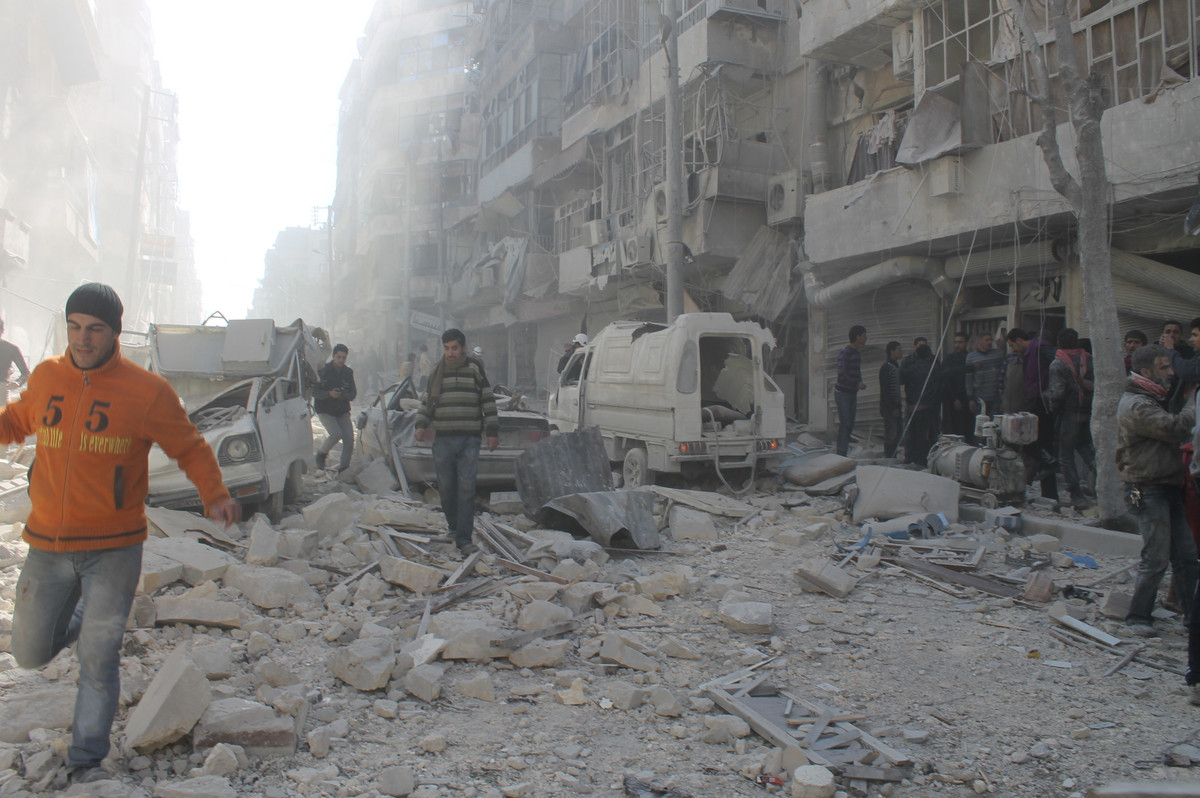
The world doesn’t change. The situation of those imprisoned in Jerusalem in 70 CE is not too different from that of those in many parts of Syria in 2014. The city of Homs has been under siege for two years now. Its inhabitants – men, women and children – have lived on grass boiled in water and killed cats for food. Schools are shut, only one hospital remains open and there is no electricity or running water. Those who emerged during the recent cease-fire were gaunt and hollow-cheeked, often caked with dirt. No one has been excluded from the horror, not the elderly, the disabled or the very young.

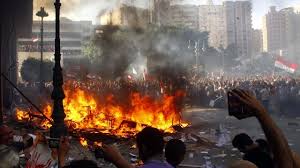
Syria is perhaps the most graphic example of a world gone wrong, of the way in which human beings can inflict the most horrific suffering on their brothers and sisters and of the way in which our primal fears can boil over into violence and destruction. As the world waits with bated breath to see what will be the outcome of the strife in the Ukraine, we cannot overlook the fact that Syria and the Ukraine are not isolated situations but are the face of a world in crisis – a world which reveals the very worst that humankind can be. Even to begin to list the nations at war or in the grip of civil strife would take too long. What is more, our minds simply cannot encompass the scale of suffering on a global scale. War and civil strife are just one example of a world that bears no hint of a good creator God. When we add to that human trafficking, extreme poverty, corrupt or ineffectual government, we could be tempted to ask: “Is this the world that God loves so much that he sent his Son?”

The answer is of course a resounding “yes”!

Today’s readings remind us that God’s love is not restricted to a privileged few or to those parts of the world that are free from strife and turmoil. God’s love reaches out to include the whole world.

The biblical story of God’s inclusive love begins in Genesis with Abraham and Sarah (12:1-4a). When God calls Abraham, God’s intention is clear – it is to make Abraham the Father of many nations – “in you all the families of the world will be blessed”. Initially it appears that through Abraham, God has chosen a select group of people for Godself. Certainly that is how the story plays out for centuries. All the while though there are constant hints that God’s love extends farther and embraces those who do not belong to the family of Abraham. Consider the following for example. Rahab was an outsider, yet it was she who enabled the victory at Jericho and facilitated entry into the Promised Land. Ruth, the forebear of Jesus was not a member of the Hebrew nation. God relented and saved the Gentiles city of Nineveh (despite Jonah’s objection) and the Psalmist tells us that all nations will flock to Jerusalem. Even Cyrus the King of Babylon is called God’s “anointed”. It is clear that God’s love and attention was not focused on the children of Abraham alone.

Paul picks up on this theme in both the letter to the Romans (4:1-17) and the letter to the Galatians (3:3-9). It was, he informs his readers, always God’s intention to include all people within the ambit of God’s love. No one is privileged in God’s eyes, all are equally worthy of God’s loving attention. “God is the father of all of us (Rom 4:16).”

It comes as no surprise then to read the familiar words of John 3:16 “God so loved the world that he sent his only Son”.

God’s love in not (and never was) restricted to a limited few, to those who belong to a particular group or to those who behave in a certain prescribed way. God’s love doesn’t pick and choose and it certainly does not wait until the world is ready or worthy of that love. The Palestine to whom God sent his Son was far from an ideal microcosm of human existence – far from it. In the first century, the Hebrew people were compromised, conflicted and divided, their priests were, at best, servants of Rome and, at worst, men seeking wealth and aggrandizement. Despite all this, it was to such a broken and imperfect people that God chose to send his Son.

Nothing much has changed – the world that God loves continues to be a long way from perfect but that doesn’t stop God from loving. However unlikely it seems, however undeserving the world continues to be, God reaches out in love giving us the opportunity for salvation. What it takes is for us to respond, for us to choose light over darkness, salvation not destruction.

God so loves the world – how then should the world respond?


[1] Aslan, Reza, Zealot – the life and times of Jesus of Nazareth. New York: Random House, 2013, 60ff.

[2] Vespasian’s Triumph, the procession of slaves and spoils of war were immortalized in the arch which can still be seen in Rome today.

The world God loves.

Devastation in South Sudan

Devastation in South Sudan

Riots in Egypt in 2013

Riots in Egypt in 2013

Syrian refugees lining up for food Syrian refugees lining up for food

Destruction of HomsDestruction of Homs

God’s insistent call

January 25, 2014

Epiphany 3

Paul’s Conversion – Galatians 1:11-24

Marian Free

In the name of God whose insistent call draws us out of ourselves and into God’s service. Amen.

Throughout history there have been numerous accounts of people coming to faith, or coming to what they believe is a deeper and truer understanding of their faith. Many such accounts are dramatic and powerful of the sort that turn a person’s life around and lead them to serve God in ways that are risky and demanding, or that have a profound effect on the world around them and on the church in particular.

One such person was Augustine of Hippo whose spiritual quest had so far failed to satisfy him when his heart was touched by God. His own account goes like this: “As I was weeping in the bitter agony of my heart, suddenly I heard a voice from the nearby house chanting and repeating over and over again. “Pick it up and read, pick it up and read.” I began to think intently whether there might be some sort of children’s game in which such a chant is used. But I could not remember having heard of one. I checked the flood of tears and stood up. I interpreted it solely as a divine command to open the book and read the first chapter I might find. So I hurried back to the place where I had put down the book of the apostle when I got up. I seized it, opened it and in silence read the first passage on which my eyes lit. “Not in riots and drunken parties, not in eroticism and indecencies, not in strife and rivalry, but put on the Lord Jesus Christ and make no provision for the flesh in its lusts.” (Rom 13:13-14) I neither wished nor needed to read further. At once, with the last words of the sentence, it was as if a light relief from all anxiety flooded into my heart. All shadows of doubt were dispelled” (Chadwick, St Augustines Confessions, 152).

Much later in Germany, Martin Luther, a monk of the Augustinian Order had been going through “hell” obsessed with his own sinfulness and the impossibility of remembering all his sins in order to confess them. He tried all kinds of self-abasement to atone for his perceived sinfulness – sleeping in the snow, lying almost naked in the belfry tower at night – nothing seemed to work.

Part of his struggle was: “ to understand Paul’s expression, ‘the justice of God’ because I took it to mean that God is just and deals justly in punishing the unjust. My situation was that, although an impeccable monk I had no confidence that my merit would assuage God. Therefore I did not love a just and angry God, but rather hated and murmured against him. Night and day I pondered this until I grasped that the justice of God is that the righteousness by which through grace and sheer mercy God justifies us by faith. Thereupon I felt myself to be reborn and to have gone through open doors into Paradise. The whole of scripture took on a new meaning and whereas before the phrase ‘the righteousness of God’ had filled me with hate, now it became to me inexpressibly sweet in great love. This passage of Paul became to me a gate to heaven ….” (Bainton, R. Here I Stand – The Classic Biography of Martin Luther. Sutherland, NSW: Albatross Books, 1978, 65.)

An encounter with God not only gives relief from anxiety or opens a gate to heaven, it gives new insights, a different perspective of God and the world. An encounter with God can draw people out of their comfort zone and compel them to respond to a call on their lives that they would not have thought possible and of which they would not have believed themselves capable. The Bible is full of such figures. Abraham and Sarah who responded to a God whom they did not know and set off to a place they had never heard of. Moses who protested that he could not speak, liberated God’s people from slavery and led them to the promised land. Isaiah and Jeremiah who likewise did not believe that they were capable of the task God was asking them to fulfill challenged Kings to change their ways. Jonah who ran away, before he did what God required. Mary and Joseph who said “yes” and enabled Jesus to enter the world. Then there was the rag-tag bunch of unlikely people who left all they had to follow Jesus. People from all walks of life drawn out of their comfort zone to serve a God or a Christ whom they did or did not know who might take them who know where.

Among this great crowd of people we find Paul – that passionate, self-assured servant of God whose life radically changed direction after a “revelation of Jesus Christ”. Unlike Augustine and Luther Paul was not troubled by a search for faith or a fear that he could not please God. By all accounts Paul was a proud and confident Jew, absolutely convinced of his righteousness, his place in the world and before God. He was so sure of himself and his beliefs that he set out to persecute the misguided Jews who believed that Jesus was the Christ. He says of himself: “I advanced in Judaism beyond many among my people of the same age, for I was far more zealous for the traditions of my ancestors. If anyone else has reason to be confident in the flesh, I have more: circumcised on the eighth day, a member of the people of Israel, of the tribe of Benjamin, a Hebrew born of Hebrews; as to the law, a Pharisee; as to zeal, a persecutor of the church; as to righteousness under the law, blameless” (Phil 3:4-6). Nothing, so far as Paul could tell, was lacking in his life or faith – his credentials were impeccable, his behaviour exemplary and his actions a clear demonstration of his commitment to the faith of his fathers.

Then all this changed: “Yet whatever gains I had, these I have come to regard as loss because of Christ” (Phil 3:7). Those things of which he was so proud now count for nothing, the beliefs that led him to persecute Jesus-followers have been overturned. Now he proclaims the faith that “he once tried to destroy.” What happened? The truth is that we do not really know. Paul provides no more details than those in today’s reading from Galatians. He says only that he received a “revelation of Jesus Christ”, that “God called him through his grace and was pleased  to reveal his Son to him, so that he might proclaim him among the Gentiles,.”

We may not know what form the revelation took but we can see that the results are astounding – the one who persecuted believers is now preaching the faith he once tried to destroy. More than that, he is so convinced that there is no other way to understand God’s action in Christ that he will brook no other interpretation or accept any other view. “As we have said before, so now I repeat, if anyone proclaims to you a gospel contrary to what you received, let that one be accursed!” (Gal 1:9). Paul preaches as though his life depends on it, and in fact, he does believe that his eternal salvation is intimately bound to that of the communities who have come to faith through him.

Paul’s encounter with God sharpens and refines the faith that he has held from birth. His new, God-revealed perspective allows him to see that God always intended that Gentiles can be included in the Abrahamic faith, that believers be led by the Spirit (not determined by the law) and that God’s grace is not something to be earned, but something that is freely given. Empowered by his experience of God, driven by the conviction that he was called to share what he hd received and enabled by his passion and his great intellect, Paul became a potent force for change in the world. Some twenty years before the Gospels were written, Paul was making sense of Jesus’ life death and resurrection and finding ways in which emerging communities, made of of people who had come from different faiths and different social groupings could worship together.

Paul’s impact on the church is demonstrated by his place in the New Testament – one-fourth of which consists of letters written by or attributed to Paul. Half of the Book of Acts deals with the life and ministry of Paul which means that he accounts for one-third of the New Testament. Paul’s letters are the earliest written documents of the church and provide us with valuable information about the struggles to build community and to come to some consensus as to what faith in Jesus meant for Jew and Gentile alike.

God has ways of getting ours attention, often when we least expect it.  Whether it is a thunder-clap or a whisper, a blinding light or a moment of insight, a call to change the world or a call to change ourselves, a demand to protest against injustice or an insistence to maintain our integrity, empowerment to do something heroic for others or strength to face a personal battle. God’s insistent call will not be denied. We can run, but we cannot hide. God will find us and take us where we do not want or did to expect to go. But whatever it is, whatever God asks of us, we can be sure that God will equip us, support and sustain us and that God will never abandon us until our task is done.