Posts Tagged ‘Being prepared’

Be prepared – Advent 1

November 29, 2025

Advent 1 – 2026

Matthew 24:26-44

Marian Free

In the name of God who always is, Christ who came and who is to come, and the Holy Spirit who enlivens and encourages. Amen.

Advent is one of my favourite times of the year.  Though I have never been particularly efficient at opening Advent Calendars, the sense of anticipation that such calendars engender remains with me to this day.  Calendar or not, every day of Advent brings me closer to the great mystery of the Incarnation – the coming of Emmanuel, God with us. 

Sadly, I have long since given up my habit of separating Advent and Christmas, of keeping the two seasons distinct in my practice and in my mind. The commercial world which fills our stores with Christmas decorations and gifts from September, and which removes all signs of Christmas on Boxing Day makes putting up a tree on Christmas Eve and waiting till January 6 to take it down feel a little bit hollow. Even singing carols on the first Sunday after Christmas can seem somewhat strange when you know that the rest of the world is already preparing for Easter!

Many years ago, I made the decision to stop resisting the tide of change. I no longer try to hold on to traditions that are meaningless to the rest of the world. Nor do I get frustrated that an increasingly secular world has no idea about what Christmas means and that the commercial world has capitalized on the Twelve Days of Christmas by putting them before and not after Christmas. The world may change but nothing can diminish my sense of anticipation and joy as Advent approaches, and I enter once again into the sense of wonder at the birth of Jesus, the mystery of God’s vulnerability and the astounding reality of God’s becoming one of us. 

Given that Christmas celebrates God’s quiet and gentle entry into the world it seems odd that our church year begins and ends with gospel readings that appear to be a series of threats – threats of destructive forces, lawlessness, and. persecution, threats of judgement, of the impending end of the world, and threats that God will catch us unprepared as a thief during the night. We are warned, as we are today, to “keep awake” so that we can catch the thief and not be surprised. These are hardly messages that are designed to fill us with joy and excitement, but rather with terror. They seem designed to keep us on our toes, with one eye watching our back and the other scanning the horizon for danger. The message seems to be: “Be afraid, be very afraid.” Be afraid if not of judgement, but of those terrible events which will precede Jesus’ coming again.

During Advent, these messages are thankfully paired with messages of hope and renewal from the prophets, such as that from Isaiah this morning. God’s coming is associated with putting things straight. This can look like judgement and terror especially to those who resist or deny God, but the prophets assure us that God’s coming is primarily to put the world to right, to bring peace where there is no peace, to make the desert bloom, to give sight to blind, healing to the sick and release to the prisoner and to draw all people to walk in the light of the Lord. In other words, God’s coming will restore the world to that which God intended from the beginning.

What then do we make of the dire warnings that begin at the start of this chapter and which, to be honest, populate the pages of the prophets? 

Themes of destruction and restoration usually arise at times when the nation of Israel is feeling particularly vulnerable and oppressed, or when the people have wandered so far from the faith that it seems that the only possible solution is to begin with a clean slate. This was almost certainly how many people in Palestine at the time of Jesus. It must have seemed that the only way Israel could be restored would be by a dramatic intervention of God who would destroy the forces of Rome, purify Temple practices and bring about healing and peace.  

In reality, as we know, this was not how God responded. 

Today’s gospel is part of Jesus’ response to a question about the signs that will indicate that the end is near. Jesus uses language familiar to the disciples to insist that it is impossible to read the signs. Turmoil in the world is not a sign that God is near, but sign that humanity is flawed and that we live on a fragile planet. Jesus warns that those who want signs are looking for the wrong thing, are asking the wrong question. That they have to ask already indicates their failure to understand. Certainly, they want to be ready, but on their terms. By asking for signs, they reveal that they want to be able to spread out their preparations, they want to be in control. After all this time with Jesus, they have failed to understand that discipleship means giving their lives completely to God, submitting entirely to God’s will and absolutely trusting God with their future. In other words, ceding all control to God.

Scenes of chaos and destruction, images of thieves who catch a home-owner unprepared are a reminder that planning such as the disciples envisage is impossible. No one can go without sleep forever. 

The only plan is to be ready NOW – to admit that our future is in God’s hands, to surrender our lives to God in the present, to trust that whatever life throws at us, God will be with us; and to know in our hearts that if God/Jesus were suddenly to come among us we would not need to be afraid because our hearts would already be God’s, we would already be confident of God’s unconditional love and we would not hide in fear but welcome God with open arms. 

Being ready, being watchful is not the same as being afraid. Being prepared doesn’t mean planning, it means being ready now – knowing that we already beloved, just as we are. It means waiting and watching with quiet anticipation for that time when God will come and when all things including ourselves will be gathered into God’s kingdom.

God has given Godself to us. This Advent let us make sure. That we have given ourselves to God.
The foolish virgins – is it really about oil?

November 11, 2023

Pentecost 24 – 2023

Matthew 25:1-13

Marian Free

In the name of God to whom we must one day answer. Amen.

It is important to remember that the intention of parables to tease, to disturb, to unsettle, to make us see things differently or to give us new insights. They are not, as I have said many times, meant to be dissected, turned into allegories, or forced to make absolute sense. If we worry too much about detail – won’t it be just as difficult to separate the wheat from the weeds when they are full grown – we are bound to miss the central point – in this case that good and bad exist together, in the world and in each of us.

Today’s parable is no exception. The parable of the locked-out virgins is both disturbing and confusing. It is only natural for us to try to make sense of it – especially as we are given only the bare outline. There is no context and some elements that might help us to make sense of the story are missing. (Because it is not a story.) We are not helped by the fact that the translators translate “parthenos” as “bridesmaids” which immediately gives us a mental picture of a modern day bridesmaid and means that we impose something of our twenty first century idea of weddings on to the scenario.

The Greek word “parthenos” is much better translated “virgins”. Whatever their role, these are young women who are not old enough to be married, and who, in the first century were under the protection of their father. So, the first odd thing to notice is that these young (and presumably vulnerable) girls, were being left alone at night and that apparently so little thought was given to their safety that the bridegroom could delay his return. The parable begins “ten virgins went out to meet the bridegroom.” This implies that he was already on his way. Why did the virgins go out if he wasn’t in fact coming? What delayed him? We are not told. 

Why are the five “foolish” girls told to go the dealers? We know it is midnight and, as other parables affirm, all decent people will have gone to bed, they certainly won’t be touting their wares in the market. If the bridegroom has arrived there is reason why the girls who did bring oil could not share it. Between them they only need enough oil to light the way in – there will be light enough inside. 

We are not even told that the role of the girls was to light the bridegroom’s way. Whatever it was that caused him to be delayed, he and his party would have known it was dark and would have made provision for light.

As I have said, it is not the intention of a parable to make perfect sense. There are no easy answers to the questions that I have raised. Even trying to understand the cultural context doesn’t help. We know very little about first century marriage practices and would only be guessing as to what might happen in rural Palestine.

So, what is the point that the parable is making? What is the lesson that we are meant to take away? What is it that we are to learn from the “foolish” girls’ behaviour – for surely it is in their exclusion from the party – the shut door, the lack of recognition – that the message lies. 

A clue to the parable’s meaning is found in its context within the gospel. At the beginning of the previous chapter the disciples ask Jesus: “What will be the sign of your coming and the end of the age?” The remainder of chapter 24 and most of chapter 25 deal with the question of Jesus’ return – and how the community are to behave in the in-between time. There is an emphasis in these chapters on the fact that no one (not even Jesus) knows exactly when the coming of the Son of Man will be and that, for this reason, it is incumbent on believers to maintain a state of wakefulness so that they are not unprepared. 

In this parable all the girls fell asleep. What did the five foolish girls do, or not do, that led to their exclusion from the party? 

I’d like to hazard a guess. It seems that the “foolish” girls, thought that having light was more important than being around to greet the groom (which, we are told at the start was their one role in this wedding celebration). Further, they apparently had little confidence in the bridegroom’s affection for them (after all they are his guests, if not his family). They seem to have believed that their presence at the party was dependent on their having enough oil. Instead of relying on their relationship with the groom (and presumably with all the other guests), they were determined to be self-sufficient – disappearing into the night, just as he was arriving. 

It is tempting to focus on the closed door and the harsh words of the groom, but the focus should be on the five girls who weren’t there to greet him, who were paying more attention to themselves and their lack of oil rather than on his joy, the girls who wanted to prove that they were self-sufficient rather than rely on the groom’s generosity, the girls who thought that only if they got everything right would they be accepted.  The door may be shut, but perhaps they locked themselves out.

The gospels constantly remind us that we are loved unconditionally and that the tax collectors and prostitutes will enter the kingdom first. Being ready (awake) is not about how much oil we do or do not have, but upon our accepting that we are loved just as we are – with all our imperfections. 

In 2023, it is almost impossible to feel any sense of urgency about Jesus’ return, but from the five foolish girls we can learn that, with or without oil we are loved, that the door is open if we have courage to go in  (however unprepared we feel) and that allowing ourselves to trust in God’s goodness is the best preparation we  can make for Jesus’ coming again. 

You have been warned!

September 7, 2019

Pentecost 13 – 2019

Luke 14:25-35

Marian Free

In the name of God who ask nothing less than all we have to give. Amen.

Earlier this year a father and son went missing on Cradle Mountain. Grave fears were held for their safety as the weather had closed in and there had been a heavy snow fall. If you stay in a youth hostel anywhere in Tasmania you will be confronted by posters that warn you that the weather in that state is variable and can turn bleak without warning. It would be unwise, the warnings suggest, to set our on a walk unless you are adequately prepared. Even on a sunny, summer day there is no guarantee that it will not turn bitterly cold or even snow, or that visibility will not be seriously reduced. A wise tramper, even if only planning a day trip, will at the very least take a sleeping bag and more food and drink than needed. Better still, that hiker will also pack a tent so that if they are caught out, they will at least have shelter and warmth until the clouds lift or the snow stops falling. Fortunately the father and son duo were no novices. When they realised that conditions had changed they simply set up camp instead of taking the risk of trying to make it to the next shelter. They were found unscathed because they had been prepared for all eventualities.

Today’s gospel acts as a warning for those who set out believing that following Jesus is like a walk in the park. Like the posters in Tasmanian youth hostels, the gospel warns would-be disciples that the journey is not one to be undertaken lightly and should only be entered into if one understands the terrain and is prepared, not only for the journey, but for its possible end.

Jesus has ‘set his face towards Jerusalem’. The turn of phrase suggests a steely determination and an awareness of what awaits him there. The large crowds who follow him have no idea what lies ahead. They have presumably been attracted to Jesus by his healing miracles, his compassion or his teaching. Whatever their reason for following, Jesus needs to warn them that being a disciple is much more than basking in his reflected glory, taking comfort in his compassionate nature, reveling in his revolutionary teaching or rejoicing at his humiliation of the religious leaders.

From the moment that he ‘sets his face towards Jerusalem’, Jesus has made it absolutely clear to any who seek to follow him clear that becoming a disciple involves a radical re-orientation of their life. It is not something to be undertaken lightly because discipleship means giving up everything that matters – family, possessions and even life itself. Discipleship, Jesus insists, means putting God at the centre of their life and seeing everything else from that perspective.

This is not the first time that Luke’s Jesus has insisted that a follower give up their family, or at least make them second to him and it is not the first (and it will not be the last) time that he encourages the disciples to make life-changing decisions about their possessions. Not only must Jesus’ followers be prepared to relinquish everything that they hold dear, but, Jesus insists, that they should not even bother starting out on the journey if they are uncertain as to whether or not they can go the distance. There is no point in starting, he claims, if they are going to fall by the wayside or need rescuing simply because they have started out ill-prepared, unaware of the conditions or of the nature of the path that lies ahead. Once again, this is not a new theme for Jesus. When he first set out on this journey, Jesus demanded that “the dead bury the dead” and that one should not “turn back having their hand to the plough” and warned future disciples that he ‘had nowhere to lay his head.’

Indeed, throughout the gospel, Jesus tells his would-be followers that being a disciple is no guarantee that the path will be smooth or that they will be protected from hardship and grief. In fact, he suggests that the reality of discipleship may well be just the opposite. Being a disciple is as likely to lead to degradation and humiliation as it is to recognition, to apparent failure as it is to lead to success. Those who follow Jesus must be prepared to share Jesus’ fate. They must bear the consequences of following to the point of being willing to ‘take up their cross’ should that be their fate.

It is quite clear that the only way to truly follow Jesus is to relinquish our dependence on everything else – our identity, our self-interest, our need for self-preservation, our ambition, our pretense, our false conception of the world and our need for control. Most of us, I believe, make a faltering start on our journey. Despite Jesus’ demands and the warnings the gospels have preserved for us, few of us surrender everything all at once. Our lifetimes are a process of gradually letting go of all that stands between ourselves and God – possessions, friendships and family, achievements and so on.

We do know know the road ahead, but we cannot say that we haven’t been warned. Let it never be said that we did not know what we were getting into or what is required of us and let us hope that at the end we will not be found to be holding on to anything but will have given ourselves (heart, souls and body) entirely into the hands of God.

Taking it seriously

November 11, 2017

Pentecost 23 – 2017

Matthew 25:1-13

Marian Free

In the name of God who has given us everything and to whom we owe everything in return. Amen.

My parents tell a story of my godmother Catherine. Neither Catherine nor her mother had any interest in cooking. Meals at their home generally consisted of meat and salad. On one occasion when my parents were staying with Catherine, my mother was making the dinner. When Catherine offered to help, mum asked her to stir the white sauce. Catherine couldn’t concentrate on the task. As a result the sauce was lumpy and inedible. When my mother asked why she hadn’t kept stirring, Catherine replied: “I didn’t think continuously meant that I had to stir it all the time.” Catherine had no commitment to cooking, so her approach was careless and lackadaisical with the result that the dinner was ruined.

I’m sure that you can think of many situations in which things don’t go as well as they could due to someone’s lack of commitment, their failure to think things through or their casual approach to the task or the event.

This morning’s parable is all about being fully engaged in the task at hand. It is, I think, one of the most confronting of all the parables. The shut door does not sit well with our image of Jesus as loving, forgiving and compassionate and I suspect that we all feel a chill at the possibility of Jesus slamming a door in our face.

It is essential that remember that this is a story not a real event. We don’t have to puzzle over details such as whether the markets would be open in the middle of the night or where exactly the girls were. We just have to take the story at face value. There are ten girls waiting for a bridegroom. Of the ten only five have thought to bring extra oil so that they can be sure to ready to greet the groom when he arrives.

We know very little of the marriage customs of Jesus’ time. Based on the practices of surrounding cultures we can assume that it was the practice of the groom to go to the bride’s home to negotiate the bride-price with the father. As this might involve a certain amount of haggling, the timing of the groom’s return home could not be determined with accuracy. Add to this the fact that the notion of time was quite fluid – “this evening” could mean anytime after sundown. The girls would have had no idea when to expect the groom. The groom was expected after dark as the girls had their lamps with them and their lamps were lit.

Five of the young women had extra oil and five did not. Even so, the reaction of the bridegroom appears to be harsh in the extreme. Five of the girls were foolish and ill prepared, but they were not bad. They had not broken the law or committed even a minor misdemeanour. I think that this is why the parable offends our sense of justice – the punishment does not seem to fit the crime. Surely mere foolishness is not enough to lead to such final and definitive exclusion?

In fact, foolishness is not the problem, neither, despite Matthew’s addition to the parable, is sleep. It is true that the five foolish virgins were not bad but they were thoughtless, careless and unfocussed. Theirs was an important responsibility, but they had not taken it seriously enough. They had one job and one job only – to greet the bridegroom and to lead him to his house, but when he arrived they were nowhere to be seen. Five of the girls had prepared for the eventuality that the groom would be delayed, but five had not. The first five had thought about the role and what it required and the others had not. The five foolish girls did not really have their heart in the task, they had taken their responsibility lightly and in so doing they have in effect shown their true colours and locked themselves out. Their actions (or rather their lack of action) demonstrated that they were only half-hearted about their involvement in the wedding, they were happy to be involved, but not willing to do what it took to take the role seriously.

A number of the parables point in this direction – that is they make it clear that it is not so much that God judges us, but that by our own inaction, our own carelessness or indifference we make it clear that we do not really want to belong. Take for example the parable of the man without the wedding garment: he was happy to come to the wedding but couldn’t be bothered dressing appropriately. The parable of the house on the rock and the house on the sand suggests that it is our decisions and our actions that determine how the future will play out. Whether we are invited in or locked out depends, at least in part, on how much we want to be included, on whether or not we are truly conscious of what a great privilege it is to have been chosen in the first instance.

Being good is not enough on its own. The parable shows that it is possible to be good but not attentive, to be good but not thoughtful, to be good but in some sense to be absent. Today’s reading from Joshua gives us some sense of what is required of us – to revere God and to serve God in sincerity and faithfulness – that is, to give ourselves completely and unreservedly, holding nothing back; not half-heartedly and superficially, distracted by worldly affairs.

Joshua’s challenge to the people of Israel rings out through every generation: “Chose this day whom you will serve” and having chosen: “Revere the Lord, and serve him in sincerity and in faithfulness – fully committed, totally focussed and completely engaged in our relationship with God – then and only then will we truly know God and know that God truly knows us.


Being Prepared – a Reflection for Advent 2

December 8, 2012

Advent 2 2012

Luke 3:1-6

Marian Free

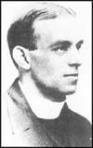
Woodbine Willie

Geoffrey Anketell Studdert Kennedy

In the name of God who is coming to call us all to account. Amen.

I wonder how you envisage judgement day? Do you see God seated on a throne with books of your good and bad deeds laid out before him? Or do you think that when you breathe your last you will simply make an easy transition to heaven? Do you think about what you might do before that day to be prepared?

I guess that I stand somewhere between the idea of the throne and of the easy transition. I am not convinced that a God who enters the world as a vulnerable baby and allows himself to be nailed to the cross, is a God that is absorbed with thinking of ways to keep us out of heaven. Neither do I think that God keeps score, for that would rob the cross of its meaning and imply that we could achieve salvation through our own efforts. I do believe however that we are accountable for how we behave in this life and that we will stand before God to give an account.

How do we prepare for such an occasion? Do we worry ourselves sick trying to reach some imaginary high standard? Do we need to become serious, moralizing, fun- destroying do-gooders? Do we put ourselves into a straight jacket so that we can be sure that we will avoid doing those things which would lead us to hell?

I don’t think so. I believe that the most important thing that we can do to be prepared for the end is to trust in God’s unfailing love and in response to that love endeavour to be the best we can. In coming to this opinion, I have found this poem by Geoffrey Studdert Kennedy to be helpful. It’s called “Well?” and it was written by Studdert Kennedy when he was an army chaplain during WWI. It is written in dialect so I apologize ahead of time if I slip in and out of the accent. It is published in a collection of Studdert Kennedy’s poems called Unutterable Beauty and can be found on the Internet if you’d like to read it for yourself. I think it speaks for itself and may give you something to think about as you prepare for the coming of Jesus.

www.poemhunter.com/poem/well-5/ (There are also recitations of the poem on You tube)