Posts Tagged ‘contradiction’

Not our place to judge

July 22, 2023

Pentecost 8 – 2023
Matthew 13:24-30
Marian Free

In the name of God who loves us as we are. Amen.

Last week the preacher in the parish in which I worship pointed out the number of contrary positions that could be defended with reference to the Bible. Within its pages you can find support for the full inclusion of women in ministry and support for the exclusion of women. From the Bible you can justify both eating meat and an admonition not to eat meat. One can use the Bible to argue that God is a vengeful judge, but equally to demonstrate that God will never execute judgement. People have used the Bible to defend domestic violence and others can point to passages that condemn it. And so the list goes on.

Sadly, the current situation in the world-wide Anglican Church is evidence of the ways in which the Bible can be used to support opposing views and the lengths to which different sides of the debate will go to to protect their stance.

It is possible to say that these contradictions come about because our scriptures were written by humans with human failings – and that would be true. It is equally possible that we hold a faith that is able to hold contradictions in tension, that refuses to be starkly black and white and refuses the sort of dualism that neatly defines good and bad but acknowledges the grey areas that are part and parcel of being human.

Today’s parable goes some way to addressing this situation. A householder sows a field with wheat only to have enemies come in the night and plant weeds in the field. (We are told that the weed is darnel – a plant that is remarkably like wheat, but which is poisonous and which among other things causes hallucinations if eaten.) When the slaves ask if they should pull up the weeds they are astounded that the householder tells them to allow the plants to grow together until harvest – only then he says will the weeds be gathered and burned.

The wheat and the weeds are an illustration of the contradictions of this life. Just as the wheat is almost indistinguishable from the darnel, so too, the difference between good and evil is not always easy to discern. Good intentions can have unintended consequences that lead to harm . Apparently good people can limit the growth of others through criticism and disapproval and most of us contain within us the good and the bad and most of us will spend a lifetime living with the tension.

The good news of this parable is that God can hold the ambiguities and paradoxes of human existence in tension. God does not intend to violently and preemptively reach into our individual and collective lives to destroy all that is bad. God understands that ‘fixing’ one area of our collective and individual lives can cause harm in other areas of our lives. God can see the good that we intend and patiently forgive the harm that we do (to ourselves and others). God recognises that no one is wholly good and that no one is wholly bad and God is prepared to patiently go the distance with us, to support us uncritically as we struggle with the weeds that make up our lives. Finally, it God (not us) who will ensure that that only what is good in us will be gathered into the kingdom.

God our creator is only too aware of our shortcomings. If God can allow the weeds to grow with the wheat perhaps we should learn to be more gentle with ourselves and more forgiving of others. If God can live with the contradictions within and among us, perhaps we should be less willing to define what is right and wrong, good and bad, less sure that we know what exactly it is God wants. If God can withhold judgement until the end, perhaps it is time for us to suspend judgement of others and of ourselves.
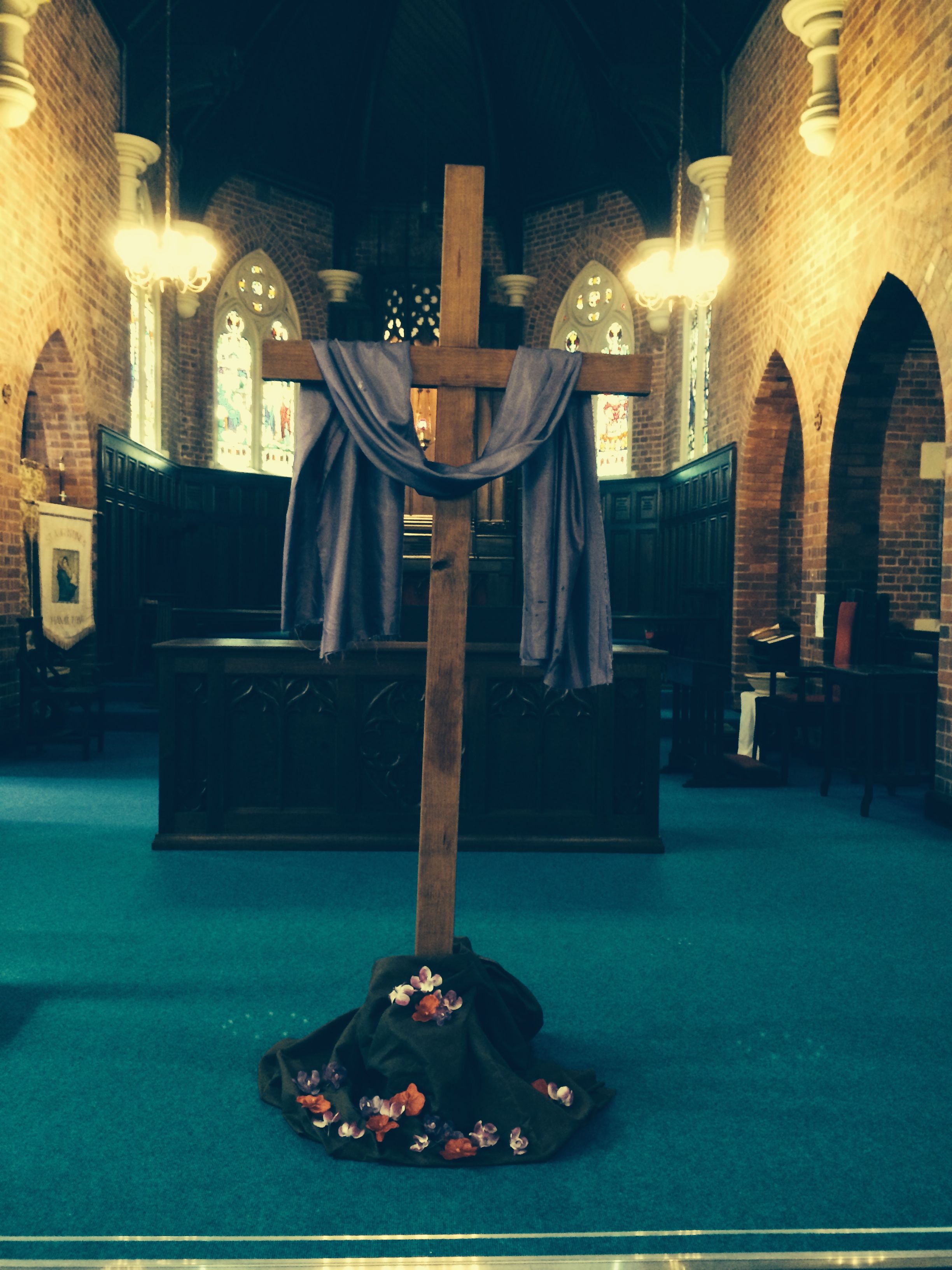
Innocent act or deliberate provocation? Jesus’ entry to Jerusalem

April 1, 2023

Palm Sunday – 2023
Matthew 26:14-27 (21:1-11)
Marian Free

In the name of God, source of all being, eternal word and Holy Spirit. Amen.

It is no wonder that our scriptures are sometimes referred to as the ‘living word’. There is always more to be discovered within the pages of our biblical text, always much more to be revealed than at first appears. This is in part because when we read a passage, a story or a Psalm there are many factors that come into play – our state of mind, our faith tradition, our prior understanding of the text, our knowledge of first century history and culture and our understanding of literary forms just to mention a few. Perhaps most importantly, because we believe that scriptures are inspired by God, and that the Holy Spirit informs our reading we approach the bible with a sense of expectation and wonder. What will it reveal on this occasion? What new things will I learn? There are times when I completely by surprise. I will be reading a familiar passage, when I notice a word or phrase as if for the very first time and see the passage in a completely new light .

Understanding scripture as the ‘living word’ frees us to read it from a variety of angles, exposes us to new possibilities and liberates us from the hubris of believing that we already know what it says and what it means for us.

In the Parish email this week I suggested that Jesus’ entry into Jerusalem was not an innocent act, but a deliberate strategy. Jesus, a little-known, travelling teacher from Galilee might not have received such a rousing welcome had he simply mingled with the crowds who were surging into Jerusalem for the Passover. By riding a donkey, Jesus was making sure that he stood out from the crowds. Riding a donkey that had a foal implies that Jesus intended the crowds to draw a parallel between himself and the triumphant king – Zechariah. If this was the case, it was this (not Jesus’ fame) that drew attention to himself, and which caused the crowds to react so joyously.

Knowledge of first century history throws more light on Jesus’ action.

As we know, Passover was a time of heightened tension in Jerusalem. At this time the population of Jerusalem swelled from 50,000 to 200,000, the visitors were filled with excitement and there were the usual problems associated with crowds. To maintain control at this. time, the Roman governor made it his business to be present in the city and with him, his troops. Pilate would have entered from the west in a blatant display of imperial power: “cavalry on horses, foot soldiers, leather armour, helmets, weapons, banners, golden eagles mounted on poles, sun glinting on metal and gold.”

In the light of Pilate’s procession, Jesus’ entry on the same day can be understood as a parody, an exposè of the foolishness of temporal power and a reminder that true power belongs to God. In contrast to the power and might of the Empire, Jesus’ reveals a power that does not rely on force and that will not assert its will by suppression.

Jesus knew that the people of Israel, oppressed and humiliated were looking for a leader who might drive the Romans from their land. Jesus, by mocking Pilate’s procession is enacting a different scenario, demonstrating that there is a different way to bring in God’s kingdom – a way of vulnerability, service and humility.

The contradictions of this day are echoed by contradictions of Holy Week –

Excitement becomes anxiety;
Joy becomes terror;
“Triumph” turns into defeat;
The cries of “hosanna” become the cries of “crucify him”;
The “king” who parodies the might of Rome, is in turn ridiculed by Roman soldiers;
The welcome of the crowds become their utter rejection of Jesus.

As we enter this most Holy Week, let us enter the story afresh, allow ourselves to notice the tensions and free the text to speak to us anew.

We see God through the cross or not at all

May 13, 2022

Easter 5 – 2022
John 13:31-35
Marian Free

In the name of God who confronts and overturns the values and expectations of the world and opens our eyes to new possibilities, new ways of being. Amen.

A couple of weeks ago I shared the reflections of Scott Hoetze that there are really very few accounts of the resurrection – hardly enough to account for the forty days between Easter Day and Ascension Day. That may be why our Lectionary only spends three of the seven Sundays of Easter focussed on the gospel accounts of the resurrection – there are simply not very many! Last week, Easter 4, used the gospel reading from John chapter 10 which took us back to the middle of Jesus’ earthly ministry. The next two weeks will begin to focus on the Holy Spirit which leads us to Pentecost. This morning we are looking at a small section of chapter 13 which, in turn, is a very small part of Jesus’ discourse during the Last Supper.

I’m not entirely sure if it is still the case but when I began to study the gospel of John scholars were in general agreement that Jesus’ farewell speech – the five chapters from John 13-17 represented Jesus’ post-resurrection teaching. That is, these chapters refer to what Jesus revealed to the disciples after he was raised from the dead which would mean that today’s gospel, and that of the next two weeks do fit neatly into the post-Easter resurrection experiences. Certainly, this view would appear to make sense of Jesus’ use of the past tense in today’s gospel in which he declares: “Now the Son of Man has been glorified, and God has been glorified in him”. A post-resurrection Jesus would indeed have been glorified.

However, seen in context, Jesus makes that statement after Judas has “gone out” to betray him. Associating Jesus’ glorification with Judas’ betrayal does not immediately make sense unless we understand John’s use of the word “glory” and the way in which it subverts both the honour/shame culture of the 1st century Mediterranean and the power structures of the Roman Empire. Like Paul in the first letter to the Corinthians, John makes it clear that the cross is central to redemption – not so much as sacrifice, but as a deliberate act – challenging conventional wisdom and forcing believers to re-evaluate their ideas about God. According to Paul, the cross undermines smugness and self-satisfaction. It is a reminder of the unfathomable nature of God and of our limited ability to understand God. Both John and Paul face head on the apparent absurdity of worshipping a crucified man, demonstrating how something – apparently shameful and senseless – is in fact God’s way of redeeming the world.

John doesn’t focus on the contradiction of the cross as does Paul. Instead, he shows how the cross is the pivotal event in the story, the moment at which Jesus is glorified and at which his purpose is accomplished (19:30). The significance of the cross in this gospel is evident almost from the beginning when, in conversation with Nicodemus, Jesus makes the claim that: “the Son of Man must be lifted up” (code in John for the crucifixion), “(so) that whoever believes in him may have eternal life” (3:14). (This is in contrast to Moses’ lifting up the snake in the desert which gave life to those who looked at it, but which did not give eternal life.) Jesus further asserts that the Jews will “realise that I am he” when they have lifted up the Son of Man (8:28) and that when he (Jesus) is lifted up he will “draw all people to himself” (12:32). Finally, when Jesus is praying in the garden before his arrest, he prays that the Father may glorify him that he in turn may glorify God (17:1-5). Glory and cross are inextricably linked in this gospel.

From the outset, the author of John makes it clear that Jesus’ glorification – the point at which people will recognise him for who he is, and the point at which all people will be drawn to him – occurs on the cross and not at the resurrection. The act of self-sacrifice and shame is given more weight here than is the triumphalism of the resurrection. It is the unexpected that is important. God does not behave in the way that we expect God to behave. God’s anointed (Jesus) did not enter the world to the sound of trumpets and his early life was so insignificant that it was not considered worth recording. Jesus did not impose his will on others or lord it over them, but acted as a servant to them, he didn’t lead nations or armies but unobtrusively shared the message of God’s love.

In John’s gospel, Jesus’ glorification occurs on the cross not in the resurrection because it is here that Jesus shows most clearly what God’s love for the world looks like and it is through the cross that the blinkers will be removed from our eyes so that we may be freed to see God – unfettered by our preconceptions.

Over the centuries we have sanitised the scandal of the cross – to the point where it has almost lost its meaning. We have become so used to it as a symbol that adorns our churches and hangs around our necks that we can overlook the horror and shame, the ugliness and the brutality, and the violence and bloodiness that it represents. In so doing we deny its power to undermine our preconceived notions of who and what God is and how it is that God acts in the world. We refuse to allow the cross to defy our cosy and comfortable relationship with God and we reject its purpose which is to confound and startle us.

Jesus can announce his glorification in connection with Judas’ betrayal precisely because he is clear sighted about his role, about his relationship with God and about God’s action in the world.

Jesus, through John, wants us to know that we see God through the cross or not at all.

Wholly God’s

April 13, 2019

Palm Sunday – 2019
Philippians 2:5-11
Marian Free

In the name of God whose Son frees us from death and opens the way to eternal life. Amen.

You all know the story. God creates Adam. God puts Adam in a garden. God gives Adam everything in the garden – exceptthe fruit of the tree of the knowledge of good and evil. The snake tells Adam that the reason that God doesn’t want him to eat the fruit is because he would become like God – implying at the same time that God has misled Adam. When Adam realises that he will not die but will become “wise” he decides that being like God is worth the risk of eating the forbidden fruit. He eats the fruit. God finds out (of course!). Adam and Eve are banished from the garden. Instead of a life of peace and ease they are both punished with lives of pain and toil. As it records in Genesis 3: ‘Then the Lord God said, ‘See, the man has become like one of us, knowing good and evil; and now, he might reach out his hand and take also from the tree of life, and eat, and live for ever’. As a consequence of eating from the tree of knowledge, Adam was refused access to the tree of life and so all human beings who came after him became subject to mortality.

You will notice that I refer to Adam and not to Eve. This is because, as we can see from the letters of Paul, that at least in first century Judaism, Adam (not Eve) was given responsibility for the “fall”. Paul understood that it was through Adam that sin and death came into the world and that ever since all humanity have shared in Adam’s fate.

Paul’s letters reveal that he was convinced that the consequences of Adam’s action had been reversed in Jesus’ life. Jesus’ obedience contrasted starkly with Adam’s disobedience. Jesus’ refusal to claim equality with God completely reversed Adam’s desire to be like God. Death may have come to all through Adam. Life is made available to everyone through Jesus.

Paul explores this theme in a number of places. In 1 Corinthians 15 Paul claims: “For since death came through a human being, the resurrection of the dead has also come through a human being; for as all die in Adam, so all will be made alive in Christ. (1 Cor 15:21,22) Paul’s discussion in Romans 5 makes a similar point: “if, because of the one man’s trespass, death exercised dominion through that one, much more surely will those who receive the abundance of grace and the free gift of righteousness exercise dominion in life through the one man, Jesus Christ” (5:17). In other words, Paul believes that Jesus has undone the damage caused by Adam’s disobedience. Adam created a breach between humanity and God that led to death. Jesus has repaired the damage done, brought us back into the ideal relationship with God and given us access to eternal life.

The hymn that formed our reading from Philippians today is based on that understanding. For those who know the story of Adam, it is quite clear that Jesus’ behaviour is the opposite to that of Adam. Both were created in the image of God but whereas Adam sought equality, Jesus did not. Adam rejected servanthood, but Jesus embraced the role that he saw to be his. Adam who desired to be like God was found in human likeness but Jesus “who was in the form of God did not regard equality with God as something to be exploited”. In his desire for self-aggrandisement Adam exalted himself. On the other hand Jesus, who was entitled to be arrogant, humbled himself. Adam was disobedient unto death. Jesus was obedient unto death. As a consequence of their actions, Adam was condemned by God and Jesus was exalted by God[1].

This hymn, which may in fact pre-date Paul, not only compares Adam with Jesus but also provides the model for Christian living. If Adam is the model of human existence before Jesus, Jesus is the model for Christian existence in the present. Jesus’ “obedience unto death” informs us that only if we empty ourselves of all desires and all ambitions can we be filled with God. Only if we are aware that we are not and never will be God, will we be willing and free to submit to God’s greater wisdom and direction. Only if we make ourselves completely God’s can God’s will be done in us.

Jesus’ life and death are an apparent contradiction. The one who is God behaves as the servant of God. The one who need never die, submits to death.

Those who follow Jesus must live out this contradiction. We must learn that, contrary to our natural inclination it is by not trying that we win the kingdom, it is by not striving that we attain life eternal. As soon as – like Adam – we think we can achieve goodness, holiness, wisdom or any other god-like characteristic by our own efforts, we demonstrate that we have placed our trust not in God, but in ourselves. When we acknowledge our limitations, we understand that a life directed by God is infinitely more satisfying than any life that is determined by our own choices and when we really believe that God knows us better than we know ourselves, we will have the confidence to trust God with life itself. It is not the things of this world that will meet our deepest needs, but only those of the kingdom of heaven.

Jesus (who was God) did not count equality with God as something to be exploited, we who are not God, should not place our trust in ourselves, but give our lives wholly to God who gives Godself wholly to us. Then, filled with the presence of God, we like Christ can be the God’s presence in the world.

[1]See further Malina and Pilch. On the letters of Paul. 307.

Loyalty to God alone

January 5, 2019

Epiphany – 2019

Matthew 2:1-12

Marian Free

In the name of God who holds all people in God’s embrace and longs only that they allow themselves to be held. Amen.

Last week there were shepherds and a stable. This week there are kings and a house . The differences between Luke’s account of Jesus’ birth and that of Matthew are striking and tell us something about the perspective of the authors. Luke, as we shall see throughout this year, emphasizes Jesus’ concern for and identification with the poor and the marginalised. No room can be found to house the pregnant Mary and the only visitors are shepherds (the lowest rung of the social ladder). Luke’s shepherds bring no gifts. The author of Matthew has different interests. He is more concerned with the fulfillment of prophesy and with Jesus’ place within Judaism. In Matthew Jesus’ visitors are respected Magi – of such significant rank that they receive an audience with King Herod and they present the child with rich gifts. Matthew makes it clear that this is no ordinary child but a king. The Magi go to the palace to ask Herod where they can find ‘the King of the Jews’ and Herod’s grip on power is so tenuous that the thought that there might be competition fills him with terror.

In the context of today’s gospel, it is interesting to note the contradiction between, but also within the two accounts of Jesus’ life – especially in relation to the inclusion of those who were not Jewish by birth. Luke’s gospel makes it clear that faith in Jesus is open to those outside the Jewish faith – the Gentiles. For example, in both the parable of the Good Samaritan and in the account of the ten lepers, it is a despised Samaritan whose behaviour shows up that of Jesus’ own people. In contrast, Matthew appears to believe that faith in Jesus is a logical – indeed foretold – continuation of Judaism. Matthew emphasises the Jewish law and the keeping of that law which, of course, is only relevant if you are Jewish. It is only in Matthew’s gospel that Jesus instructs the disciples to “go only to the lost sheep of Israel.”

At the same, even though Luke’s gospel is much more inclusive of non-Jews, the author is at pains to establish Jesus’ Jewish heritage and the devoutness of Jesus’ parents. Luke’s gospel both begins and ends in the Temple – the centre of Jewish religious practice. Matthew, whose gospel appears to exclude non-Jewish believers, both begins and ends in a way that implies the inclusion of Gentiles. Here at the very beginning of the story, it is the non-Jewish Magi who not only recognize Jesus but worship him – while the Jewish authorities (represented by Herod and the priests) and terrified of his existence. At the conclusion of Matthew’s gospel Jesus insists that the disciples “make disciples of all nations, baptizing them in the name of the Father, the Son and the Holy Spirit”. Matthew’s very Jewish Gospel is opened wide to all people

Both gospels, but that of Matthew in particular, reflect a contradiction that exists already in Judaism. From the time of Abraham onwards, the religion of the Hebrews was unique in that it promoted belief in one God who had a special and exclusive relationship with God’s chosen people – Israel. The children of Abraham were a people set apart for God and who had, in response, to set themselves apart from the nations around them – nations who believed in multiple gods and whose practices did not match the high standards that God expected of those whom God had set aside as God’s own. In order to ensure that the Israelites did not become contaminated by those who did not belong, God gave very clear instructions including ordering the genocide of the inhabitants of the Promised Land and a directive that the children of Abraham were not to marry men or women of different ethnic backgrounds.

Despite this, despite God’s obvious preference for Israel, there is a thread that runs through the Old Testament that makes it clear both that the relationship between God and God’s people is not entirely exclusive and that in the future all nations will worship the God of Israel. To give just two examples – the book of Ruth informs us that Ruth, a Gentile, is to become the forbear of David – Israel’s most beloved king and in turn the forbear of Jesus. The book of Jonah makes it quite clear that God has compassion on the Gentile Ninevites and will not destroy them if they acknowledge their fault. In more than one place we are informed that there will be a time when all nations will stream into Jerusalem to offer worship to God.

These contradictions, which continue in the New Testament, remind us that God, who is the creator of all, and the God above all Gods is a jealous God who demands absolute loyalty and insists that God’s people set themselves apart as God’s holy people yet at the same time is the God of every nation who cares for and longs to include all of humanity in God’s embrace.

The visit of the Magi to Jesus cautions us not to think too highly of ourselves in comparison with others. It was outsiders who saw the signs, those who did not belong who sought out Israel’s king and those who belonged to a very different faith who fell down and worshipped the infant Jesus. The people who should have been alert to the signs, the people whose king had come to birth and who should have been first to offer homage had stopped expecting a king. They took for granted their status as the people of God and had accommodated themselves to their situation as servants of Rome. Jesus was seen, not as a king to be welcomed, but as a threat who needed to be destroyed because he would expose the compromises they had made and return power to God and not the Empire.

May the visit of the Magi remind us that we should never be complacent and self-satisfied about our place in the kingdom, that we should always be alert to the signs of God’s presence and that we should not be in the all to the powers and values of this world but remember that our first and only loyalty is to God and to God alone.

Life and Death – two sides of one coin

March 31, 2018

For the Good Friday Liturgy, go to that page.

Kahlil Gibran – On Death

You would know the secret of death.

But how shall you find it unless you seek it in the heart of life?

The owl whose night-bound eyes are blind unto the day cannot unveil the mystery of light.

If you would indeed behold the spirit of death, open your heart wide unto the body of life.

For life and death are one, even as the river and sea are one.
In the depth of your hopes and desires lies your silent knowledge of the beyond;

and like seeds dreaming beneath the snow your heart dreams of spring.

Trust the dreams, for in them is hidden the gate to eternity.

For what is it to die but to stand naked in the wind and to melt into the sun?

And what is it to cease breathing, but to free the breath from its restless tides, that it may rise and expand and seek God unencumbered?
Only when you drink from the river of silence shall you indeed sing.

And when you have reached the mountain top, then you shall begin to climb.

And when the earth shall claim your limbs, then shall you truly dance.

Reflection

It is easy to think that Good Friday is all about dying and indeed we do focus on Jesus’ gruesome death and the events that led up to it. Today is a sombre and sobering day when we are forced to face our own role in the death of Jesus – our daily betrayals, our luke warm faith and our love of all things worldly. It is also the day when we are brought face-to-face with the potential consequences of standing with the oppressed and the marginalised, of challenging unjust structures and of confronting the love of power.

It is also a day of contradiction – the cross revealing in stark relief the ignorance and foolishness of humankind in regard to all things Godly. We begin to understand that life and death go hand in hand – they are two sides of the one coin. Without life there is no death, without death we do not really know life. Death throws life into perspective, helps us to appreciate the gift that it is, challenges us to value and to use the life that we have, encourages us to make the most of every minute.

Life that acknowledges death tries to make the most of every moment – to grasp with both hands the good and the bad, to embrace the future rather than to hold on to the past, to have half an eye on eternity rather than being bound to this earthly existence.

Life and death are aspects of daily existence. Every moment we can choose life or death – we can choose to behave in ways that are life-enhancing or life destroying. We can choose to hold on to those things that are familiar and comforting but which are stultifying and limiting, or we can let go and embrace a future that is uncertain and full of potential and opportunity.

Do you fear death? Are you afraid of letting go of those things that are familiar and comforting?

As the poem suggests, death and life go hand in hand. Through our daily deaths (to fear, anxiety, greed and hate) we free ourselves to embrace life more fully.

All our little deaths, free us to live more fully, more authentically,


Keeping Jesus secret

September 12, 2015

Pentecost 16 – 2015

Mark 8:27-38

Marian Free

May God’s word, written and spoken, speak to our hearts and minds so that we might know God’s Son Jesus the Christ and in so knowing allow ourselves to deny ourselves such that Jesus is our all-in-all. Amen.

“Get behind me Satan!” Jesus strongest words of rebuke are directed towards Peter at the very point at which Peter has identified Jesus as the Christ. What is going on here? Why does Jesus react so strongly? Why is it that when Peter demonstrates both his insight and his concern that Jesus not only goes on the offensive but also identifies the spokesperson for the disciples as the devil? To grasp the answers to these questions we have to understand the strategy that lies behind Mark’s gospel and Mark’s understanding of the nature of Jesus’ ministry.

As I have said on other occasions, the gospels are not simply random collections of memories nor are they an orderly and exact account of Jesus’ life and teachings. They are in fact carefully crafted writings designed to gain the listeners’ attention and so to bring them to faith in Jesus. Like any good story, the gospels build suspense and come to a climax before finally coming to resolution and they make good use of literary techniques to achieve their end. In this the author of Mark is no different from the other gospel writers. He develops his plot in such a way that Jesus’ identity and destiny are only gradually revealed. In fact one of the characteristics of Mark’s gospel is that of secrecy. A reader could be excused for thinking that the Jesus of Mark’s gospel does not want to be recognised, that he does not want anyone to know who he is.

Secrecy is essential for the author of Mark. Central to his gospel is the cross. In his account of Jesus, Jesus is primarily depicted as the suffering Son of God. Mark knows that this is a contradiction in terms. It does not make sense that God would be vulnerable, that God would appear on earth, not as a leader but as a servant, a servant who would have to suffer and die. It is because a suffering Messiah is difficult to understand that the Jesus of Mark’s gospel reveals his true identity only gradually. Jesus fears that if he exposes his hand too soon those who follow him will form the wrong impression. If he reveals that he is the Messiah, they will cast him in a mould that fits their expectations and will be disappointed when he fails to conform.

The wisdom of Jesus’ caution becomes obvious in today’s reading, which represents a watershed moment in Mark’s gospel. Up until now, Jesus’ true nature has been recognised only by the demons whom he has exorcised. Today Jesus takes a risk and asks the disciples: “Who do you say that I am?” Peter answers confidently: “You are the Christ.” Peter is of course correct, but only partly so. He understands that Jesus is the one promised by God, but he fails to understand what this means in Jesus’ case. This is evidenced when Jesus announces that he must suffer and die. Peter takes him aside and rebukes him. In Peter’s world the Messiah doesn’t die, the Messiah comes to lead and to save.

It is this misapprehension that elicits Jesus’ strong rebuke. Peter has it all wrong. Despite knowing and working with Jesus for some time, he still thinks in human terms and categories. Peter is only able to identify Jesus according to known criteria. He simply cannot cope with the idea of a Messiah who does not conform to his expectations.

Over the next two weeks we will see that the disciples generally cannot come to terms with a Messiah who is not a triumphant leader, but a suffering servant. Each time Jesus announces his death and resurrection, the disciples demonstrate by their words and actions that they really have no idea – either what this means for Jesus or for their discipleship. It is no wonder that Jesus doesn’t want them to tell anyone about him. Until they fully understand his identity and destiny there is no point their sharing their knowledge with anyone. Unless they really comprehend who and what Jesus is, the crucifixion will make no sense at all.

Jesus’ question to Peter could well be Jesus’ question to us. How well do we understand Jesus? Do we make the mistake of ignoring Jesus’ suffering, Jesus’ vulnerability and frailty? Do we too soon elevate Jesus to Son of God without fully understanding his crucifixion and death? Do we really comprehend that Jesus life and ministry are a model for our own? That is, do we really understand that serving God means serving others? Have we grasped that following Jesus requires complete surrender – putting our own needs and wants aside in order to give to him our whole selves – heart, mind and body? Would we, should the occasion require, give even our whole lives?

Do we really comprehend the identity and destiny of Jesus? Or do we like Peter and the disciples still think in human terms? Does the real nature of Jesus remain a mystery for us or have we fully grasped the contradiction of a suffering Son of God?

“Who do you think that I am?” is a question that echoes through the ages, forcing each succeeding generation to examine their hearts and ask if they really do understand. It is a question that challenges every age to embrace a Saviour who must suffer and die before he rises in glory.

The absence of God- what makes this Friday “Good”?

April 18, 2014

Good Friday 2014Good Friday – 2014

(Read in conjunction with the Good Friday liturgy on this site

https://swallowsrest.wordpress.com/good-friday-liturgies/)

“My God, my God, why have you forsaken me?”

A bare church, an empty altar speaks to me of absence – God’s absence.

The Bible is full of God’s absence, times when people have called to God and have been met with silence. Of all the biblical images of absence, Jesus’ cry from the cross and his ultimate death are the most poignant.

If Jesus is God, where is God when Jesus hangs dying on the cross? Is there a moment when there is no God?

If Jesus is God – and we believe that he is – then God is Jesus and Jesus is dying/dead.

How can it possibly be Good Friday? The shocking failure of Jesus’ potential, Jesus’ promise, the destruction of the hopes of all who followed him, the brutality of the crucifixion are anything but “good”.

“My God, my God, why?

The paradox is this – God’s apparent absence is also God’s ultimate presence.

The cross confronts us with the uncomfortable truth that God is so intimate, so completely identified, with the human condition, that God would go so far as to share a human death. You can’t get any closer to human experience, to us than that.

This is perhaps the ultimate contradiction. Not only that Jesus’ death is God’s death, but that God’s death is a confirmation of God’s deep, unswerving, unreserved love for us – a love shown by God in Jesus who not only goes through the motions of dying, but who actually dies – dies a we will all one day die.

It is a contraction – God’s absence serves to demonstrate God’s intense, immediate, never-ending presence with us and in us.


And that is what makes this Friday “Good.”

Wisdom and the cross

February 8, 2014

Epiphany 5

1 Corinthians 2:1-13

Marian Free 

In the name of God, whose foolishness is wiser than human wisdom. Amen.

 If someone were to ask me which of Paul’s letters was my favourite, I think I would say the first letter to the Corinthians for no other reason than it reveals Paul’s profound insight into and interpretation of the cross. The community almost certainly Gentiles so it is not surprising that, as the letter indicates, they were a little confused as to the details of this new faith. It has to be remembered that at that time, there were no Christian scriptures. New converts were entirely dependent on the teaching of itinerant preachers who did not stay long enough in the community to ensure that all possible problems had been dealt with and all questions answered. Even though Paul had spent quite some time among the Corinthians, it seems that confusion reigned once he had left the city.

Paul writes this (possibly his second)[1] letter to Corinth in response to some concerns which had been reported by Chloe’s people[2] and also in response to a letter that the community had written to him[3]. Chloe’s concerns relate to divisions and competition in the community and immoral and un-Christian behaviour. Paul’s deals with issues such as members striving to outdo each other with regard to spiritual gifts, sub-groups following different leaders, a man living with his father’s wife and believers taking one-another to court. The letter also deals with more specific issues, many of which relate to relationships and sex: how to behave towards one’s spouse (whether to have sex or not, whether one should divorce a non-believing partner) and to marry or not to marry.

Even though Paul is addressing these very specific issues, he does so in a way that is theologically insightful and which interprets the cross of Christ is such a way that he can apply it to the community life of the believers in Corinth and to his own ministry.

The Corinthians, as I have said, were a divided community who had not fully grasped Paul’s message of the gospel. Perhaps based on the religions from which they had come, they placed wisdom as the high point of their faith and competed for the distinction of being the wisest or most knowledgeable in the community. It is clear that knowledge or wisdom is at issue. More than once Paul challenges their supposed wisdom with the question: “Do you not know?” (Obviously they do not!)

In order to demonstrate that the Corinthians wisdom is only narrow and partial, Paul points out the absurd contradiction of a crucified man proving to be God’s chosen one. As he says, any self-respecting Jew would have nothing to do with such a person – let alone elevate him to the status of God’s anointed.  On the other hand Greeks would think that to have faith in such a man would be utter foolishness.  To be fair, if we were to strip away sentimentality, dogma and creed, we too would think that a crucified Saviour was both gruesome and ridiculous (and impossible to sell). God, in Christ, has done something absolutely ludicrous. This, Paul claims, this is exactly the point. Christians believe that a man who was condemned to death as a criminal was the one sent by God. God’s action begs the question: Why on earth or in heaven would God chose such a person, or allow such an awful fate to befall the one whom he sent? He provides the answer using the words of Isaiah “I will destroy the wisdom of the wise, and the discernment of the discerning I will thwart.” (29:14)

According to Paul, God’s purpose in presenting us with a crucified Saviour was precisely to confound and unsettle us, to create some sort of cognitive dissonance that would force us to rely, not on ourselves, but on God, to shake us out of our complacency and to open our eyes to a completely different way of seeing, so that instead of being limited and bound by our own intelligence and by the constraints of the human imagination, we might be freed to see and hear what God is actually doing and saying. This, the cross demonstrates, is often the exact reverse of what we expect God to say and do.

In today’s text, Paul extends his argument about the cross to his proclamation of the gospel.  Paul made no attempt to claim power or knowledge for himself as did other preachers. He did not pretend to be anything he was not but allowed the Corinthians to see his weaknesses and imperfections. Paul has no need to compete, to demonstrate that he is wiser, stronger or more knowledgeable than anyone else. He is content to be weak and inarticulate because he knows that this enables him to be used by God and to be receptive to the Spirit. What is more those who come to faith know that they have not been swayed by the power of Paul’s presence and the force of his argument, but by the power of God working through him. Their faith lies where it belongs, in God and not in Paul.

The contradiction of the cross turns everything upside down. In so doing the cross exposes the flaws in what we might have thought we knew and the limitations of human knowledge and understanding – about worldly values, wisdom and strength. Through the cross God makes us aware that our knowledge, however good, is always incomplete and imperfect. The only true wisdom is that of God and the only way to achieve that wisdom is through recognizing the vast gulf between ourselves and the creator of all – who saw fit not to stun us with a triumphant king or a military victory, but a vulnerable, friendless man who died one of the most shocking deaths of all.

The purpose of the cross is to challenge the arrogance and self-conceit that allows us to believe that we know all there is to know about God. A crucified Saviour confronts our need for certainty and our dependence on doctrine, ritual and yes, even scripture and to open us to the power of God working in us and through us.


[1] 1 Corinthians 5:9

[2] 1 Corinthians 1:11

[3] “Now concerning the matters about which you wrote” (7:1, cf 7:25, 8:1).

Surrender now

November 23, 2013

Christ the King 2013

Luke 23:33-43

Marian Free 

In the name of God who created us in God’s own image. Amen.

Jesus was not the first or the last king to be executed. A great many Kings (or heirs apparent) have been executed or murdered. In the Old Testament, the books 1 & 2 Kings are filled with gruesome accounts of power struggles – particularly among half-brothers. At times whole families are slaughtered in order to ensure that one person’s right to rule is not challenged. The history of the British Monarchy is no less ruthless. Civil wars have been fought by supporters of rival claimants to the throne. In 1483, Richard duke of Gloucester. who had already killed the then Queen’s brother and her eldest son from her first marriage. forcibly locked up her son Edward – the king who had inherited the throne from his father – and shortly after imprisoned the younger son as well. The young princes (aged 13 and 10) were seen from time to time, but then disappeared completely. It is presumed that they were killed so that they would not challenge their uncle’s right to the throne. (In the Art Gallery at the moment a poignant painting of the boys’ Mother bidding them farewell is hung in a prominent place near the entrance.) (The problem with power illegally gained is that is has to be protected from challengers – those who have usurped the throne are only too aware of how easily they might be unseated. All potential threats need to be disposed.)

Some British Monarchs have been publicly executed. At least two of Henry the Eighth’s wives were executed for treason. In our tradition, perhaps the most well-known monarch to have been executed was Charles the 1st who was accused of treason because of his refusal to call a Parliament. Charles was firmly convinced of the divine right of kings and sought to levy taxes without Parliament’s consent. He was tried by 68 judges (there were to have been 135) and beheaded.

What makes Jesus different from this long line of tragic kings, queens and princes is that Jesus never had nor sought power – in fact just the opposite. Jesus did not see himself as someone who was in competition with the priests, scribes and Pharisees. He certainly did not try to usurp power from the rulers of Rome. From our point of view he does not appear (in himself) to pose any real threat to either the leaders of the church or the representatives of the Roman Empire.

He has none of the trappings of royalty – no palace, no fancy clothes, no wealth, no army. Jesus by his own account has nowhere to lay his head and his followers do not appear to be men whom he could easily form into a fighting force. In fact Jesus is the antithesis of all things associated with power and control. As the Son of God, he has all kinds of resources at his command – including angels – yet he chooses not to call on them even when they could save his life. Instead of resisting, Jesus allows himself to be arrested. Instead of mounting a defense he remains silent before his accusers. Instead of calling out an army (of angels) to save him, he allows himself to be nailed to the cross.

Jesus’ approach to death is consistent with his approach to life. From the moment of his baptism, Jesus makes it clear that, though he knows he is God, he is not going to capitalize or take advantage of that knowledge. He could turn stones into bread when he is hungry, jump off the Temple and be unharmed and he could rule the world if he chose to claim power solely for himself. However, despite the knowledge that he has power to just about anything, Jesus never imposes his will or lords it over others – just the opposite. Unlike the dictators of his time (and ours) Jesus knows that imposing his will on others will not secure their confidence or their loyalty. He knows that love that is forced is not love. He knows too, that it is only by forgoing all the trappings of wealth and power, only by giving himself completely to God that God’s purpose (rather than his) will be achieved.

Jesus’ teaching likewise emphasises service over power. Over and over again he teaches his disciples that the first will be last and the last will be first or that the one who serves is greater than the one who lords it over others. By example and instruction, Jesus models the notion that humility is the quality most prized in heaven and that submission to God is more likely to lead to salvation than trying to succeed on one’s own terms.

From beginning to end, Jesus confounds everyone. His life begins in humble circumstances and ends with the shame of the cross. In popular understanding, he does not fit the image of a soldier Messiah, nor does he conform to the expectations of a King of David’s line. Jesus does not exercise his prerogative to judge. All in all, he is a very unlikely and unexpected Saviour.

Jesus’ crucifixion highlights how little he has been understood and the disdain rather than the respect that has come his way. To the very end he held fast to his purpose, which was to demonstrate that true power is demonstrated through service rather than dominance. Interestingly, it is at the end – ironically – that his true divinity is demonstrated. At the very point at which he most identifies with humanity in death, the very point at which he is most human and most vulnerable, he exercises his divine right to both judge and to forgive and in so doing to decide who may or may not enter paradise – something that only God can do.

Jesus is a king who doesn’t conform to the ways of the world. He is a contradictory and confusing king who refuses the identifiers of status wealth and power. Following this king will not lead to power and glory. Sometimes it will lead to persecution and derision. It does not require great exploits and certainly has no career structure. If we choose to follow Jesus, we will learn that we are most empowered when we empower others, that we are most truly ourselves when we are the person whom God created, that true authority comes not from ourselves but from the presence of God within us, that entry into the Kingdom of God is not something that we earn, but something that we receive when we acknowledge Jesus and no other as our King.

Ultimately, we have no power, no glory, no wisdom or strength or goodness that does not come from God. That being the case, we might as well surrender. As Jesus gave himself fully to God so we might as well give ourselves fully to Jesus and discover as Jesus did that it is only when we give everything away that we uncover the wealth, the gifts and the godliness that was already ours.