Pentecost 13 – 2024
Celebration of Mary (St Mary’s) Kangaroo Point
Luke 2:1-7
Marian Free
Hail, Mary, full of grace,
Blessed art thou amongst women
the Lord is with thee.
and blessed is the fruit of thy womb, Jesus.
Holy Mary, Mother of God,
pray for us sinners,
now and at the hour of our death.
Amen.
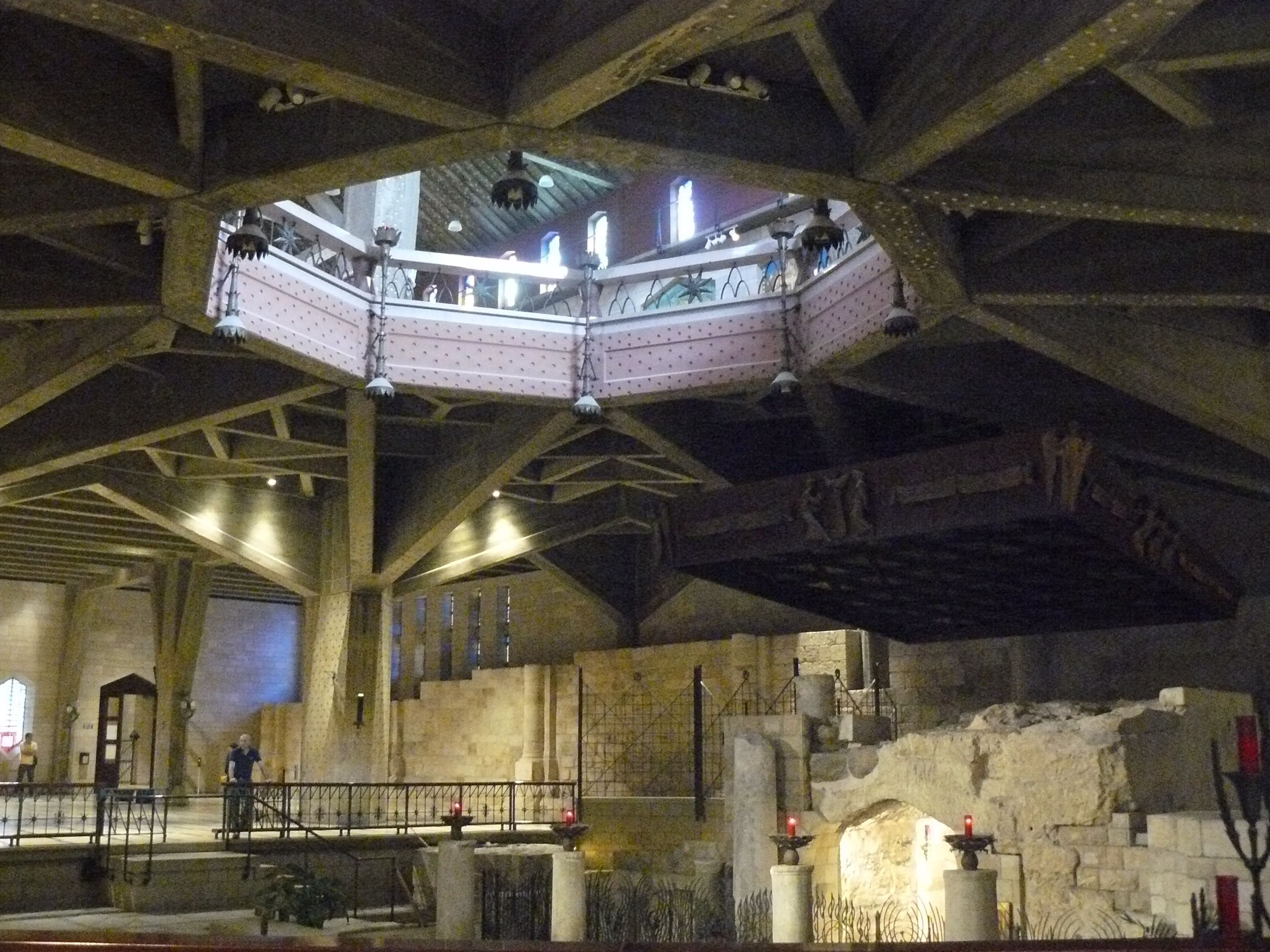
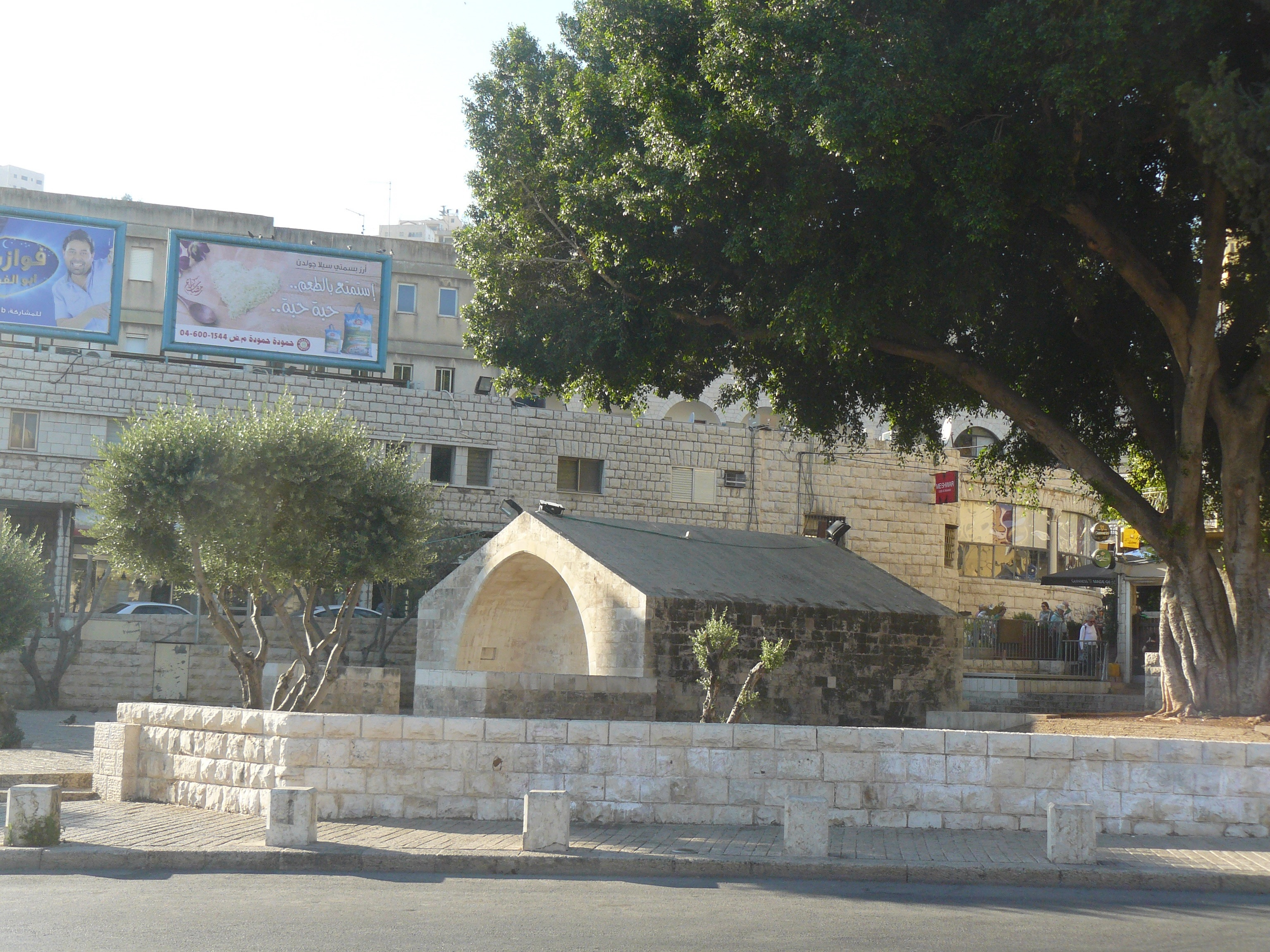
Grotto in the Basilica of the Annunciation (above). Mary’s well (below)
If you visit Nazareth, you will probably be taken to two Marian sites at both of which you will be told that this was where the angel appeared to Mary. One site is the Basilica of the Annunciation. Beneath the floor of this church a first century grotto was uncovered in which was found a foundation stone inscribed with the words: “Hail Mary”. A second site is known as Mary’s well – a covered well which used to be fed by a spring and from which water was drawn by Palestinian villagers for many years. Of course, we have no way of knowing at which site, if either, the angel appeared to Mary. The gospels do not accurately record where the events of Jesus’ life occurred and it was not until the fourth century when Helen, the mother of the then Emperor Constantine visited the Holy Land, that any such details were documented for posterity.
In terms of developing a background for Mary, we are not served well by our scriptures. We have a backstory Elizabeth, who according to Luke, was a descendant of Aaron, was. married to Zechariah who belonged to the priestly order of Abijah, was righteous before God, and lived blamelessly according to all the commandments and regulations of the Lord. Luke further informs us that both Zechariah and Elizabeth were “getting on in years” and that Zechariah was performing his priestly duties when the angel appeared to him.
In contrast, we know nothing of Mary’ s life prior to the appearance of the angel. Though we are given quite a lot of detail about Elizabeth, Luke appears not to be interested in Mary’s heritage or her piety. The only information he gives us is that when the angel appeared to Mary, she was in a town in Galilee called Nazareth and she was engaged to a man whose name was Joseph of the house of David. Similarly, Luke is not particularly interested in where Mary is when the angel appears. What he tells us is that despite Mary’s initial confusion at the angel’s announcement, she readily submits to God’s will, and then she visits her cousin and sings a hymn exalting in the reversal of the fortunes of the rich and poor.
Details of Mary’s parents and of her childhood belong to a later time and are almost certainly apocryphal.
That said, it is clear from the Gospels and Acts that Mary was held in regard by the early church, both as the mother of Jesus and as a prominent member of the community.
Perhaps as a consequence of her place in the emerging church, veneration of Mary began quite early. In the Roman catacombs there are paintings of Mary with the Christ child that date from the middle of the 2nd Century. Dedication to Mary grew and in 431CE. the Council of Ephesus gave Mary the title, Theotokos or Mother of God – thus sealing her place in the devotional life of the church. It was, and is, believed that Mary’s special relationship with Jesus enabled her to intercede with him on behalf of believers, a belief that became especially important in the Dark Ages. When God was depicted as a remote and unforgiving figure and the church held the fear of hell fire over its members, Mary offered a vision of the divine that was conciliatory, relational and accessible.
The trajectory from Mary, the unknown young girl from Nazareth to Mary Queen of Heaven, is more complex than my simple picture, but what it is clear is that over time, Mary had been transformed from a person much like you and I, into an ideal figure to be appealed to and worshipped, and had been assigned an intercessory role between those who prayed and the God to whom they prayed.
The last thing I want to do is to disparage or diminish the practice of venerating Mary, but I can’t help wondering if elevating Mary to such an extent has had the effect of distancing Mary from us, of making her more into an idealised figure who is beyond our reach rather than someone with whom we can identify and whose example we can aspire to emulate.
When the angel appeared to Mary, she did not stand out from the crowd in any way that the evangelists thought was worth recording. She could not trace her ancestry back to any person of significance, let alone to Aaron or to David. Her piety appears not to have set her apart from the crowd. As the scriptures tell it, Mary was an unknown, even ordinary, young girl from an insignificant place in an occupied country with no claim to notoriety or to religiosity. She was an ordinary person living an ordinary life when, out of the blue an angel appears with startling news.
Mary is startled, but does not run away, she expresses surprise, but not anxiety and despite the fact that she is entering unchartered waters, despite the fact. That she has no idea how Joseph will respond, and despite potential cost to herself Mary says: “yes” to God. What is significant is not her background or even her faithfulness, but rather her openness to the presence of God and her willingness to say: “Yes” even when God suggested the impossible.
In Mary, the Mary to whom the angel appeared, not the Mary who is the creation of the church, we find someone like ourselves – someone of little or no importance, someone without qualifications or impressive forbears, someone who is uncertain and tentative, someone whose faith and piety does not set them apart but someone who is curious and open to the presence of God in her life.
As the mother of Jesus, the one whose ‘yes’ to God changed the course of history, Mary deserves a special place in history and in our hearts, but perhaps the most significant role Mary has to play is that of reminding us that “ordinary” people – people like you and I – have the capacity to do extraordinary things. Mary is constant reminder that God does not seek extraordinary, talented, well- known people to make God’s presence known in the world. God uses people like you and like I, if only we are open to God’s presence in our lives and willing to add our “yes” to that of Mary.


 Swallowsrest