Posts Tagged ‘growth’

Nothing is perfect, nothing is permanent, nothing is complete

June 5, 2021

Pentecost 2 – 2021
Mark 3:20—35
Marian Free

In the name of God – changeless yet ever new. Amen.

I am sure that many of you have heard about the Japanese practice of Kintsugi or golden joinery. The history of Kintsugi is shrouded in mystery, but legend has it that a Japanese shogun, Ashikaga Yoshimasa sent a cracked tea bowl to China to be mended. When it was returned to him, he was distressed by the crude repair. Ugly metal staples had been used so to hold the broken pieces together. In response, Japanese craftsmen determined to find a more aesthetically pleasing method of repairing broken bowls. The practice of Kintsugi uses lacquer mixed with gold, silver or platinum to join broken pieces of pottery with the result that though the breaks are clearly visible, the repaired bowl is often more beautiful than the original.

A number of Japanese philosophical ideas are associated with this practice. Foremost among these is the principle of wabi-sabi which acknowledges that everything is imperfect, everything is impermanent, and everything is incomplete. In Kintsugi, the repairs allow the imperfections to be visible, thus illustrating the impermanence of the original bowl and pointing to the incomplete nature of all things. An associated philosophy is that of mushin (no mind) which emphasises non-attachment and the acceptance of change. Instead of trying to hold onto or to recreate an unblemished past, the repaired vessel bears its scars boldly, proudly carrying them into the future.

Kintsugi illustrates the fact that change is not to be feared or resisted but is an integral part of existence. What is more, it demonstrates that change has the potential to forge something new and beautiful.

One of the problems with institutions is that they tend towards stasis. Once established, organisations develop practices, traditions and customs that can become very difficult to change. “We’ve always done it that way.” “It’s worked in the past,” workers or members say. A person who has a vision to improve a company’s bottom line by changing the way it does things is liable to be ridiculed, treated with suspicion and even ostracised. People who see flaws in the way our society operates are likely to be called troublemakers, radicals or revolutionaries. This is as true of the church as it is of any enterprise. People become comfortable with the way things are done and, in the worst-case scenarios, actively resist any attempt to innovate preferring a slow death to a revitalised, but different way of being.

The problem with Jesus was that he represented change. He refused to conform to the societal norms of his time, and he actively defied attempts to make him fit in. Instead of supporting the religious institutions of his time, he seemed to be undermining everything that they stood for. This I suspect is part of the tension that is recorded in today’s gospel. Jesus’ actions are making people uncomfortable. He is behaving in ways that are unconventional. He seems to have some sort of hold over the crowds. He is putting the whole fabric of society and of the church at risk. Who knows what might happen if he is allowed to continue unchecked?

Jesus’ behaviour is causing anxiety at every level – from his family to the state (as represented by the Temple). Jesus’ notoriety has grown to the point where he cannot find time or space even to eat. His family, who have heard that people are saying: “He is out of his mind,” have come to constrain him. In a world in which the honour of a family depends on all its members conforming to the cultural customs of their society, Jesus’ behaviour was a source of embarrassment. His family needed to stop him, to bring him back into line so that their reputation could remain intact.

While the people attribute Jesus’ behaviour to madness, the scribes take it even further and accuse him of being possessed by Beelzebul. After all, how else could he have such a sway over the crowds unless he was possessed by some supernatural power? Jesus’ influence over the people threatened the authority of the scribes (the Pharisees, the Sadducees and the High Priests). Worse, Jesus’ popularity threatened the whole religious establishment. If Jesus could heal and teach and cast out demons, what role was there for the Temple, its representatives and its sacrifices? If Jesus was able to point out the flaws in the religious practices of his time, how could the church continue to exist? The stakes were high. No wonder the scribes accused Jesus of being in league with the devil. They needed to bring him to heel, to discredit him, to make him conform.

Centuries of religious practice could come tumbling down if the people discovered that healing and forgiveness could be found beyond the walls of the Temple. The institution of the church would break apart if the people refused to be bound by age old traditions and customs. It was impossible for the scribes and other religious leaders to see that the change Jesus heralding would lead not to the destruction of all that they knew, but to a renewed and revitalised relationship with the living God. They were so sure that they were doing all that God wanted that they had lost sight of the fact that God was dynamic, vital and creative not static, lifeless and unchanging. They had become so comfortable in their own ways that they could not see that God in Jesus was trying to break open their narrow vision and their stagnant practices. They were blind to the fact that Jesus was attempting to re-energise their relationship with a life-giving and innovative God. They could not see that if only they could allow their rigidity and their conformity to be cracked and broken that they would be put back together, stronger, more resilient and even more beautiful than they had been before.

The scribes wanted things to stay the same, so they chose stasis over growth, stagnation over change and their current practice over the possibility of new life in Jesus.

Our present situation is a stark reminder that nothing stays the same. Let us pray that we might always be open to the living God, expectantly waiting to see what it is that God will do next and ready and willing to join God in whatever it is that God has planned.


It will never be the same

April 4, 2020

Palm Sunday – 2020

Matthew 21:1-11

Marian Free

In the name of God who uses our pain and suffering to transform and renew us. Amen.

Life will never get back to “normal”. When this crisis is behind us the world will look very different What that will be like no one knows. There a will be vast numbers of people for whom this experience will have been costly in more ways than one, we as a community and as a nation will have learnt much and in many ways changed for the better. One difference will be that our congregations have embraced digital technology. A significant improvement for the community will be the inclusion of telehealth in Medicare that will save people the time and money that it costs for them to drive great distances for a repeat prescription and or to access therapy. Many businesses are already finding innovative solutions to the shut-down and the care and goodwill that is being shown by local communities and individuals will not easily be forgotten.

That is not to say that a pandemic is good or that it’s part of God’s plan but it is a reminder that if we allow them, pain and suffering and loss can lead to growth and transformation for individuals and communities.

In general humanity is not very good at dealing with trauma as has perhaps been demonstrated by the slow uptake of the government’s encouragement that we stay at home. People react differently to pain. Some wallow in it, enjoying the attention and sympathy they might receive. Others are stoic. “We all have our crosses to bear” is a refrain of those who seem to think that they are destined to suffer and must simply endure it. Some pull up the draw bridge and look at ways to keep the hurt out. Still others try to bury the pain through medication or sheer will power – imagining perhaps: “if I don’t think about it, it might go away” or “if I’m strong enough I’ll get through this”. Some people fill their lives with distractions (throwing themselves into their work or their social and family life, or by abusing drugs or alcohol) so that they don’t notice the pain. Still others simply deny that there is anything amiss with their lives; afraid to look too closely in case they do not like what they see or in case it overwhelms them.

I mention these various reactions not to be critical – I suspect that most us have reacted in similar ways during the course of our lifetimes. We all need strategies to deal with grief, trauma and loss – whether they are life-giving or not.

In today’s world, there is a tendency (at least in our privileged, self-absorbed Western world) to see pain and suffering as the enemy. We use language such as: “I’ll beat it” as if we can defeat everything (even death) threatens our idea of a good life and we forget that joy and sorrow, love and grief, success and failure go hand in hand. Many of us push suffering and pain to the periphery as if it did not belong to the swings and round-abouts of life.  Popular culture has encouraged us to embrace positivity and happiness as if they will steer us away from pain and despair. Motivational speakers make vast sums of money selling stories of how they overcame their adversity and telling anyone who will listen that they too can do this if only they believe in themselves and focus on the positive.

There is wisdom in focussing on the good rather than being absorbed by the bad, but if we deny the place of suffering in our lives and in the world, or if we ignore it rather than dealing with it, we will forget that suffering has something to teach us. As Richard Rohr points out, “we do not handle suffering; suffering handles us— in deep and mysterious ways that become the very matrix of life and especially new life. Only suffering and certain kinds of awe lead us into genuinely new experiences. All the rest is merely the confirmation of old experience.” [1]. In other words, if we spend our lives ignoring our pain, relishing our pain or burying our pain then we miss out on the growth, enrichment and the transformation that suffering can bring about.

Suffering is not good in and of itself, it should not be sought out and it certainly should not be imposed on others. But it does, as Rohr suggests, force us to reassess our values and our expectations, to separate the trivial from the important and to let go of our illusions about ourselves.

Holy Week reminds us that Jesus did not seek pain, but nor did he try to avoid it. He did not hide from the authorities but risked teaching in the open. He did not restrain Judas but let him conspire with the priests. He did not resort to the sword but submitted to being arrested. And he did not call down the angels but allowed himself to be nailed to the cross.

Had Jesus made different choices, he would not have died, but neither would he have been raised from the dead.

We can choose to hold on to what we have and what has always been, or we can let it all go and see what God will do with it.

This prayer/poem by Brother Richard Hendrick gives us something to reflect on this week and in the weeks to come.

So we pray and we remember that:

Yes there is fear. But there does not have to be hate.

Yes there is isolation. But there does not have to be loneliness.

Yes there is panic buying. But there does not have to be meanness.

Yes there is sickness. But there does not have to be disease of the soul.

Yes, there is even death. But there can always be a rebirth of life. (Brother Richard Hendrick, A Capuchin Franciscan living in Ireland. Quoted by Julia Baird in The Sydney Morning Herald,

April 4, 2020, p32.)

[1] Daily reflection, March 29, 2020.

One more chance

March 23, 2019

Lent 2 – 2019

Luke 13:1-9 (Some thoughts)

Marian Free

In the name of God who always gives us a second chance. Amen.

I have said many times before that the gospel writers have not captured Jesus’ words exactly in the places where and when he might have actually said them. By the time the gospels were being written Jesus’ sayings and parables had been circulating orally for decades. Almost certainly the stories were simply repeated out of context. (Remember what Jesus said about ..? Remember the story about the Samaritan ..? and so on.) Early believers were not so interested in Jesus’ life especially when those who knew Jesus were still alive. What that means is that when writer of Luke recorded his story of Jesus, he had available to him a collection of teaching material from which he had to create some order and which he had to insert into a chronological account of Jesus’ life. Sayings that appeared to have something in common were placed together but sometimes, as is the case today their positioning seems to our eyes to be quite random.

The first saying presents a picture of a God who is exacting and demanding. It suggests that any trauma or trouble in our lives is God’s judgement on our bad behaviour. (In our current context it would allow us to justify the massacre in Christchurch as a consequence of the ‘sins’ of those who were killed and injured.) Most of us would find this theology abhorrent. It presents an image of God that does not fit with the infant in the cradle or the victim on the cross.

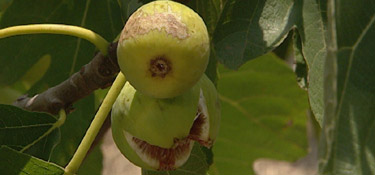
It is well for us that this saying is balanced by the parable of the gardener and the fig. Those of us who have tried to grow fruit trees in this climate know how much work it can take and how disappointing it is when our tree produces nothing. Careful pruning, judicious fertilising and appropriate watering can be to no avail if, for example the weather is not right. Some of us will sympathize with the owner who, frustrated by the lack of fruit wants to replace the fig with something that will produce a yield. Not so the gardener who argues that the tree be given one more chance.

One more chance – this is more like the God who sent Jesus to an unworthy people. One more chance – God doesn’t demand perfection, nor does God wait until we are perfect until we receive the blessings that faith showers upon us. One more chance, then another and another. Over and over again God reaches out to us – frail and imperfect as we are – and says ‘one more chance’, ‘have another go’, ‘you can do it’.

The God in whom I believe, the God who came into a world that was far from perfect, is not remote and distant but close and reassuring. God ‘knows of what we are made’ and, over and over again, makes allowances for us.

God always gives us one more chance.

Lent is an opportunity, a gift from God to take that chance, to make changes in our lives such that by Easter we are in some way more faithful, more joyful or more at peace with the world. Year after year (if need be, day after day) we can take hold of the opportunity to change, to grow and to bear fruit such that albeit imperceptibly we reach the potential God has in mind for us.

One more chance – take it!

God’s wild abandon

July 15, 2017

Pentecost 6 – 2017

Matthew 13:1-9

Marian Free

In the name of God who with wild abandon, gives the gospel to all the world. Amen.

[To prepare, I made two copies of Matthew 13:1-9 in large print, pasted it on board and then cut out each word (a). I made another copy, cut out each word and pasted the words on card (b). Begin by introducing the gospel, and then toss one set of words (a) indiscriminately into the congregation. Call out: “catch! catch!” Conclude with “For the Gospel of the Lord”].

Props

I’m sure that you’d agree that was most unsatisfactory and not the most effective way of sharing the gospel. If I were to present the gospel in this way every week it wouldn’t be long before you began thinking of me as reckless and irresponsible and you would be right. Today, as it happens, I have a copy of the gospel that I prepared earlier. It reads like this (read Matthew 13:1-8).

The discerning among you may have noticed a) that I haven’t read what the lectionary has set down for the day and b) that that means that I have omitted the interpretation of the parable. I’ve left out the interpretation for two very good reasons. Firstly – most scholars do not believe that the interpretation originates with Jesus. Secondly the interpretation throws a very different light on the way in which the parable is heard. The allegorical explanation focuses on the way in which the word is received. In other words, it takes the responsibility away from the sower and places the emphasis on where the seed falls. When we pay particular attention to the response of the seeds to their environment, or interpret the different types of ground as belonging to different types of people we overlook the miraculous growth of the seeds. Even though the seeds are sown indiscriminately they still manage to produce a crop that is over and above even the most optimistic of expectations.

You see, in first century Palestine the usual yield of a crop was a modest seven-fold increase on what was planted. In comparison even a thirty-fold yield is extraordinary. A, sixty-fold or a hundredfold yield would be beyond comprehension! Jesus’ listeners would have been absolutely startled by what they were hearing. They would have been stunned by the reckless and irresponsible behaviour of the sower who, through carelessness wastes precious seeds. Then they would have been completely taken by surprise by the yield – grain that has been sown with wild abandon, not only produces a decent yield, but a yield that exceeds their wildest imagination..

What then is Jesus trying to say? Jesus is reminding the disciples that God does not discriminate. God throws the seed in any and every direction heedless of where it might land and certain that there is good soil in which God’s gifts will take root, grow and produce abundantly. God is not careful or sparing with the gifts that God has to offer the world, but generous and reckless, confident that the response to God’s actions will be overwhelming – beyond imagination

God showers the world with love, compassion and goodness, confident that it will land and take root and reproduce those gifts in abundance.

We have no need to worry ourselves about the future of the church, God will ensure that in one way or another people will continue to respond to God and in this way, God’s love, compassion and goodness will spread throughout the whole world.


For the children – something like this

The Parable of the Sower (or God’s wild abandon)

I ask the children to come forward. Toss some glitter into the air so that it lands on everyone. Ask if they all got some. Ask if I was careful how I threw it (hopefully they will say I wasn’t). Did I try to make it land on the eldest, or the cleverest or the one who was the best behaved? (Again, hopefully they will say I didn’t.)

Wonder aloud how long it will take to come off. Suggest that they will sparkle all day – just a tiny bit of glitter will catch the light. Tell them that whenever someone sees the glitter it will make them smile.

Tell them that God’s love is like that. God throws love at everyone – the good and the bad, the clever and the not so clever, the old and the young. If we know that God loves us, we will love ourselves and everyone else in the world. Just like our tiny sparkles of glitter make people smile, our love will make other people feel loved and God’s love will grow and grow and grow until the whole world is filled with love.

Spreading the gospel with wild abandon

July 12, 2014

Pentecost 5 – 2014

Matthew 13:1-9,18-23

Marian Free

In the name of God who is not concerned with the where or the how, but only that the gospel is shared. Amen.

As you know, General Synod met last week. A significant proportion of the meeting – one and a half hours each day – was spent in small group discussion. There were three aspects to the process – getting to know each other across Diocesan and theological boundaries, bible study and discussion of the report of the Viability and Structures Task Force. The Report, which is available on the General Synod website, is an honest, hard look at the state of the national church.

Broadly speaking, the future of the Anglican Church of Australia looks bleak. Whereas in 1911 38% of the population identified as Anglican, today, according to the census, only 17% of Australians admit to being Anglican and these figures drop to 12.2% in the Northern Territory and Victoria. Of these a massive 62% of those who identify as Anglican are over 60. Changes in our culture over the past fifty to seventy years have dramatically changed the landscape in which we as a church operate. Many of you like me have rehearsed these changes over and over again – Sunday is no longer sacred, patterns of relating have changed to include Facebook and other online networks, Australian citizens now come from vastly different backgrounds and many of our younger citizens have abandoned the church in favour of other forms of spirituality. The days of huge Sunday Schools and full churches seem to many to be a distant memory.

Not only has the society in which we live changed, but we are hampered by other factors that are outside our control – not least of which is the vastness of our country. The Diocese of North West Australia for example covers an area as large as Europe with a population that is small and scattered. How do we offer ministry in such a situation? Changes in our rural areas mean that the populations are declining making survival difficult for rural Dioceses. Job opportunities in our major cities mean that the coastal fringes and especially the capital cities on our eastern seaboard are expanding at a phenomenal rate -so much so that it is impossible for our Dioceses to keep up the pace. Both in the country and the cities there are large areas that are not receiving ministry on a regular basis.

Given the situation on the ground it would be easy to become despondent. However, while the report is realistic, it is also hopeful and offers some suggestions for moving into the future. Using the report from the Church Growth Research Programme in the UK (which we discussed yesterday at our Synod), the report points out that there are places in which growth is occurring. The research team discovered that while there is no single recipe for church growth, there are a number of factors that are associated with growth in Parishes. These include a clear mission and purpose; a willingness to reflect, to change and adapt; freedom to experiment and to fail and intentionality in prioritizing growth and nurturing disciples. Added to these, good leadership and the culture of a Diocese/Parish are paramount. Prayer and vision are indispensable.

Doing things the way that we have always done them is no longer working. If we are going to take the gospel to a world that is vastly different, we will have to try new ways of doing things, we will have to take the gospel to the community instead of expecting the community to come to us and we will have to create an atmosphere in which those who have no experience of church are made to feel comfortable and are given opportunities to engage with the gospel.

Today’s gospel of the sower is very familiar and most readers or hearers will be used to hearing and interpreting it according to the allegorical interpretation that follows. However, it is the view of scholars that the interpretation did not originate with Jesus, but was added by the early church. There are a number of reasons for coming to this conclusion but perhaps the most convincing is this – in a country where arable land was scarce and land holdings were small, it would have been a very thoughtless or careless farmer who would scatter his seed so recklessly (or clear his land so inadequately) that his seed would fall on the rocks, the paths or in weeds. Any farmer would want the best return from his labour and his seed and would ensure that the land was cleared and that the seed fell where it was intended to fall.

The parable then, is not about where the seed falls, but about the extraordinary growth that follows[1]. A thirtyfold return would have been a significant harvest in that time and place, sixtyfold or a hundredfold would have been inconceivable. The parable then, is not about how people respond to the gospel, but to the fact that the sower spreads the seed recklessly and in every direction in the hope that it will fall on receptive ground, take root and grow. The seed is not measured out in small quantities and planted in limited and suitable places. It is thrown to the wind that it might fall where it will.

The kingdom of God then is like a sower who tosses seed on to good and bad ground with wild abandon knowing that whenever and wherever it does take root it will flourish and grow beyond anyone’s expectation.

If we would like our church, the church, to grow, we need to stop being timid and cautious, limiting what we do to the tried and true. If we believe in the gospel, if we really want to share the good news of Christ with a rapidly changing world, we need to step out in faith, to try things that have never been tried before and to go to places where we have never been. We have to have the courage to experiment and not to worry when we fail. Above all, we have to have the confidence to spread the gospel widely and wildly, allowing it to land in many and varied places – the expected and the unexpected. And we have to believe that we will know when it lands in the right place, because it will grow and increase in ways that we cannot even begin to conceive or imagine.

There is good soil out there – just waiting for us to sow the seed.

[1] An interpretation that is supported by two of the parables that follow – the mustard seed and the leaven.

A matter of heaven or hell

February 23, 2013

Lent 2 – 2013

Luke 13:1-9

Marian Free

Figs

Figs

In the name of God who created all things, and saw that they were good. Amen.

Today’s gospel reading includes two discrete parts. A couple of sayings about repentance are followed by a parable about growth.  The first sayings certainly get our attention – Galileans whose blood Pilate mixed with their sacrifices and 18 crushed by a falling tower. Shocking as these events are they are not a sign that those killed were more sinful than others. All of us need to repent. Luke follows these sayings with the parable of the fig tree. Repentance alone is not sufficient, believers are called to grow into full maturity rather than to rest on their laurels for the remainder of their lives. (Salvation is not dependent on a one off decision, but process that begins when we repent and turn to God.)

Jesus’ parable about the fig tree is often misunderstood. An emphasis on keeping the ten commandments and doing good works has led to the conclusion that if the fig tree will only be spared if it produces fruit, that we will only be spared if we can manage to build up a folio of good works that can be measured on the day of judgement. However, in this instance, as in most cases in the New Testament, fruit represents much more than external deeds or measurable goodness. As the parable implies, the fig’s bearing fruit is dependent on its receiving enough fertilizer – that is, on its internal health. Fruit trees in general are very reliant on nourishment, they cannot bear fruit unless they have been properly fed and watered. (The first and only time that my parent’s persimmon bore fruit was the year after the ’74 flood had deposited a substantial amount of fertile silt on their garden.)

Many fruit trees need to reach maturity before they bear fruit. Figs generally take two or three years to be well enough established to produce figs and then they will produce best only if they have been given a good start in life – planted in the right situation and fed and watered well. Without help, a fruit tree will probably attain a reasonable height and appear to be growing well, but without the required fertiliser, no amount of growth will produce fruit.

It is possible that Luke combined the sayings about repentance with the parable of the fig tree because he understood that a change of heart (repentance) was required before growth (maturity) could occur. Conversely, repentance alone is not enough, but is a pre-requisite for future development. A change of heart – repentance – creates the sort of internal environment that allows fruit (the external evidence of change and growth) to be produced. That being the case, it becomes clear that Jesus is speaking of fruit (behaviour) which is driven by a relationship with God that is strong and healthy and which is nurtured and developed by the presence of the Holy Spirit. Seen in this light, fruit refers much less to good deeds and much more to the characteristics that result from such a change of heart.

Paul understood this when he wrote of the fruit of the spirit. When he lists the fruit he doesn’t refer to keeping the commandments or doing good deeds but to the external signs of a person at peace with God, with themselves and with the world. Love, joy, peace, long-suffering, gentleness, patience and self-control are the fruit that we are to bear. These are the characteristics that will be a sign of our growing spiritual maturity.

Jesus’ challenge to the disciples that they are not to make the mistake of believing that their turning to him (repentance) is some simplistic, easy fix that will ensure their salvation. Turning to Jesus is only the first step in a process of development that will continue for the rest of their lives and that development, as the parable indicates, will need to be encouraged, fed and nurtured.

Richard Rohr considers spiritual development in his book Falling Upward – a spirituality for the two halves of life[1]. He argues that many people never develop beyond the superficial declaration of faith. Having come to faith, they fail to feed and nurture the depths of their being such that they bear meaningful fruit as a result of their faith. Because they do not pay enough attention to what is going on internally, their external lives never really change. They cannot bear fruit because they have not developed a healthy spirituality that can drive their behaviour.

Rohr suggests that this internal growth is at the core of all religious practice and that it is essential not only for the individual but for the world as a whole. This he claims is because: “God gives us our soul, our deepest identity, our True Self, our unique blueprint at our own ‘immaculate conception’. We are given a span of years to discover it, to choose it and to live our destiny to the full. Our True Self will never be offered again”. The unique person that is ourself has this life only to be the unique person God intends us to be, to achieve the unique goals God has in mind for us and to contribute to the world the unique gifts with which God has endowed us. Our one essential task in this life is to discover and to be that True Self, that unique part of God’s creation. Rohr believes that this task is absolutely imperative for all of us. Heaven and earth, all that is, depend upon our trying to become the person God intended us to be.

Because the implications of this task are so vast, its importance cannot be underestimated. In fact, Rohr suggests, it is because so much is dependent on our spiritual health that the discussion surrounding it is accompanied by such emotionally charged words as “heaven” and “hell”. It is why the vineyard owner threatens to uproot the tree when it is not fulfilling its purpose, why the call to repentance is set in the context of such shocking stories as the slaying of the Galileans and the fall of the Tower of Siloam. The consequence of not nurturing our souls is not something to be taken lightly – it has ramifications for the future of the whole world.

If we allow ourselves grow into our souls, to become the unique being envisaged by God at our creation, God’s purpose not only for us but for the world will be achieved. If we do not grow into our own unique being we hinder God’s purpose, we fail to make our own unique contribution and we refuse the invitation to take part in bringing about the coming of God’s Kingdom.

The purpose of the fig is to bear figs. Without fruit it is taking up space, that could be used to grow something else. It is not fulfilling the purpose for which it was created. Our purpose is to grow into our full identity, that unique self that God has given us and by doing so to share with God in bringing about the kingdom, the salvation of the world.


[1] Rohr, Richard. Falling Upward – a spirituality for the two halves of life. San Francisco: Jossey-Bass, 2011, ix. Note: I acknowledge that I have used Rohr as my starting point, but I am aware that  he may not agree with my use of his premise.