Posts Tagged ‘hatred’

Graduation speech?

June 20, 2020

Pentecost 3 – 2020

Matthew 10:24-39

Marian Free

In the name of God Earth-maker, Pain-bearer, Life-Giver. Amen.

In 2015, the actor Robert de Niro addressed the graduands at the New York University Tisch School of the Arts Commencement ceremony. He began by saying: “Tisch graduates you made it and you’ve had it.[1]

The speech in full is available on Youtube. This is an excerpt.

“You’ve had it. The graduates from the College of Nursing, they all have jobs. The graduates from the College of Dentistry – fully employed. The Leonard Stern graduates of Business Studies, they’re covered. The School of Medicine graduates, each one will get a job.

Where does that leave you? Jealous? I doubt it. Those accountants they all had a choice. I suspect they used reason, logic and common sense to give them a career that would give them stability. Reason, logic and common sense at the Tisch School of Arts? – are you kidding me? But you didn’t have a choice did you. When it comes to the Arts common sense doesn’t come into it. You have a talent; a passion and you chose to pursue it.

“That’s not a bad place to start. Your place is clear – not easy, but clear. A new door is opening for you, a door to a lifetime of rejection. How do you cope? I hear that Valium and Vicodin block the pain, but you don’t want to block the pain too much – without the pain what would we talk about?” 

“Rejection may sting but my feeling is that very often it has nothing to do with you. You have to be true to yourself. I presume you didn’t pick this life because you thought it would be easy. Don’t be afraid to fail. Take chances, you have to be bold and go out there. You are not responsible for the whole project, only your part in it. You learn to trust each other and depend on each other, because you are all in this together.”

It would only take a little adaptation to turn de Niro’s words into Jesus’ graduation speech to his disciples. There are two major differences. One is that I am not entirely sure that the disciples chose their path. Sure, they have followed Jesus willingly – but he asked them, not the other way around. The second is that the Tisch graduates (judged by their wholehearted laughter) have some idea that the way ahead will not be easy – and may in fact be extraordinarily difficult.

Today’s gospel continues that begun last week – Jesus’ sending out of the disciples. Last week Jesus provided a list of instructions to the twelve – what not to take and where not to go. If these instructions weren’t daunting enough, Jesus continues by informing the disciples what they might expect. Up until now, I imagine, the disciples will have been caught up in the excitement and novelty of being followers of Jesus, with little to no thought that it might be dangerous or costly. Jesus teaching may have in parts been difficult, even harsh, but there has, up until now, been little hint that the path that they have chosen will lead to persecution or to the cross. 

And now – just before Jesus sends them out on their own – he spells out the consequences of following him. Graduates of the Tisch School of Arts might face unemployment and rejection. Disciples of Jesus can expect to be handed over to the authorities, betrayed by their own families and hated by all. They must even be prepared to lose their lives for Jesus’ sake. 

I can’t help wondering if the disciples realised that this was what they had signed up for. In fact, did they think that they had signed up for anything at all? And, even if the twelve had made a choice, if they had signed up for discipleship, did they really know what it entailed? Did they understand that one day Jesus would simply send them out (on their own) into a hostile world – a world of hatred and rejection, a world filled with violence and persecution, a world that would turn its back on them and which might even put them to death? I suspect that this was all news to them. 

At that point, I would not be surprised to discover that the disciples were frozen in fear, unable to go forwards or backwards. Our Arts graduates have their talent and their passion to fall back on. The disciples had no such resources. Only Matthew could be considered to have been a “man of the world”, someone who knew how cruel and unforgiving it could be. Thankfully, Jesus’ warnings are interspersed with assurances. Despite promising the disciples that he has come to set “a man against his father and a daughter against her mother” Jesus insists that they need not be afraid because their very association with him is the protection and strength that they will need. He may not be able to keep the disciples from harm, but he can assure them that when they are at a loss for something to say, the Spirit of the Father will speak through them. Their lives may be at risk, but Jesus can give them the affirmation that their lives are of such value that even the hairs of their head are all counted.  Jesus doesn’t promise that it will be easy, but he does promise that even if they lose their lives they will find them.

In the light of this passage, Jesus’ “graduation speech” we may all have to reconsider our understanding of discipleship. If we had thought that following Jesus comprised conformity to a code of behaviour and a peaceful coexistence with our fellow human beings, then – this passage tells us – we are very much mistaken. Jesus has come not to bring peace but a sword. His very presence was divisive and confrontational, and he expects that our presence will extract the same reaction. Where there is injustice, we are called to confront it. Where there is oppression, we are called to challenge it. When people are excluded, marginalised or stereotyped because of their race, religion, colour, gender or sexuality; we are called to stand for and with them whatever it may cost.

Disciples of Christ – you are done for! Wherever you go from here may be dangerous and frightening. It may cost you your family, your friends and your life! In the end, though, it does not depend entirely on you. You are not alone, and you are not “responsible for the whole project.” With other disciples of Christ, you are in this together and you are supported and upheld and given voice by the Spirit of the Father. 

The way ahead may not be easy, but in the end, would you have made any other choice?


[1] Not his word. He used a word that got attention, but which I didn’t feel I should repeat.
God loves the world?

March 15, 2014

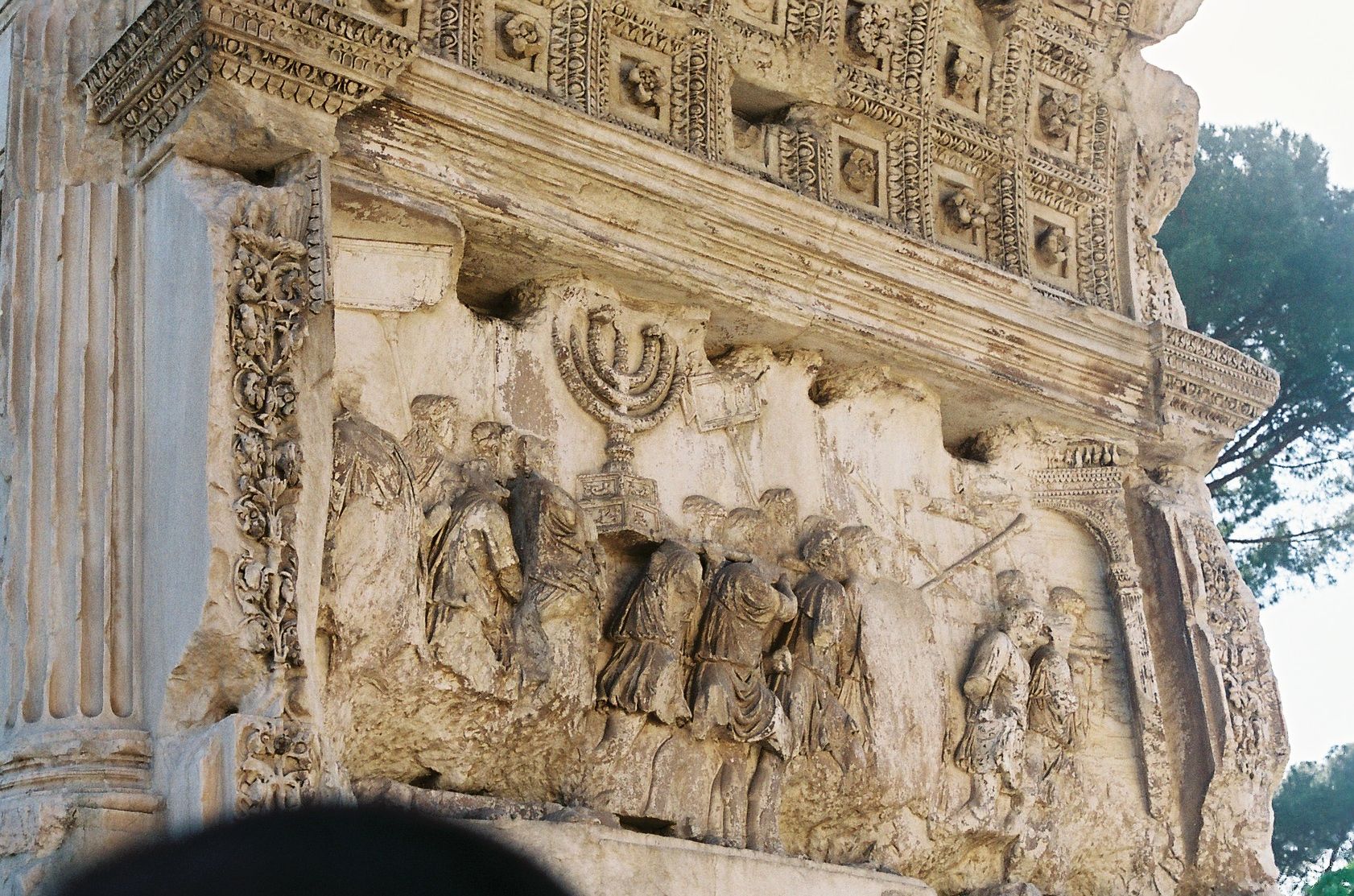
Titus' arch

Titus’ arch

Lent 2. 2014

John 3:1-17 (Genesis 12:1-4a; Romans 4:1-17)

Marian Free

In the name of God whose love embraces a world torn apart by violence, hatred, fear and greed. Amen.

During the week I came across a graphic description of the siege of Jerusalem in 70 CE. The author, Reza Aslan imaginatively recreates the turmoil and unrest of first century Palestine, the various revolts by “bandits” against the Roman rulers and how finally this ferment boiled over in the centre of the Hebrew faith – Jerusalem[1]. Aslan records the failure of successive Roman governors, the discontent of the people, the uprisings, the factions and the focus on Jerusalem and the Temple. Then he goes on to describe the callous ruthlessness of the Roman reaction.

When the Israelites expelled the Romans from Jerusalem, Vespasian was sent to quell the rebellion and restore order. Approaching Jerusalem from north and south, Vespasian and his son Titus retook control of all but Judea. In 68 CE Vespasian was distracted by the death of Nero and his ambition to fill that role. He abandoned the battle and returned to Rome where he was declared Emperor. The people of Rome were restless and Vespasian realized that he needed a decisive victory (or Triumph) to consolidate his hold on the office and to demonstrate his authority over the whole of the Roman Empire.

The revolt in Palestine provided the perfect scenario to show of what he was made. Vespasian decided not only restore order and reclaim authority in the nation, but to utterly destroy it – its people and, more particularly its God. To this end Vespasian dispatched his son Titus to bring the Hebrews to their knees. Titus set siege to Jerusalem, cut off the water supply and ensured that no one could go in or out. Those who did escape, he crucified in full view of the city. Slowly the people starved to death. They ate grass and cow dung and chewed the leather from their belts and shoes. Soon the dead were piled high in the streets, as there was nowhere to bury them. Titus needed nothing more for victory, but his task was to annihilate the people completely. His troops stormed the city, slaying men, women and children and burning the city to the ground so nothing remained[2].

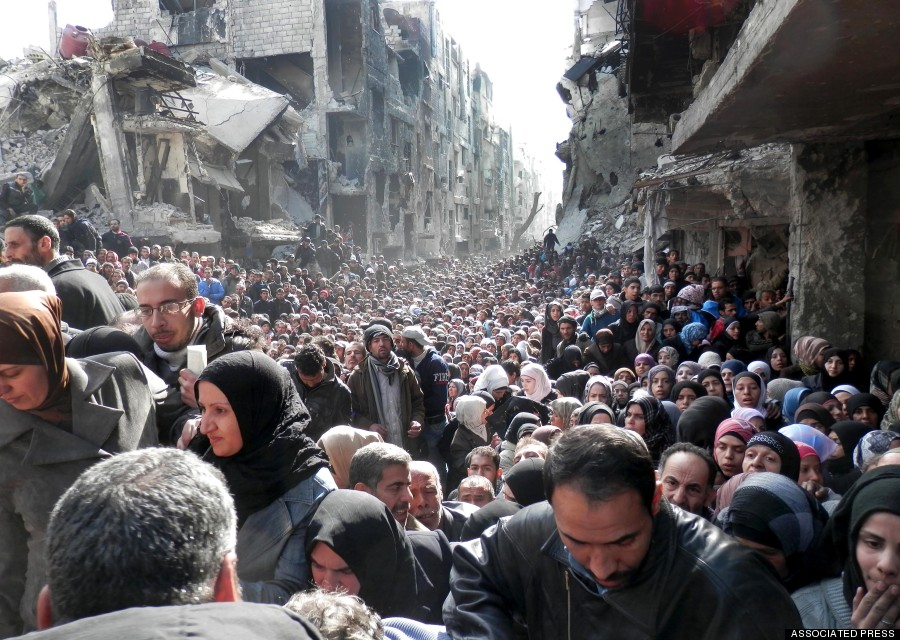
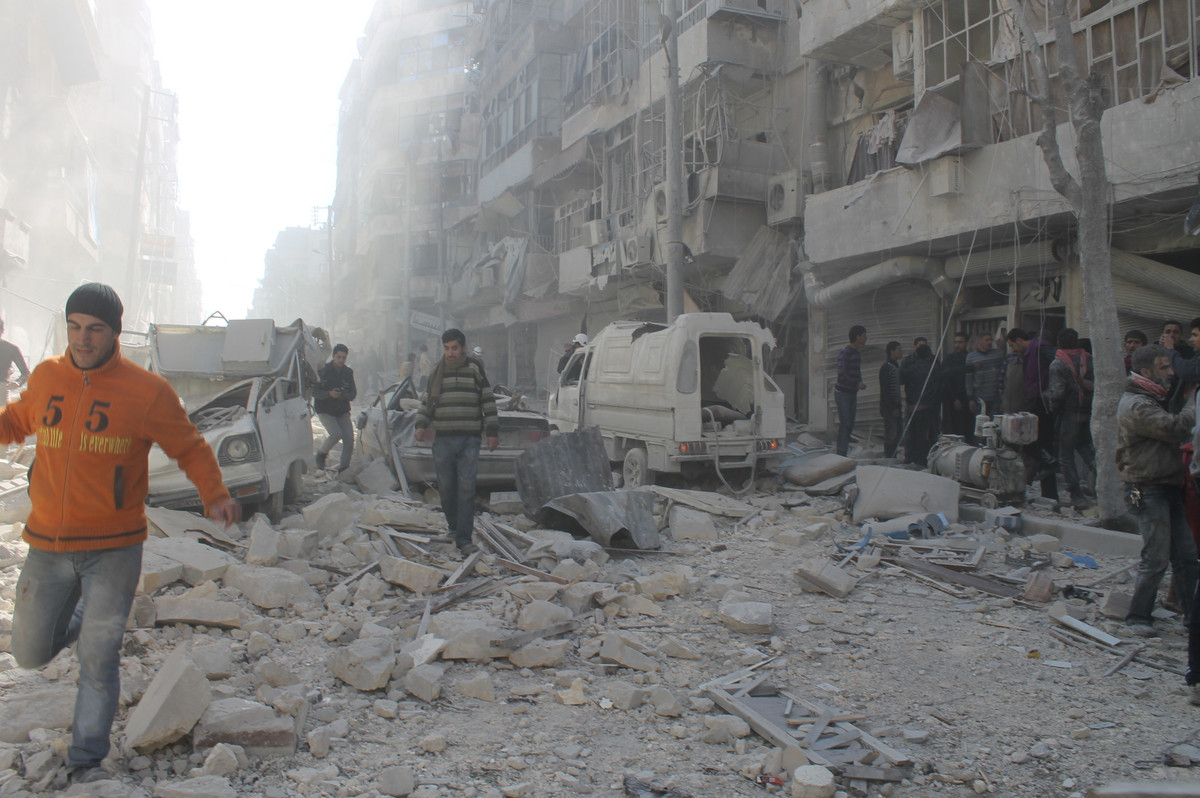
The world doesn’t change. The situation of those imprisoned in Jerusalem in 70 CE is not too different from that of those in many parts of Syria in 2014. The city of Homs has been under siege for two years now. Its inhabitants – men, women and children – have lived on grass boiled in water and killed cats for food. Schools are shut, only one hospital remains open and there is no electricity or running water. Those who emerged during the recent cease-fire were gaunt and hollow-cheeked, often caked with dirt. No one has been excluded from the horror, not the elderly, the disabled or the very young.

Syria is perhaps the most graphic example of a world gone wrong, of the way in which human beings can inflict the most horrific suffering on their brothers and sisters and of the way in which our primal fears can boil over into violence and destruction. As the world waits with bated breath to see what will be the outcome of the strife in the Ukraine, we cannot overlook the fact that Syria and the Ukraine are not isolated situations but are the face of a world in crisis – a world which reveals the very worst that humankind can be. Even to begin to list the nations at war or in the grip of civil strife would take too long. What is more, our minds simply cannot encompass the scale of suffering on a global scale. War and civil strife are just one example of a world that bears no hint of a good creator God. When we add to that human trafficking, extreme poverty, corrupt or ineffectual government, we could be tempted to ask: “Is this the world that God loves so much that he sent his Son?”

The answer is of course a resounding “yes”!

Today’s readings remind us that God’s love is not restricted to a privileged few or to those parts of the world that are free from strife and turmoil. God’s love reaches out to include the whole world.

The biblical story of God’s inclusive love begins in Genesis with Abraham and Sarah (12:1-4a). When God calls Abraham, God’s intention is clear – it is to make Abraham the Father of many nations – “in you all the families of the world will be blessed”. Initially it appears that through Abraham, God has chosen a select group of people for Godself. Certainly that is how the story plays out for centuries. All the while though there are constant hints that God’s love extends farther and embraces those who do not belong to the family of Abraham. Consider the following for example. Rahab was an outsider, yet it was she who enabled the victory at Jericho and facilitated entry into the Promised Land. Ruth, the forebear of Jesus was not a member of the Hebrew nation. God relented and saved the Gentiles city of Nineveh (despite Jonah’s objection) and the Psalmist tells us that all nations will flock to Jerusalem. Even Cyrus the King of Babylon is called God’s “anointed”. It is clear that God’s love and attention was not focused on the children of Abraham alone.

Paul picks up on this theme in both the letter to the Romans (4:1-17) and the letter to the Galatians (3:3-9). It was, he informs his readers, always God’s intention to include all people within the ambit of God’s love. No one is privileged in God’s eyes, all are equally worthy of God’s loving attention. “God is the father of all of us (Rom 4:16).”

It comes as no surprise then to read the familiar words of John 3:16 “God so loved the world that he sent his only Son”.

God’s love in not (and never was) restricted to a limited few, to those who belong to a particular group or to those who behave in a certain prescribed way. God’s love doesn’t pick and choose and it certainly does not wait until the world is ready or worthy of that love. The Palestine to whom God sent his Son was far from an ideal microcosm of human existence – far from it. In the first century, the Hebrew people were compromised, conflicted and divided, their priests were, at best, servants of Rome and, at worst, men seeking wealth and aggrandizement. Despite all this, it was to such a broken and imperfect people that God chose to send his Son.

Nothing much has changed – the world that God loves continues to be a long way from perfect but that doesn’t stop God from loving. However unlikely it seems, however undeserving the world continues to be, God reaches out in love giving us the opportunity for salvation. What it takes is for us to respond, for us to choose light over darkness, salvation not destruction.

God so loves the world – how then should the world respond?


[1] Aslan, Reza, Zealot – the life and times of Jesus of Nazareth. New York: Random House, 2013, 60ff.

[2] Vespasian’s Triumph, the procession of slaves and spoils of war were immortalized in the arch which can still be seen in Rome today.

The world God loves.

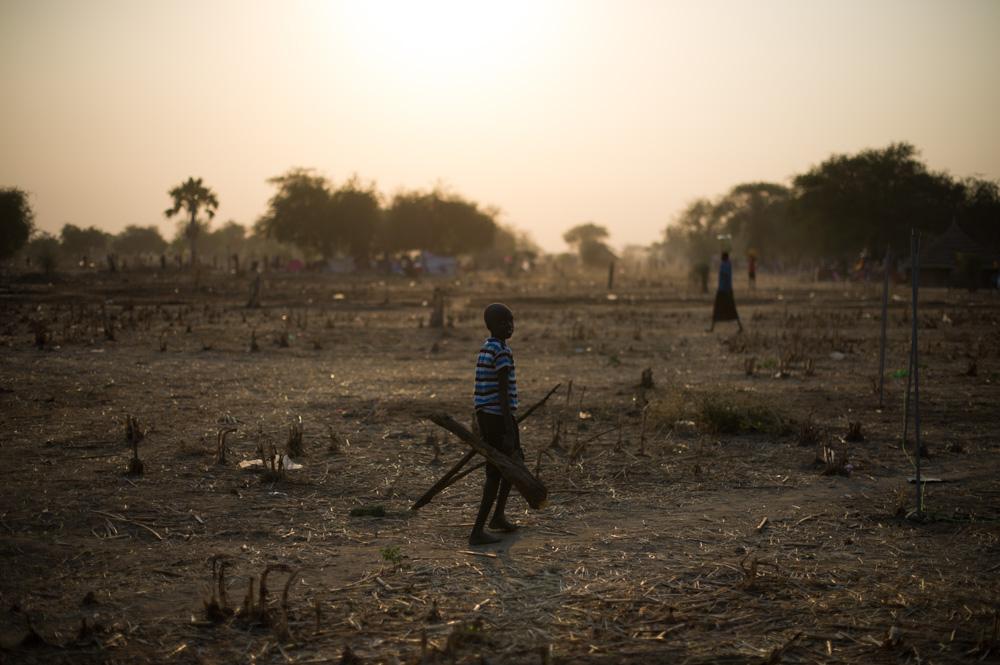
Devastation in South Sudan

Devastation in South Sudan

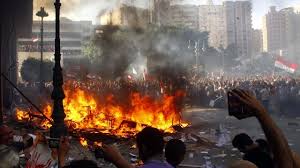
Riots in Egypt in 2013

Riots in Egypt in 2013

Syrian refugees lining up for food Syrian refugees lining up for food

Destruction of HomsDestruction of Homs