Posts Tagged ‘Lent’

Glory and humiliation

February 25, 2017

Transfiguration – 2017

Matthew 17:1-9

Marian Free

In the name of God who can transfigure and transform those who, with Jesus, are willing to accept that the way of faith may just be the way of the cross. Amen.

The very public and tragic meltdowns of someone like Grant Hackett are a stark reminder of how difficult it is for a person whose life has been spent in the limelight and the constant affirmation that success brings, to deal with life afterwards. If their sense of identity and purpose has been tied up in their sport and their success in that sport, it may be extraordinarily difficult to forge a new life, a new identity and a sense of purpose after retirement.

“Everything that goes up must come down,” the saying goes. Most of us know that highs of life are very often followed by lows. When a great party ends and we are left with the cleaning up, or when friends who have stayed for a while leave to go home, we can be left with a sense of emptiness, a lack of direction and no way to fill our days. We would like the good times to go on forever but life is not like that.

Traditionally – from the ninth century onwards – the feast of the Transfiguration was celebrated on August 6th. When the Lectionary was updated about 22 years ago the festival was moved to the last Sunday of Epiphany, the Sunday immediately prior to Lent. In this new position the feast day does a number of things. It acts as a bridge between Epiphany and Lent, it reminds us that our faith did not emerge in a vacuum, that it has its roots in the ancient stories of Moses and Elijah, it points us forward to Jesus’ resurrection and Ascension and in its context it highlights the tensions between glory and humiliation that are not only part and parcel of Jesus’ life, but which can be expected in the life of everyone who chooses to follow him.

When the Transfiguration is celebrated on the Sunday before Lent it serves as a stark reminder that Jesus’ glorification came at a cost – that of complete submission to God and of the acceptance of God’s will in his life. In some ways it reverses the account of the temptation of Jesus that we will hear next week. Just to remind you, before Jesus’ ministry began he came to John to be baptised. As he came out of the water he heard a voice from heaven declaring “This is my Son the Beloved”. It is heady stuff especially if, as the gospel implies, only Jesus hears the voice. You can just imagine what might be going through Jesus’ head at that moment. He has come to be baptised and in the process learned that he is none other than God’s Son. What could he do with such power? He could perform miracles in the way that magician would perform magic tricks, he could behave recklessly and expect that he would come to no harm or, better still he could rule the whole world! As the Son of God nothing would be beyond his power or his reach!

Amazingly, despite the temptation to do otherwise, Jesus chooses NOT to take advantage of his divinity, choosing instead to allow the power of God to work through him not for him.

The occasion of the Transfiguration is, as I said, almost the reverse. Jesus has by now begun his ministry, chosen disciples and sent them out as his representatives. According to Matthew, just six days prior to the journey up the mountain Peter has made Jesus’ identity known to the disciples: “You are the Christ, the son of the living God”. Jesus’ secret is out. Here is his opportunity to shine, to share with the disciples what the Son of God can and will do, but Jesus is clear, his role is not to seek his own glory but to take the path that God has chosen – a path that will lead to suffering and to the cross. If he ever had a desire for power and glory it was defeated long ago, his role now is to convince the disciples that they too must follow the path that he has chosen.

Following Peter’s declaration, that he is the Christ Jesus goes – not to the desert – but to the mountain. Here, instead of facing the temptation to seek power and glory, he has power and glory bestowed upon him. As if it is a pledge of what is to come, Jesus is transfigured, he speaks with the prophets of long ago and once more a voice from heaven declares: “This is my Son the Beloved”. Jesus has made the right choices and has made it clear that he will follow through to the bitter end. There on the mountain and before the disciples God affirms Jesus’ choice and gives both Jesus and the disciples who are with him a glimpse of what is to come. A moment of transcendence and affirmation that will sustain them through the bitterness of betrayal and the humiliation of the cross.

For Jesus the euphoria of his baptism was followed by the trials of the desert, the affirmation of Peter by the announcement of his death and resurrection, the mountain to experience by his mundane human existence and the misunderstanding and foolishness of the disciples. If it was so for Jesus it will be no less true for us. Our lives of faith will not be lived on some exalted plateau of spiritual experience from which we never descend. There will be moments of doubt, times of anxiety and occasions of temptation and humiliation. In our faith journey, we may soar to the clouds but we may also come crashing down to earth. We may feel enveloped by God’s love and we may feel utterly abandoned. But, if we hold to our course, we will be affirmed, encouraged and ultimately transformed.

A matter of love

March 19, 2016

Palm Sunday – 2016

Luke 22: -23:

Marian Free


A matter of love

May God whose love for us knows no bounds, free us from all those things that prevent us from accepting that love. Amen.

Love is an extraordinary motivator. It can enable people to go to extraordinary lengths to make a difference for those whom they love. Parents of children with severe handicaps invest hours of their time and all their financial resources to not only ensure that their child has the best quality of life that is possible, but also to defy the medical staff who have advised them that the child has no future. Siblings of cancer sufferers cycle around Australia or complete other such feats to raise awareness of the disease and raise funds for research. Husbands or wives refuse to turn off life support machines, believing that the one whom they love has a future.

The love and determination of a spouse means not only the difference between life and death, but also the difference between simply being alive and having some quality of life.  Only last week I read the account of a young woman Danielle. At just 23[1] Danielle had married the love of her life. Only months later her husband, Matt he seriously injured in a cycling accident. As well as numerous fractures, he had sustained a serious traumatic brain injury. A team of doctors advised Danielle to turn off his life support.

Danielle trusted the doctors and thought she would agree to end Matt’s life. After a sleepless night she thought: “Matt is my husband. If he stays in a coma, of if he needs looking after for the rest of his life, I will be the one taking care of him.” Instead of conceding that the doctor’s were right, Danielle knew if a flash that she could do it. She felt that God was telling her to take a chance, that this was her path in life. Danielle was not going to let Matt die. That was 2011. What followed was a battle to bring Matt out of the coma, battles with the medical staff who wanted to put him into a nursing home and twenty four hour care, once she got him to her mother’s home. Caring for Matt meant changing nappies, checking feeding tubes, giving sponge baths, administering up to 20 different medications, turning Matt every two hours and single handedly doing all the physical therapy that was required.

Danielle’s journey is a long way from over and Matt may never be the same, but he sings to Danielle and writes her poems and tells her every day that he loves her.

As is the case with Danielle, the cost of love is often enormous – emotionally, financially and in terms of the time that is involved. Yet the lover (parent, sibling, friend) thinks nothing of that, only of ensuring that their beloved is loved and cared for, has the best life that is possible in the circumstances and that they know that they have not been abandoned.

This Lent, it has seemed to me that the readings have focused on love – God’s boundless, unconditional love for all of humanity. We have seen that God reaches out for us in love, refusing to give up on us no matter how much we disappoint, frustrate and even enrage God.  God does not/cannot stop loving even when we blindly go our own way, when we put up barriers between ourselves and God’s love or when we behave in ways that are damaging to ourselves or to others. God’s love for us is a love that never gives up, no matter how broken or beyond repair we might be and it is a love that never counts the cost.

Today and throughout this week, we will witness God’s love played out in Jesus’ journey to the cross. We cannot know what was going through Jesus’ head when he set out for Jerusalem or when he incurred the wrath of the Jewish leaders by entering the city as a King, by challenging their views and by being high-handed in the Temple. What we do know is that at any point Jesus could have turned back. At any point, Jesus could have decided that it was all too hard and simply given up. At any point, Jesus could have chosen to do what was right for him, rather than what might be right for others.

But as relentlessly as the forces of evil lined up against him, Jesus doggedly continued on the path that was before him, the path that would ensure death for him and life for the world.

This is the ultimate demonstration of God’s love for us – God, in Jesus entering our world and pouring out love and compassion on an ungrateful world. God demonstrates God’s love for us in Jesus’ giving himself completely to and for us – doing whatever it would take to enable us to live our lives as fully as we possibly can.

God cannot and will not stop loving us. It remains for us to accept that we are loved and to discover that it is only by surrendering to God’s love that we will find fulfillment, freedom and peace. It remains for us to abandon ourselves to God and to thereby see that it is only in God we have all that we want or need.

[1] Reported in the latest Marie Claire Australia magazine (April 16, 2016, p104-106).

Abundance not sacrifice – Lent is God’s gift to us, our gift to ourselves

March 12, 2016

Lent 5 – 2016

John 12:1-8

Marian Free

In the name of God whose outpouring of love is more than we can ever imagine.  Amen.

It is just possible that I am turning into a grumpy old woman or it may be that I am by nature someone who tends to take the world and faith seriously. Whatever it is, I have found myself being irritated or disappointed by the attitude that some people (particularly via social media) have taken towards Lent. There have been posts on Facebook by people bemoaning the fact that they are saying “goodbye” to beer or wine or some other treat for forty days as if Lent is a burden imposed upon them rather than something taken up freely. Other people have posted cartoons, which again make it seem that Lent is at worst some interminable punishment or at best a trial that has to be endured. To be fair, I am sure that most of the posts are from people who do take Lent seriously and who assume that their friends will understand that they are simply making light of it not expressing how they really feel.

It does concern me however that the negative messages about Lent, give the wrong idea – not only about the practice of Lent but about the Christian faith – to the non-Christians who hear or read them. Those who are not in on the secret could be forgiven for thinking that Lent is a period of misery expected by an exacting and demanding God instead of seeing it as a time of self-imposed abstinence that will liberate us to know more fully an indulgent and affirming deity.

The readings for the first four weeks of Lent have encouraged us to turn our lives around and to remove the barriers that separate us from the overwhelming abundance of God’s love. John the Baptist urged us to “repent” (literally – turn around), the parable of the fig tree reminded us that we share with all of humanity its frailty and imperfections, Jesus’ lament over Jerusalem gave us an insight into the sorrow experienced by God because of our refusal to accept God’s love and the parable of the two sons demonstrated God’s utter refusal to exclude us from that love and at the same time reminded us of the ways in which we place ourselves beyond the reach of God’s affection.

Today, as we approach the end of our forty days, we are confronted by a description of an act of intimacy, extravagance and tenderness – not of God towards us, but of Mary towards God. At first the gospel seems out of place an action of such beauty and lavishness seems to conflict with a time of fasting and self-denial.  But today’s gospel is a perfect fit – not only with the gospel readings that have preceded it, but also with the central purpose of Lent. In conjunction with the gospels of the past four weeks, today’s gospel sums up what Lent is about and what we can hope to achieve.

We discover, if we plumb the lectionary offerings, that Lent is primarily about ensuring that we are in the best condition possible to accept God’s love for us. We allow ourselves a period of prayer and self-examination to reflect on our lives and in particular to consider whether or not we are truly open to the love that God is constantly pouring out on us. Fasting and self-denial are not intended to be a way of  “mortifying” or denying the flesh” but a means of identifying and ridding ourselves of the obstacles that we place between ourselves and God – obstacles which are just as likely to be emotional and psychological as they are to be physical.

When we strip ourselves bare, when we purge ourselves of all the things that prevent us from experiencing the fullness of God’s love, we will be simply overwhelmed by the outpouring God’s grace and the generosity and the bounty of God’s affection. We will be astounded that God could love us so much and we will be acutely aware of our little we deserve that love.

Lent is a lesson of love, God’s extravagant, unconditional and boundless love, which is ours for the taking. The disciplines of Lent are not intended to weigh us down, but to prepare us to receive God’s love without question and without hesitation.

This is where Mary fits in. Mary, the sister of Lazarus, responds to God’s love with an extravagance that matches Jesus’ own. Mary is the perfect example of someone who has allowed herself to be stripped bare, who has opened herself completely and unreservedly to God’s scrutiny and in so doing has discovered not judgement but compassion, not condemnation but understanding, not rejection, but complete and total acceptance. Mary responds in the only way possible – with a demonstration of her deep and humble gratitude.

Even by today’s standards, Mary’s actions open her to disapproval – the loose hair, the public and intimate display of affection, the extravagance and waste. Yet for Mary there is no other response that will adequately express her reaction to God’s love for her. Mary throws caution, propriety and decorum to the wind. She has no thought of what others might think of her only that she must express her own love in a way that matches her experience of the love of God.

Lent then, is not so much about sacrifice as it is about abundance, not so much about self-denial as it is about self-acceptance, not so much about being unable to measure up, but about realizing that there is nothing against which to measure ourselves. Lent is less about sacrifice and more about abundance – about discovering the abundance that emanates from God and not from the world. Lent is less about will power and more about letting go – for it is only when we truly let go that we are able open ourselves to the wealth that is ours for the taking.

During Lent we identify and shed the obstacles that separate us from the love of God – a love so overwhelmingly abundant that it calls for a response that is extravagant, intimate and tender a response like that of Mary sister of Lazarus.

Forty days is not much to ask – in fact it almost seems far too little to give when we gain so much in return.

No quick fix

February 13, 2016

                                                                       Lent 1 – 2016 – some thoughts                                                                                             Luke 4:1-15

                                                                                                                                                                  Marian Free

In the name of God who asks for all that we have so that God can give us all that we need. Amen.

Some time ago, I had surgery on my foot. As part of the healing process I was to keep off my foot for a fortnight and not drive for six weeks. It has to be said that even with lectures to prepare and movies to watch, two weeks stuck on a couch seemed like forever. Once the pain had diminished, it was tempting to move about to fill in the time in other ways, but in this instance I knew that a “quick” recovery meant doing what was required. So, bored and uncomfortable I stayed on the couch with my foot on a stool and moved about only when absolutely necessary.

It is tempting to cut corners, to avoid the hard yards that a good job requires. At first it might appear that it made no difference that we went back to work too soon, that we used an injured limb before the recommended time, that we didn’t properly prepare the timber before we painted, that we didn’t properly cream the butter and the sugar for our cake. In fact, there will be times that we don’t experience any ill consequences for our failure to do something properly. However, there will be times when the consequences of our failure to follow through are disastrous. A bad paint job will need redoing sooner rather than later, a cake that has not been properly stirred might be lumpy, but a limb that has not properly healed might cause us even worse problems later on, and a return to work when we have not fully recovered from an illness may mean that the infection returns – more virulent than before – and we lose even more time from work than had we been patient in the first place.

Here, at the beginning of his ministry, Jesus is offered a short cut, a way out of the difficult and painful course that lay before him. The tempter tells him that doesn’t have to be hungry. It would be easy enough for Jesus to turn stones into bread. As the Son of God Jesus he could simply enforce God’s rule, bend the wills of people to his own, there was no need to persuade and encourage. He didn’t have to endure the suffering and pain of the cross when he could simply call on the angels to save him.

Jesus has been driven into the wilderness to reflect on his call and on his role. The temptations are anything but theoretical. They reflect the very real choices that faced Jesus – to fully enter the human experience or to exert the power of his divinity, to impose his will or to draw people to his way of seeing things, to gain attention by being a miracle worker or by working beside people, to try to escape pain and suffering or to place his trust completely in God and believe that the cross would be worth it.


Forty days in the wilderness have taught Jesus that near enough would not be good enough and that easy solutions would not achieve the end goal. Jesus knew that people who were impressed by easy miracles would not stick around for the long haul, that loyalty that was forced would be no loyalty at all and that without the cross there would be no resurrection.

Jesus will be a very different sort of Christ from the one whom many expected. His leadership will be marked by service and his victory will look like defeat, but it will only be through his complete submission to God that Jesus will be able to restore the relationship between God and the people of God. So Jesus refuses to be drawn into the devil’s ruse, he resists temptation to take the easy way out and sets his mind to the task that is before him.

What is true for Jesus is true for us. Later in the gospel Jesus will ask the disciples: “Who do the crowds say that I am?” When Peter identifies him as the Christ, Jesus makes sure that the disciples know what this means telling them that he must suffer and be rejected and killed and that on the third day he will be raised. He goes on to say that those who follow him must set their minds to the same experience – figuratively if not literally. They must deny themselves and take up their cross daily. If they want to save their life, they must lose it.

Jesus’ life and death not only win our salvation, but they provide the model for our own spiritual lives. If we are to realise our full potential as children of God, we, like Jesus must be prepared to go the full distance, to put in the effort that is required, to give ourselves whole-heartedly and with conviction. In order to be formed into the image of Christ we must be prepared to stick with it,, to understand that short-term pain leads to long-term gain. We must try to see the big picture rather than getting caught up in the minutia of the every day. We must learn that near enough is simply not good enough.

Lent provides an opportunity for us to share Jesus’ wilderness experience, to ask ourselves once again, what it is that God wants of us. Lent allows us time and space to see how we are going, to ask ourselves whether we are content with the superficial or whether we are ready to explore the depths of our existence, to consider whether our focus is on the present or on eternity. Lent gives us space to ponder whether we trust God sufficiently to give ourselves completely to God or whether we are still holding something back, whether we understand that it is only by giving all that we have that we gain everything that we could ever want or need.

Lent forces us to ask whether we are just giving lip service to faith or whether we are really ready to allow God to be all in all.

How will you spend this Lent and will your practice equip you for the rest of your journey or will it simply fulfill the needs of the moment?


A quiet observance

February 10, 2016

Ash Wednesday

Matthew 6:1-8,14-18

Marian Free


In the name of God who created us and who, with our consent, continues to recreate us. Amen.

Jerusalem - Ramadan

Canon fire to mark end of fasting.

In 2015, we were in Jerusalem during Ramadan. Two things stood out, one was the fact that it was not until 8:00pm that the streets came alive. Food vendors who had been there for most of the day suddenly became busy as Palestinians came out to eat. The second was the canon (yes, canon) that helpfully fired at 4:00am to remind people that the time to fast had begun and again at 8:00pm to indicate that the fast had ended. Our Palestinian driver was observing Ramadan and while we Westerners ate lunch, he sat in the bus eating nothing.

One of the most challenging things about being in a largely Muslim country is the observance of faith. Five times a day the Muezzin gives the call to prayer – a haunting chant that floats overhead reminding the observant to stop what they are doing and offer worship to God. Five times a day faithful Muslims unroll their prayer mats and in full view of the world make their obeisance. For myself the call to prayer is a powerful reminder of the presence of God in every aspect of life, further, it always seems to me that such a public proclamation is an indictment of the Christian world whose faith is practiced behind closed door. (We might ring bells before services, but today few churches ring the Angelus.)

I think that it would be fair to say that in today’s secular world, more people know about Ramadan than they do about Lent. The reason for this can be placed directly at our door. If our observance is lack-lustre or non-existent, there is no reason for others to ask what we are doing and why. If we ourselves are not prepared to demonstrate that it is possible to go without for a short time or that it is necessary to hone our spiritual practices, how can we possibly confront the materialism and secularism of the world around us?

That does not mean that we should fast loudly and blatantly. It certainly doesn’t mean that we should go about with long faces so that everyone is able to notice how much we are suffering for our faith. Just the opposite – our practice of Lent should be quiet and unobtrusive. If our abstinence or our practice is noticed by others, we can say, without fanfare, something like: “Oh, this is just something that I am doing for Lent.” It is just possible that this will lead to further questions about why we do such things in Lent and give us opportunities to expand on the benefits of devoting a period of time to being less self-obsessed.

It is possible too that some will find our Lenten practice disquieting and confronting. Some people may feel uncomfortable around us if they are being extravagant and we are being economic, if they are feasting and we are fasting. Hopefully their disquiet may lead to further thought and questions (just as the Muezzin confronts my failure to display my faith more publicly).

Either way, without trumpeting our self-righteousness or proclaiming our self-discipline, an observance of Lent by more than just a few of us, may just enable the secular world to understand that we take our faith seriously, that our practice of the faith is more than just outward form and that God as known through Jesus Christ is indeed a very real presence in the world.

Let this be a year in which we take our practice seriously and in which our observance of Lent contributes to the knowledge of God in the world.

Lent is not about chocolate

March 21, 2015

Lent 5 – 2015

John 12:22-30

Marian Free

In the name of God who raises the dead to new life, and who raises us from our daily deaths to newness of life. Amen.

Some time in recent weeks, I was shown a column in The Courier Mail. It was written by a young man who was making comments about Lent that demonstrated that he not only did his misunderstand the purpose of Lent, but that he had completely missed the point. I don’t have a copy of the article to hand, but as I remember the writer was pointing out how foolish, even meaningless, it was to give up things for Lent. He urged readers to go out and indulge themselves and to ask themselves what made them feel better – going without or indulging?

The article was a stark reminder that a sad reality of today’s world is that the Christian faith has been transmitted in such a way that the faith and its practices are not only misunderstood, but are also, at times, a source of ridicule. I am not precious about my faith and I have no problem with people making fun of it, or of us, when that humour is properly informed. What does disturb me is that sometimes humour slides into misinformed derision. One only has to listen to some of the radio stations favoured by our youth to hear that misconceptions about, and negative attitudes towards, Christianity abound. Worse still, it appears that for a large number of people, such misconceptions are a result of their experiences of the church and its teaching.

This means that if the faith is misunderstood, if a whole generation does not understand what we are on about, and if there are many people in the world who do not respect the Christian faith, then the fault, broadly speaking, lies with us. I would contend that for decades, if not centuries we have failed to share the good news, reducing it to rules and regulations that can deaden rather than enliven. The season of Lent is a good example. There are people who give up something for Lent who then spent the whole of Lent either complaining or boasting about it? Such people give the impression that the discipline of Lent is something that has been imposed rather than freely chosen or implied that it is a burden rather than a form of liberation.

The problem with this is that Lent is NOT about self-abnegation or self-mortification, it is not – I repeat, not- about being miserable or imposed upon. Rather Lent, like all forms of spiritual practice, is a God-given opportunity to grow, to examine our lives, to stop and see whether there are areas in which we can improve, ways in which we can better live out our Christian vocation. If we chose to give up something for Lent it is to facilitate, not hinder, our spiritual development.

Traditionally Anglicans have given up a luxury item for Lent, something that is enjoyable but not essential – chocolate or wine. We might like chocolate or a glass or two of wine, but neither are absolutely necessary to our well-being. Ideally over the course of Lent we learn that we don’t need whatever it is that we have given up, that our lives are not determined by it and that we can live happily and well without it.

It could be argued that chocolate and wine are easy to give up. Other things, those that have the potential to stunt our spiritual growth are much harder to let go of. Such things can be material, emotional or even psychological. They will be different according to the individual. For example, in the gospels, the thing that was holding back the rich young man was his possessions, for the man who wanted to follow Jesus it was his desire to farewell his family and for the man who had been sick for thirty eight years it was his inability to give up his self-identity as someone who was sick.

Through each of these examples, Jesus challenges each of us to consider what it is that is constraining us, what it is that is preventing us from reaching spiritual maturity. So for example, it is possible that some of us are overly concerned with financial security, or that we are in the grip of unhealthy relationships or that we are allowing a long-standing grudge to define who we are in relation to God and to others. These and many other things prevent us from developing fully as human beings and they certainly prevent us from realizing our divine natures.

In today’s gospel Jesus says: “Very truly, I tell you, unless a grain of wheat falls into the earth and dies, it remains just a single grain; but if it dies, it bears much fruit. Those who love their life lose it, and those who hate their life in this world will keep it for eternal life.” The language of love and hate is strong to be sure but Jesus uses it to underline his point. We can be so focused the things of this world that we lose the opportunity to be engaged with the world to come. We can be so obsessed with material things that we do not pay enough attention to spiritual things. We can be so wrapped up with the trivia of the everyday that we overlook the bigger picture of a full and happy life.

Jesus says that those who love their life will lose it. He is claiming that those who are bound up with their own issues are not really living. Those who hate their life he says will keep it for eternal life. Jesus is pointing out that those who are dissatisfied with the chains that hold them back, will allow themselves to be changed, transformed and set free to grow. This is the promise – that if we die to ourselves, especially those parts of ourselves that hold us to worldly values and ideals – we will be raised to newness of life – again, and again and again.

What is extraordinary is that iff we have the courage to let go of the things that bind us, we will discover that we lose nothing and gain everything.

When we allow ourselves to be liberated from concerns about wealth, liberated from false sense of responsibility to other and liberated from the emotional baggage that ties us down we are free to grow and to life life to the full. To live as God has always intended us to live – free and happy and content. To live a life that not only gives us everything, but demonstrates to the world how much we have as a consequence of faith. Unless a seed dies …. unless we allow God to change and transform us, the world will never see the privilege and joy that it is to have and to live out our faith.

Alone with ourselves

February 21, 2015

Lent 1 – 2015

Mark 1:9-14

Marian Free

In the name of God who loves us as we are and invites us to do the same. Amen.

During a recent visit to Hobart we visited both Port Arthur and the Female Factory[1]. The latter was particularly shocking. At both prisons there was provision for solitary confinement. An Englishman John Howard promoted the idea as a more effective means of reform than prison. His belief was, that in isolation from others a convicted person would be forced to reflect on and repent of their crimes. His idea was first put into practice in the United States, then England and from there to Van Dieman’s Land. Prisoners would be locked in a cell for twenty-three hours of every day and allowed one hour only to exercise and even then they wore masks to prevent them from communicating with each other. The walls of the cells were thick to ensure that the convicts couldn’t hear each other. To maintain an atmosphere of silence, the guards wore slippers and “spoke” to each other through sign language. Even during the compulsory Chapel Service the prisoners wore masks and were separated from each other in separate stalls.

The cells were so small that the hammocks on which the men slept had to be rolled up during the day. They had a small table and a chair so that they could work and a bucket for personal needs. In the United States both the Chaplains and Doctors noticed that an abnormally high number of prisoners developed what today we would call “mental illness” and advocated that the practice be abandoned. In Van Dieman’s Land, the Comptroller of Convicts, John Hampton, supported by the Commandant at Port Arthur was a fervent supporter of the system.

A particularly abhorrent part of the practice of solitary confinement was that known as the ‘the dumb cell’ or punishment cell. This cell lay behind four thick doors and was completely light and sound proof. (It is possible to go inside a cell today and if you draw the door to, there is absolutely no light. The cell was so small that anyone taller than myself (5’3”) would have found it impossible to lie down, let alone move around.) The practice was abandoned when Port Arthur closed, but it is still used today both as a form of punishment and as a means of torture.

It is difficult for us to imagine just how demoralising and isolating such a situation can be. Being alone without any distraction allows self-doubt to surface and depression to follow. In the 1800’s a Danish prisoner who experienced solitary confinement wrote: “one was ‘instantly overpowered’ by a ‘depressing’ and ‘poignant solitude’ that went against the natural desire of ‘both men of nature and men of culture’ for a social life. A perpetual emptiness grinds away and throws the prisoner into a condition which borders on insanity’.[2]

This is depressing stuff, but it illustrates the disorienting affect of silence and isolation. A person is left with only their own resources to keep them from madness. Every fear, every anxiety is given an opportunity to come to the surface and there are no distractions. Such an extreme form of isolation, isolation imposed, rather than chosen is beyond cruelty.

Isolation and silence that is freely chosen is quite different, though the lack of distraction and conversation has a similar effect – albeit to a much lesser extent. Our work, our families and our social life all have the benefit of taking our minds off our troubles, of giving our lives meaning and helping us to identify our place in the world. In the midst of everyday life we can see where we “fit”. We are able to balance our troubles and problems against the good things in life and recognise that so many others are much worse off than ourselves. Without these identifies, we are like a boat that has come lose from its moorings, we are cast adrift, with nothing to hold on to. We are forced to depend on our own resources, or to place our trust firmly in God.

For many in religious orders, isolation and silence are a lifestyle choice. Away from the world practitioners are able to come to a fuller understanding of themselves – their resources and their strengths, their poverty of spirit and their weaknesses. Unfettered by the concerns of everyday life, they are able to make themselves totally available to God. On a much smaller scale, a Religious Retreat (especially if it is silent) provides a similar sort of experience. The Retreatant comes to a deeper awareness of their true nature and a deeper relationship with God.

We are told that after Jesus’ baptism the Spirit “drove him into the wilderness” where for forty days he was alone with himself and with God. Whatever sense of mission Jesus had before this time, it seems that it was crystallised at his baptism. Spirit-driven or not, it would not be surprising that Jesus needed some time out to think, to consider whether he was really up to the task – after all, for all that he was divine he was also fully human. Could the human side of him really be placed at the service of the divine? Could his divinity really be expressed, without his being tempted to compete with God? The time in the wilderness would have shown him what he was really made of. The isolation and the loneliness would have forced him to totally rely on God. It seems that whatever happened in the wilderness, Jesus returned to the world with a clear sense of purpose and a willingness to accept whatever it was that God had in store for him.

During Lent we are invited, in some small way, to share Jesus’ wilderness experience. By “giving up” something for Lent we are given an opportunity to see what we are made of and by allowing God to fill the space that we have created. Compared to forty days alone in the wilderness, or a lifetime of silence in a religious order, forty days of going without in the comfort of our own home, in the company of family and friends is nothing at all.

Lent is a gift, not a chore, an opportunity not an imposition. May your Lenten observance be a fruitful time of self-examination and spiritual growth.

[1] Female prison

[2] http://www.insidetime.org/resources/Publications/Solitary_Confinement_PSJ181.pdf, More recent descriptions of the experience of solitary confinement can be found in the book Evil Cradling that describes the experience of Brian Keenan who was taken hostage in Lebanon in the 1980’s and the diary of Mohamedou Ould Slahi who has been incarcerated in Guantanamo Bay even though several years ago he was found to be innocent.

God loves the world?

March 15, 2014
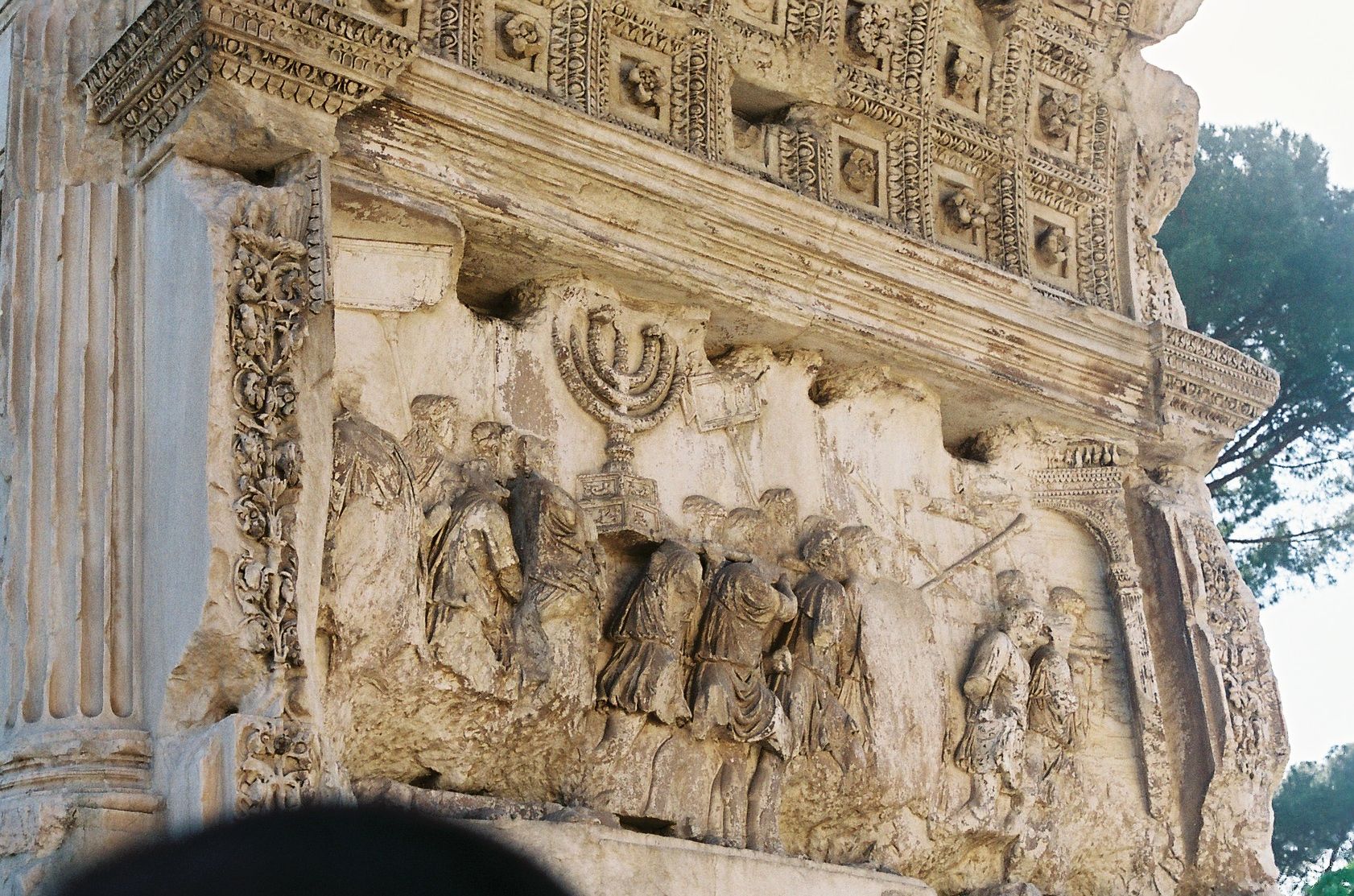
Titus' arch

Titus’ arch

Lent 2. 2014

John 3:1-17 (Genesis 12:1-4a; Romans 4:1-17)

Marian Free

In the name of God whose love embraces a world torn apart by violence, hatred, fear and greed. Amen.

During the week I came across a graphic description of the siege of Jerusalem in 70 CE. The author, Reza Aslan imaginatively recreates the turmoil and unrest of first century Palestine, the various revolts by “bandits” against the Roman rulers and how finally this ferment boiled over in the centre of the Hebrew faith – Jerusalem[1]. Aslan records the failure of successive Roman governors, the discontent of the people, the uprisings, the factions and the focus on Jerusalem and the Temple. Then he goes on to describe the callous ruthlessness of the Roman reaction.

When the Israelites expelled the Romans from Jerusalem, Vespasian was sent to quell the rebellion and restore order. Approaching Jerusalem from north and south, Vespasian and his son Titus retook control of all but Judea. In 68 CE Vespasian was distracted by the death of Nero and his ambition to fill that role. He abandoned the battle and returned to Rome where he was declared Emperor. The people of Rome were restless and Vespasian realized that he needed a decisive victory (or Triumph) to consolidate his hold on the office and to demonstrate his authority over the whole of the Roman Empire.

The revolt in Palestine provided the perfect scenario to show of what he was made. Vespasian decided not only restore order and reclaim authority in the nation, but to utterly destroy it – its people and, more particularly its God. To this end Vespasian dispatched his son Titus to bring the Hebrews to their knees. Titus set siege to Jerusalem, cut off the water supply and ensured that no one could go in or out. Those who did escape, he crucified in full view of the city. Slowly the people starved to death. They ate grass and cow dung and chewed the leather from their belts and shoes. Soon the dead were piled high in the streets, as there was nowhere to bury them. Titus needed nothing more for victory, but his task was to annihilate the people completely. His troops stormed the city, slaying men, women and children and burning the city to the ground so nothing remained[2].

The world doesn’t change. The situation of those imprisoned in Jerusalem in 70 CE is not too different from that of those in many parts of Syria in 2014. The city of Homs has been under siege for two years now. Its inhabitants – men, women and children – have lived on grass boiled in water and killed cats for food. Schools are shut, only one hospital remains open and there is no electricity or running water. Those who emerged during the recent cease-fire were gaunt and hollow-cheeked, often caked with dirt. No one has been excluded from the horror, not the elderly, the disabled or the very young.

Syria is perhaps the most graphic example of a world gone wrong, of the way in which human beings can inflict the most horrific suffering on their brothers and sisters and of the way in which our primal fears can boil over into violence and destruction. As the world waits with bated breath to see what will be the outcome of the strife in the Ukraine, we cannot overlook the fact that Syria and the Ukraine are not isolated situations but are the face of a world in crisis – a world which reveals the very worst that humankind can be. Even to begin to list the nations at war or in the grip of civil strife would take too long. What is more, our minds simply cannot encompass the scale of suffering on a global scale. War and civil strife are just one example of a world that bears no hint of a good creator God. When we add to that human trafficking, extreme poverty, corrupt or ineffectual government, we could be tempted to ask: “Is this the world that God loves so much that he sent his Son?”

The answer is of course a resounding “yes”!

Today’s readings remind us that God’s love is not restricted to a privileged few or to those parts of the world that are free from strife and turmoil. God’s love reaches out to include the whole world.

The biblical story of God’s inclusive love begins in Genesis with Abraham and Sarah (12:1-4a). When God calls Abraham, God’s intention is clear – it is to make Abraham the Father of many nations – “in you all the families of the world will be blessed”. Initially it appears that through Abraham, God has chosen a select group of people for Godself. Certainly that is how the story plays out for centuries. All the while though there are constant hints that God’s love extends farther and embraces those who do not belong to the family of Abraham. Consider the following for example. Rahab was an outsider, yet it was she who enabled the victory at Jericho and facilitated entry into the Promised Land. Ruth, the forebear of Jesus was not a member of the Hebrew nation. God relented and saved the Gentiles city of Nineveh (despite Jonah’s objection) and the Psalmist tells us that all nations will flock to Jerusalem. Even Cyrus the King of Babylon is called God’s “anointed”. It is clear that God’s love and attention was not focused on the children of Abraham alone.

Paul picks up on this theme in both the letter to the Romans (4:1-17) and the letter to the Galatians (3:3-9). It was, he informs his readers, always God’s intention to include all people within the ambit of God’s love. No one is privileged in God’s eyes, all are equally worthy of God’s loving attention. “God is the father of all of us (Rom 4:16).”

It comes as no surprise then to read the familiar words of John 3:16 “God so loved the world that he sent his only Son”.

God’s love in not (and never was) restricted to a limited few, to those who belong to a particular group or to those who behave in a certain prescribed way. God’s love doesn’t pick and choose and it certainly does not wait until the world is ready or worthy of that love. The Palestine to whom God sent his Son was far from an ideal microcosm of human existence – far from it. In the first century, the Hebrew people were compromised, conflicted and divided, their priests were, at best, servants of Rome and, at worst, men seeking wealth and aggrandizement. Despite all this, it was to such a broken and imperfect people that God chose to send his Son.

Nothing much has changed – the world that God loves continues to be a long way from perfect but that doesn’t stop God from loving. However unlikely it seems, however undeserving the world continues to be, God reaches out in love giving us the opportunity for salvation. What it takes is for us to respond, for us to choose light over darkness, salvation not destruction.

God so loves the world – how then should the world respond?


[1] Aslan, Reza, Zealot – the life and times of Jesus of Nazareth. New York: Random House, 2013, 60ff.

[2] Vespasian’s Triumph, the procession of slaves and spoils of war were immortalized in the arch which can still be seen in Rome today.

The world God loves.

Devastation in South Sudan

Devastation in South Sudan

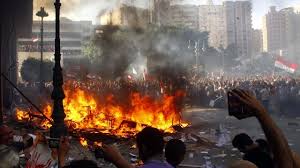
Riots in Egypt in 2013

Riots in Egypt in 2013

Syrian refugees lining up for food Syrian refugees lining up for food

Destruction of HomsDestruction of Homs

The wilderness of our hearts

February 16, 2013

Lent 1 – 2013

Luke 4:1-13

Marian Free


In the name of God who longs for us to see ourselves more clearly and having done so to submit ourselves to the transforming power of God. Amen.

‘Sugar and spice and all things nice, that’s what little girls are made of. Slugs and snails and puppy dog tails, that’s what little boys are made of.’ To think that many of us used to recite this silly, sexist rhyme! But what are we made of? Beyond the obvious skin and bones, do many of us really know what lies beneath? Do we really know our strengths and recognise our weaknesses? Do we know what triggers or events might lead us to act nobly and selflessly? Alternately, can we begin to imagine forces or situations which would lead us to behave basely or cruelly?

I suspect that it is impossible to know ahead of time how we will react in situations that demand courage, resilience or moral fortitude. Fear, timidity and an unwillingness to stand out from the crowd can prevent people from acting as they should or worse, they can cause people to behave in ways that are cowardly, cruel and self-serving. History is littered with instances of good people failing to act in the face of evil. The past is crowded with examples of a mob mentality leading otherwise reasonable people to behave in violent or rash ways. The world stood silent in the face of the Nazi gas chambers and still seems unable to act against oppressive or unjust regimes.  The insanity of the mob leads to disregard for law and order and the destruction of property as was witnessed in Brixton, in Cronulla and elsewhere.

After the event, those who were silent might say: “I was too afraid to speak out.” Those who were caught up with the crowd might respond: “I thought they would kill me if I didn’t join in.” There is always a reason or justification for such behaviour. No one likes to believe that they deliberately acted in a way that led to or contributed to another’s injury or harm or which saw another abased or killed because of their failure to act. No one likes to think that they could have a propensity for cruelty or indifference, that they would join in with the crowd or that they would stand silent in the face of grave injustice.

On the other hand, the past is equally populated with ordinary people who, in the face of danger, have exhibited extraordinary courage and who have risked their own safety to save the life of another – the by-stander who pulls a person from a burning car, the surfer who without thought rushes to the aid of someone attacked by a shark, the solider who exposes him or herself to enemy fire, to save another who is injured or dying. Every day, in a variety of different circumstances, people like you and I show what they are really made of. When asked about their heroic acts, such people often reply: “I didn’t think – I just did what needed to be done.” They don’t think of themselves as heroes because their action was so spontaneous. Until confronted with the situation they may not have known that they had such courage in them.

Some among us may have faced such challenges and may have confidence to know how they will respond in the face of danger or when someone is needed to speak out. Others of us can only imagine and hope that we would meet every difficulty and danger with grace, that even at the cost of our own lives we would challenge oppression, cruelty and injustice and that we would seek to heal and be healed, to understand and forgive (even if at first sight, healing, understanding and forgiveness is impossible to imagine).

The sad reality is that apathy, cruelty and lust for power exist side by side with integrity, compassion and selflessness in every human being and until we are tested we cannot be 100% sure how we will respond. Fortunately, it is not often that we are put to the test.

For Jesus it was different. Jesus had a very particular task. Jesus was called by God to serve God in the world and to bring about the salvation of humankind. This was a task that could only be achieved if Jesus was prepared to submit his life completely to God. Anything less would jeopardise the whole endeavour. His was a weighty responsibility. Jesus (and perhaps God) had to be sure that he was up to the task. He (and God) had to know that when it came to the crunch, he would not bow down to earthly authority, he would not waver in the face of opposition and he would not give up before the job was complete.

There was no opportunity for a dress rehearsal. Jesus only had one chance. When the moment came to be strong, to speak out or to suffer, Jesus had to know that he would not back down but would continue on the path that was set before him. So the spirit led him to the wilderness – to the emptiness and silence, to a place where there were no distractions, nothing to take his mind off himself, no social structures to ensure that his baser instincts were suppressed. In the desert then, Jesus came up against the darker side of himself. Deprivation and isolation brought to the surface ideas that may, until then, have been suppressed. He could do so much with the power that was his! Given who he was and the power that was at his disposal, it would have been easy for him to be self-serving (to use his gifts to enrich himself). Given God’s love and care for him, it would have been easy for him to take risks with his own safety, to force God to always be on the look out for him, protecting him and keeping him out of harm’s way. Then again, he could use his power for his own aggrandisement, he could force the world to bow to him and not to God.

Jesus heard the voice of his “other self”, the voice of temptation whispering in his ear – what he could do if he wanted to! He knew though, that this was not the self that he wanted to be – a self separated from and in competition with God. Using the words of scripture he pushed the other voice out of the picture and demonstrated that he could withstand every test and that he was ready to answer the call of God.

Finding out who we are and of what we are capable is one of the goals of Lent. Through fasting or prayer or giving up something that we thought we could do not without we create space in our lives. We make our own small internal wilderness and we can be surprised by what longings, what emotions, what insecurities rise to the surface.

In the stillness of this wilderness it is harder to escape from who we are. In the silence of this desert it is harder to quell thoughts we would rather ignore. In this place, without our usual distractions, we can come face-to-face with who we really are.

We can spend a lifetime running away from ourselves, avoiding our deeper issues, burying parts of ourselves that we wish were not there at all or we can take time out, have the courage to see who and what we really are and with the help of God dispel the demons that drive us and build up the character that we want to define us

Dust to Dust

February 12, 2013

Ash Wednesday – 2013

Dust to dust

I have just discovered a writer – William Stringfellow. He was quoted in another book and I was so impressed that I bought one of his books immediately. In A Simplicity of Faith, Stringfellow reflects on the death of his close friend Anthony Towne – a poet. Anthony died suddenly at age 51. What is interesting is that Stringfellow makes the claim that despite the suddenness, neither he nor Towne were caught by surprise by his death.

He meant by this that he and Towne had discussed death – not in a morbid way – and had come to see death as an essential part of life. By this he meant that they had come to see death as an essential part of life. Death was not something to be feared, but neither was it to be glorified. It simply was. All living things die.

Understanding that we are to die helps us to live – knowing that death awaits us all helps us not to take ourselves too seriously, to understand our insignificance in the wider scheme of things, to value this life and to make the most of it.

Today as we receive the ashes we are reminded that we are dust and will return to dust. The intention of the ritual is not to make us feel worthless, but to understand our complete dependence on God, to understand that without God we are nothing.

Throughout Lent, our goal is to develop our relationship with God, to more properly understand our place in the scheme of things and to humbly ask God transform us so that we might more truly become the people God calls us to be.