Posts Tagged ‘Scribes’

Sinning against the Holy Spirit

June 8, 2024

Pentecost 3 – 2024

Mark 3:20-35 (thoughts from Sorrento)

Marian Free

In the name of God from whom all goodness comes. Amen.

As is often the case, today’s gospel is complex. Two related stories are separated by a third, apparently unrelated story. This technique of sandwiching (intercalation to be technical) is typical of Mark, though it is used by the other gospel writers. By placing the stories in such a way the author allows them to play on each other in such a way that the meaning of both is elucidated. Perhaps the best example is the story of the the woman with a haemorrhage. In that account, Jesus is on his way to a dying girl when he allows himself to be interrupted by a woman who has been bleeding for 12 years. In that instance the parallels are obvious – the girl is twelve, on the verge of womanhood and fertility, the woman has been bleeding for 12 years and has been made infertile as a result.

In the gospel reading that we have before us today, Mark seems to be drawing our attention to the identity of Jesus, and in so doing is redrawing the definition of family and of the religious establishment. Jesus’ natural family are concerned that he is ‘out of his mind’. As such he is an embarrassment to them, and they are anxious to get him away from the crowds. After the interruption by the scribes, Jesus responds to his family’s anxieties – not by reassuring them, but by sidelining them! He expands the definition of family to include every who does the will of God. In so doing Jesus has completely re-defined the base structure of his society. It is his purpose to disrupt, not to maintain the equilibrium.

The scribes, perhaps emboldened by the concerned of Jesus’ family, take advantage to the moment to claim that Jesus is possessed. Their misguided logic tells them that anyone who is destabilizing the society of the day, must be in the grip of evil. Someone who breaks the Sabbath and challenges the institution cannot in their mind, be on the side of good/God. Jesus does not fit their model of a good observant Jew and so, by deduction he must be something other. (He is redefining the religious institution of their time and this makes them deeply uncomfortable.)

The attack by the scribes draws from Jesus his harshest, and for some most confusing critique: “Truly I tell you, people will be forgiven for their sins and whatever blasphemies they utter; but whoever blasphemes against the Holy Spirit can never have forgiveness, but is guilty of an eternal sin”.

There is, according to Jesus, only one sin that cannot be forgiven- that of blaspheming the Holy Spirit – of seeing evil where there is good, of accusing God’s representative of representing the devil, of being so threatened by change that we resist it, of being so anxious that things stay the same that we vilify the changemakers, or of being so sure that right is on our side that we perpetuate evil in order to maintain the status quo.

In today’s gospel it is the scribes who confuse good/godliness for evil, but this is a pattern that has been repeated throughout history, whenever someone has the courage to challenge injustice or to confront an oppressive government. But it is not just rulers or leaders who react when their status or their actions are questioned. The sin against the Holy Spirit is just as evident when good, churchgoing people fail to recognise the prophets among them, or when they feel uncomfortable when someone speaks truth to power.

The recent referendum in Australia revealed the deepest fears of some who from their place of fear made outrageous claims about the consequences of voting for a Voice to Parliament. More than one person claimed it was a communist plot and others were certain that if we voted ‘yes’ our backyards would be taken away the very next day. What to many was a simple, innocuous request from a generous, patient people, became a source of fear. Supporters of a ‘yes’ vote were painted as evil, devious and self seeking.

It is too easy to let our fear of change dominate our reaction to new ways, new teachings, or new expressions of God’s love, but over and over again the gospels challenge us to have open hearts and minds and to humbly accept that what we know of God is but a fraction of the whole and that there may be much more to be revealed than we can possibly imagine.
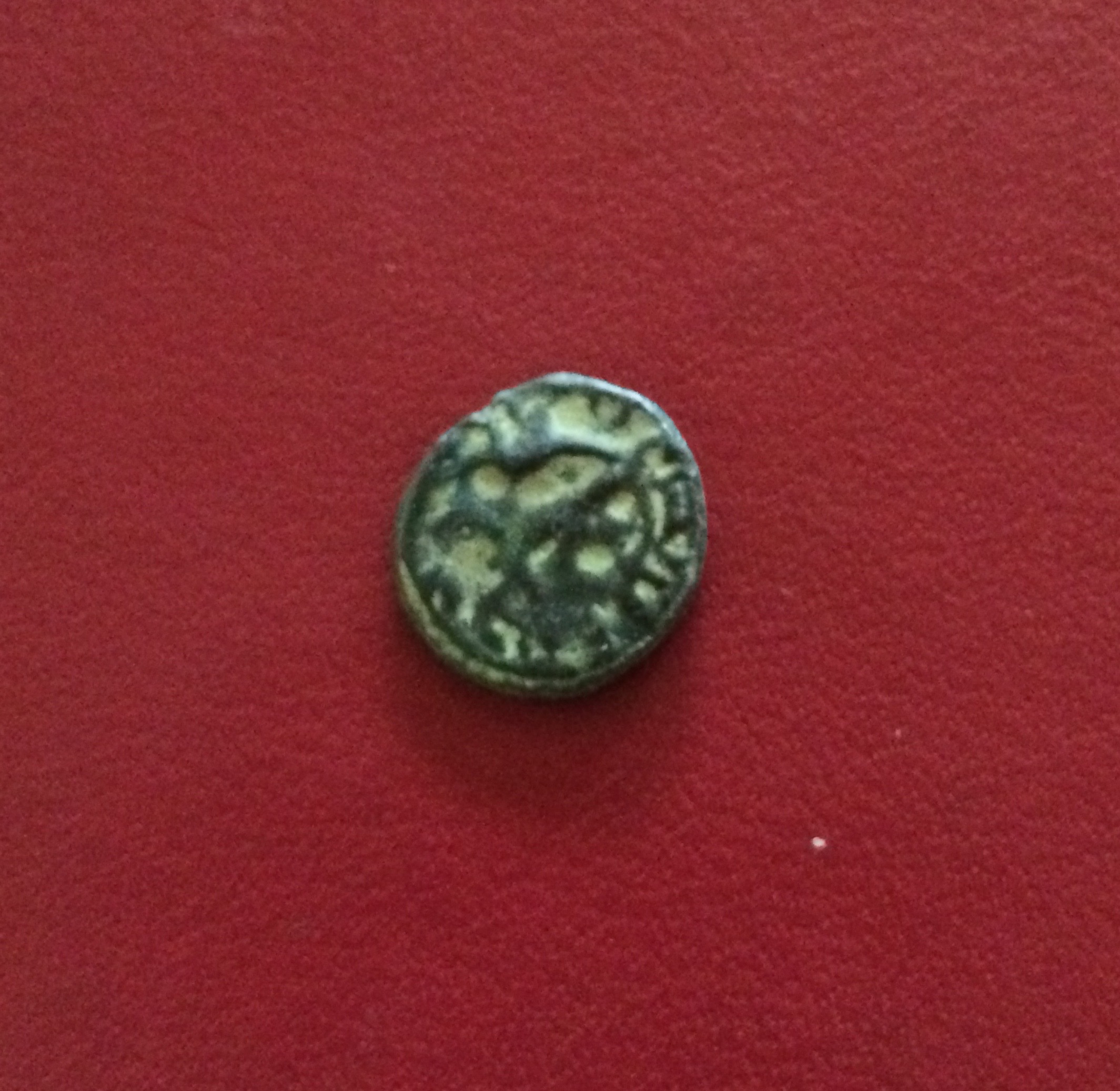
 

Sacrifice or example – the widow’s mite

November 6, 2021

Pentecost 24 – 2021
Mark 12:38-44
Marian Free

In the name of God who asks only that we love, with heart, soul, mind and strength. Amen.

Some time ago one of my friends read a book titled The Five Languages of Love. She found it utterly enlightening and somewhat liberating. She was frustrated that her husband, on his day off, would mow the lawn because she thought that if he loved her, he would want to spend the day doing things with her. What she hadn’t understood was that in his mind, mowing the lawn was his way of showing his love for her. Love is complex and sometimes complicated. Neediness or possessiveness are sometimes confused as love with devasting effects. On the other hand, selflessness may not be an expression of a healthy relationship. Love is best when it is freely given, out of a strong sense of self.

This morning’s gospel is one with which we are all very familiar. The widow and her two small coins make a good Sunday school lesson and provide excellent material for a sermon on stewardship. However, as we have been observing over the past few weeks, taking a superficial view of any one gospel story is to miss its real meaning. In this case the generosity of the widow is important, but the context of this account reveals that there is a lot more going on in today’s reading than a story of a widow giving two small coins to the Temple treasury.

A clue to deeper meaning of the story lies in the verses that immediately precede Jesus’ observation about the widow’s behaviour. Here, Jesus has launched an apparently unprovoked attack on the arrogance, social ambition, and avarice of scribes who abuse the poor – specifically the widows for whom they had a special duty of care and who were particularly vulnerable. “Beware of the (attention seeking) scribes,” Jesus says, “they are not who they appear to be.” It is specifically these scribes whom Jesus is condemning. A little earlier Jesus had cause to compliment another scribe with whom he had been engaged in debate as to which commandment was the greatest. Jesus’ asserted that the first commandment was: “‘Hear, O Israel: the Lord our God, the Lord is one; you shall love the Lord your God with all your heart, and with all your soul, and with all your mind, and with all your strength.’” To which the scribe responded: “You are right, Teacher; you have truly said that ‘he is one, and besides him there is no other’; and ‘to love him with all the heart, and with all the understanding, and with all the strength,’ is much more important than all whole burnt offerings and sacrifices.” Jesus commends and affirms this scribe and tells him that he is not far from the kingdom of God.

There are scribes and there are scribes and apparently not all scribes are deserving of censure. The shallowness and worldliness of the status-seeking scribes is vastly different from the sincerity and wisdom of the questioning scribe who understood that love of God is the heart of the law and that that love is all-consuming; a love that demands all of one’s being, not just a part of it; a love that cannot be represented by the superficial offering of sacrifices in the Temple or by making a show with long prayers. Jesus’ scathing attack on the posturing of the scribes who devour the houses of widows (instead of providing for them as is demanded in the law) is brought into sharp relief by the widow who contributes her two small coins to the treasury.

Given the context, and the juxtaposition between the scribe who recognises love of God as the most important and those who seek status and recognition, it is possible to argue that the account of the widow is less about her self-sacrifice and more about her loving God with heart, soul, mind and strength. That this might be the case is supported by the Greek text. In the NRSV, the version of the Bible that we are use, we read that the woman gave “all that she had to live on”. This phrase translates the Greek word “βιος” or life (think biology). In other words, it is probably more accurate to say that, “she out of her poverty has put in everything she had, her whole life.”

When we make this pericope only about the widow’s sacrifice, we risk adding insult to injury by further disempowering her. Jesus makes it clear that she is in very straightened circumstances – a situation that may well have been caused by self-seeking scribes who had taken payment for legal services (though that was forbidden), or who had mismanaged her estate or who had taken advantage of her situation in other ways. Despite this it seems, the widow is still her own person, a person of faith and integrity, a person in control of her own destiny who can choose to give her whole life and who understands (as did the scribe who engaged Jesus in debate), that love of God – with heart, soul, mind and strength – the giving of one’s whole self, is of much greater value than any amount of “burnt offerings and sacrifices.”

The widow’s self-giving came from the heart and stood in stark contrast with the scribes whose focus was on appearances and with the wealthy who gave to the Temple what they could easily afford. Jesus’ compares the widow’s behaviour with that of the wealthy and of the scribes not to diminish or pity her nor to draw attention to her poverty, but to lift her up as an example of faith and faithfulness, as a model of one who knows exactly what it is to keep the first commandment and who does so willingly and whole-heartedly.

We are all called to love God with heart, soul, mind, and strength. Nothing less will do.

Insiders and outsiders

June 9, 2018

Pentecost 3 – 2018

Mark 3:20-35

Marian Free

In the name of God who does not observe conventional boundaries and who brings the outsider in and challenges the insider to rethink their ideals and their values. Amen.

I don’t need to tell anyone that families are complicated beasts. An ideal family provides nurturing and safe place in which there is a genuine desire that each member is given the space and resources to develop their full potential. The reality however is sometimes very different. Children, and even parents can compete with one another for the limelight. Some parents want to live out their missed opportunities through their children and others want their children to follow in their footsteps. Even though most of us have good intentions, we can unwittingly bring to our relationships our own experience of family and our unmet needs.

Families may not be perfect, but most of us stumble through and our lives are enriched by the relationships and the security that family affords and most of us retain our loyalty to and our love for our families despite their flaws.

In the first century family life was complicated by the cultural norms of honour and shame and of the collective personality. Individualism as we know it did not exist. Society consisted of a web of relationships and individuals existed in relationship only to others – primarily to their extended families. At the same time a person’s honour was their most precious possession and had to be guarded zealously. A man’s reputation (his honour) could be negatively impacted or seriously undermined not only by his deeds but also by the actions of his family (who were seen as extensions of himself). Expectations of family members were much higher a result.

According to today’s gospel Jesus’ behaviour had led his family to believe that: “he had gone out of his mind” . It is not surprising then, that they determined to “restrain him”. The reputation of his brothers, his mother and his sisters and their standing in the community were at stake. We don’t immediately hear how this part of the story works out because Mark interrupts the discussion with a comment from “the scribes who came down from Jerusalem” who, while acknowledging that Jesus was possessed of power to heal, claimed that his power derived from Satan . When Mark returns to the story of Jesus’ family the reader is shocked to hear that Jesus not only ignores their call, but completely dissociates himself from them.

By placing these stories together Mark suggests that Jesus’ family was as misguided as the scribes. They were concerned with superficial issues such as reputation. They misinterpreted his teaching, his healing and the attention of the crowds as madness. The scribes, who were perhaps threatened by Jesus’ popularity, could not believe that God was at work through him (or indeed that God could be at work in the world). They refused to believe that a nobody from Galilee could work miracles that they themselves were unable to perform. They resented the fact that Jesus was liberating the poor and the marginalised from illness and possession.

Jesus pointed out the foolishness of the scribes’ point of view. Satan, he says, simply has no interest in relinquishing his power over individuals and certainly would waste no time in setting them free from the cords that bound them – to do so would only weaken Satan and ultimately destroy him – which would be counter- productive to Satan’s goal of controlling the world!

The actions of both Jesus’ family and the scribes reveal not only their lack of understanding, but that they in fact are in league with Satan. Both have committed the “unforgivable sin” – mistaking God for Satan and by standing in the way of God’s work in the world. They are unable to see God’s compassion and grace being worked out through Jesus – in fact they reject that very possibility. They have confused the divine with its opposite and what is worse, is that both Jesus’ family and the scribes try to stop Jesus – the family by restraining him, the scribes by denouncing him. Their hearts are hardened and their eyes are blinded to the presence of God’s liberating grace. They themselves have not been set free from the powers that bind them (honour in the case of the family, cynicism in the case of the scribes) and they cannot rejoice when others are set free.

That Jesus would reject his family is shocking even now. That he would put his family in the same category as the scribes and even Satan seems utterly outrageous.

Through his teaching and healing ministry, Jesus broke apart the conventional ways of behaving and of seeing the world. He opened up new possibilities for those willing and able to recognise the potential to bring about healing and wholeness for the world. Those who had not as yet identified their own brokenness resisted and condemned him, unable to relinquish their pre-existing points of view (as to how things should be done and who should do them).

Jesus broke down the barriers that separated people from one another and from God. His acts of healing restored them to family and to society, his teaching freed them to experience God’s love and compassion in their lives. Jesus redefined the meaning of family (personal and religious)– insiders became outsiders and outsiders become insiders. Insiders were no longer defined by belief or by blood, but by their relationship to God, their willingness to see God in Jesus and their desire to work with and not against God.

Insiders were (and are) those who are not concerned with reputation or position in the world, who are not rigidly locked into a particular way of seeing things, who do not resent God’s blessings being bestowed on the unlikely and the unworthy and who are not afraid to see God at work in new and unexpected ways.

For different reasons both Jesus’ family and the scribes are determined to stop him and as a result are exposed for whom they really are – people closed to the possibility that God might be at work in the world.

Let us pray that we do not make the same mistake, but remain open, expectant and excited by what God might be yet to do.

Who is forced to suffer so that we do not have to???

November 7, 2015

A widow's mite purchased on our recent visit to Palestine.

A widow’s mite purchased on our recent visit to Palestine.

Pentecost 24

The Book of Ruth, Mark 12:38-44

Marian Free

In the name of God whose preference is for the poor and the vulnerable. Amen.

It is no secret that I am a Jane Austen fan. This may have to do with my growing up in an era when the role of women was still considerably constricted. It was not until I reached my teens that mothers began stepping confidently into the work force and I still have vivid memories of a single female friend who, despite having a good job and regular income was obliged to ask my father to be guarantor so that she could obtain a home loan. She may not have felt this way, but even though I was relatively young I felt keenly the humiliation of her experience. The idea that because she was a woman she could not be trusted with something as weighty as a home loan seemed (indeed was) ludicrous.

That said, by the time I came into the world some things had changed for the better. By then the government was providing some sort of support for women who had been widowed and for single mothers who were strong enough to refuse to put their child up for adoption. For centuries prior to that, women without a husband or father to protect them often found themselves in very straightened circumstances[1].

Jane Austen’s Sense and Sensibility gives an insight into the precarious nature of a woman’s place in the world of the eighteenth century. Mrs Dashwood is the second wife of an older man whose estate is entailed on his son John. When her husband is dying he makes John promise to care for his stepmother and stepsisters. The son promises, but does not take into account his overbearing wife who cannot bear the thought of sharing the estate, or of their only son being deprived of even a modest part of what might become his inheritance. Mrs Dashwood senior and her daughter’s find themselves unwelcome visitors in what up until then had been their family home. They feel sufficiently uncomfortable that they seek to find somewhere else to live, but their allowance will not stretch very far and many suitable house have to be ruled out. Thankfully a distance cousin offers them a small cottage on his estate and so they move (with the few possessions that they can call their own) to a situation far removed from that which they were used to.

The privations do not end there. Even though their cousin is very generous and insists that they eat with his family most evenings, the yearly allowance does not stretch to beef or even sugar. Overnight what had been a privileged and comfortable lifestyle is reversed and the women find themselves utterly dependent on the generosity of others.

The Book of Ruth is set during the time of Judges – approximately 1200-1020 BCE. At this time the majority of Israelites were small landowners and could support themselves through farming. Laws were in place to ensure that the widows and orphans were able to sustain themselves. Not only was it the responsibility of everyone to provide for them, but there was a law to the effect that farmers should exercise a certain amount of carelessness when harvesting. Leviticus 19:9-10 specifically instructs the Israelites to leave the margins of their fields unharvested, to leave behind any produce that fell to the ground and to harvest only once. This ensured that the poor and the aliens could be assured of finding food to eat. They could enter a “harvested” field and glean what had been left behind. It was not an easy existence, but it did provide a way for the poor to support themselves.

Fast forward to the beginning of the first century and we discover a situation that was completely different. With the best will in the world no one could impose the Levitical law universally. At this time many Israelites had been forced off their land so that the Emperor could give gifts to soldiers who had served him well. This meant that there were fewer farms in the hands of the Israelites and therefore fewer people to observe the obligations set down in Leviticus. In the city of course the situation was even worse. It has been said that Israelite women were at this time among the poorest people in the world.

Today’s gospel has often been used to extol the widow for her utter selflessness and to encourage the rest of us to follow her example, but that interpretation misrepresents what is really happening here. When we read the passage in its entirety we see that the story of the widow is a continuation of Jesus’ attack on the scribes. This forces us to observe that Jesus is not complimenting the woman for her generosity; but instead is lamenting the political and social climate that has created a situation in which the widow thinks that she has to give anything at all. The scribes it seems have found a way to convince the poorest and the most vulnerable that God requires demonstrations of their commitment – in the form of donations to the Temple. By insisting on “sacrificial giving” they are in effect, “devouring the estates of the widows”. The poor and the widows should have received support from the Temple, not felt obliged to do the reverse.

By giving her last two coins, the widow has not achieved anything. Her small contribution will not all much to the Temple resources but will certainly deprive herself and any dependents of a future[2].

Jesus’ attack on the scribes suggests that they were more into outward show than they were into meeting their obligations to those who were entirely dependent on their goodwill and generosity. Like all people of wealth and status, the scribes were determined that they should they behave in a way that demonstrated their wealth and power and that they should receive the honour that they believed was owed to someone in their position. At the same time, they were determined to preserve their relative position at all costs – in particular at the expense of those who could least afford it.

The problem then, as it is now, is that one can only maintain one’s own position at the expense of those who have no resources and no position. The gospel challenges us to seriously consider how much we ourselves exploit and disempower the poor and the vulnerable in order to hold on to our status and relative wealth. Who is disadvantaged and oppressed because we refuse to give up our comfortable lives? Whose life is on a knife-edge because we cannot bear to give up our relative luxuries in order to liberate others to do more than eke out an existence?

Who is forced to suffer so that we do not have to?

[1] If you were poor you might, as a woman, have found work as a servant or in the mills, but the novel Tess of the d’Ubervilles demonstrates that even for the rural poor, life could be horrendous for those who had no husband or son to provide for them.

[2] The coin, a lepta, was the least value of the coins of that era and was worth about 6 minutes of an average day’s wage.