Posts Tagged ‘self-denial’

Ash Wednesday – Lent

February 17, 2026

As I write this, I am conscious that my calendar announces that today is the beginning of Ramadan, the time of fasting observed by Muslims. From today practicing Muslims will not consume food or drink between sunrise and sunset. This may mean rising at 4am for breakfast and then eating and drinking nothing until 8pm. I know this because my visit to Israel in 2015 coincided with Ramadan. In Old Jerusalem a canon was fired to indicate the beginning of and the end of the fast and the empty streets in the Palestinian districts filled with food carts only. after 8pm. Ramadan and its concluding celebration of Eid are now well-known in the Western world. The ABC news site has even published recipes for Ramadan. In my childhood, newspapers and magazines would. have featured recipes for Lent. Today Ash Wednesday and Lent do not even warrant a mention on my calendar!
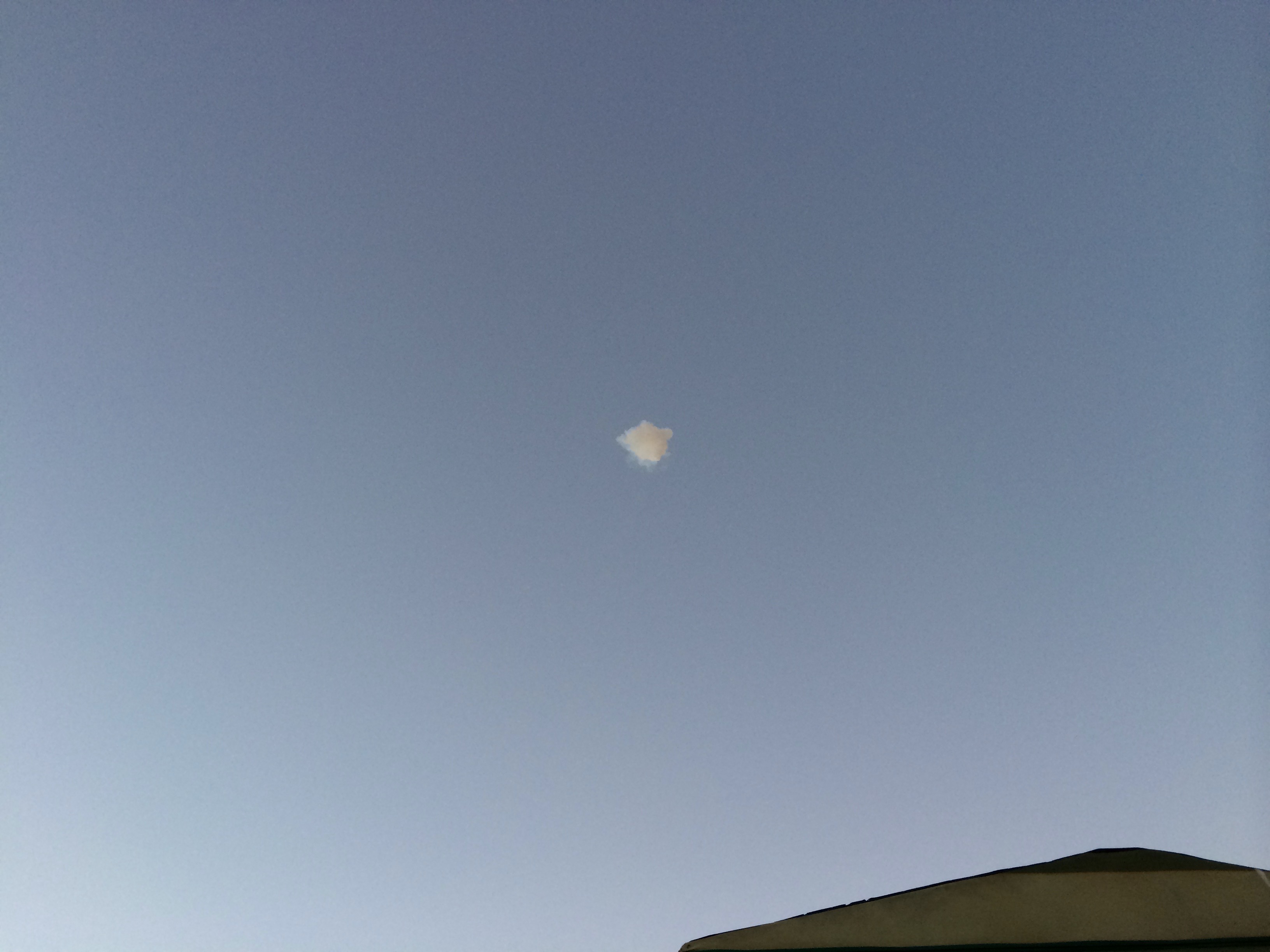
Image of smoke from canon. Jerusalem 2015

Culturally Lent has become irrelevant and in the churches we seem to have lost the sense of solidarity that came with giving something up for Lent. This is due in part to the increasing secularisation of our society, but also relates to a more relaxed attitude in the church and the trivialising of the practice by making it a test of will-power rather than a freedom to focus on God and not on oneself.

I don’t have a solution, just a sense of grief that the traditions which enriched our faith and which were evident to the culture around us seem to have lost their place and we haven’t yet found something which unites us as followers of Christ.

The purpose of fasting is to pare down our lives to what is essential such that we can pay attention to God’s provision and can fully appreciate what we do have. We try to give up those things that prevent us from focussing on God. This might include meal plans that are less extravagant and easier to prepare – freeing us from the distraction that food can be in our lives. Equally, it might be useful to give up the self-absorption that reveals itself in resentment, self-pity, envy, ingratitude. If instead we practice gratitude and forgiveness, joy in other’s successes, we will (over time), rid ourselves of the negativity and bitterness that cause us to look inward rather than outward into the world and into God’s creation. We will make room for God and the fruits of the Spirit – love, joy, peace, patience, kindness, generosity, faithfulness, gentleness, and self-control – will be evident in our lives and be visible to the world.

Satan falling from heaven

July 6, 2019

Pentecost 4 – 2019
Luke 10:1-11, 16-20
Marian Free

In the name of God who has power over life and death, good and evil. Amen.

“I watched Satan fall from heaven like a flash of lightning.” Jesus’ response to the mission of the seventy is quite incredible. What was it about their actions that led Jesus to make such a pronouncement? No other gospel records the sending out of seventy disciples and no other gospel records Jesus’ dramatic, visionary exclamation. It is only in Luke that the seventy (some versions say 72) are, like John the Baptist sent out before Jesus to prepare the way for him. Interestingly, the commissioning of the seventy follows Jesus’ severe words about discipleship – “let the dead bury their own dead.” That means that those who remain understand the consequences of following Jesus. They must leave everything behind and there is no safety net.

When Jesus appoints the seventy, he gives them strict instructions as to where to go, what to pack and how to respond to rejection. The disciples are directed to take nothing except their faith to support them – no purse, no bag, no sandals. Unarmed, they are sent out as “lambs in the midst of wolves”. Now they have come back to Jesus. Not only have they have survived, they have also learnt that God is to be trusted! No wonder that they have returned with joy – amazed and elated by what they have achieved in Jesus’ name: “in your name even the demons submit to us!” The disciples are like a bunch of school children, bursting to share their adventures and successes with Jesus.

Underlying the Gospel of Luke is a cosmic battle between good and evil, between Jesus and Satan. The battle begins at the beginning of Jesus’ ministry when Jesus is tempted in the wilderness. Here Jesus has an apparently decisive victory over Satan. To Satan’s disappointment (and surprise), Jesus is not seduced by easy solutions, marvelous feats or by the promise of power. Jesus’ responses to Satan make it quite clear that he will serve God, and God alone, no matter what the cost.  Apparently, Satan is not convinced that the battle has been won, he still believes he has a chance to gain the ascendancy. He does not slink away with his tail between his legs (as he appears to do in the gospels of Mark and Matthew). Instead, we are told that he “departs from Jesus until an opportune time”. From Satan’s point of view, it is not over till it is over. As we will see, Satan appears again at the end of the story when he enters into Judas Iscariot who, spurred on by him, will betray Jesus to the chief priests and the offices of the Temple police. (Having failed to influence Jesus, Satan finds a weak link in Judas and possibly in the other disciples whom “he will sift like wheat”.)

Jesus proves more than a match for his adversary – he knows that the stakes are high, but nothing will prevent him from focusing on the task ahead. His exclamation in response to the disciple’s report on their mission may reflect Jesus’ confidence that, whatever happens to him, his mission will not fail. It is clear to him that the disciples have discovered their own role in the defeat of evil. Like Jesus, they have not succumbed to the temptation to rely entirely on themselves. From the way in which they report their experience it is obvious that the disciples understand that it is not by their own power or ability that the demons are cast out, rather is the power of Jesus’ name that causes the demons to submit. The disciples’ self-awareness and humility, their willingness to give credit where credit is due may give Jesus an assurance that his mission is in the right hands. Jesus can be sure that Satan will not regain his place in the world – even after Jesus’ death.

No wonder Jesus exclaims: “I watched Satan fall from heaven like a flash of lightning.” It is a prophetic statement based on his new found evidence that the disciples are to be trusted, that they understand that God alone can defeat evil and that ministry in the service of God is not about self-aggrandisement, but about trusting in God and giving credit where credit is due.

In today’s world, in which the balance of power is shifting and in which self-centredness and greed appear to be gaining an upper hand, can we still be confident that the powers of evil have been defeated? Was Jesus prophetic statement misguided? Was his trust in we, his modern disciples, misguided? Are we tempted to rely on our own strengths to combat the power of evil or are we, like Jesus and the seventy, ready and willing to ignore our need for recognition and success so that we might truly submit to God and allow God to work through us so that evil does not and cannot get the upper hand?

May Jesus’ prophetic vision be as true now as it was when he proclaimed: “I watched Satan fall from heaven like a flash of lightning” and affirmed all that the disciples had done.