Posts Tagged ‘war’

God is dead – Good Friday

April 19, 2025

God is dead – Good Friday 2025

Marian Free

In the name of God who, in Jesus, identified with humanity to the point of death.  Amen.

“Then he bowed his head and gave up his spirit.” A core component of Christian faith is that Jesus actually dies. Taken to a literal end point, God dies with Jesus on the cross. From three in the afternoon on Friday to sometime during the night on Saturday evening there is an absence – an absence felt physically by Jesus’ friends and disciples. An absence that I believe we are meant to feel in our hearts and in our bones. From that moment on Good Friday when the gospel is read until that moment on Sunday morning when we declare: “Christ is risen”, we are confronted with the harsh reality that Jesus, God among us, was put to death and that for something like 36 hours, Jesus’ lifeless body lay in a tomb. Jesus/God was truly dead.

As we wait – in this time of emptiness – we have an opportunity to experience the absence of God –  in Gaza, in Ukraine, in the prisons where people are tortured and killed because they challenged the authority of the state, in the favelas of Brazil, the townships of South Africa and the slums of Mumbai and in the Congo and the countless other places in which war, civil strife, injustice and poverty shout out that God is dead, that God is impotent to bring about lasting change.

In the dramatization of the gospel on Good Friday we acknowledge our complicity in the death of Jesus. We take the part of the crowd demanding: “Crucify him! Crucify him!” In so doing, we acknowledge our complicity in the death of Jesus/God in the world today. Our collective unwillingness to pay the cost of change that would lead to peace, equity and justice makes us uncomfortable with “revolutionaries” like Jesus, such that we join the cry for their removal – condemning Jesus to his death. Our collective belief that somehow we can solve the dilemmas of the world, pushes God to margins, denies God the ability to act – sends Jesus to the cross. Our focus on our own needs and our belief that collectively we have the tools to solves the world’s problems proclaims that we do not need God – keeps Jesus in the tomb.

During the time between our Good Friday observances and our Easter Day celebrations, we acknowledge that God is powerless in the face of human greed, greed that leads to a desire for power and control, greed that demands an unfair share of the world’s resources, greed that ensures one’s own well-being before the needs of others. We recognise our complicity in the state of the world today and we grieve the ways in which we have disempowered and marginalised God through our action (or more likely through our inaction).

If God is dead, it is because we put God to death. It is a burden we need to carry especially today.

Thank God we know the end of the story. 

May we commit ourselves to resurrection life – ours and that of others – that God’s power and love may be effective in the world and God’s presence shine light into the darkness.

100th Anniversary – Armistice Day

November 10, 2018

Armistice Day – 2018

Mark 12:38-44

Marian Free

In the name of God who sustains us in our darkest hours. Amen.

On the 24thof April 2015, Tony Abbot told the following story that was reported by The Herald Sun.

“It was on a still spring night a century ago that the ships carrying the Australian and New Zealand Army Corps stole in towards the high coastline of the Gallipoli peninsula.

The first boat landed at a small cove surrounded by steep slopes of thick scrub shortly after four in the morning. Two of the ANZACs who came ashore on April 25, 1915, were Privates Lance and Daryl Blannin-Ferguson. Hailing from Mt Martha, they were two of the first to enlist after the war broke out. They were assigned to the 7th Infantry Battalion, and left Melbourne on the transport ship Hororata on October 19, 1914. Lance was one of more than 750 Australians who were killed on the day of the landing. He was just 21 years old.

His younger brother, Daryl, was killed on May 8, 1915, during the Second Battle of Krithia, aged only 19.

By the time of the evacuation — the only successful part of the campaign — in December 1915, Lance and Daryl were just two of more than 8700 Australians who had died. Their older brother, Lieutenant Acland Blannin-Ferguson, also served on Gallipoli. He survived the campaign and transferred to the British Army in January 1916 before returning to Australia after the war. The Blannin-Ferguson family, like so many families across Australia during the Great War, paid a great price.”

I belong to a generation that has had a rather charmed existence. Both my grandfathers were too young to enlist in the first World War, my father too young for the second and my brother too young for Vietnam. During my lifetime our shores have not been threatened and civilians have not had to endure rationing or the other ordeals associated with a nation at war. I have not had to flee my home with only what I could carry because the enemy were advancing or the bombs raining down.

I have no idea what it is like to farewell a beloved father, brother or husband knowing that I might never see them again. I cannot imagine what it is like to open the door to the person delivering the feared telegram and to know that you will not see your husband, father or brother and that you will not even know where their bodies lie have no grave at which to grieve.

That said, the First World War did cast a shadow over our family life. Lance and Daryl were the older brothers of my paternal grandmother – great uncles whom I never knew, and whose stories were cut short.

The First World War, the Great War, the War to end all Wars was the costliest conflict the world has known. In total, the losses on both sides amounted to nearly 10 million soldiers and 7.7 million civilians  – a total of over 17 million dead (some estimates make the number 19 million). Over 21 million soldiers on both sides were wounded. It was a huge price to pay for a conflict that was driven by nationalism rather than ideals, by greed rather than a deeply held cause. It is much easier to defend our engagement in the second World War than our participation in the first. Yet it is possible to argue that “out of the war came a lesson which transcended the horror and tragedy and the inexcusable folly. It was a lesson about ordinary people – and the lesson was that they were not ordinary. On all sides they were the heroes of that war; not the generals and the politicians but the soldiers and sailors and nurses – those who taught us to endure hardship, to show courage, to be bold as well as resilient, to believe in ourselves, to stick together”[1]. It was, as many have claimed, the time when we identified the characteristics that made/make us uniquely Australian – mateship, youthful confidence, a certain “devil may care” attitude to life (especially in the face of danger or difficulty).

It is common to speak of the sacrifice these young people made for us, but we must be careful not to use the word sacrifice too liberally. The idea of sacrifice is idealised and it allows us to dignify what became a shocking, even wasteful loss of life. The young men (and some young women) who boarded our troop ships had no idea what lay ahead, many were signing up for the adventure of a lifetime. Few, I imagine, enlisted with the goal or ideal of dying for king and country.

Sacrifice can be a dangerous notion as today’s gospel suggests. Too often it involves asking those who are the most vulnerable to give the most – the widow to give her last coins to the Temple treasury, the youth of this land to face a hail of bullets, mustard gas and muddy trenches for what, at times, were futile gains.

There were 61,000 Australian soldiers who never returned home, 152,000 who were wounded and another 119,000 who served overseas. Whether the cause was noble or not, whether they were asked to do the realistic or the impossible, whether the leadership was wise and strategic or unwise and haphazard, all those who served, served willingly and did what was required of them. They faced the horrors and the losses with fortitude, resilience and courage, not to mention a dose of good humour and a determination to stand by one’s mates.

It is true that this day 100 years ago did not provide the world with lasting peace. WWI was not the war to end all wars, but it does remain the most devastating and wide-reaching war with the worst loss of life. We remember today those who did not come home, those who came home maimed and scarred, and those at home whose lives were changed forever by loss or by the changes in those they loved. We do not remember war to glorify it. We remember to remind ourselves how great is the cost of conflict. We remind ourselves of the cost, so that we will think carefully before we enter any future engagements and so that we will do all that is humanly possible to promote reconciliation and to work for peace.

We remember all those who bear the cost on our behalf – soldiers, medics and nurses.

We will remember them.

[1]Paul Keating http://www.awm.gov.au/commemoration/speeches/keating-remembrance-day-1993Ar

Telling it how it is

November 12, 2016

Pentecost 26 – 2016

Luke 21:5-19

Marian Free

 In the name of God who gives us courage to carry on when all hope seems lost and the future is out of our hands. Amen.


“We are lousy, stinking, ragged, unshaven and sleepless. Even when we’re back a bit we can’t sleep for our own guns. I have one puttee, a dead man’s helmet, another dead man’s gas protector, a dead man’s bayonet. My tunic is rotten with other men’s blood, and partly splattered with a comrade’s brains. It is horrible, but why should you people at home not know? Several of my friends are raving mad. I met three officers out in No Man’s Land the other night, all rambling and mad. Poor Devils!” so wrote John Raws from Pozieres on the fourth of August 1916[1].

That same day the Australians joined the attack at Fromelles. It was a disaster. Five and a half thousand young Australian men died – the greatest loss of soldiers in a single day during the war. Fighting continued on the Somme through the autumn mud and a bitterly cold winter. Australian casualties continued to mount, and the men’s health deteriorated in the conditions.

In November that same year, Hugh Anderson wrote home to his mother in New South Wales from Fromelles: “The Big Push has a 12 mile front and a depth of 6 miles and a curved front,” he wrote. “It has cost us half a million casualties at least and goodness knows how much money and animals. This is in six months. The German line is bent but not broken, at this rate to blow the Germans back to the Rhine, Britain will be broken for money and men. How it will end is very hard to say. I give him two years more at least. That’s my opinion from what I’ve seen and read.”[2]

This year marks 100 years since the Battle of the Somme. Between the 1st of July 1916 and the 18th of November, the Allied forces took on the Germans along the Somme River. The battle front was 30 kilometres long, the Germans well entrenched and when it was over the British and Dominion forces had lost an astounding 430,000 young men and the French 200,000 soldiers. In three and a half months the troops had advanced only 12 kilometers.

Three years later on the 11th of November, the Armistice of Compiegne went into effect. At the time, what we now know as the First World War was called the Great War – the war to end all wars. One hundred years later, we have witnessed a second world war and Australian troops have been involved in countless other engagements in countries too many to name.

Despite lessons from the past, the world has barely changed since 1916. Humanity, it seems, is destined to live with conflict and war, rioting and revolutions, oppression and injustice – not just in the last 100 years, but from the beginning of time. Not only must we contend with our inability to live together peaceably, we are also subject to the instability of the planet, the earth’s uncontrollable weather systems and the constant threat of illness or disease. For many people life is a daily struggle simply to survive and most of us at some time or another face some sort of adversity as a consequence of belonging to the human race on planet Earth.

It is important then to recognise that the words of today’s gospel are not prophetic in the sense that Jesus is predicting what might happen in a far distant future. Nor is he providing a check-list of signs that will precede the end. He is speaking of the world as it is – a world that is flawed, erratic and often dangerous. Jesus is describing the world as the disciples will experience it. His words are prophetic only in as much as he is describing the difficulties and dangers that the disciples in every age can expect to encounter. His words are prophetic only in as much as every generation has lived through wars, earthquakes, famines and plagues. At the same time, his words are not prophetic in the sense that though these events have occurred over and over again in the last 2000 years, they have not presaged the end.

In fact Jesus makes it clear that we are not to look for signs or to come to any conclusions as to the timing of the end. He cautions about being led astray by those who think that they know better than God when the end will come.

Rather than foretelling the future, Jesus is telling the disciples what they can expect in the present. Their lives might have changed as a result of their coming to faith, but the world will remain much the same. The only significant change in the disciples’ external environment is the risk that they will be misunderstood, that their faith in Jesus’ message may expose them to ridicule, misunderstanding, isolation and even arrest and imprisonment. He does not want them to be unprepared for a future that will be uncertain and ultimately unpredictable.

Behind the warning Jesus offers assurance and encouragement. “Not a hair of your head will perish. By your endurance you will gain your souls.” No matter how hard it gets, no matter what external or internal threats present themselves, Jesus assures that God will not abandon us. No matter what adversities we face, God will give us the courage and strength to endure. If we are able to trust in God’s steadfastness, if we maintain our faith to the end – no matter what life throws at us – God will keep faith with us. If our relationship with God through Jesus remains unbroken, we are assured that that relationship will defy even death and that in the present and for eternity we will be alive together with God.

Jesus doesn’t promise that life with him will be without challenges or will isolate and protect us from suffering, but he does assure us over and over again that life with him will give us the ability to endure. Let us thank God that, relatively speaking our lives are not subject to the desperation of poverty, displacement, disease faced by millions. Let us trust God that whatever life throws at us, we will find the courage to endure and face the future with confidence in God’s love for us and the certainty that we are destined for life eternal.

[1] Lieutenant John Raws, 23rd Battalion, 4 August 1916

[2] http://www.australiansatwar.gov.au/stories/stories_war=W1_id=99.html

The seeds of evil

July 19, 2014

Pentecost 6b. 2014

Matthew 13:24-30 (31-33) 34-43 (see below)

Marian Free

(It is always difficult for a blog to represent just what is actually said, and the tone with which it is said. I was unhappy with what I wrote last night and so spoke from the heart. The update – what is immediately below – represents as best I can remember, the verbal edition.)

In the name of God who sends rain on the just and the unjust. Amen.


(Sung before the reading of the Gospel:

God is love, and gently enfolding

all the world in one embrace,

with unfailing grasp is holding

every child of every race.

And when human hearts are breaking

under sorrow’s iron rod,

then they find that selfsame aching

deep within the heart of God.

Timothy Rees 1874-1939)

 No doubt you, like me and countless others, woke up on Friday to the news that flight MH 17 had been shot out of the sky over Ukraine – presumably by pro-Russian separatists. No doubt you too have spent the time since in a state of bewilderment and incomprehension. How could such a thing happen? How could anyone wantonly take the lives of nearly three hundred civilians who have nothing to do with your cause? How could a civil war so far away and in which we have no stake come all the way to our shores? The impact of the loss of life is more powerfully felt because twenty-eight of those on the flight are our fellow citizens, friends of our friends, people whom we might have known. We are not at war and yet we, and many others who are equally removed from the situation, have been affected by an act of war.

The how and why of these questions belong with a broader group of questions – how could the Rwandans, the Serbs and others slaughter vast numbers of their fellow citizens – former neighbours and friends? How can would-be lovers throw acid in the faces of the women who reject them? How can men gang rape a woman to the point of death or rape teenagers to settle a score with their family or tribe? How can men and women commit acts of torture, degrade other human beings? How can anyone force children to become soldiers? How can a person traffic others into slavery or into the sex trade? How can people stroll through a shopping mall indiscriminately shooting anyone they see? How can such evil and ugliness persist in a “civilized” world?

How? How? How?

On a day like today when there are so many questions, we have to ask ourselves what does the gospel have to say in such a situation. In particular what does today’s gospel have to say?

At first glance today’s gospel makes it easy – the devil did it. This response is problematic for two reasons. The first is this, that Matthew or someone telling the story before Matthew has radically changed the original parable as told by Jesus. In Mark, chapter 4, we find the same parables that Matthew has grouped together in chapter 13. Mark’s version however, is that of a sower who sows seed and goes to sleep and wakes and goes to sleep while the seed grows. (The sower does not know how it grows.) The writer of Matthew has added an enemy, weeds and reapers. Not only do these appear to be additions to an original, but they don’t really make sense. What enemy would go to the trouble of sowing? It would be much easier to wait until the wheat was ripe (and dry) and set fire to it. Furthermore, who would make a large collection of weed seeds (which might affect their own crop)? Finally, darnel (the weed) carries a fungus that is hazardous to the wheat. Leaving the weed to grow until the harvest is not really an option.

It appears that the original parable was adapted to answer the same question that we might well be asking at this time: What has happened to the kingdom of God that Jesus promised? Why does the world look so different from that which we might have expected as a result of Jesus’ preaching? By the time Matthew is putting pen to paper, Jerusalem has been destroyed, the Temple razed to the ground and the community for whom Matthew is writing has been forced to leave their homes. This is not what they expected. The parable is recast to enable them to make sense of the current situation.

That said, there is another reason that taking the parable at face value is problematic – for to do so would absolve us of our complicity in the affairs of the world. It would be to make the assumption that some among us were good, in contrast to the others who are not.

I can’t answer for you, but I know for sure that I am a long way from perfect and while I do not wish to share my flaws with you, I can assure you that they are many and that I am as yet only a poor reflection of the child of God I was created to be. Until I, until you, are perfect and perfectly fitted for the kingdom, the world will remain violent, unjust and cruel.

And this is where the parable as told by Matthew shines a light on our current situation. Good and evil exist side by side in the world and in each one of us and, failing a miracle, will co-exist until the end of time. It is this our brokenness that excludes us from passing judgement. Only God, who is without flaw, can truly distinguish good from evil, and as a result, only God is in a position to judge.

In the meantime, it is essential that we who are concerned with the kingdom do all that we can to ensure its presence in the world – by allowing God’s love to expose the presence of evil in our own lives, by making Jesus’ life the model for our own and by giving the Spirit free reign to produce in us the fruits of love, joy, peace, patience, kindness, generosity, faithfulness, gentleness, and self-control.

It is only when we are not part of the problem that we can be part of the solution. It is only when we allow God full reign in our lives that we can begin to alleviate the sorrow that is “deep within the heart of God”.


Matt. 13:24   He put before them another parable: “The kingdom of heaven may be compared to someone who sowed good seed in his field; 25 but while everybody was asleep, an enemy came and sowed weeds among the wheat, and then went away. 26 So when the plants came up and bore grain, then the weeds appeared as well. 27 And the slaves of the householder came and said to him, ‘Master, did you not sow good seed in your field? Where, then, did these weeds come from?’ 28 He answered, ‘An enemy has done this.’ The slaves said to him, ‘Then do you want us to go and gather them?’ 29 But he replied, ‘No; for in gathering the weeds you would uproot the wheat along with them. 30 Let both of them grow together until the harvest; and at harvest time I will tell the reapers, Collect the weeds first and bind them in bundles to be burned, but gather the wheat into my barn.’”

Pentecost 6. 2014

Matthew 13:24-30 (31-33) 34-43

Marian Free

In the name of God who sends rain on the just and the unjust. Amen.

No doubt you, like me and countless others, woke up on Friday to the news that flight MH 17 had been shot out of the sky over Ukraine – presumably by pro-Russian separatists. No doubt you too have spent the time since in a state of bewilderment and incomprehension. How could such a thing happen? How could anyone wantonly take the lives of nearly three hundred civilians who have nothing to do with your cause? How could a civil war so far away and in which we have no stake come all the way to our shores? The impact of the loss of life is more powerfully felt because twenty-eight of those on the flight are our fellow citizens, friends of our friends, people whom we might have known. We are not at war and yet we, and many others who are equally removed from the situation, have been affected by an act of war.

The how and why of these questions belong with a broader group of questions – how could the Rwandans, the Serbs and others slaughter vast numbers of their fellow citizens – former neighbours and friends? How can would-be lovers throw acid in the faces of the women who reject them? How can men gang rape a woman to the point of death or rape teenagers to settle a score with their family or tribe? How can men and women commit acts of torture, degrade other human beings? How can anyone force children to become soldiers? How can a person traffic others into slavery or into the sex trade? How can people stroll through a shopping mall indiscriminately shooting anyone they see? How can such evil and ugliness persist in a “civilized” world?

How? How? How?

Evil permeates the world in which we live. This, it seems, is the problem that confronts the community for whom Matthew writes. They know that Jesus announced the coming of the kingdom of God and yet the world of Matthew’s community does not resemble the kingdom any more now than it did before Jesus’ came. In fact the situation could be said to be worse. Jerusalem and the Temple have been destroyed and the Matthean community has been forced from their homes. Why, they might be asking, have things not turned out as they expected? Why has the kingdom not come to fruition?

At the time that Matthew is writing, some fifty years have passed since the death of Jesus. In that time Jesus’ teaching has been passed on and sometimes adapted to meet changing circumstances. This process may be reflected in the parable included in today’s gospel, that of the wheat and the tares. We can make this assumption because a similar parable occurs in Mark. The Markan version makes more sense in the context of the parable of the sower and the parable of the mustard seed with which it is told. Mark’s parable is simple, while the farmer sleeps, the seed grows though he does not know how, the farmer wakes and sleeps and the seed grows until it is ready for harvest (Mark 4:26-29).

Matthew or someone else has retold the parable in the light of their experience of the world and added new elements so that it makes sense of their situation. That this has happened, becomes clear when we realise that many of the aspects of the story do not really make sense. What enemy would think to sow weeds and at night? Even if he did think that this was a good idea, it is very unlikely that anyone would have sufficient seeds of the weed to hand? In any case, apart from the obvious inconvenience at harvest time, the weeds in the story have made little or no difference to the final crop. (In reality, darnel contains a fungus that in turn damages the wheat. It would be worse to leave the weed than to pull it out.)

We cannot know for sure in what form Jesus told the parable or whether both versions come from him. It does seem clear though that the author of Matthew uses the parable in a way that reflects the experience of his community – that, even though the Kingdom of God has been sown, evil continues to be real and effective in the world.

Nothing has changed. There is still little evidence that the Kingdom of God has come. Terror and violence persist to a greater or lesser extent in all parts of the world, and this despite the best efforts of local and international law-makers. Increased communication and better understanding of different cultures and faiths has made little difference to peace, harmony and goodwill. People continue to commit atrocities and inflict cruelty on others. Innocent men, women and children continue to be caught up in disputes that don’t directly concern them. Locally and internationally violence against individuals continues.

It would be easy, like the author of Matthew, to place the blame elsewhere, but one thing that the parable tells us is that the good and bad exist side by side and will do until God’s kingdom is firmly established. Humankind is capable of the greatest good and the basest evil. We have no need of an external power to sow the seeds of discontent, anger, hatred, greed, envy or fear. To a greater or lesser extent, all of those characteristics exist side by side with love, compassion and contentment in each one of us. In the final analysis, only God can distinguish evil from good, and only God can root out evil from the world.

Our task in this lifetime is to do our best to be part of the kingdom now – by allowing God’s love to expose the presence of evil in our own lives, by making Jesus’ life the model for our own and by giving the Spirit free reign to produce in us the fruits of love, joy, peace, patience, kindness, generosity, faithfulness, gentleness, and self-control. When, in our own lives God is all in all, we will have played our part in the coming of the kingdom.
God loves the world?

March 15, 2014

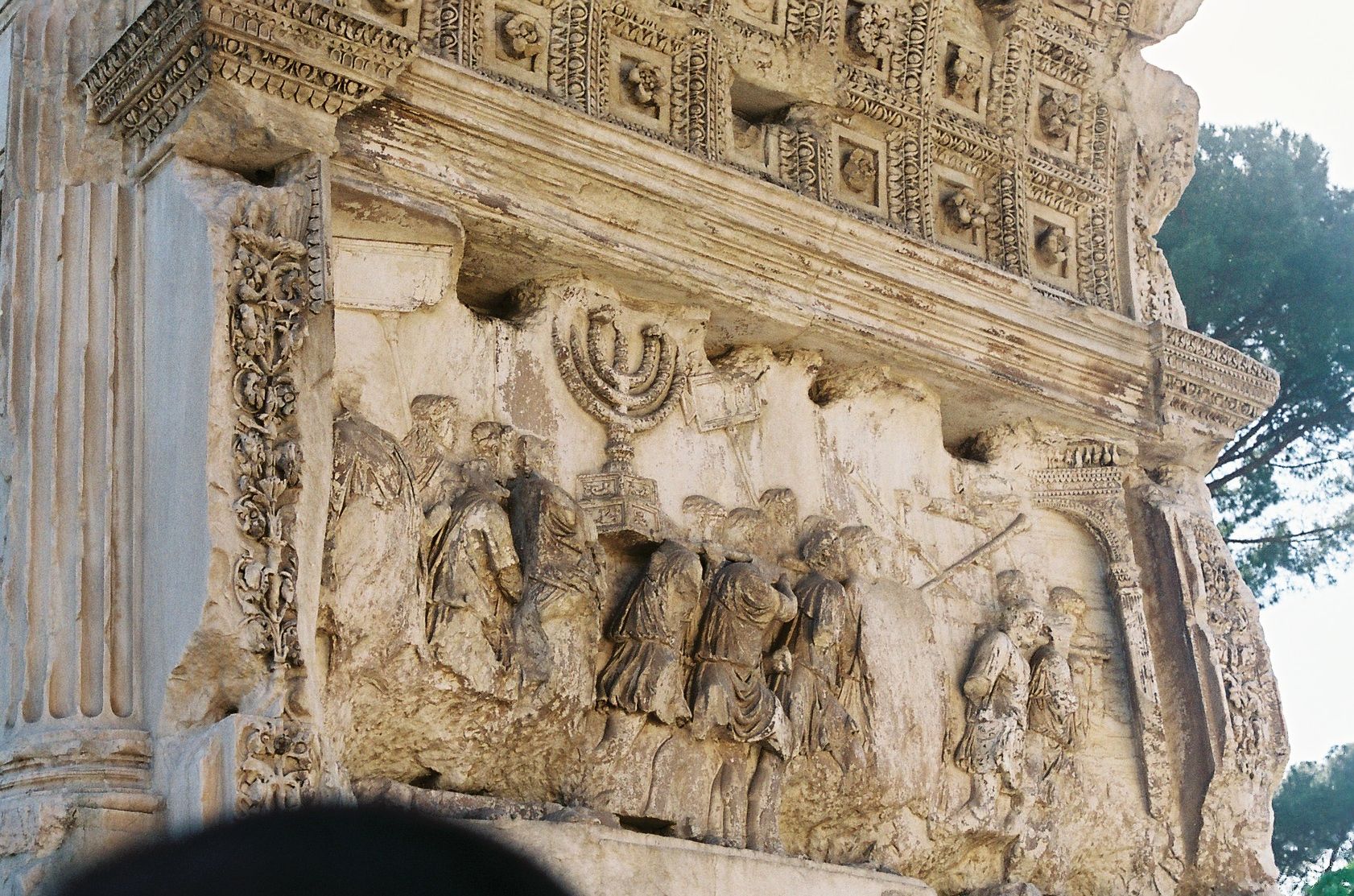
Titus' arch

Titus’ arch

Lent 2. 2014

John 3:1-17 (Genesis 12:1-4a; Romans 4:1-17)

Marian Free

In the name of God whose love embraces a world torn apart by violence, hatred, fear and greed. Amen.

During the week I came across a graphic description of the siege of Jerusalem in 70 CE. The author, Reza Aslan imaginatively recreates the turmoil and unrest of first century Palestine, the various revolts by “bandits” against the Roman rulers and how finally this ferment boiled over in the centre of the Hebrew faith – Jerusalem[1]. Aslan records the failure of successive Roman governors, the discontent of the people, the uprisings, the factions and the focus on Jerusalem and the Temple. Then he goes on to describe the callous ruthlessness of the Roman reaction.

When the Israelites expelled the Romans from Jerusalem, Vespasian was sent to quell the rebellion and restore order. Approaching Jerusalem from north and south, Vespasian and his son Titus retook control of all but Judea. In 68 CE Vespasian was distracted by the death of Nero and his ambition to fill that role. He abandoned the battle and returned to Rome where he was declared Emperor. The people of Rome were restless and Vespasian realized that he needed a decisive victory (or Triumph) to consolidate his hold on the office and to demonstrate his authority over the whole of the Roman Empire.

The revolt in Palestine provided the perfect scenario to show of what he was made. Vespasian decided not only restore order and reclaim authority in the nation, but to utterly destroy it – its people and, more particularly its God. To this end Vespasian dispatched his son Titus to bring the Hebrews to their knees. Titus set siege to Jerusalem, cut off the water supply and ensured that no one could go in or out. Those who did escape, he crucified in full view of the city. Slowly the people starved to death. They ate grass and cow dung and chewed the leather from their belts and shoes. Soon the dead were piled high in the streets, as there was nowhere to bury them. Titus needed nothing more for victory, but his task was to annihilate the people completely. His troops stormed the city, slaying men, women and children and burning the city to the ground so nothing remained[2].

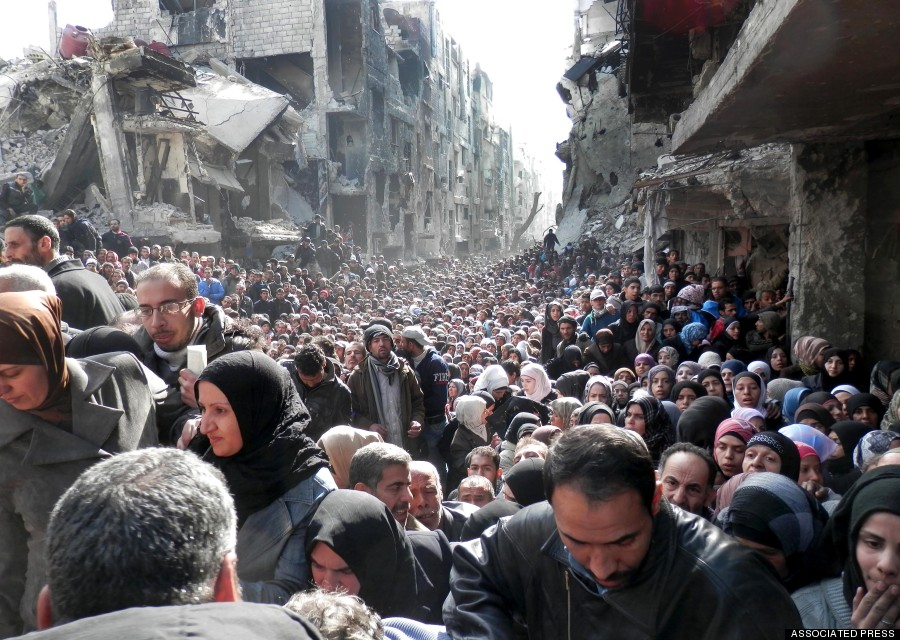
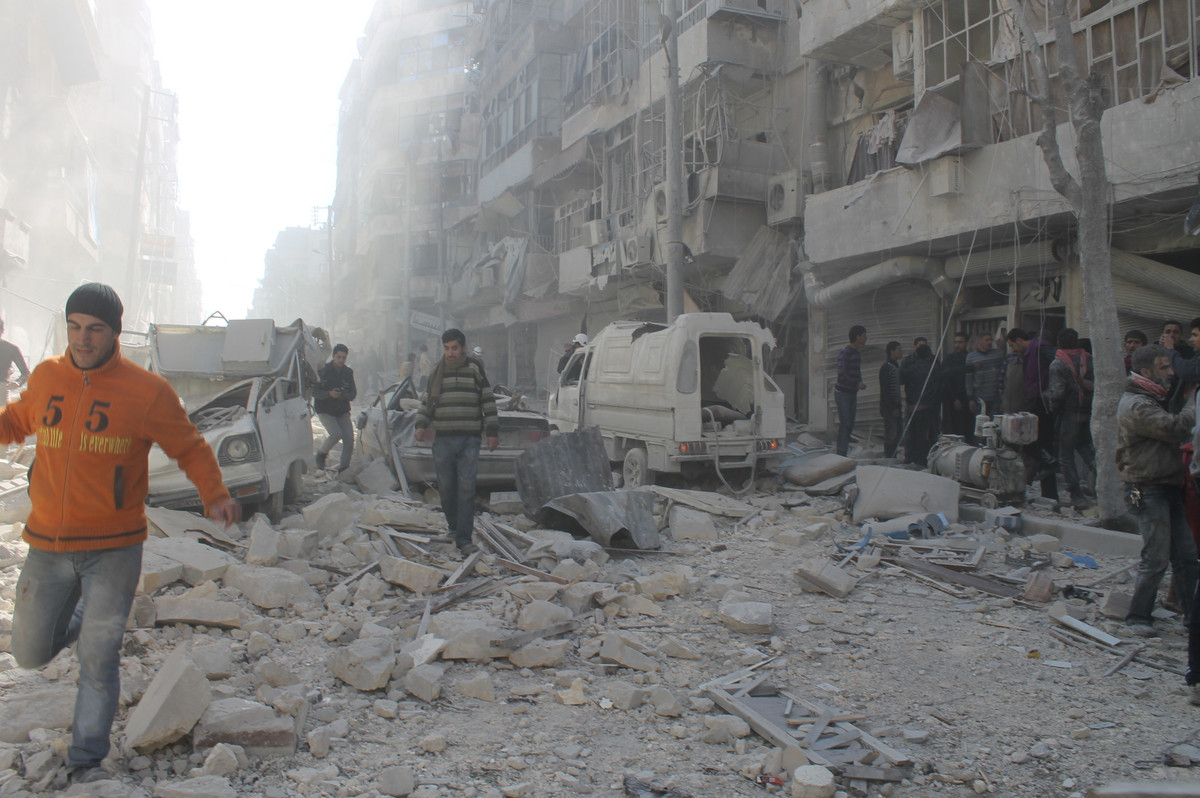
The world doesn’t change. The situation of those imprisoned in Jerusalem in 70 CE is not too different from that of those in many parts of Syria in 2014. The city of Homs has been under siege for two years now. Its inhabitants – men, women and children – have lived on grass boiled in water and killed cats for food. Schools are shut, only one hospital remains open and there is no electricity or running water. Those who emerged during the recent cease-fire were gaunt and hollow-cheeked, often caked with dirt. No one has been excluded from the horror, not the elderly, the disabled or the very young.

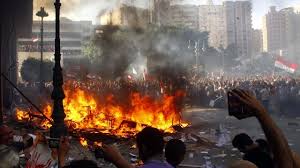
Syria is perhaps the most graphic example of a world gone wrong, of the way in which human beings can inflict the most horrific suffering on their brothers and sisters and of the way in which our primal fears can boil over into violence and destruction. As the world waits with bated breath to see what will be the outcome of the strife in the Ukraine, we cannot overlook the fact that Syria and the Ukraine are not isolated situations but are the face of a world in crisis – a world which reveals the very worst that humankind can be. Even to begin to list the nations at war or in the grip of civil strife would take too long. What is more, our minds simply cannot encompass the scale of suffering on a global scale. War and civil strife are just one example of a world that bears no hint of a good creator God. When we add to that human trafficking, extreme poverty, corrupt or ineffectual government, we could be tempted to ask: “Is this the world that God loves so much that he sent his Son?”

The answer is of course a resounding “yes”!

Today’s readings remind us that God’s love is not restricted to a privileged few or to those parts of the world that are free from strife and turmoil. God’s love reaches out to include the whole world.

The biblical story of God’s inclusive love begins in Genesis with Abraham and Sarah (12:1-4a). When God calls Abraham, God’s intention is clear – it is to make Abraham the Father of many nations – “in you all the families of the world will be blessed”. Initially it appears that through Abraham, God has chosen a select group of people for Godself. Certainly that is how the story plays out for centuries. All the while though there are constant hints that God’s love extends farther and embraces those who do not belong to the family of Abraham. Consider the following for example. Rahab was an outsider, yet it was she who enabled the victory at Jericho and facilitated entry into the Promised Land. Ruth, the forebear of Jesus was not a member of the Hebrew nation. God relented and saved the Gentiles city of Nineveh (despite Jonah’s objection) and the Psalmist tells us that all nations will flock to Jerusalem. Even Cyrus the King of Babylon is called God’s “anointed”. It is clear that God’s love and attention was not focused on the children of Abraham alone.

Paul picks up on this theme in both the letter to the Romans (4:1-17) and the letter to the Galatians (3:3-9). It was, he informs his readers, always God’s intention to include all people within the ambit of God’s love. No one is privileged in God’s eyes, all are equally worthy of God’s loving attention. “God is the father of all of us (Rom 4:16).”

It comes as no surprise then to read the familiar words of John 3:16 “God so loved the world that he sent his only Son”.

God’s love in not (and never was) restricted to a limited few, to those who belong to a particular group or to those who behave in a certain prescribed way. God’s love doesn’t pick and choose and it certainly does not wait until the world is ready or worthy of that love. The Palestine to whom God sent his Son was far from an ideal microcosm of human existence – far from it. In the first century, the Hebrew people were compromised, conflicted and divided, their priests were, at best, servants of Rome and, at worst, men seeking wealth and aggrandizement. Despite all this, it was to such a broken and imperfect people that God chose to send his Son.

Nothing much has changed – the world that God loves continues to be a long way from perfect but that doesn’t stop God from loving. However unlikely it seems, however undeserving the world continues to be, God reaches out in love giving us the opportunity for salvation. What it takes is for us to respond, for us to choose light over darkness, salvation not destruction.

God so loves the world – how then should the world respond?


[1] Aslan, Reza, Zealot – the life and times of Jesus of Nazareth. New York: Random House, 2013, 60ff.

[2] Vespasian’s Triumph, the procession of slaves and spoils of war were immortalized in the arch which can still be seen in Rome today.

The world God loves.

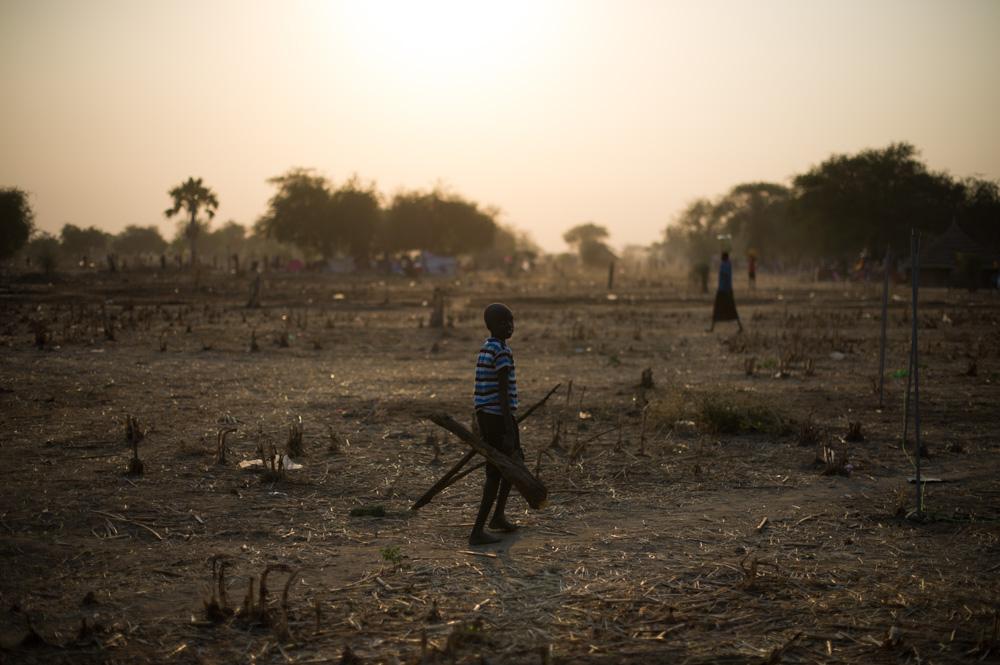
Devastation in South Sudan

Devastation in South Sudan

Riots in Egypt in 2013

Riots in Egypt in 2013

Syrian refugees lining up for food Syrian refugees lining up for food

Destruction of HomsDestruction of Homs