Pentecost 22 – 2025
Luke 21:5-19
Marian Free
In the name of God in whose hands are all things. Amen.
We live in particularly unsettled times. It is impossible to be unaware of the fragility of social structures, of national borders and of infrastructure. In some places democracy appears to be under threat; wars in the Ukraine, the Sudan and elsewhere threaten to change the shape of the world and typhoons, hurricanes and earthquakes reveal the vulnerability of our built structures.
For those of us who have lived through at time of relative of security, peace and prosperity the current state of the world can feel destabilizing and disturbing. We just don’t know how to plan ahead.
Jesus’ disciples knew what it was to live in uncertain times. Most of them lived a hand to mouth existence. Except for a brief period under the Maccabees their country had been under foreign domination for centuries. At this point in the first century Galilee was ruled by a cruel and capricious Herod and the marginally more benign Pilate ruled in Judah. Everything that could be taxed was taxed and punishment for unrest was swift and violent. Their ability to make plans for the future was severely limited.
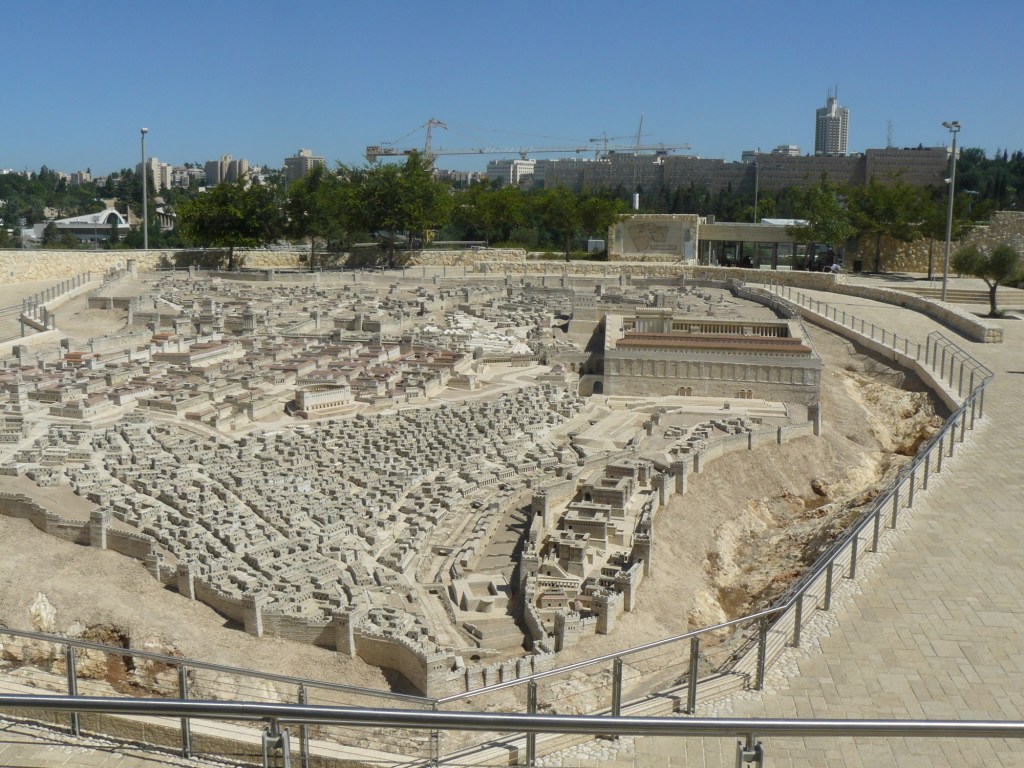
One point of stability and confidence was the Temple. The Temple, built as it was on the Temple Mount was a magnificent and imposing building. Constructed in 516 BCE to replace the original that had been destroyed by the Babylonians, the Temple had been significantly enhanced by Herod the Great (the father of the current Herod) and was known as Herod’s Temple. For Herod it was a symbol of power and might and control and for the Jews it was a symbol of God’s presence in their midst, a holy place in which the ancient rituals of sacrifice and atonement could be carried out, a place of prayer, a meeting place and a place in which even the Gentiles could worship the God of the Jews. Above all, it was a reminder of the universal nature of God, a sign of solidity, strength and endurance.
The Temple dominated the city of Jerusalem, it would have been almost impossible to imagine that it could be razed to the ground.
Yet, on overhearing people marvel at the Temple Jesus warns that: “the days will come when not one stone will be left upon another; all will be thrown down.” And in response to the disciples’ question: “When will this be?” Jesus doesn’t answer their questions but continues with a number of seemingly unrelated warnings – about false teachers, wars, insurrections, earthquakes, famines and plagues, betrayals and persecution.
This section of the gospel is usually referred to as the “little apocalypse”, a litany of what might be expected at the end of time. It is possible that is reflecting a commonly held view that things are so bad that God will surely intervene and bring the world as it is to an end. If so, he is helping his disciples to make sense of the chaos that they see around them and assuring them that a) they will survive if they hold fast and b) that God will ultimately have the upper hand.
Equally possible is that Jesus, recognising the anxiety of his disciples, is warning them that the future is unpredictable and that God doesn’t work to a time line. Jesus is encouraging the disciples not to waste time by focusing on what might or might not happen but instead to live in the present and to take things as they come, knowing that God will equip them to cope with whatever comes their way – be it political upheaval, natural disaster or persecution. Jesus is reminding the disciples that they cannot and should not try to second guess God, that they should try to trust that God has things in hand and that the future will unfold in God’s own time.
Jesus is reminding his disciples that life is precarious and the world is unpredictable and that they shouldn’t allow themselves to be caught up wondering what will happen and when. Rather they should concentrate on what they can and cannot do in the present. They should learn to place their trust only in God, because God is the only constant – not political systems, not buildings and certainly not the natural environment. Living in the present and leaving the future to God is the only way to cope with uncertainty. Trying to take control is futile. Worrying about the future and trying to create systems and structures that will cushion us from the visiccitudes of existence, keeps us in stasis and prevents us from experiencing life with its joys as well as its sorrows. Obsessing about how one might face a situation (a situation that may not arise) prevents us from seeing and grasping how God is acting right here right now.
Jesus advice is as relevant now as it was two thousand years ago. In uncertain times, he says, we must avoid the temptation to trust in those who make false promises that all will be well. When we are are tempted to read the signs of the times, we must remember that there will always be wars, insurrections and natural disasters and that they are not accurate indications that the end is near, but simply a reflection of the nature of humanity and of the instability of the planet. If we are tempted to see the hand of God behind the awful events in our lives and in the world Jesus reminds us of our limited understanding and asks that we leave the ordering of events to God.
The disciples want Jesus to tell them what the future will hold. Jesus’ response is to tell them not to waste time worrying about the future, not to build up barriers the hope that they can protect themselves from hurt and from harm, but rather to embrace the present with all it difficulties and complexities and to trust in God to give them the confidence to accept what is, the courage to persevere and the words to say.
No one knows what the future will hold so let us trust God in the present rather than placing our hope in an unknown future and being paralyzed by unnecessary fear.


 Swallowsrest