Archive for the ‘discipleship’ Category

Lambs among wolves – do you dare?

July 1, 2022

Pentecost 4 – 2022
Luke 10:1-12, 17-24
Marian Free

In the name of God who asks us to leave everything and follow. Amen.

I wonder, do you travel light, or do you need to be prepared for any eventuality? Do you like to plan your accommodation in advance, try out new places to eat or are you just as happy to take things as they come? Either way I wonder how you respond to Jesus’ instructions to his disciples in this morning’s gospel? “Carry no purse, no bag, no sandals”, “Remain in the house you first enter, eating and drinking what they provide”? Could you set out on a journey with nothing but the clothes that you are wearing? And how do you feel about accepting hospitality from strangers, eating whatever is put in front of you? How comfortable would you feel as a “lamb among wolves”?

In the first century, the most common form of communication was by word of mouth. People were illiterate and letters were an expense that few could afford. A majority of people lived on the breadline – paying for accommodation was not an option. To get a message to someone in the next village or further afield meant that someone had to travel by foot and be dependent on the kindness of strangers. This had its dangers and risks but, by and large, travellers could rely on the culture of hospitality that existed among many of the cultures in the Middle East. Even the poorest of people would share what they had, even if it was just some bread or maybe some fish.

If the gospel was to be shared the disciples had to go out, to travel through the towns and villages of Galilee: “to cure the sick who are there, and say to them, ‘The kingdom of God has come near to you.’” In a world without internet, telephone or even the printing press, there was only one way that people were going to hear the good news of the kingdom and that was if was taken to them.

Today’s world is very different. In the first instance, since Constantine made Christianity the religion of the Empire in the fourth century, it has been possible to assume that, in the West at least, the Christian faith was known (if not always held). Then during the years of expansion and colonisation, the Christian faith was exported to all corners of the world. Either way, until the last hundred years or so, there has been no apparent need to take the gospel to the world. Add to that the fact that in the 22nd century, communication is easy, cheap and, often, immediate. Modern day followers of Jesus can share the message of the gospel simply by sitting at their computer or by tapping out messages on their phone. Blogs, tweets, Facebook posts can all be employed in the service of spreading the gospel. There is not even a necessity for any face-to-face contact – no need to go out, no need to accept hospitality from strangers, no need to take risks, and certainly no danger of being “lambs among wolves”.

Safe behind our texts and our screens we can congratulate ourselves on spreading the word. We may take a certain pride in the number of “followers” that we have, imagine that our creative meme helps to make the gospel “relevant” to a new generation or that our erudite words will convince a sceptic or unbeliever that the gospel does indeed have something to say to today’s world.

Therein, I suspect lies a serious problem. In our offices and our homes, we have no idea what the world needs to know, even worse, we do not know what the world needs us to hear. Safe in our own little worlds, we do not need to engage with the pain and suffering experienced by millions – in distant places, but also on our doorsteps. We do not have to get our hands dirty with the grit and toil of what for many is daily life. If we do not take ourselves into the streets of our cities and towns, we will not have to contend with the anger that many people feel towards the church or face their disappointment with a church that has failed them. Confined in our churches, we do not have to personally take responsibility for the ways in which Jesus’ teachings have been distorted and used for purposes for which they were never intended.

How can we possibly follow Jesus’ instruction to “heal the sick”, unless we allow ourselves to come face-to-face with those whose lives are limited by poverty, injustice or trauma? How will we learn the stories or those beyond our walls, unless we allow ourselves to become vulnerable (unprotected by our equivalents of purse, bag, and sandals)? How will we begin to have any understanding of their lives and their struggles unless we graciously accept their hospitality and not only listen to, but share their stories? How can we tell others that the “kingdom of God has come near” when for so many it is palpably absent and when we demonstrate by remaining in our comfort zones that we are loath to place our trust and hope completely in Jesus?

At first glance, the gospel appears to be bound in time and place, but like most of our gospel stories, Jesus’ sending out of the seventy can and does speak to us. Jesus warns that if we take seriously the commission to share the gospel, there will be times when we are overwhelmed by the impossibility of saving the world, when we feel defeated by the cynicism and scepticism of those who have rejected the church’s teaching and occasions when we are struck with anguish when we hear of the pain inflicted directly and indirectly by the church in which we have found a home. If we truly allow ourselves to be defenceless against the onslaughts of those whom we seek to serve, we may indeed feel as though we are “lambs among wolves”.

The good news is that the seventy did go out and when they returned, they exclaimed: “Lord, in your name even the demons submit to us!” “Even the demons submit to us!”

In a different time and place, we would not use the language of demons, but it is fair to say that there are many evils in the world today. The evil of greed which leads to the impoverishment of millions. The evil of a desire for power and control that leads to war and terror. The evil of climate injustice, which leads to the most vulnerable paying the cost for the careless of others. The evil of domestic violence and child-abuse. The evil of dispossessing people of their land, removing their children and incarcerating them at disproportionate rates. (I am sure that you could add more.)

Our blogs, tweets, Facebook posts, our Live-streaming and Zoom meetings will not do. We must find the courage to go out – even if we do not know what to say and even if we are afraid of our welcome – because only then can we confront the evils of the world and only then will Jesus be able to empower us to overcome them.

Believer or follower?

June 25, 2022

Pentecost 3 – 2020
Luke 9:51-62
Marian Free

In the name of God who calls us to a future that is as yet unknown. sci

It is said that earning a Phd is more about persistence than it is about intelligence. I can testify to the truth of that. The most exciting year of the project is the very first year during which one develops a proposal for the research topic which involves coming up with an original argument and discerning whether or not there is enough evidence to support it. This is a challenging and stimulating time – a year of discovery and of new insights. If, as I was, you are studying part-time, the next eight years are spent developing and defending the proposal. Towards the end, it becomes simply mind-numbing. The initial enthusiasm wanes and the energy fades. Now it is just hard slog – ensuring that the thesis is well-argued, that the expression is good and, most importantly, that the referencing conforms to the required system. At this point, one is no longer making new discoveries or engaging in further research. The research question has been satisfactorily answered and now it is just the matter of putting the insights gained into some coherent sort of order. Not surprisingly, some students find this stage simply too tedious to continue. Many half-finished PhDs litter the halls of academia.

I know only too well the feeling – having answered the question to my satisfaction, I wondered why I needed to someone else to approve the result. After all, I knew by then that I was right! Thankfully I pressed on and gained a qualification that allows me to pursue a passion for teaching.

It is not always easy to see something through to its conclusion. I suspect that many of us over the course of a lifetime have begun projects with enthusiasm, only to leave them to languish when they became too difficult or when something more interesting cropped up. This is the point of today’s gospel which begins a new section in Luke’s telling of the story.

“Jesus set his face to go to Jerusalem.” The strength of the verb (set his face) tells us that this is no easy decision on his part. Going to Jerusalem (where he will surely die) takes all of Jesus’ resolve. This is something that he must do, not something that he wants to do.

This week and next our gospel readings focus on discipleship – what it means and what it demands. As Jesus sets out on the journey that will lead to his crucifixion, he needs to make it clear to would-be disciples that following him is not for the faint-hearted. Jesus knows what lies ahead for him – a sham trial, humiliation, and a brutal death. Those who choose to follow him must be prepared for discomfort, rejection and death. So, when these three representative disciples make enquires about following him, Jesus is keen to ensure that they can step up to the challenge and if, having stepped up, they can go the distance. For this reason, instead of enthusiastically welcoming them, he throws down the gauntlet. Can you accept having nowhere to lay your head? Will you risk the social and familial censure of not fulfilling your cultural obligations? If confronted with persecution will you hold fast or fall away? Are you prepared to live with uncertainty, abandon your families and not look back?

By testing the commitment of these would-be disciples Jesus is trying to discern whether they simply want to be part of the excitement that surrounds him, or whether they have truly grasped what it means to be a disciple.

We do not hear if Jesus adds to his followers that day or not, but in the following verses (as we will hear next week) we get a fuller idea of what it means to be a disciple of Jesus and why Jesus might want to test the enthusiasm of those seeking to join him. His disciples are sent on their first mission: “like lambs in the midst of wolves”, with no purse and no bag and nowhere to stay. It takes real commitment (and courage) to rise to this and the other challenges that lie ahead of the disciples.

For most of us here, the experience of following Jesus is quite different from that described in today’s gospel. We are, by and large, followers by birth rather than by choice. When we were in our infancy our parents and godparents enrolled us in the faith through our baptism. The questions they were asked were very different from the challenges that Jesus threw out to his potential disciples.

“Do you renounce the devil and all his works, the vain pomp and glory of the world, with all covetous desires of the same, and the sinful desires of the flesh, so that thou wilt not follow, nor be led by them?

Do you believe all the Articles of the Christian Faith, as contained in the Apostles’ Creed?

Will you then obediently keep God’s holy will and commandments, and walk in the same all the days of thy life?”

These are questions about faith rather than discipleship. In Baptism we are made members of the church rather than enrolled as followers of a radical, itinerant teacher. This is an important distinction, and one that we should take seriously. It is easy enough to believe – in God and in Jesus whom God sent. Being follower, a disciple, is potentially demanding and life-threatening. In twenty first century Australia it is unlikely that we (believers or followers) will be put to the test. We will not be asked to abandon home and family or to give our lives for our faith. But that does not let us off the hook. If we want to be followers of Jesus and not just believers, our commitment must be wholehearted, enthusiastic, and able to withstand any test.

Today, on his behalf, Braxton’s parents will promise to share with him their faith in God and in Jesus whom God sent. We pray that through them he may come to know the power of God’s love, have faith in Jesus Christ as his Saviour and have the courage to follow wherever that faith may lead.

Holy fear

February 5, 2022

Epiphany 5 – 2022
Luke 5:1-11
Marian Free
In the name of God who is both immanent and transcendent, as close as breath and as distant as heaven, as demanding as forgiving. Amen.
In the wake of the death of Archbishop Desmond Tutu many people from many walks of life uploaded their memories online. Among them was journalist Giles Brandenreth who posted what (at the time) he thought might be the last ever interview with Tutu who was being treated for prostate cancer. (That was 2005!) It was in that context that Brandenreth asked: ‘When you get to Heaven what do you think will happen when you come face to face with God?’ In response the Archbishop shrieked. ‘Will I survive? You remember Gerontius? He longs to be in the presence of God and his guardian angel takes him to God and the moment he comes into the divine presence he cries out in anguish, “Take me away.” In the blinding presence of holiness, who would survive?’
Gerontius is a character in a poem written by John Henry Newman who, having converted to Roman Catholicism from Anglicanism, pens a verse to help explain the doctrine of purgatory. Newman uses Gerontius (who had died) as the means through which the reader might be drawn to consider their own death and their feeling of unworthiness before God. Towards the end of the poem the soul of Gerontius asks his guide if he will see God. He is told that for a moment, he will see the face of God, but that the sight will open a wound and heal the wound and widen the wound all at the same time. Acutely aware of how pitiful he is, Gerontius begs that rather than come into the presence of God he might be allowed to undergo purgatorial cleansing so that his sinfulness might not sully the perfection of God and the courts of heaven.
The notion of purgatory (which has no support in scripture) was one of the doctrines rejected by the English church at the time of the Reformation, but Newman’s understanding that being in the presence of God would leave a person feeling exposed is not his alone. Geoffrey Studdart Kennedy uses the same imagery in his poem ‘Well’ in which a person (finding himself before God) sees himself and his imperfect life through God’s eyes. When God finally says, ‘Well?’ the person responds, ‘Please can I go to ‘Ell.’ (He cannot in all conscience believe that he belongs in the presence of God.)
This sense of sinfulness or unworthiness in God’s presence has its roots in scripture. Many of the prophets respond to God’s call with a declaration of their unworthiness and here, in today’s gospel, Peter falls at Jesus’ knees and begs him ‘to get away from him’ because in Jesus’ presence he recognises himself as a sinful man. It seems that God’s very goodness has the propensity to make us aware of our lack goodness. In the presence of God’s infinite holiness we, like Peter, want to hide ourselves from sight, at least until we have been cleansed and made ready for the encounter, or so that we are in no danger of contaminating holiness itself.
This is similar to, but different from, the reaction that demons have to Jesus. They too want Jesus to go away but, in the case of the demons, Jesus’ presence is like a blinding light or burning fire that threatens to consume them. Unlike Peter they are satisfied with themselves and want to be left alone to their wickedness. In asking Jesus to go away, the demons are protecting themselves, whereas Peter mistakenly believes that Jesus needs protecting from him.
Jesus’ response is to reassure Peter. He does not pretend that Peter is perfect, but he makes it clear that Peter can serve him, and serve God, just as he is.
God is something of a contradiction. On the one hand God is transcendent, omnipotent, and unreachable, demanding of humanity the perfection/godliness for which we were created. On the other hand, God is immanent, relatable, and intimate, loving and accepting, constantly overlooking our foibles, and always drawing us back into relationship. This, of course, is what is perfectly revealed in the Incarnation (Jesus coming among us as one of us). The transcendence of God is balanced by the presence of God, the need to be accountable to God the creator is beautifully balanced by the saving love of the Redeemer.
In our relationship with God who is both transcendent and immanent it is essential to understand the tension between God’s expectations of us and God’s refusal to give up on us, to find a healthy balance between fear of God and over-familiarity with God. On the one hand we must acknowledge God’s holiness and our comparative lack of holiness. On the other hand, we must not assume that God simply ‘one of us’ with little to no expectations of us.
While it is important – essential even – to understand that we are completely and utterly and unconditionally loved by God, it is also important to remember that we have a responsibility to try to be the best that we can be and that we will one day be called to account. God loves us, but that doesn’t mean that God demands nothing of us. In other words, knowing ourselves loved does not mean that we should treat that love lightly. Knowing ourselves loved, leads us to want to be worthy of such love.
Approaching God with a true sense of holy awe (and an awareness of our unworthiness) is very different from the sort of terror experienced by demons or a sense of deep shame that prevents God’s love from reaching us. In every encounter between the created and the creator the first words spoken are always ‘Do not be afraid’ – the very words that Jesus utters to Peter in our gospel today. In the face of our alarm, awkwardness and embarrassment, God/Jesus reassures us that we. belong, we need not fear.
In the interview with Brandenreth, Archbishop Tutu questions whether he/anyone could survive in the presence of God yet elsewhere he writes that being in heaven is to encounter the unutterable beauty of God. In the presence of such beauty he argues, even an Idi Amin or Adolf Hitler would be compelled to fall down and worship and thus would gain eternity. Kennedy’s poem ‘Well’ concludes with the voice of God refusing the penitent entrance to ‘‘Ell’ on the basis is that hell is ‘for the blind, and not for those that see.’
So do not be afraid. Do not take God for granted but take it for granted that God’s love is constant and unwavering and, no matter the state of our lives or our hearts, God’s love will never, ever be withdrawn.

Being childish or being as a child

October 16, 2021

Pentecost 21 – 2021

Mark 10:35-45

Marian Free

May I speak in the name of God, Creator, Redeemer and Sanctifier. Amen.


Last weekend I was babysitting one of the grandchildren. His current fascination is “racetracks” and he has some very interesting ways of constructing them. In one iteration two chairs were pulled together so that ideally the cars could gather enough speed travelling down the arm of one chair that they could jump the gap between the chairs and continue racing. Sadly, even with some firm card in between it didn’t really work. That however did not put a damper on the game – or should I say – competition. Each of us could choose a number of cars and the one who had the most cars over the line was the winner. I probably don’t need to tell you that: a) I always chose cars that I wasn’t meant to choose and b) that no matter where my car ended up there was some reason that I wasn’t the winner. The final score was something like 7 to 2 in my grandchild’s favour.


This of course is quite normal behaviour for a five-year-old. It is an important step in their development, a way in which they work out their own identity, their place in the world, and how they learn to feel safe and secure. Over time most children learn that it is OK if they don’t win all the time. Some, however, never learn and never develop a sense of their own worth that does not rely on being the best, being the centre of attention or being affirmed. Indeed, few of us truly grow up. Most of us spend our lives measuring ourselves against others – a state of being that is reinforced by the society in which we live – a society that values winning, that promotes being bigger and better and encourages the amassing of possessions.


As we have observed over the past few weeks, Jesus’ disciples fall into the category of those who have failed to fully grow up. It doesn’t seem to matter how many times Jesus tells them that competition, comparison and one-up-manship have no place in the kingdom, they don’t seem to get it. Jesus models inclusion and the disciples want to form a special in-crowd. Jesus speaks of giving his life for others and the disciples argue among themselves as to who is the greatest. Jesus talks about suffering and dying, and James and John ask to sit at his right hand and his left. Jesus says that those who want to be first must be last and still the disciples want to rule over others.


Jesus, the only one among us who could claim to be superior, divests himself of anything that could suggest power or a claim to being more important, more deserving than anyone else. We see this from the very beginning of his ministry. When he was tempted in the desert, he absolutely refused to be caught up in the power play in which the devil was trying to engage him. He doesn’t operate alone as if he is the only one through whom God works. One of his first actions is to choose disciples whom he endows with the same powers that he has, and then he sends them off on their own to teach and to cast out demons! For Jesus it was never about competition or about measuring himself against others but always about equipping and empowering others.


That the early church recognised this quality is evident in the Christ hymn of Philippians 2: “Let each of you look not to your own interests, but to the interests of others.  Let the same mind be in you that was in Christ Jesus,

            who, though he was in the form of God,

                        did not regard equality with God

                        as something to be exploited,

            but emptied himself,

                        taking the form of a slave,

                        being born in human likeness.

            And being found in human form,

                        he humbled himself

                        and became obedient to the point of death—

                        even death on a cross.”

Even though Jesus was/is God, he didn’t presume on this to set himself apart from the rest of humanity, but fully immersed himself in the human condition. In so doing, he demonstrated that by divesting ourselves of all striving, of all attempts to be better than, smarter than others, we in fact become most truly ourselves and at the same time become most truly content.

Ever since Jesus first announced his death and resurrection the disciples have willfully or foolishly misunderstood the nature of discipleship. No matter how Jesus has worded his teaching – “take up your cross”, “be servant of all and slave of all”, “the first must be last,” “it is to such as these (referring to the lowest of the low) that the kingdom of God belongs”.  Can you imagine just how frustrated and disappointed Jesus must have been when James and John ask to be given seats at Jesus’ right and at his left? Jesus has told the disciples over and over and over again that discipleship was not about power and authority and yet James and John have still not understood. They believe that by hitching their wagon to Jesus that they will be able to stand out from the crowd, to be distinctive. It will not be until they have watched Jesus suffer and die (and rise again) that they will finally understand the true meaning of servant leadership and grasp what it means to lose their life to gain it. Before that they will continue to misunderstand to the point of betraying and abandoning him.


Unlike the disciples we have the advantage of the gospels and can learn from their mistakes, yet how many of us fall into the trap of fitting the cultural norms, how many of us express our discontent with who we are by competing with others and trying to prove ourselves, how many of us forget that our primary task is to fit ourselves for the kingdom of heaven?


If we want to know what it means to be disciples we need only read from Mark 8:27 and Jesus’ first prediction of his passion to learn that discipleship involves prioritizing others, caring for the vulnerable and being willing to give up everything that stands between ourselves and God.


The good news is that God doesn’t give up on us, that it doesn’t matter how slow we are or how foolish we are and that we have a life-time to try to do what it takes.


Difficult and incoherent – Jesus on discipleship

September 25, 2021

Pentecost 18 – 2021
Mark 9:38-50
Marian Free

May I speak in the name of God who in Jesus gives us the perfect model of discipleship. Amen.

Millstones around one’s neck, cutting off one’s hands and feet, pulling out one’s eyes, entering life deformed rather than facing the fires of Gehenna – verses 42-48 of Mark chapter 9 are utterly confronting, even incomprehensible. In fact, the entirety of today’s reading is perhaps the most difficult of all to understand let alone to preach on. To quote C. Clifton Black “It contains things that drive the conscientious (of preachers) into a slough of despondence: exorcisms (38), multiple disturbances in the Greek text, footnoted in responsible English translations (vv 42,44,45, 46, 49) and hard sayings of Jesus (39-41) that are logically incoherent (48-50) or which are manifestly outrageous (42-47) .”

Thankfully, the passage makes a lot more sense and is a lot more coherent it we take a step back and read it in context – both from a literary point of view and from an historical/cultural perspective. The verses that we have read this morning follow directly on from last Sunday’s gospel which began with Jesus’ second prediction of his passion and resurrection, was followed by the disciples’ bickering about who was the greatest and concluded with Jesus’ visual parable about the nature of discipleship – Jesus “sat down and called the twelve, and said to them, “Whoever wants to be first must be last of all and servant of all.” 36 Then he took a little child and put it among them; and taking it in his arms, he said to them, 37 “Whoever welcomes one such child in my name welcomes me, and whoever welcomes me welcomes not me but the one who sent me.” The second saying in this pair illustrates and expands the first in that a child is an example of the “last of all.” In an aural culture, the two sayings would be further linked by the similar sounding Greek words παιδον for child and παις for servant.

This connection between the two parts of Jesus’ illustration warns us against romanticising Jesus’ use of a child to make his point. “Whoever wants to be first must be last of all and servant of all” Jesus says. Time has softened the offense of Jesus’ statement here. In the twenty first century we have a very different attitude towards children from that of Jesus’ time and place. In the first century, children, along with slaves, were on the lowest rung of society: they had no legal status, no agency and certainly no self-determination. A person would gain no social or economic gain from welcoming a child – in fact their reputation would be compromised rather than enhanced if they were to pay much heed to someone who had nothing to offer them in terms of honour and status. A child was not unlike the “the last of all and the servant of all” for “the servant of all” was, as the expression implies, at the very bottom of the social ladder. A servant or διακονος was someone who served the food and the servant of all would only be able to eat after everyone else had eaten enough to satisfy them.

Jesus is doing here what he does so well. By insisting that his disciples welcome children as they would welcome him Jesus is completely reversing the cultural norms of his day. He is teaching his disciples that they are not to seek (or expect) honour and status but are to be “servants of all” and are to welcome into their midst the lowest of the low, the most marginalised and the most vulnerable – those who not only cannot confer status, but who will, by their very presence lessen the disciples’ own position in society.

Today’s complex and difficult reading is a continuation of this theme – that discipleship does not confer power or set apart, but rather calls one to sacrifice one’s position in the world by immersing oneself in the lives of those who are most despised and who have the least to offer.

This is spelt out in a number of ways. First of all Jesus makes it clear that discipleship is not a special club consisting of the “in-crowd”, nor does it confer special powers and privileges on only a few. If therefore, the disciples notice someone casting out demons in Jesus’ name, they are not to stop them. Being a disciple does not give a person special privileges. The disciples should rejoice that others, however unconnected to Jesus, are able to exercise the powers that Jesus has bestowed on them.

Secondly, Jesus points out that with discipleship comes great responsibility. Not only are disciples expected to welcome the most vulnerable and the least worthy, they are also to note that the consequences of causing harm to anyone of “these little ones” are catastrophic. It would be better, Jesus says, to have a millstone placed around their neck and be cast into the sea! This means, he continues, that rather than risking harm to others, those things that might cause such harm should be dealt with in the most radical way possible and disposed of.

Finally, Jesus seems to sum up what he has been saying since he announced his death and resurrection for the second time. That is that discipleship involves sacrifice not exaltation, service not power, collaboration, not competition. For this he uses the image of salt which in the Old Testament is associated with sacrifice. When we see the passage as a whole we can see that we have come full-circle. What began with Jesus’ second announcement of his passion was followed by the disciples’ argument about who was the greatest. Jesus then confronted the disciples’ status-seeking behaviour by insisting that they become last of all, that they welcome those who can confer no status. He challenges their desire to be distinctive, by welcoming anyone who casts out demons in his name, he insists, that they cause harm to no one and that they, like him are willing to give everything – even their lives – for the sake of others.

Discipleship is so much more than simply living good lives. It is about following Jesus’ example, no matter what that might cost us in terms of respect, reputation, ambition. It means putting ourselves last and others first, and giving up everything for the privilege of following Jesus – who gave up everything for us.

Can we do better?

September 18, 2021

Pentecost 17 – 2021
Mark 9:30-37
Marian Free

May I speak in the name of God, Earth-Maker, Pain-Bearer and Life-Giver. Amen.

Several years ago, a medical conference was held in Hawaii to examine the multi-cultural aspects of effective treatment. Hawaii is apparently the most racially diverse place in the world and the hospital staff there were discovering that patients responded differently according to their backgrounds and their expectations. A story that has stayed with me from that report is the account of the death of one of their patients. The gentleman concerned was from Turkey. When he died his wife and daughter howled inconsolably – ululating loudly and swaying back and forth. Without thinking the staff tried to comfort the grieving women, to offer words of consolation that might help them in this moment of utter desolation. What they didn’t realise at the time was that their attempts were not only futile but were in fact both unwarranted and unwanted. Both mother and daughter were behaving in a way that for them was culturally appropriate. Loud and lengthy wailing was their way of coping with grief and in trying to calm them down the staff were in fact preventing them from doing what, to them, was the most helpful response to the situation.

At times when we feel uncomfortable, we behave in ways that lessen our own sense of unease without necessarily thinking about the impact our behaviour will have on others. When we hear bad news, a natural response is to try to find explanations for what is happening, as if understanding a calamity might mitigate its effect. In the face of danger, we may deny what is happening or try to imagine a positive outcome rather than face the horror of reality. If someone says something difficult or confronting, we may be tempted to change the subject so that we don’t have to deal with the issue at hand.

Certainly, the disciples respond in all these ways to Jesus’ announcement that he must suffer and die, before rising from the dead. Three times Jesus announces his impending arrest, suffering, death, and resurrection and three times the disciples respond in ways that demonstrate that they do not want (or simply cannot bear) to hear what he has to say. They are confused and frightened so they turn the conversation towards topics that they can understand and over which they have some control. Last week we heard that Peter was so upset by Jesus’ announcement that he rebuked (tried to silence) him. Today we learn that the disciples as a group turn the discussion to something very earthly – who is the greatest. Next week we will discover that James and John have completely blocked out what Jesus has said and have convinced themselves that Jesus really is the one who is going to reclaim the kingdom from the Romans and who can offer them positions of power commensurate to his own.

Each of these accounts follow a similar pattern: Jesus’ prediction, the disciple’s failure to understand and Jesus’ correction of their misunderstanding followed by an illustration of the meaning of discipleship. Jesus points out that instead of avoiding death, the disciples are to meet it front on. They are to take up their cross and follow him. Instead of competing as to who is the greatest, they are to put themselves last by placing the most vulnerable, the most marginalised ahead of themselves. Rather than seeing discipleship as an opportunity to “lord it over others” Jesus’ followers are reminded that they are not to be like the Gentiles but are to serve one another. In each instance Jesus turns the cultural expectations of his time on their head. He knows that it is natural to want to preserve one’s life, to establish one’s place in the pecking order and to seek recognition. For disciples though the opposite is expected.

Clearly Jesus’ teaching is difficult for the disciples to comprehend. They have yet to understand the nature of Jesus’ ministry and the consequences that will ensue. They want to prevent his death and they want to continue to believe that in following him they will share in his reflected glory. They cannot, at least for the moment, suspend their cultural expectations and allow themselves to be fully caught up in Jesus’ reversal of those attitudes.

So uncomprehending are the disciples that Jesus is forced to repeat himself three times in three different ways and still the disciples cannot grasp the implications of what he is saying – about himself and about what it means to follow him. It is not until they are faced with the reality of Jesus’ death and resurrection that they finally grasp what it means to be disciples – they are to take hold of life with both hands and with no fear of death, they are to broaden their concept of who is in and who is out such that no one is excluded and they are to lead, not by lording it over others, but through service to them. Discipleship may not, in fact probably won’t, lead to fame and fortune but it will at its best turn the world on its head.

As members of the institutional church, we too often find ourselves as part of the establishment, supporters of the status quo, bound by cultural norms. Since Constantine our bishops have had positions of status (and even power) in the community. For centuries the church (as institution) has engaged in more in self-preservation than in the protection of the vulnerable (as the child sex abuse reports reveal). Throughout the centuries there have many issues on which the Church has been more concerned with its reputation than with providing a welcome for the marginalised – the single mother, the divorced, the ex-prisoner, the druggie. Indeed, rather than embrace the outsider, the Church has at times been guilty of looking down on (and even excluding) those considered to be disreputable – those who threaten the sanctity of the church.

In other words, Jesus’ instructions on discipleship continue to fall on deaf ears.

Perhaps after all three times is not enough. Perhaps Jesus needs to repeat over and over and over again that he will suffer, die and rise and that we his disciples must take up our cross, welcome the vulnerable and marginalised and eschew power for servanthood.

Can we do better? I suspect that we can.

Inviting others to meet Jesus

January 16, 2021

Epiphany 2 – 2021

John 1:43-51 (you might like to begin at 35)

Marian Free

In the name of God who calls us to into relationship with God and with each other. Amen.

Those of you who pay attention to detail will have noticed that our Gospel readings this year have changed from Matthew to Mark. According to the lectionary we are now in Year B. Throughout this year we will be reading from Mark’s gospel and hearing this author’s particular slant on Jesus’ life and teaching. Why then, you might ask, does today’s gospel come from the gospel of John? The answer is this. We have a three-year cycle which allows us to give one year each to Matthew, Mark and Luke. Because there is considerable overlap between the three Synoptic gospels, it is possible to manage one gospel a year. The lectionary omits at least some repetitions. For example, in Year A we read Jesus’ parable of the talents as recorded by Matthew but in Year C we do not read Luke’s account of the same parable. 

Mark is the shortest of the three synoptic gospels – 12 chapters shorter than Matthew in fact! This allows room for John’s gospel to be read in Year B – this year. During both Lent, and the season of Easter, we will be reading from the gospel of John. This allows us to cover all four gospels over the three-year period. 

John’s gospel is quite different from the Synoptic gospels as is very evident in today’s reading. I’m sure that if I asked you to tell me about Jesus’ calling of the disciples, you would repeat the story of Jesus’ walking by the lake and calling the fishermen – Peter and Andrew, James and John – from their fishing and you would remember that Jesus said that he would make them “fish for people”. If, however, John’s was the only gospel available to us, we would tell quite a different story. John’s version of events begins not with Jesus, but with John the Baptist Jesus doesn’t call people, they come to him and, having come to believe, bring others to Jesus. It is, as Jerome Neyrey points out, a pattern of evangelisation that is repeated four, if not five times in the gospel.[i]

Neyrey identifies the following pattern:

  • A believer in Jesus evangelizes another person (2) by using a special title of Jesus. (3) The evangelizer leads the convert to Jesus (4) who sees the newcomer and confirms his decision. (5) The conversion is sealed.

I am grateful for the insight, but I would word it differently.  A believer tells another person about Jesus (1) using a title that that person would recognise (2). He or she brings that person to Jesus who (3), in some way engages them (4) in such a way that they too come to believe (5). Whichever way you choose to look at it, John appears to be describing evangelism – bringing people to faith. 

The link to the article from which I have drawn this argument gives a fuller story, but in summary, the four/five examples are as follows.

John the Baptist (1), who has earlier recognised Jesus (Jn 1:34) draws the attention of two of his disciples to the “Lamb of God” (2). The disciples follow Jesus (3) and are convinced that the Baptist is right (4). They then become followers of Jesus (5).  In the second example, one of the original two, Andrew (1) finds his brother and tells him that they have found the “Messiah” (2). He brings Peter to Jesus (3). In this instance, Jesus’ acknowledges Peter and gives him a new name (Cephas) (4) which draws him into Jesus’ band of followers (5). Our third example is abbreviated. We are not told who finds Philip (Andrew or Peter) and Jesus is not given a title, but Philip’s discipleship is confirmed by Jesus – “follow me”.

Finally, at least in terms of those who become numbered among the twelve, is Nathaniel. Again, someone who already believes, in this instance Philip, (1) tells Nathaniel that “we have found the one about whom Moses in the law and also the prophets wrote (2).” Despite Nathanael’s resistance, Philip brings Nathaniel to Jesus (3), Jesus engages Nathaniel in discussion (4) and promises him that he will witness extraordinary things thus affirming him as a member of the twelve (5).  

A further example of one person bringing others to faith is found in the account of the woman at the well who, having met Jesus, tells her community (1) about the “Messiah” (2). The community come to see Jesus for themselves (3), listen to Jesus (4) and come to faith for themselves (5).

John’s account of discipleship provides a model for evangelism or mission in every age – those who know and believe in Jesus, introduce their families, friends and communities to Jesus, using expressions that would lead them to understand who Jesus is. In turn, those who are introduced to Jesus come to faith themselves. 

If the church of the 21st century is shrinking rather than growing, perhaps it is because we have not learnt from John that we bring others to faith simply by bringing them to Jesus and letting him do the rest.


[i] John J. Pitch https://liturgy.slu.edu/2OrdB011721/theword_cultural.html

Stormy waters

August 8, 2020
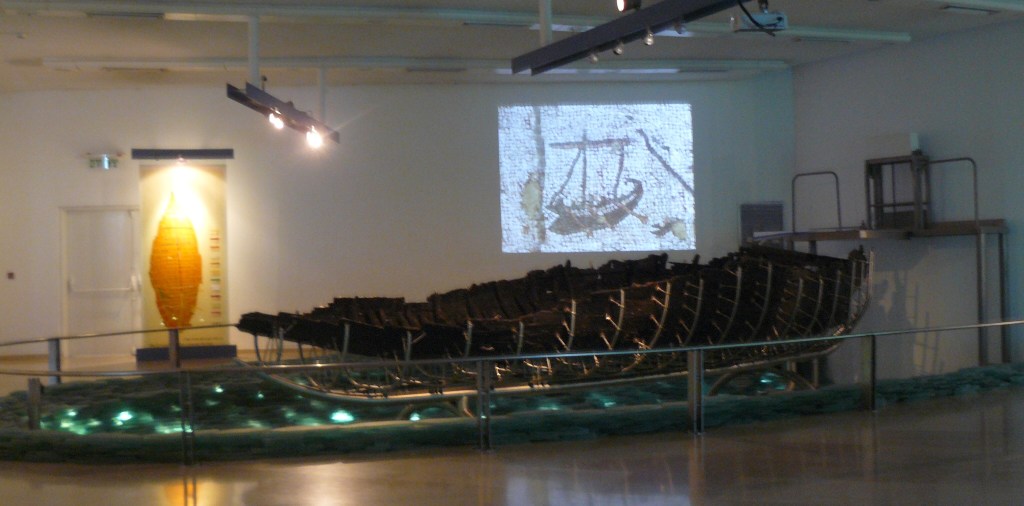
The Jesus boat

Pentecost 10 – 2020

Matthew 14:13-21

Marian Free

In the name of God who understands our deepest fears and who overlooks our multiple weaknesses. Amen.

The most visited tourist destination in Israel is Kibbutz Ginosar on the shores of Galilee. It was here, in 1986 that two brothers, Moshe and Yuval Lufan, found the remains of a first century boat. That year the water levels were particularly low and the brothers – who spent a great deal of time looking for artifacts – came across a rusty nail which, on inspection belonged to a boat, buried in the mud beside the water. Recovering the boat was a mammoth task. Archaeologists had to work out how to excavate the boat without damaging or destroying it. This meant keeping the timbers wet, moving the fragile structure in one piece, cleaning off the mud without touching the boat, and finding the right fish to keep the bacteria away. Thankfully the hard work was rewarded with success and the boat can now be seen in a museum close to where it was found.

Boats are a feature of the gospels. Jesus calls four fishermen to follow him, he teaches from a boat, is responsible for an extraordinary catch of fish from a boat and he himself seems to criss-cross the Galilee in a boat. The discovery of the “Jesus boat” puts flesh on the gospel stories and enables us to visualise Jesus and his disciples as they sail from one side of the lake to another. The popularity of the “Jesus boat” lies in the fact that it is probably the most intact structure that can be related directly to Jesus’ life and ministry. 

Fishing, in the time of Jesus was regulated by the Roman government – delegated to local officials. Anyone who wanted to fish needed to purchase fishing rights and a proportion of the catch was subject to tax. Fishermen were at the mercy of the brokers and tax-collectors. They were also vulnerable to the vagaries of the sea – a good catch was never guaranteed and the sea could whip up into a storm at any moment. Most fishermen could not swim, and, as the sea was considered to be the home of demons, falling overboard was doubly dangerous. No wonder the disciples were terrified when they found themselves on the lake, at night, in the middle of a storm.

An account of Jesus calming the sea is one of the few stories that occurs in all four gospels – sometimes twice. In Matthew, Mark and John it follows Jesus’ feeding of the 5,000.  Matthew and Mark have included an account of Jesus’ walking on the water. In every instance, the event illustrates Jesus’ power over nature and over the demonic forces, but the authors use the story in very different ways. (Only Matthew chooses to include Peter’s attempt to walk on water – his initial confidence and his ensuing doubt.) 

In Mark, Matthew and John, Jesus is not in the boat when the storm blows up. He has stayed behind. Later, during the storm, he walks across the water towards the boat. A comparison of Mark and Matthew is interesting and illustrates the different purposes of the gospel writers and the different ways in which they depict the disciples and the disciples’ reaction to the stilling of the waters[1]. In Mark, the incident is directly related to Jesus’ feeding of the 5,000, specifically the bread. When Jesus enters the boat and the wind ceases the disciples are utterly astounded, but there is no expression of faith because: “they did not understand about the loaves, but their hearts were hardened.”[2] Matthew reports an entirely different reaction. When Jesus and Peter get into the boat (after Peter’s failed attempt to walk on water) and the wind ceases, the disciples worship Jesus as the Son of God. 

In Mark’s gospel, the disciples never identify Jesus as God’s son. Indeed, other aspects of Mark’s telling of the story, suggest that the question of Jesus’ identity remained a secret until the resurrection. Throughout that gospel the disciples are consistently depicted as foolish and lacking in understanding. In contrast, Matthew suggests that despite the fact that the disciples do recognise Jesus as the Son of God, they constantly waver between doubt and faith (even after the resurrection – Mt 28:17). 

We will never know for certain the purpose of the authors. (We have nothing except the gospels on which to base our conjectures). Is Mark, the first of the gospel writers, describing the disciples as they really were and did Matthew, dismayed that the founders of the church were presented as such poor role models, remodel their failings from misunderstanding to doubt? Or did the community for whom Mark was writing need models that shared their misunderstanding, and did Matthew’s community need to feel that even the disciples had moments of doubt? 

Whatever the truth of the matter, the writers of the gospels have given us disciples with whom we can relate, real people with real fears and failings. This means that if we are confused, we can be reassured that the first disciples were confused. When we are afraid, we can identify with disciples, who despite being in the presence of Jesus still experienced fear.  At those times when our faith wavers or when we are overwhelmed by the circumstances in which find ourselves, we can be comforted in the knowledge that the disciples too had moments of doubt. 

Our gospel writers did not gloss over the failings of the disciples, nor did they present them as exemplary models. In our gospels we find disciples with whom we can identify. Through them we are assured that God does not expect perfection but will find ways to use us – however weak our faith, however wavering our courage and however poor our understanding. 

There is one thing of which we can be sure that, whether we falter or not, whether we are uncomprehending or not, whether we are brave or not God’s love for and confidence in us is steadfast and unwavering.


[1] Read Matthew 14:22-33, Mark 6 45-52 (John 6:16-21 Jesus doesn’t calm the storm, but he does walk on the water.)

[2] Hard to know just what this means!

Who gets the water?

June 27, 2020

Pentecost 4 – 2020

Matthew 10:40-42

Marian Free

In the name of God who empowers us with the Holy Spirit to be Jesus’ presence in the world. Amen.

Matthew concludes his ‘missionary discourse’ with a rather confusing and apparently disconnected set of sayings. I have to confess that I have always found this passage difficult and disconcerting. Chapter 10 is primarily about Jesus’ sending out of the disciples, his instructions to them and his warnings as to what they might expect from the world. Suddenly, at the end of the chapter, it appears that Jesus is addressing a different audience: “Whoever” and he introduces prophets, righteous ones and little ones when he had been speaking about the disciples. 

For me, the confusion lies both in Jesus change of direction, and also in the way that the passage is usually interpreted. As the Collect for today suggests: “O God, your Son has taught us that those who give a cup of water in his name will not lose their reward: create in us generosity of heart, that we might share our bounty with others,” the last verse in particular is interpreted as an exhortation to extend generosity to others. Generosity towards others, particularly the poor can be interpreted as generosity towards Jesus (see for example, Harrington, 154)[1]. But that is not how the passage reads. If the four sayings are a whole, then the last verse, as the first, must relate to the disciples not to an undefined “little one”. The cup of water must be offered to a disciple, not to the poor.

If we take the sayings in order, it is clear that the first phrase “Whoever welcomes you, welcomes me” refers to the disciples (or to the twelve) – those whom Jesus has “sent out” at the beginning of this discourse. In the final line, the “whoever gives a cup a water” must refer to the “whoever” and of the first line and the “you” must be the same “you” of that line. In verse 40, the “whoever” is the party whom Jesus is now addressing and the “you” refers to the disciples. In other words, Jesus is referring to the generosity that people can and should offer to the disciples and not to what the disciples might or might not do for others! 

Mark uses the phrase about the cup of water in a completely different context, but he makes it very explicit that the disciples receive (not give) the water: “whoever gives you a cup of water to drink because you bear the name of Christ will by no means lose the reward.” (Mk 9:41). 

This is why I find the passage disconcerting. The usual direction of generosity is reversed. Instead of the disciples giving relief to others, they are the recipients of generosity. Further, these statements undermine our understanding that discipleship is about service. They suggest instead that discipleship is about being honoured, respected and served.

Puzzles such as this cause us to be grateful for the scholarship of others. Luz points out that first four sentences have the same form and that key words are repeated (up to six times as in the case of “received”)[2]. This makes it clear that that the last three verses elaborate on the “you” of the first verse. We know that Jesus has been addressing the disciples which tells us that they are the “you” about whom speaks. This means that the “prophets”, “the righteous ones” and “the little ones” all refer to the disciples whom Jesus has sent. The actions described are the actions that the “receivers”, the “welcomers”, and the “givers” do towards or for  the disciples – not the actions that the disciples themselves engage in. 

As the disciples are Jesus’ representatives, the way in which people respond to them is indicative of their response to Jesus. The way in which they respond to Jesus determines their response to God and their place in the kingdom (their reward).

Here the gospel writer (or Jesus) employs a Rabbinic principle: a person’s representative is like the person himself (sic). Receiving the representative is the same as receiving the person.  Further, both the person and his/her representative may share the same fate. This principle is particularly pronounced in the gospel of John – “Whoever has seen me has seen the Father” (Jn 14:9).  Jesus’ identification with God is replicated in the disciples’ representation of Jesus and Jesus’ fate is the fate that the disciples can expect. Perhaps more importantly, John’s gospel makes it very clear that judgement is not related to good or bad behaviour but is determined by a person’s response to Jesus (and therefore to Jesus’ disciples).

Here in Matthew, we have one of the few instances of a parallel with the fourth gospel. The one sent (the disciple) is to be seen as the representative of the one who sends (Jesus) and the treatment received by the one sent (disciple) is a reflection of the esteem in which the sender (Jesus) is held and of the relationship between the one receiving the message and the sender (Jesus). In other words, the way in which a person receives a disciple is indicative of their relationship with God. If the disciples are received as if they are Jesus, a prophet, a righteous person or a little one (a member of Matthew’s community (Mt 18)) the one who receives them, welcomes them or gives them sustenance is thereby demonstrating their positive (or negative) response to the gospel. A positive reaction to the disciples and to their message indicates a positive relationship with God and the “rewards” are the benefits (including eternal life) that devolve from that relationship. 

The primary point of the passage then, is not generosity – either towards the poor, or towards the disciples. The primary point of the passage is the reception (or not) of the message – spread first by Jesus and then by the disciples. The chapter begins with Jesus’ sending out of the disciples and concludes by alerting those to whom they take the message that they will be judged by how they receive it and how they react towards those who bring it. 


[1] Harrington, Daniel, J. S. J. The Gospel of Matthew. Collegeville, Minnesota: The Liturgical Press, 1991.

[2] Luz, Ulrich. Matthew 8-20. Minnesota: Fortress Press, 2001, 119f.

Graduation speech?

June 20, 2020

Pentecost 3 – 2020

Matthew 10:24-39

Marian Free

In the name of God Earth-maker, Pain-bearer, Life-Giver. Amen.

In 2015, the actor Robert de Niro addressed the graduands at the New York University Tisch School of the Arts Commencement ceremony. He began by saying: “Tisch graduates you made it and you’ve had it.[1]

The speech in full is available on Youtube. This is an excerpt.

“You’ve had it. The graduates from the College of Nursing, they all have jobs. The graduates from the College of Dentistry – fully employed. The Leonard Stern graduates of Business Studies, they’re covered. The School of Medicine graduates, each one will get a job.

Where does that leave you? Jealous? I doubt it. Those accountants they all had a choice. I suspect they used reason, logic and common sense to give them a career that would give them stability. Reason, logic and common sense at the Tisch School of Arts? – are you kidding me? But you didn’t have a choice did you. When it comes to the Arts common sense doesn’t come into it. You have a talent; a passion and you chose to pursue it.

“That’s not a bad place to start. Your place is clear – not easy, but clear. A new door is opening for you, a door to a lifetime of rejection. How do you cope? I hear that Valium and Vicodin block the pain, but you don’t want to block the pain too much – without the pain what would we talk about?” 

“Rejection may sting but my feeling is that very often it has nothing to do with you. You have to be true to yourself. I presume you didn’t pick this life because you thought it would be easy. Don’t be afraid to fail. Take chances, you have to be bold and go out there. You are not responsible for the whole project, only your part in it. You learn to trust each other and depend on each other, because you are all in this together.”

It would only take a little adaptation to turn de Niro’s words into Jesus’ graduation speech to his disciples. There are two major differences. One is that I am not entirely sure that the disciples chose their path. Sure, they have followed Jesus willingly – but he asked them, not the other way around. The second is that the Tisch graduates (judged by their wholehearted laughter) have some idea that the way ahead will not be easy – and may in fact be extraordinarily difficult.

Today’s gospel continues that begun last week – Jesus’ sending out of the disciples. Last week Jesus provided a list of instructions to the twelve – what not to take and where not to go. If these instructions weren’t daunting enough, Jesus continues by informing the disciples what they might expect. Up until now, I imagine, the disciples will have been caught up in the excitement and novelty of being followers of Jesus, with little to no thought that it might be dangerous or costly. Jesus teaching may have in parts been difficult, even harsh, but there has, up until now, been little hint that the path that they have chosen will lead to persecution or to the cross. 

And now – just before Jesus sends them out on their own – he spells out the consequences of following him. Graduates of the Tisch School of Arts might face unemployment and rejection. Disciples of Jesus can expect to be handed over to the authorities, betrayed by their own families and hated by all. They must even be prepared to lose their lives for Jesus’ sake. 

I can’t help wondering if the disciples realised that this was what they had signed up for. In fact, did they think that they had signed up for anything at all? And, even if the twelve had made a choice, if they had signed up for discipleship, did they really know what it entailed? Did they understand that one day Jesus would simply send them out (on their own) into a hostile world – a world of hatred and rejection, a world filled with violence and persecution, a world that would turn its back on them and which might even put them to death? I suspect that this was all news to them. 

At that point, I would not be surprised to discover that the disciples were frozen in fear, unable to go forwards or backwards. Our Arts graduates have their talent and their passion to fall back on. The disciples had no such resources. Only Matthew could be considered to have been a “man of the world”, someone who knew how cruel and unforgiving it could be. Thankfully, Jesus’ warnings are interspersed with assurances. Despite promising the disciples that he has come to set “a man against his father and a daughter against her mother” Jesus insists that they need not be afraid because their very association with him is the protection and strength that they will need. He may not be able to keep the disciples from harm, but he can assure them that when they are at a loss for something to say, the Spirit of the Father will speak through them. Their lives may be at risk, but Jesus can give them the affirmation that their lives are of such value that even the hairs of their head are all counted.  Jesus doesn’t promise that it will be easy, but he does promise that even if they lose their lives they will find them.

In the light of this passage, Jesus’ “graduation speech” we may all have to reconsider our understanding of discipleship. If we had thought that following Jesus comprised conformity to a code of behaviour and a peaceful coexistence with our fellow human beings, then – this passage tells us – we are very much mistaken. Jesus has come not to bring peace but a sword. His very presence was divisive and confrontational, and he expects that our presence will extract the same reaction. Where there is injustice, we are called to confront it. Where there is oppression, we are called to challenge it. When people are excluded, marginalised or stereotyped because of their race, religion, colour, gender or sexuality; we are called to stand for and with them whatever it may cost.

Disciples of Christ – you are done for! Wherever you go from here may be dangerous and frightening. It may cost you your family, your friends and your life! In the end, though, it does not depend entirely on you. You are not alone, and you are not “responsible for the whole project.” With other disciples of Christ, you are in this together and you are supported and upheld and given voice by the Spirit of the Father. 

The way ahead may not be easy, but in the end, would you have made any other choice?


[1] Not his word. He used a word that got attention, but which I didn’t feel I should repeat.