Archive for the ‘Parables’ Category

The kingdom of God is like yeast?

July 25, 2026

Pentecost 9 – 2026

Matthew 13:31-33, 44-58

Marian Free

In the name of God whose creative power operates out of sight and in extraordinary ways. Amen.

I wonder what image do you have in your head when you hear “the kingdom of God” or if you have an image at all? Maybe your mind goes to Revelation 21 – to a city adorned with every jewel through which runs the river of life, which has on every side trees providing fruit for every month and leaves for healing. A place in which death, mourning and crying will be no more?  Or perhaps you imagine the images in Isaiah of deserts blooming, hills and mountains singing, of full harvests and banquets with plentiful food or of swords beaten into plough shares. 

I confess that I’m not entirely sure that I have tried to visualize the kingdom of heaven and that if I did it would have been an idealistic image of a perfect society – a place in which everyone is happy, everyone has a home and enough to eat, a place in which there is no war, no crime, and in which governments have the best interests of their people at heart.

As we have studied the parables these last three weeks, I’ve had to re-consider and to ask what it is that Jesus actually saying here? I am clear that the kingdom is not the same as heaven and that the kingdom parables are speaking of the kingdom of God breaking into the present. What I have learnt over the past three weeks is that the kingdom of God to which Jesus alludes is not, as we often imagine, God’s working among us to create some perfect, ideal society future but rather it is the presence of God in the midst of all the messiness and imperfection of our present existence – a presence which accepts the way things are, is not trying to force us to be what we are not, but which is loving us into what we could be.

For example, we learn through the parables that the sower continues to sow the seed – on all sorts of soil, the good, the bad and the indifferent. The weeds are allowed to remain in the midst of the wheat. That which is not perfect is not rooted out, the infertile soil is not improved so that it will be responsive to the seed. The sower allows the seed to fall where it will, no matter the state of the soil and the farmer is confident that the wheat and the weeds will be able grow together without the wheat coming to harm.

The parable of the yeast makes this point even more strongly though its meaning is not obvious to our 21stcentury ears. 

Yeast as you may know is a fungus, a contaminant. Anyone who has ever made bread knows that the fermenting yeast both looks and smells unpleasant. It is almost impossible to envisage the smelly, bubbly mess turning into anything we would want to eat, let alone a warm loaf of delicious bread. In the first century, the starter for bread was an old piece of leavened dough. It would have looked and smelt disgusting. People did not need to know that it was a fungus to consider it to be unclean, a source of corruption and contamination. It was for this reason that leavened bread was not eaten at all during Passover and that all homes were completely stripped of any trace of leaven before the feast. Yeast as a symbol of corruption is referred to by Jesus who tells the disciples to beware of the leaven of the Pharisees (Matthew 16:6) and by Paul who writes to the Corinthians telling them to cleanse out the old leaven (1 Corinthians 5:7). 

Yeast was, you might say, a necessary evil. Yet here Jesus can say: “the kingdom of heaven is like yeast!” 

That alone would have been confronting enough for Jesus’ audience, but there is more. As Dominic Albaria points out there are two other unexpected, shocking elements to this parable.  “The kingdom of heaven is like yeast that a womantook!” Jesus has made a woman God’s agent. In Jesus’ time women had no role in the religious life of the community, no voice and no legal rights, yet Jesus elevates a woman to a role which facilitates God’s kingdom.  Finally, in a culture which valued openness and in which nothing good happened in secret, the transformative work of the yeast happens in the dark, in secret![1] Yeast is good, women can do God’s work and darkness is not all bad!

In so many ways, this one sentence parable would have unsettled every one of Jesus’ listeners. In effect he is saying that the unclean, the impure, and the immoral not only belong to, but are essential to the growth of the kingdom and that things that are hidden in darkness are not of necessity bad! The parable has the power to shock and surprise even us and to make us re-think all that we thought we knew about the kingdom and, dare I say, all that we thought we knew about God.

Alongside the parable of the sower and the weeds, the parable of the yeast reveals the inclusive nature of the kingdom. No one is excluded from the kingdom, no one, that is no one, is beyond the reach of God’s love. That means that the kingdom, whatever it may be, is not made up solely of the good, the pious and the pure, but includes the bad, the flawed, the damaged, the corrupted and corruptible and, more shocking still, the bad, the flawed, the damaged, the corrupted and the corruptible may in fact contribute to the growth of the kingdom.

Heard in this way,  the parables of the kingdom tell us that it is not our place to determine who is in and who is out, remind us to be grateful that we, with our own imperfections are included in the kingdom and insist that we extend God’s loving welcome to all people without question and without exception because they will change us as much as we might hope to change them.

The kingdom of God is like yeast – it is a smelly, disgusting, contaminate – but it is also transformative in ways we cannot begin to imagine.


[1] https://www.fermataministries.com/post/when-god-uses-what-we-reject-the-parable-of-the-yeast
Growing together- wheat and weeds

July 18, 2026

Pentecost 10 – 2026

Matthew 13:24-30, 36-43

Marian Free

In the name of God who holds all people in God’s heart – the good, the bad, the lovely and the unlovely, the deserving and the undeserving. Amen.

To me, the Bible is endlessly fascinating. It is so complex and varied that every time one reads it, it can reveal new insights, or connections that you hadn’t noticed before. Thus, having seen the parable of the sower with new eyes I can see that there is a connection between this and the one that follows – the wheat and the tares (most likely darnell, a grain that is very much like wheat.

There are seven  parables in this chapter and it seems that Matthew may have grouped them according to their broad themes. They are the parables of the sower, of the weeds and the tares (inclusion), the parables about the mustard seed and the yeast (unseen growth), the parables about the hidden treasure, the precious pearl (value) and the fishing net (which stands alone). With the exception of the parable of the sower they all begin: “The kingdom of heaven is like.” It is important therefore to try to understand what Jesus is saying about the kingdom rather than trying to find a way to apply the parables to ourselves, to our behaviour or to the present situation.

The number of parables should in themselves tell us that the kingdom of heaven cannot be easily described or defined by a single image, but that it is significantly unlike anything we can truly comprehend that it must be described in a multitude of different ways.

For the moment, we have two parables about sowing and harvesting. Today’s parable of the wheat and the tares presents a very different picture from that of the sower with which the chapter began yet it makes something of the same point – God’s all-embracing, non-discriminatory, unconditional love includes all people. There are also significant differences between the two parables. For example, the farmer in this second parable is richer (he has slaves) and he is much more thoughtful. The field in this instance has been carefully prepared and the seed sown where it will grow not scattered carelessly.  The problem is not that the seed lands where it has no hope of growing, but that an external agent has sabotaged the crop by planting weeds among the wheat. There are weeds in both parables, but in the second they play a completely different role in that they do not choke out the wheat but can grow alongside  it.

So, Jesus is describing a careful, rich sower,  an enemy and the seemingly irrational decision to allow the weeds to grow alongside the wheat and to harvest the plants together. The shock factor lies here. No experienced farmer would allow the darnell to grow. Wheat and darnell (which is the most obvious candidate for the weed)  are difficult to distinguish once grown. In fact, darnell is deadly poisonous, and if the darnell seed contaminates the wheat the ground wheat becomes unusable. What is more, allowing the darnell to grow and seed leaves open the possibility that the darnell will spout next year and the year after and the year after. Allowing the two plants to grow together is a much bigger problem than at first appears.

There is a tendency for us to focus on the end of the parable, the burning of the weeds. It can be used (as can the parable of the sower) as an excuse for us to try to distinguish between people, to make a guess as to whom God will or will not condemn. Believing that the end is the point of the parable, allows us to take a certain amount of satisfaction in concluding that those who have hurt us (or others) will get their just deserts (while we, of course, will emerge unscathed).  But is that the primary point of the parable, is that the thing that pulls us up short and makes us rethink the way we view the world, the way we understand the kingdom? Surely the shock value lies, not in  the harvest, but in the initial, unwise (unthinkable) decision to allow the two plants to grow together until harvest?

Scott Hoetze writing for the Centre for Excellence in Preaching points out that the farmer knows that the weeds are not a threat to the wheat but that the wheat is perfectly capable of growing to maturity alongside the weeds. The issue, he suggests is not the weeds, but how we react to the weeds[1]. Do we, like the slaves wish to preemptively pull up the weeds? Are we so keen to judge between the good and the bad, those who are up to standard and those who are not? Are we sufficiently arrogant as to believe that our careful weeding will ensure an harmonious, bland, devoid of anything or anyone that falls short of our concept of the kingdom? Are we so blind to our own imperfections that we believe that we are entitled to remain while others deserve to be removed? Do we really think that we are in a position to know who is within the scope of God’s love and concern?

Just as the wheat and the darnell are allowed to grow together, so God gives each one of us room to grow, allowing us to change and mature, to draw closer to God and to allow ourselves to be more fully formed into the image of God. The weeds (which may describe us) are not torn out because it is God’s place, not ours, to make the distinction. We are not, and cannot be, the judge of others. Ultimately only God can truly see the good in them and the bad in us.

Just as God keeps throwing the seed with wild abandon, so God is willing to wait until the end to make the decision as to who might or might not be discarded. In the meantime we will all grow together as best we can and with whatever cards have been dealt us.


[1] https://cepreaching.org/commentary/2020-07-13/matthew-1324-30-36-43-2/

Tossing the seed – parable of the sower

July 11, 2026

Pentecost 7 – 2026

Matthew 13:1-9, 18-23

Marian Free

In the name of God whose, wild, careless generosity spreads love and goodness without regard, without distinction and without expectation. Amen.

Parables are perhaps the most contested area of study when it comes to the gospels. In trying to discern their original meaning scholars are faced with millennia of  previous interpretations. In their original form parables had a sting in the tail that was intended to bring Jesus’ listeners up short, to make them see the world in an entirely new way. This is particularly obvious in two of the parables recorded by Luke – those we know as the Good Samaritan and the Prodigal Son. In the former Jesus sets up the scene such that his audience – good, observant Jews expect that it will be one of their number who reaches out to the injured man. It is hard for us to imagine their utter shock when it is a complete outsider, one of the despised Samaritans who is the hero of the story. The latter describes a father who defies convention and is totally without shame. No self-respecting, first century, Palestinian man would divide his inheritance before his death, let alone run down the road to the son who had so publicly shamed him. Jesus’ listeners were confronted by the impossibility that a Samaritan might be good, the idea that God would be so undignified that he would run towards a sinner, and with the absurdity that a shepherd would leave 99 sheep exposed to thieves and predators while he goes off in search of one.

Over the centuries the shock that Jesus intended has become domesticated to the point that most modern listeners find these parables comforting and worse, instead of being confronted and changed by them have reversed the stories to make them more about themselves than about God or the kingdom. So, the Good Samaritan, instead of being a story about the wrong people doing the right thing, has become an example of good people doing good deeds. Likewise, the story of the forgiving Father has become a story about God loving us instead of a story about God’s inclusion even of those who embarrass and shame him. 

We should not be surprised then to learn that the parable of the sower has also been adapted in a way that makes it more about us than about God. We insert ourselves into the story asking what sort of soil we are and making judgements about those who have not accepted the gospel whereas it is really a parable about the sower, not the soil, about God, not about us. (As I have revisited the parables over the last couple of weeks I have been amazed to realise that in some ways we have managed to reverse the gospels and have made faith more about what we do for God, rather than understanding that faith is all about what God does for us.)

With this in mind, let’s have a new look at the parable of the sower. 

The first thing to notice is the utter carelessness of the sower. In a country in which good ground is a scarce commodity and few farmers can afford waste, this sower tosses the precious seed with wild abandon, allowing it to fall in places in which it has absolutely no chance of growing.  The resulting crop is not the primary consideration. The main concern is that the seed be spread as far and wide as possible. Another factor that seems to escape our notice is that soil is neutral. Soil is passive, it does nothing in and of itself. Unless the soil has been tended carefully by a third party it is simply fertile or infertile, rocky or not rocky, weedy or cleared, watered or not. Soil may be improved by the addition of compost or fertiliser – but it cannot improve itself. Someone has to tend the soil – break up the hardened patches where people have trodden it down, pull up the weeds, add water when it does not rain – the soil itself is not responsible for what it produces. Seeds on the other hand will do everything they can to grow – often putting down roots in the most extraordinary of circumstances.

Seen in this way, it is clear that the parable has nothing to do with the way in which people (the soil) respond to God, but everything to do with what God does. God tosses God’s love, God’s word, God’s healing power with a wild generosity, completely indifferent as to where it might land and how the soil might respond. God keeps tossing the seed regardless of whether or not it will grow and bear fruit, confident that when it does hit the right spot it will produce more than can possibly be imagined.[1]

God continues to toss the seed indiscriminately into a world that is sometimes uncomprehending,  sometimes ungrateful and often indifferent, because God knows that the soil is not wholly responsible for its reaction, but the soil, good or bad, rocky or weedy needs to know God’s forgiving, non-judgement love. In other words, the parable suggests, God continues to shower the world with love, because the world needs love. God knows that there are people whose life circumstances have closed them off to the possibility that they are loved, people who have been so mistreated and abused that they have withdrawn into themselves, become bitter and angry, or have sought solace in addictive substances or the pursuit of wealth and possessions. God knows that some people will be harder to reach than others and that only unconditional love will bring about the conditions that will allow them to heal.  

Seen in this light, the parable might be intended to be explanatory, a non-judgement justification for why some people don’t respond to Jesus. Jesus is challenging his listeners to ask themselves what it is that leads some people to close themselves off to Jesus’ message? Are they so hurt, so damaged that they simply cannot believe that they might be loved? Are their lives so filled with worries about how to feed their families, how to meet the deadlines of their job, how to face another day that there is no room to stop and see that there might be anything good? Have they been disappointed so often that they cannot trust that this won’t be another way in which they might be let down?

God will keep on tossing the seed of God’s love, God’s word and God’s healing power, because God knows that people who are loved unconditionally will eventually open themselves to love and healing. Our task, it seems, is to join God in the indiscriminate, unjudgmental, generous distribution of God’s love, to be understanding, compassionate, generous and nurturing even of the most difficult, most closed off and most negative people – not expecting them to change but believing that there is a possibility that love will bear fruit – 30, 60 or 100-fold.

As the sower tosses the seed of love and compassion with wild abandon so should we.


[1] A yield of 10 fold is what might be reasonably be expected let alone 30, 60, 100-fold.

Seeing Lazarus

September 27, 2025

Pentecost 16 – 2025

Luke 16:19-31

Marian Free

In the name of God whose preference is for the poor, the widowed and the orphaned. Amen.

During the week I learnt a new expression which was coined to describe Elizabeth Gilbert’s book Eat, Pray, Love[1]The expression “Priv Lit” or “Privileged Literature” was introduced in 2010 by writers Joshunda Sanders and Diana Barnes-Brown in an article titled Eat, Pray, Spend. I came across the expression in a comment on Gilbert’s latest offering All the Way to the River in which (as I understand it) Gilbert describes the wild ride she and her lover go on when the latter is diagnosed with cancer.  The expression ‘Priv Lit’ refers to: “literature or media whose expressed goal is one of spiritual, existential, or philosophical enlightenment contingent upon women’s hard work, commitment, and patience, but whose actual barriers to entry are primarily financial”.

Authors of these sorts of biographical narratives use their own life experiences as a model for others, assuming that these can be universalised and forgetting that they write from a position of wealth and privilege that few others can aspire to.

While this term was first applied to Gilbert, it could just as well refer to a number of other authors who are so focussed on their own issues (and resulting solutions) that they are blind to the very real problems faced by women (children and men) all over the world – including in their own country of the United States. Self-actualisation, dealing with grief through travel, or restoring a villa in Italy pale into insignificance in comparison with the hour-by-hour struggles of homelessness, starvation, injury and loss experienced right now by millions in Gaza, the Sudan and elsewhere. These (usually expensive) “solutions” to pain and grief are meaningless to the millions struggling to survive in many of first world countries who cannot afford homes or, who if they have homes have to decide between keeping the lights on and feeding their children.

In today’s parable the unnamed rich man could (like the authors above) be described as tone-deaf and blind. Lazarus, the only person named in parable, lies at the gate of the rich man. It is inconceivable that the rich man doesn’t know that he is there, or that Lazarus is hungry, dependent and covered in sores that are licked by dogs. Not only would the rich man have to pass Lazarus every time he left the house, but Lazarus would also have been visible from within the house. The architecture of the time was such that even the homes of the wealthy were built directly on the street, and those going past would have been able to see inside to the courtyard. Lazarus would have been able to at least glimpse the goings-on inside the home and maybe the obvious signs of wealth.  All the daily to-ing and fro-ing, including the delivery of food, would have to have passed by him[2].

There was nothing in the way of social services in the first century Mediterranean. Those without families, those unable to work, the widowed and orphaned were often forced to beg.  Jewish law made up for this lack by building into it an obligation to provide for the poor, the widowed and the orphaned not, as AI helpfully summarises, “as an optional act of charity, but as a fundamental expression of the righteousness and justice of God”. This is perhaps most clearly expressed in Deuteronomy 15:7, 11 – “If there is among you anyone in need, a member of your community in any of your towns within the land that the LORD your God is giving you, do not be hard-hearted or tight-fisted toward your needy neighbour.” “Since there will never cease to be some in need on the earth, I therefore command you, ‘Open your hand to the poor and needy neighbour in your land.’”[3]

The rich man in the parable was a Jew; he knew the law; as we learn when he appeals to Father Abraham after his death. In life though, the rich man appears to have no self-awareness, no understanding that his wealth is a privilege not a right, and no concept of the obligations his position and his faith entails. He is either so self-absorbed, or so self-righteous or perhaps so disgusted by Lazarus’ condition that he looks right past or right through him. 

We live in a time in which the problems facing the world seem insurmountable. Many of us find ourselves frozen in indecision because any contribution we can make to the solution is but a drop in the ocean. On our own we cannot impact the systemic abuses that lead to entrenched poverty, we cannot end the wars in the Ukraine, in Gaza, in the Sudan and elsewhere, and we can’t, as individuals, stop climate change. We can, however, examine our own lives and try to understand how our attitudes, our lifestyles and even our political allegiances impact the poorest of the poor. We can try to understand how systems we unwittingly support further entrench poverty and inequity. We can recognise and be thankful for the advantages that we do have and acknowledge that throughout the world and in our own nation there are those who, through no fault of their own live in situations of dire poverty, unable to properly house and feed themselves or their families let alone manage to fund health. 

If nothing else this parable urges us not turn away, but to keep our eyes firmly focussed on the state of the world around us, to try to comprehend (and change) the systems that trap people in poverty and to do all in our power to ensure that all people have adequate access to food and shelter, health care and education.  


Like the rich man (and his brothers) we already know what to do – it is all there in our scriptures.

He has told you, O mortal, what is good;

                                    and what does the LORD require of you

                  but to do justice, and to love kindness,

                                    and to walk humbly with your God? (Micah 6:8)

Today is the day to open our eyes and ears to the cries of the poor, the oppressed and the overlooked.

This poem could be our daily prayer:

If it should be, loving Father of all,

that, all unknown to us,

our eating causes others to starve, 

our plenty springs from other’s poverty,

or our choice feeds off other’s denial,

then, Lord,

forgive us,

enlighten us,

and strengthen us to work for fairer trade

and just reward. Amen. (Donald Hilton, Blessed be the Table)[4]


[1] Gilbert’s journey of self discovery was actually subsidized by her publisher.

[2] Many scholars assert that Luke was written for an audience that was well-off and urban dwelling. The inclusion of this parable, not found elsewhere, seems to support this view.

[3] Or this from Amos 6:4f  Alas for those who lie on beds of ivory,

                                    and lounge on their couches,

                  and eat lambs from the flock,

                                    and calves from the stall; 

                  who sing idle songs to the sound of the harp,

                                    and like David improvise on instruments of music; 

                  who drink wine from bowls,

                                    and anoint themselves with the finest oils,

                                    but are not grieved over the ruin of Joseph! 

[4] Quoted by Chelsea Harmon, Working Preacher, September 25, 2022.

A son who brings shame and dishonour and a father who couldn’t care less

March 29, 2025

Lent 4 – 2025

Luke 15:11-32

Marian Free

In the name of God who, on our part endures humiliation and shame in order to show love to and to welcome home the worst of us. Amen.

(You might like to watch the Anglican Archbishop of Brisbane’s one minute reflection on today’s gospel.)

There are two parables (only found in Luke) that have become part of common parlance.  These are known as the parable of the Good Samaritan and the parable of the Prodigal Son. Unfortunately, our over familiarisation with these parables (and with parables in general) is that they have lost their capacity to shock, to pull us up short. In the first instance, Jesus’ parable about the Samaritan is not a call to do good works, but a critique of those – good Christians all– who think that in some way superior to those whom they consider as somehow lesser than themselves. In the second instance, Jesus is challenging the view of those who thought that Jesus should only eat with/associate with those who kept the law and those who observed the niceties of social expectations (Luke 15:1).

In the case of the Prodigal son, as the name suggests, the focus tends to be on the son. When we read the parable, we put ourselves in the place of the son and feel immense gratitude that God overlooks our faults when and if we repent. What we fail to see, is what the parable tells us about the Father – by implication what it tells us about God and Jesus. In fact, scholars today call the parable the forgiving father, because that more accurately represents Jesus’ meaning.

The focus in this parable is not the repentance (if it was repentance) of the son, but on the father, who, ignoring ridicule and having no regard to his position in society, not only indulges the son, but who watches day and night for the son’s return and who runs to greet him on the road. In this parable, Jesus turns the honour/shame culture of the Middle East on its head. 

At that time (and in some places today) the concept of honour/shame was central to all relationships in the Middle East. There were complex protocols governing all human behaviour because honour was a finite resource and if you wanted to increase your own honour you could only do it at the expense of someone else’s honour. In an interaction between people of differing status, there were quite specific codes to follow so that each person, whether of higher or lower status, was not in danger of threatening the honour of the other.  

A loss of honour was equally the loss of respect and status in the community. This is the reason why Herod felt that he had to honour the request of his step daughter to behead John the Baptist. To have failed to do so would have meant that he would have lost face (respect, status) before his guests.  If a person lost their honour, it was lost for good. Had Herod not fulfilled his promise, he might have been able to maintain his power by force, but not through his status in the community. (He would have become an object of ridicule, someone who could not be expected to keep his word.)

In a collective (not individualistic) society, honour was collective. A man’s honour was dependent on the behaviour of his family – so much so that homes were often open to the street to demonstrate that the head of the household had nothing to fear. In this case the actions of the son reflect badly on and diminish the father’s honour.

This is what makes Jesus’ parable of the forgiving father all the more surprising, even shocking to his audience. From beginning to end the story is about a father whose honour is challenged and diminished and about a father who doesn’t care less about honour, his dignity or the regard in which he is held by his neighbours.  He cares only for the well-being of the son.

According to the parable the younger son asks for his share of the inheritance. Not only is this son greedy, selfish and impatient he is, by asking for his inheritance, implying that wished his father dead. Jesus’ audience would have understood that the son’s request was in clear violation of the fourth commandment to honour your father and mother. Further, anyone dependent on making a living from the land would be well aware of the financial burden that paying out the son would put on the father (and the remaining brother). The son has brought shame on the family, possibly impoverished the family and has thought only of himself and his short-term pleasure.

You might say, “yes, but he did come to his senses’. But did he? Was he really repentant or was he still putting his own needs first. Peter Hawkins (among others) observes that there is something quite calculating in the son’s thought process[1]. His speech is even rehearsed: “I will say to him.” There is no mention in the account that he is sorry, only that returning home would be a solution to his state of starvation. 

If anyone has/had any doubt that God was not a God of judgement and condemnation, but a God of compassion and second chances, this parable (and the two that precede it) puts paid to any questions on that score.

The father (probably representing God) has asked nothing of the son but has freely given him what he wanted, released him from all responsibility and let him go. Then, day after day, it appears, he has kept a lookout for this lost boy – forgoing pride and any sense of social respectability (the son has made it clear that he doesn’t want to be part of the family and has brought dishonour on his family name). 

Finally, the father sees the son and, without thought for his personal dignity and paying no regard to the diminished esteem in which he will be held by his neighbours, he runs (runs not walks) to take his son in his arms before son has any opportunity to give his well-thought out and well-rehearsed speech. If that were not enough to indicate to his neighbours his lack of self-respect, he then calls for the best robe, a ring for the finger, sandals for his feet AND a feast with the fatted calf, any one of which would be shocking and incomprehensible to his community.  A member of the family who had brought them into such disrepute and brought such shame upon them, should at the very least be shunned if not severely punished.

By turning upside down the social conventions of the time, Jesus wants his audience to let go of an idea that God only welcomes those self-righteous people who keep the law and set themselves apart from the sinner and tax-collector. Just the opposite, God’s primary concern is for the sheep who has wandered from the fold, the coin that has found its way into a hidden corner, and the son or daughter who has cut themselves off from God’s love. 

God of the lost, giver of second chances – is not a God who wants to condemn and exclude, but a God whose open embrace welcomes all who would turn to him – without question, without recrimination and certainly without judgement.


[1] Christian Century. Sunday’s Coming. 25/3/25

Whose kingdom is it anyway? Mustard seeds and seeds growing secretly.

June 15, 2024

Pentecost 4 -2024

Mark 4:26-34 (some thoughts)

Marian Free


In the name of God whose creative energy brings all things into being. Amen.

‘Patience is a virtue’ the saying goes. Yet as parents and educators many of us are impatient. We have a tendency (fuelled by parenting books) to expect children to reach certain ‘milestones’ at particular times and worry (about them and/or our parenting) if they do not. Such a scenario makes no allowances for different temperaments or different interests, let alone differing times of maturity. Yet I can think of a number of children who at school were considered to be under-achievers and who went on to pursue higher degrees and/or challenging careers. When the time was right or when their interest was peaked, these children found the drive to grow and to achieve, a drive which no amount of coercion or threat could have achieved. Nothing good is gained by pushing a child who is not ready developmentally or emotionally. Excessive worrying will only lead to self doubt and low self esteem n the part of the child. There are times when we have to sit back and let things take their course.

It is not just children who need the right time and conditions to flourish. Nature is filled with examples of fauna and flora that will not reproduce unless the environment is right (for themselves and their offspring). An example is the desert spadefoot toad that is native to the Australian desert. These creatures have adapted to an arid environment by burrowing underground to escape the heat which would dry them out and kill them. When the drought breaks, they emerge to engage in a frenzied period of breeding. In order to take advantage to the short-lived pools of water, the tadpoles of this species develop remarkably quickly. If the conditions are not right the toads will patiently wait until they are.

Some plants and animals will wait for the rain before they reproduce or germinate, others, like the banksia, will only release their seeds in the fierce heat of a bushfire. Nothing we can do will make them germinate or reproduce if the situation is not conducive to flourishing.

Many of us find it hard to be patient, we want to see results – results that affirm we are doing/have done the right thing – prepared our children for school, given the radish seeds just the right amount of water, fed our pets the food that will keep them healthy, provided advice that eases someone’s burden.

The problem is that the world does not work that way. Our actions, however well meaning, will not speed up a process that needs a time.

I wonder if impatience is at the heart of today’s parables. I wonder if the disciples (or the hearers of Mark’ gospel) are chaffing at the bit to see the results of Jesus’ mission or their teaching. I wonder if they are impatient to see change in the world as evidence that the way that they are going about things is the right way to go.

Why else would Jesus urge patience? Why else would he tell parables about a kingdom that has small beginnings and grows in secret?

Behind both these parables is a reminder that the kingdom of God is in God’s hands and the kingdom will come in God’s time (not ours). We cannot force the kingdom, nor can we bring about GOD’S kingdom (not our kingdom), the kingdom of HEAVEN (not the kingdom here on earth) by our own efforts. Jesus’ language says it all – the kingdom of heaven doesn’t need our help. We cannot force its growth or bring it into existence by our own efforts. We have to place our trust in God, to remember that God is always working and that God who made the universe from nothing can certainly bring about the kingdom from the smallest beginning, even if we cannot see the growth.

In a world of declining congregations, we tend to take too much on ourselves, as if the existence of God, or the coming of the kingdom were down to us.

The message of the parables is that we must exercise patience and await with eager expectation to see what God has in store for us next and leave the kingdom in God’s capable hands.


An undressed guest – an act of resistance?

October 14, 2023

Pentecost 20 – 2023
Matthew 22:1-14
Marian Free

In the name of God who gave us life, Jesus who challenged cultural norms and the Spirit who gives us courage to stand for what is right. Amen.

I have just finished reading the novel All the Light We Cannot See by Anthony Doerr. The novel is an account of a number of children whose lives intersect during and after the Second World War. One sub-plot concerns a ‘school’ that trains (increasingly) young boys to join Hitler’s war. It is, as you can imagine a particularly brutal place. The boys are selected according to their Aryan appearance and physical or mental abilities. They are expected to do everything they are asked without question – even when it involves jumping from a great height into the arms of the boys below or beating a fellow student with a rubber hose because he is deemed to be the weakest in the group.

Frederick does not really belong – he is physically small and needs glasses. It appears that his presence at the school has nothing to do with him and everything to do with his father’s position. He is resigned to having no control over his life and we learn that he was only accepted into the school because his mother helped him to learn the eye chart by heart. Frederick has an air of resignation, he does everything required of him and bears, without complaint, the beating he receives for being singled out as the slowest boy in the group.

One winter’s night, all the boys in Frederick’s year group are taken from their beds and made to stand in the courtyard. Snow lies on the ground and the boys are freezing. While they wait, wondering why they are there, an emaciated and ragged prisoner is paraded before them. After the prisoner’s crimes are listed, the boys are a given a bucket of water in turn and ordered to throw it on the prisoner. For fear of the consequences everyone complies. Everyone that is, except Frederick. When it comes to his turn, Frederick empties the bucket on to the ground. He is given another bucket – which he empties and another. “I will not,” he says.

Several nights later his bunk mate, Werner, notices that Frederick is not in his bed. When Werner goes to the infirmary in search of his friend he is confronted by bloodied sheets, but no Frederick. Years later Werner discovers that Frederick had been beaten so badly by his fellow students that he had suffered brain damage and was confined to a wheelchair. The compliant child discovered that there was a point beyond which he would not go. His non-compliance had the most awful consequences.

Resistance is costly as the winner of this year’s Nobel Peace Prize can attest. Narges Mohammidi is an Iranian activist who is serving 30 years in prison as a consequence of her struggle for human rights (democracy, freedom, and equality) in Iran. Not only has she been imprisoned but she is not allowed any contact with her husband or children. Narges is only one of thousands who resist oppression, cruelty and injustice and who pay a terrible price for struggling for justice.

Today’s parable about a king who prepares a wedding banquet, guests who not only offend the king but who offer poor excuses or worse, beat and kill the slaves, a king who retaliates by killing the offenders and razing their city and inviting others (good and bad) to the banquet, and who finally tosses a hapless guest into the outer darkness where there is weeping and wailing and gnashing of teeth. It is a bloodthirsty, vengeful story worthy of Game of Thrones and tells us nothing of God’s love, goodness, and mercy.

Taken at face value, this parable is notoriously difficult to understand, especially the addition about the guest without a garment. While it is possible to bring some cultural factors into play in our interpretation – refusing a king’s invitation being an attack on the honour of the king and the king’s vengeance a means of restoring that honour – we are still left with a capricious and violent king whose reaction to being slighted appears excessive – both in terms of the reaction to the original guests and the response to the underdressed late comer. It leaves us wondering what the parablecould possibly tell us about the kingdom of God.

Many of us grow up missing the detail of the aggression of the insulted king, but very aware of the ‘rudeness’ of the guest without the appropriate clothes. You, like me might have memories of Sunday School lessons in which a teacher told us with some authority that there was a custom of a host providing wedding dress for the guests. We were led to believe the king (God) was absolutely justified in treating the ‘ungrateful’ guest in the way that he did. The takeaway from the parable was that we should be – be grateful or else!

There are many scholarly attempts to come to terms with this parable, but I was particularly taken with Debie Thomas’ reflection . She questions her/my Sunday School lessons and the attitude that it fosters – the arrogance that believes that the unclothed (not us) deserve a shocking and vicious consequence for their ingratitude. She asks: “do we really believe in a God as petty, vengeful, hotheaded, and thin-skinned as the king in this parable?” (and what does it say of us if we do??)

Debie wonders: “Here’s one possibility: What if the “God” figure in the parable is the one guest who refuses to accept the terms of the tyrannical king? The one guest who decides not to “wear the robe” of forced celebration and coerced hilarity, the one guest whose silent resistance leaves the king himself “speechless,” and brings the whole sham feast to a thundering halt? The one brave guest who decides he’d rather be “bound hand and foot,” and cast into the outer darkness of Gethsemane, Calvary, the cross, and the grave, than accept the authority of a violent, loveless sovereign?”

This is an interpretation that I can live with, one that honours the parable’s intention to shock us out of our complacency into a new and radical way of thinking. The depiction of the heedless, selfish guests, the affronted king and the excessive response becomes a description of the world as it is, and the underdressed guest is the one who resists aggression and who pays the ultimate price for his resistance.

What is our image of God and what price are we prepared to pay in our resistance to a violent and divided world?

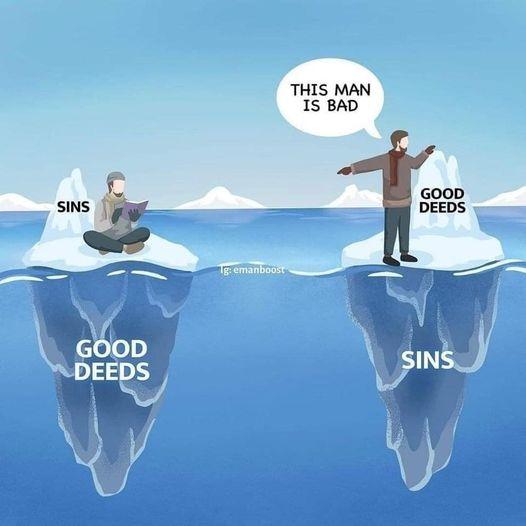
Good fish and bad fish, black and white thinking

July 29, 2023

Pentecost 9 – 2023
Matthew 13:44-58
Marian Free

In the name of God, Earth-Maker, Pain-Pearer, Life-Giver. Amen.

Anya Cook is an American woman living in Florida. In the past twelve months, she was well into a much-wanted pregnancy when her waters broke. She presented to hospital only to be told that under the state’s new abortion law, she could not be offered medical assistance to deliver the baby. She was sent home. The following day, when she was at a hair salon, Anya miscarried in the salon bathroom. As a consequence, she had to undergo life-saving surgery. Another woman, Amanda Zurawksi, was diagnosed with Pre-term, pre-labour rupture of membranes when she was almost 18 weeks pregnant. Like Anya, she was refused an induction – her health was not considered to be seriously at risk until she became septic – only then were the doctors willing to intervene.

These are only two of the stories coming out of the United States since the Supreme Court handed control of abortion laws back to the states . Doctors in states where abortion has been made illegal are in an invidious situation. Abortion is allowed when the life of the mother is in danger. The question is, how imminent must death be and can that be determined within six weeks of falling pregnant – assuming a woman knows she is pregnant? As Dr Lisa Harris (an obstretrics-gynacaelogist and professor at the University of Michigan) puts it: “There are many conditions that people have that when they become pregnant, they’re OK in early pregnancy, but as pregnancy progresses, it puts enormous stress on all of the body’s organ systems – the heart, the lungs, the kidneys. So they may be fine right now – there’s no life-threatening emergency now – but three or four or five months from now, they may have life-threatening consequences.”

Penalties for those conducting abortions range from 4 years imprisonment to 99 years. Specialists are leaving those states where they feel that they cannot fulfill their oath to “do no harm” and it is reported that enrolments to study obstetrics and gynaecology have dropped by 5% nationally and more in states in which abortion is illegal. The health of pregnant women has been seriously compromised.

The awful decisions that doctors are being forced to make and the extraordinary health risks that some women are facing are a consequence of the sort of black and white thinking that says: “all abortions are evil,” and the certainty that many people have that they and their world view are incontrovertibly right.

Many of those who hold rigid views of right and wrong are Christians, who can back up their views with passages from scripture – including the parable which concludes Matthew’s series of parables today. The parable of the net seems to be clear – there are good and bad fish and the bad fish (the evil) will be sorted out and thrown into the furnace of fire, where there will be weeping and wailing and gnashing of teeth. It is no wonder that on reading this that there are those who are anxious to be clear as to what is right and what is wrong, so afraid are they of the consequences of being found to be bad.

This parable has always troubled me. In chapter 13, Matthew has gathered into one place the parables he intends to include in the gospel. Here are parables about indiscriminate sowing, about a tolerance for weeds, about a kingdom that grows unseen and that is worth more than anything in the world and finally a parable about fishing. it is only this last that concludes with a commentary that is both judgemental and punitive .

Unfortunately, all too often we take the parable out of context. The parable of the wheat and weeds has already demonstrated that the lines between good and bad are blurred (see last week’s post) and the story of Jacob which has been the focus of our Old Testament readings for several weeks is retold without judgment or a belief in condemnation. Jacob is both deceitful and deceived and yet it is Jacob whom God choses to name “Israel,” and it is Jacob’s sons who become the twelve tribes of Israel.

To refresh your memory – Jacob convinces his brother Esau to give up his birthright for a bowl of lentils then, encouraged by his mother, he deceives his father into giving him the deathbed blessing that belonged to Esau. Jacob flees to his uncle to escape the wrath of his brother. There he himself is deceived when his uncle gives him the older daughter in marriage, when it was the younger with whom he was in love. Finally, Jacob returns home. Miraculously all is forgiven, Esau makes way for Jacob and Jacob becomes Israel – the one from whom a nation was formed that exists even to this day.

The Old Testament is filled with such contradictions – Moses was a murderer, David an adulterer, Job was an avoider and a sulker – and yet they and others are not thrown into a fiery furnace but are used by God and held in high esteem in the Judeo-Christian tradition.

Perhaps this is the reason that Jesus is so reluctant to judge, to draw clear lines between good and bad, why he was not afraid to associate with tax collectors, prostitutes and sinners and why he says things like: “Judge not so that you will not be judged”, “first take the log from your own eye”, and “let the one without sin cast the first stone.”

God, it seems, is able to see the good as well as the bad and to hold them in tension (as was demonstrated in the parable of the wheat and the weeds). God sees in us both the good and the bad and loves us regardless. God understands the circumstances in which we might do things that otherwise we might not do (admit that legalising abortion is essential for the health of a mother). God uses that which is good in us yet is not blind to our shortcomings. There will be a reckoning, a time when we are shriven of all that belongs in the kingdom, but until then God will let the wheat grow with the weeds and the good and bad fish will swim together.

Black and white thinking puts us in the place of God. We need to liberate ourselves from such narrow thinking, open ourselves to the possibility that not everything is as it seems, and finally not take judgment into our own hands, but leave it to God who alone sees everything as it really is.


I found this image on Facebook it was too perfect not to use, I apologise that I could not identify the source. Please let me know who created it so I can acknowledge them. (I have contacted the person who posted it.)

Persistence or trust?

October 15, 2022

Pentecost 19 – 2022
Luke 18:1-14
Marian Free

In the name of God Earth-maker, Pain-bearer, Life-giver. Amen.

Allow me to read the first parable again.

And he said a parable to them. Concerning their necessity always to pray and not to become discouraged, saying,
“Some judge was in some city; God was he not fearing, and people was he not respecting. And a widow was in that city. And she kept coming to him, saying, ‘Avenge/grant me justice against my adversary.’
“And not did he wish at that time. But after these things he said to himself, ‘if even God I do not fear no people do I respect, yet on account of the trouble this widow causes, I will avenge her, so that not into the end, coming, she will give me a black eye.’”
And said the Lord, “Hear what the unjust judge says. And will not God make vengeance to his elect, those who cry to him day and night, and will he be patient upon them? I say to you that he will avenge them swiftly. Nevertheless, when the Son of Man comes, then will he find faith upon the earth?

Now I imagine that translation might have taken you aback. It is awkward because it is a literal translation, and it is confronting because it forces us to see the parable in a different light. It is however a more translation and as such helps to give us a clearer sense of the parable’s meaning.

Collectively, we have a tendency to be complacent, if not lazy, when it comes to matters of faith. For example, when it comes to the bible, if or when we read it, we presume to know and understand it. Very often, we see what we expect to see rather than approaching the text afresh and asking questions and exploring it more deeply to see what else it might reveal. Familiarity does not so much breed contempt as it encourages complacency. It is easy to assume that what we have been told – at Sunday School or in a sermon – remains true for all time. This is especially true of the parables. We know the parables so well, they. Have been explained to us so often, that we can sum them up in a single phrase. The prodigal son, the good Samaritan, the barn builder and the persistent widow all bring up images not only of the parable, but of the meaning of the parable.

It is comforting and reassuring to have at our disposal stories that encapsulate what it is to be a neighbour, that illustrate how much God loves us or show the foolishness of storing up one’s wealth. Every now and again though it doesn’t hurt to be challenged, to have our traditional interpretations thrown into question or to see a saying or a parable in a new light because nothing is set in stone no one alive today was present to hear Jesus teach and even our gospel writers are the second or third generation of followers.

Before our gospels were written in their current form, Jesus’ teachings were conveyed orally. Over time different leaders will have given them different emphases depending on the needs of their audiences. When the gospel writers finally gathered Jesus’ sayings into a form of biography, they made decisions about the order in which they would present Jesus’ teaching and life. In the process they also included their own editorial comments – creating a narrative and sometimes interpreting Jesus’ words for the readers. The story didn’t end there. During the course of history, the bible was translated – first into Latin and then into the common language of the people. Translation led to another layer of interpretation. No matter how dispassionate they tried to be, each translator came to the scripture with a pre-existing bias which imposed itself on the text.

Few of us are aware of such biases and of what we bring to the text.

The literal translation of today’s parable of the widow and the judge is a good illustration of the problem. Even though the word εδικεω (edikeo) means to avenge, our translators have chosen (for whatever reason) to translate it as justice. Vengeance is a strong and uncomfortable word, and it certainly doesn’t fit with our received learning that the widow has no agency, that she needs someone to take her side. Yet there is no suggestion in the parable that our widow is powerless OR that she is meek and vulnerable. Indeed, she is arguing her case before the judge, without anyone to support her. She wants revenge and she will get it by wearing the judge down. When the judge finally gives in, it is less because of the widow’s persistence and more because he is afraid that she will resort to violence if he doesn’t give her what she wants.

This is a much more likely scenario than the one we usually associate with this parable. Jesus’ parables are intended to shock us, to challenge our conventional way of thinking. If we domesticate them (have the widow seek justice not mercy) we take away their sting – the point that Jesus is making to force us to re-think the way we see the world. Luke’s addition to the parable does just that. The parable proper is the story of the widow and the judge (verses 2 through 5). By adding an introduction and conclusion, Luke uses Jesus’ parable for a specific different purpose. Luke’s introduction and conclusion – Jesus told them a parable about the need to: “pray always and do not lose heart” and concludes that God will give justice to those who: “cry to him day and night” suggest that he uses it to encourage Jesus’ followers to pray – even when the circumstances seem to mitigate against prayer. (Luke’s additions and the translators’ preference for justice rather than vengeance contribute to a picture of a widow who is vulnerable and praiseworthy.)

But, as Amy-Jill Levine points out – in this parable neither the judge, nor the widow are ‘moral exemplars’. The widow seeks vengeance and will not stop until she is satisfied, and the judge allows himself to be corrupted or at least compromised – by giving in to the widow, even though he presumably did not think she had just cause.

The point is precisely that God is not like the judge, and we are not to be like the widow. God does not need to be worn down by our consistent pressing and cannot be forced into acting against God’s nature. We are not to be like the widow – taking things into our own hands, battering God into submission, or trying to bend God to our will. God can be trusted and God will grant justice to God’s elect. Our task is not to persist, but to trust, to believe that it is in God’s nature to bring about justice and that God will hear the cries of the broken-hearted and oppressed.

“Vengeance is mine” says the Lord in Deuteronomy (32:35)
If there is vengeance to be taken, God will take it. So we can leave it to God.

Weed or towering cedar? The Kingdom of God.

June 12, 2021

Pentecost 3 – 2021

Mark 4:26-34 (some thoughts)

Marian Free

May I speak in the name of God who created us, Jesus who redeemed us and the Spirit who enlivens us. Amen.

A key theme of the Hebrew Bible is the Kingdom of Israel. From the time Saul is appointed as the first king, the historical books are concerned with the rule of the various kings, their victories (or losses) in battle, the size of their kingdoms, their wealth and, of course, their relationship with God. Never was the kingdom so powerful, grand and wealthy as in the time of Solomon who had “dominion over all the region west of the Euphrates from Tiphsah to Gaza, over all the kings west of the Euphrates; and he had peace on all sides”. Not only was his kingdom extensive, but his wealth was legendary. Just imagine: “Solomon’s provision for one day was thirty cors of choice flour, and sixty cors of meal, ten fat oxen, and twenty pasture-fed cattle, one hundred sheep, besides deer, gazelles, roebucks and fatted fowl. Solomon also had forty thousand stalls of horses for his chariots, and twelve thousand horsemen.” Under his rule Judah and Israel lived in safety – under their vines and fig trees.

Solomon’s wealth and power were displayed in the houses that he built for himself and for his wife which were made of the finest stone and timber and lined with gold and precious stones. Likewise, Solomon’s Temple was extraordinary – filled with vessels of gold and silver and bronze, adorned with carved timber and furnished with the finest of cloth. So rich was Solomon and so secure his kingdom that it was said that: “The king made silver as common in Jerusalem as stones, and he made cedars as numerous as the sycamores of the Shephelah.” He had seven hundred princesses as wives and three hundred concubines!!! (See the first few chapters of 1 Kings for details.) Even allowing for exaggeration, the description of Solomon’s power and wealth gives some idea of the the sort of kingdom that Jesus’ contemporaries might have been expecting God to restore.

To them, the comparison of the kingdom to a mustard seed would have been utterly surprising, shocking and even offensive. Not only that, Jesus is using imagery that would have been confusing. When the Hebrew Bible wanted to use plants to symbolise powerful kingdoms, the writers chose plants that were equally powerful and majestic – the mighty cedar tree or the cosmic tree that represented the Babylonian Empire.  (“it was large and strong, with its top touching the heavens, and it could be seen to the ends of the earth. … Under it the wild beasts found shade, in its branches the birds of the air nested; all men ate of it”; Dan 4:8-9), Or the vision of Ezekiel in which the restoration of the people of Israel after the Babylonian captivity is imaged as a shoot plucked from the crest of a cedar (Babylon) and planted on mountain heights, where it becomes a majestic cedar and “birds of every kind shall dwell beneath it.”( (Dennis Hamm SJ. http://www.liturgyslj, 13/6/2021).

Not only does Jesus chose something as pedestrian as a mustard seed with which to compare the kingdom – he mixes his metaphors. Even though mustard is a short, scrubby plant and small, Jesus still envisages birds making nests in its shade. He inverts and subverts the Old Testament imagery of the mighty cedar. As he describes it, the kingdom of God is not majestic and powerful. It will not come with force and overwhelm all that is before it. Instead, the kingdom will come subtly and quietly – like the seed whose growth cannot be observed until the first shoots push themselves above the ground. What is more the kingdom of God will not tower over or overshadow those beneath it, but will still spread out and provide shelter and shade for those who seek it.

The kingdom of God does not consist of mighty armies or lavish palaces. Its king does not enforce submission, but rather encourages loyalty through love. Its leader does not impose his will, but instead models servant leadership.

We are gravely mistaken if, like Jesus’ contemporaries, we are expecting God to break in to our world with power and might ready to bend the whole world to God’s will or (worse) to establish us as God’s representatives on earth. Jesus’ life and ministry illustrate the sort of kingdom about which he speaks. It will (it has) enter(ed) our world unexpectedly and quietly and has disrupted our preconceptions and our expectations. In fact, it was for the majority of people, completely unrecognisable.

In the Lord’s Prayer we pray for God’s kingdom to come. Let’s be sure that we are not looking for it in the wrong places.