Archive for the ‘Uncategorized’ Category

Digging up the past

July 5, 2015

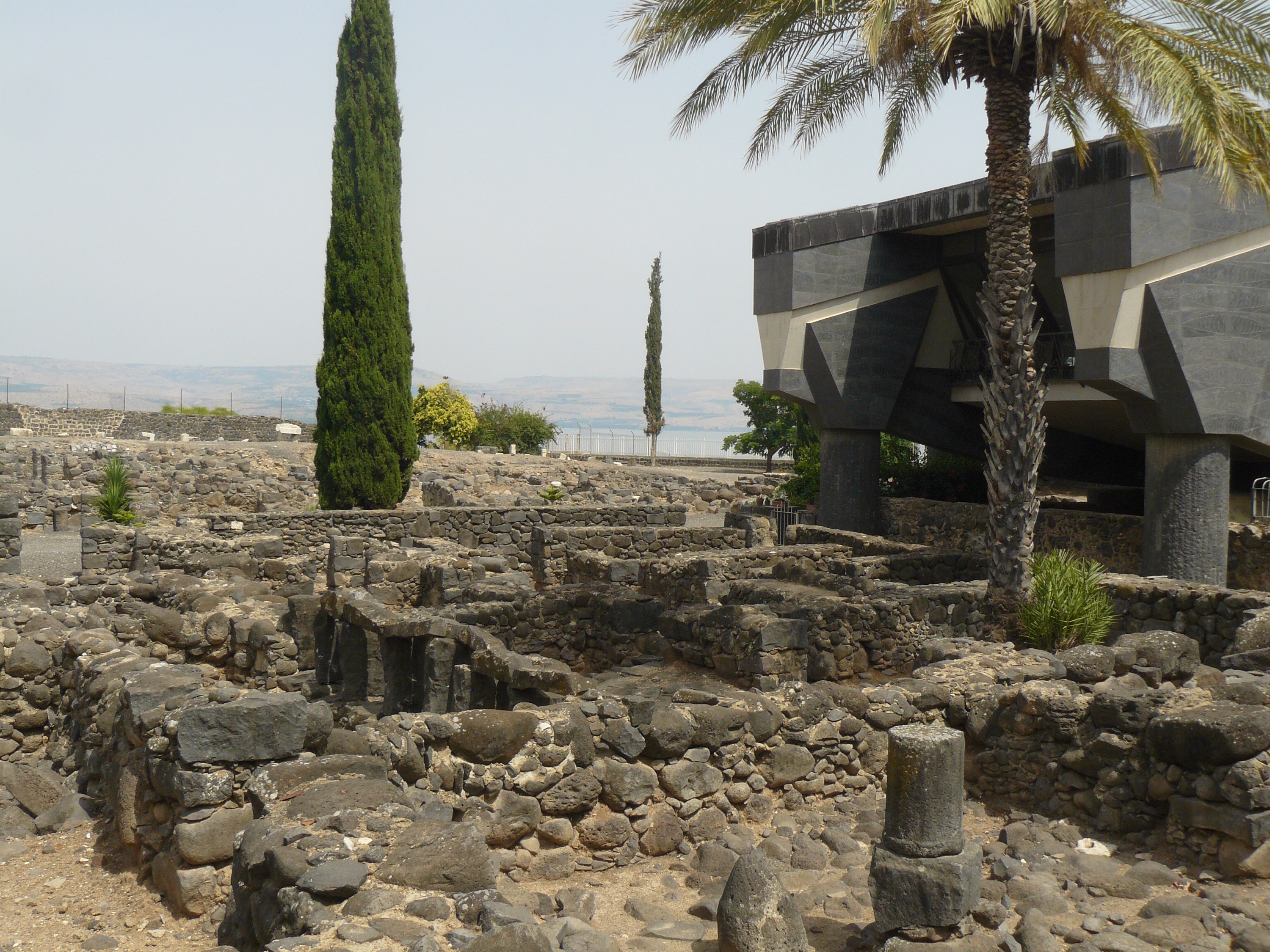
Again, I had something almost prepared as a reflection on Sunday’s reading. This week the Internet has been equally difficult to access, on to of which life  has been so full that there has been no time to think. At last we are in the region of Galilee – somewhere where Jesus almost certainly was. Below are photos of Capernaum and of sunrise over the Lake of Galilee.

Meantime the experience of an archeological dig is fascinating. Our site is Bethsaida (home to Peter, Andrew, James and John) – though it is a long way from the sea for fishermen. There are a number of important features of the site which goes back to the tenth century BCE and was inhabited by the Turks till about the twelfth century CE. There are well preserved city gates with a clear internal courtyard and several sites are currently being dug. It is clear that it would be impossible to excavate any site without volunteers. At the moment there are several concurrent digs. The process goes something like this. Workers (in this case us), dig down until we find a floor or a path and then we meticulously clean it. Once it is photographed we spoil all our hard work and dig down to another layer. Any pottery, coins, flint or other “finds” are kept to be sorted and identified later and the soil is served to pick up anything that we might have missed.

The day goes something like this. We catch the bus at 5:30am to arrive at the dig at 6:00am (hence the photo of the sunrise!) After we pick up our tools, we proceed to our part of the site and do whatever is the order of the day – dig, brush or seige. At 9:00am we break for breakfast until 9:45. Then we work till eleven when we are rewarded with a Popsicle. Clean up begins after twelve and we are back on the bus by 12:30pm. The afternoon is free though we are too exhausted to enjoy it.

The late afternoon, evening, varies though there is always pottery reading at 5:30. This entails sorting the finds from the previous day and being told something about the more significant finds. (There is not interest at all in first century pottery shards – rims are considered valuable as they can tell something about the vessel.) in the evening there might be a lecture, though one afternoon that was brought forward so that we could hear about and see a first century boat. 

All in all an amazing opportunity. Seeing the New Testament places gives the gospels more comfortable next and helps one to get a better sense of it all.


The Holy Land

June 21, 2015

At this moment I am sitting in the Bethharram Convent in Nazareth. I had thought to post some reflections on the Sunday readings while I was away only to discover that technology has let me down and the texts I had so carefully begun are lost somewhere between my laptop (in Brisbane) and my iPad in Israel. I had thought also that maybe by now I might have seen the Sea of Galillee and could therefore have spoken authoritatively about storms on the lake. Galillee is for another day. It is both exciting and frustrating to be here. There are of course many devotional sites – some of which we have visited – but there is almost nothing that might give a hint of what Nazareth might have been like in Jesus’ time.

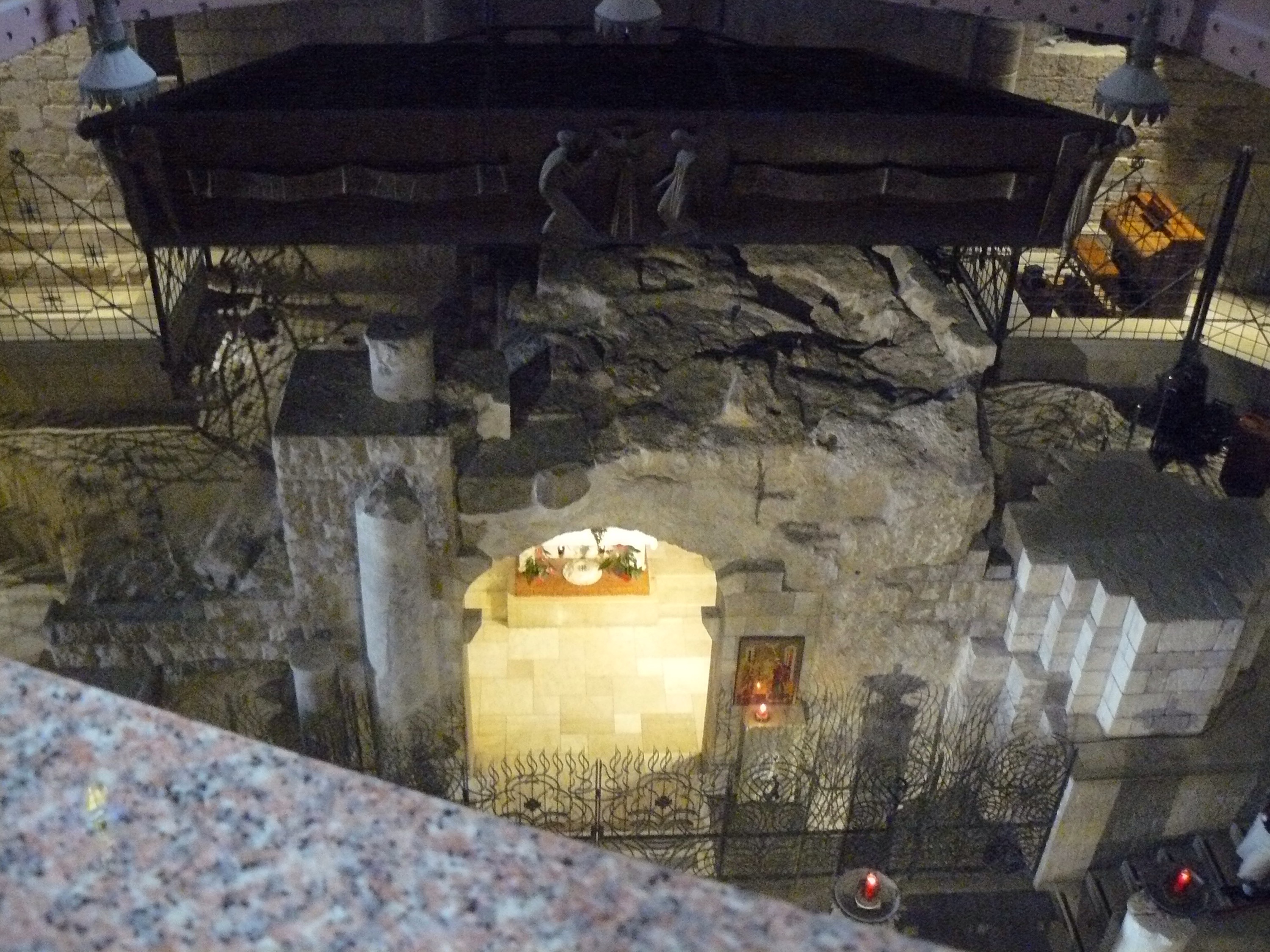
The city has been destroyed on many occasions since the first century and what we see now is a modern, Palestinian city. Many scholars believe that in the time of Jesus, Nazareth would have been a small Jewish settlement (possibly with strong ties to Jerusalem). All the evidence seems to suggest that at this time there might have been only fifteen families resident here – somewhere between 300-500 people. It is probable that they lived in one of the many limestone caves that now lie beneath the city. Some, like that beneath the Church of the Annunciation have been significantly altered as a result of devotional practices, others are more original. The caves are cool and make a great deal of sense for life during hot dry summers.


Limestone cave in Church of the Annunciation

 Understanding the geography and nature of first century Nazareth gives some cause for thought with regard to the way the Jesus’ story is presented in the gospels. For example, while there might have been sufficient men in Nazareth to form a gathering (synagogue), it is extreme unlikely that a structure that could be called a synagogue existed as LUke suggests. Likewise it is equally difficult to imagine the villagers trying to push Jesus off a cliff when the nearest “cliff” is some distance away.

Knowing the geography and learning about the history is wonderful, but we have to be careful, as our guide says that we do not “mortgage truth to history”. By this he means that we should not be so concerned with absolutely provable concrete facts that we lose the truth of two thousand years of faith. 

Will continue to be fascinated with the geography and history of this land, I will be keen to discover as much as I can of the historicity of our faith, but I will never lose sight of the deep insights that are to be found in our scriptures and of the eternal truths which they and our traditions contain.

It still doesn’t depend on us

May 9, 2015

Easter 6 – 2015

John 15:9-17

Marian Free

In the name of God – Lover, Friend, Enlivener. Amen.

Today will be the third time in three weeks that I have had cause to preach on John 15:9-17 – at the service to dedicate the windows, on ANZAC Day and now today. That tells you at least three things. One is that our scriptures are often put to uses for which they were not originally intended, a second is that they are to some degree pliable (that is they can withstand more than one interpretation) and a third is that our biblical texts contain so much depth and complexity that they can be viewed from a wide variety of angles and through an array of different lenses and so continue to reveal new and rich insights. This is certainly the case with John’s Gospel. Apparently simple, transparent texts contain layers of detail that only become obvious when we make the effort to really familiarize ourselves with them.

Take John 15:1-17 for example. Jesus declares himself to be the true vine – an image that he expands on in two ways. In the first few verses (those we heard last week) he elaborates on the image by comparing himself with the vine – the source of life for the branches. That seems straightforward enough until the reader begins to explore questions such as: to whom is Jesus referring when he speaks of the branches and whom does he mean by the branches that have withered? What does sort of fruit are the branches to bear? Does he mean doing good works or does he, as the reading suggests mean discipleship? If bearing fruit is discipleship what does that look like? [1]

Jesus expands on the question of discipleship in his second explanation of the vine. Discipleship according to this image is evidenced by self-sacrificial love for one another – love that like fruit flows from a believer’s abiding in him. This discussion is no less complex than the first. Here, Jesus turns his attention to the theme of love but he confuses the issue by adding instructions about keeping his commandment, about servanthood (slavery) versus friendship, about being sent and about answered requests.

In a ten minute sound bite, such as a sermon, it impossible to follow and elaborate on all of these different threads much as I would like to! I alert you to them so that you are aware that I am skimming the surface of and not plumbing the depths of Jesus’ analogy.

When John 15:9-17 is read on ANZAC Day, it is usual for the preacher to focus on just one of the verses: “Greater love has no one than this, that they lay down their life for their friends” (John 15:13). In that context of ANZAC Day, it is appropriate think of all those who, in times of conflict, have risked or given their lives so that others might live and it is comforting to understand that their lives were given not only for a good cause, but in response to the highest Christian ideal.

Jesus setting was not that of wartime, nor do I imagine that he spoke these words with that particular context in mind. In trying to come to grips with the text today it is important to ask: “What is the context that Jesus is addressing? To whom was he speaking? and What did he mean by that line?

A number of factors make it clear that Jesus is talking to believers,those who are already disciples. In the first instance, the setting in the gospel is Jesus’ last meal with the disciples – presumably the twelve minus Judas who has already gone out, but certainly an inner circle of followers. Secondly, Jesus is addressing those who abide in him – those who have not already withered and died. Thirdly, he calls the listeners “servants” a term that implies they are his disciples or followers. Jesus is speaking to his followers in the context of saying farewell to them and preparing them to be the church in his absence.

This is an essential detail in terms of working out the meaning for us today. Jesus is NOT encouraging us to do good works. The fruit we are called to bear is that of discipleship and discipleship is to be demonstrated in self-sacrificial love – not for the nation, not for those in need, but for our fellow church members, those with whom we meet week by week, those whom we take for granted and those whom we let get under our skin, those who agree with us on issues such as music and furnishing and those who want to turn everything upside down, those who encourage us and those who let us down, those whom we have known for years and those whom we have only known for hours. In one sense it is a much more homely love (less noble) than dying for another in battle and yet in another sense it is a much more difficult love because it means that issues that arise need to be properly addressed, differences recognised and dealt with and rifts mended. It entails recognising when to hold one’s ground and when to give way, when to be firm and when to be gentle. In one sense this sort of love is incredibly difficult, in another it is the easiest love in the world, because above all it not our love – it is God’s love, God’s love expressed through Jesus to us.

In the end then, love has little to do with us and everything to do with God. Our primary responsibility is to abide in the vine, to abide in Jesus and in Jesus’ love for us such that Jesus’ self-sacrificial, life-giving love flows through us, filling us, fulfilling our every need and freeing us such that we cannot help but to give that love freely and abundantly to others. We are called, each and every one of us to be in a relationship with God, a relationship with Jesus that is so all-embracing, so intimate that it is as if we are branches that are fed and nurtured and empowered by the life-giving love of the vine that produces the fruit of discipleship which is our love for each other.

Imagine a church community that truly and completely bound itself to God as branches in a vine, a church in which God’s love was abundantly and transparently clear. Who would not want to belong to such a church? Who would not want the love that its members showed to one another?

If we live in God’s love, God’s love will live in us and that love will be manifest to the world. It is my belief that in this community we know and live God’s love. Can know and live it better? Are we willing to know and live it better? If not why not?

[1] That is not taking into account the questions as to whether chapters 15-17 are original to the gospel and/or original to Jesus. Nor does it refer to the issue of Old Testament precedents.

How do you know someone is alive?

April 18, 2015

Easter 3 – 2015

Luke 24:36-48

Marian Free

In the name of God whose mysteries we can never fully fathom. Amen.

 There was a fascinating programme on the radio yesterday. The presenter was raising the question: “how do you know that someone is alive?” One hundred years ago the answer would have been obvious, if there was no heart-beat and no breath, then a person could be considered to be dead. Fifty years ago, even thirty years ago the answer became more complicated, but was still reasonably clear. If a person had no brain function then they were to all intents and purposes already dead. However, there are always complications. Families who hoped against hope and refused to turn off life-support systems were rewarded when someone who had been declared brain-dead resumed functioning normally. At least one person with a condition that I know only as “shut-in” syndrome was suddenly restored to normality. Our definitions of death have become more fluid in recent decades.

Jesus was really dead. Unlike those who were crucified with him, Jesus did not need his legs broken. He had died some hours before as the spear in his side confirmed. The question in Jesus’ case is the same: “how do you know that someone is alive?” This is a question that obviously exercised the minds of the first disciples and of the gospel writers.

There are a number of accounts of the risen Christ. As I mentioned last week, the accounts of the Sunday morning are remarkably similar. Matthew and Mark add little else except to report that the angels told the women to remind the disciples that Jesus was going ahead of them to Galilee. Luke and John have fuller accounts and some differences. Both seem to emphasise Jesus’ corporeality and his formlessness. He is able to be touched and to eat, yet he can pass through walls. He is recognizable and not able to be recognised. In John, Thomas seeks proof and in Luke’s gospel the disciples give Jesus fish to eat to assure themselves he is really alive.

Whether by touch or by sight, or even by the feeling of warmth that fills the disciples as Jesus’ speaks, they are absolutely convinced that the grace has been unable to contain him. So convinced are they that they leave their hiding place, and driven by the Holy Spirit, take to the streets, to the countryside and even to different nations to proclaim the resurrection. A foolish, frightened group of men are mobilized by their experience to tell the world that Jesus is risen. Resistance to their message and even persecution does not change their mind or dampen their enthusiasm.

Within three decades of Jesus’ resurrection the gospel has reached as far as Rome and others such as Paul and Chloe, Barnabas and Phoebe have come to share the conviction that Jesus has indeed been raised from the dead. It is hard to conceive that these later believers came to faith simply through the words of others. Enthusiastic as the early apostles were, they were preaching to a society that was not unfamiliar with miracles. There are very few records of the experiences of those who came to believe. We know from the Book of Acts that scripture puzzled the Ethiopian eunuch until Philip provided the answer. We know that Paul had a very dramatic experience of the risen Lord, that Cornelius saw an angel and that some were convinced of their sinfulness are responded by being baptised. Beyond that we know almost nothing.

We are left with conjecture. My guess is this – that in dramatic and not so dramatic ways – those first believers, like Paul experienced the risen Lord for themselves. I suspect that for them the resurrection was not a past event, a miracle reported to try to bring people to a point of view but that it was a lived experience of the risen Lord that convinced people that he was in fact alive.

I believe this because this is what I believe still happens and has happened in every age. We believe, not because the gospels record that the tomb was empty or Jesus ate or did not eat. We believe not because the resurrection is a miracle locked in history. We believe because Jesus, having risen lives for ever, he is not bound by time or space but lives as much in our present as he did in our past. We believe because we know the presence of the risen Christ in our lives – as a quiet strength or as a sense of disquiet, as a comfort or a challenge. Whether our experience was dramatic and life changing, or a gradual assurance, we believe not because Christ rose from the dead, but because the risen Christ continues to be a vital presence in the world today.

We need not other proofs, but what we know to be true.

Christ is risen. He is risen indeed! Alleluia!

Reimagine the Divine

March 3, 2015

Imagining the Divine – God in the 21st Century

Evensong – March 1, St John’s Cathedral

Marian Free


May my spoken word, lead us through the written Word, to encounter the Living Word, even Jesus Christ our Saviour. Amen.


If you were in church this morning you would have heard a reading from Genesis 16: 1-7, 15-16. Unless you were at Hamilton, you will not have heard how the story continues. Verse 17 says: “Abraham fell on his face and laughed.” He fell on his face and laughed. God tells Abraham that he will have a son and this is Abraham’s response. He doesn’t show his disbelief by rolling his eyes or snickering behind his hand. He doesn’t wait till God is out of earshot and share the joke with his friend. There is nothing subtle or discreet about Abraham’s incredulity. This is a laugh from the depths of his being, he is so overcome by the ridiculous nature of God’s promise that he laughs out right out loud, he guffaws. Abraham is so overcome with mirth that he bends over double, falls to the ground. This is rib-tickling, thigh slapping, laugh until you are ill amusement – and it is directed at God.

Perhaps you are thinking that this is an odd place to begin a discussion on God in the 21st century – to choose a story, which if it is historical is something like 4,000 years old. You are right – what do miracles and Hebrew characters have to do with imagining the divine today. Haven’t we moved past the view of God presented in what we know as the Old Testament? Don’t we need a new and refreshing vision?

Obviously, I’m not sure. We neglect the Old Testament at our peril. Our best imaginings cannot imagine the God depicted here. In fact, I would go so far as to say that our imaginations have been severely limited, even impoverished by our distrust of the God of the Old Testament. God, as envisioned by the writers of the Old Testament is at once approachable and remote, passionate and compassionate, loving and firm, constant and unpredictable. There is almost no limit to the imagery that is called into use to try to capture something of the experience of God. God is described and imagined as breasts, as a mother bear, as an eagle, a fortress, a rock, a tree, a king and a shepherd. In order to try to capture something of the nature of God imagery from the real world – both animate and inanimate are used.

Unfortunately, the New Testament does not provide us with such a wealth of imagery. Apart from the Gospel of John which provides us with images such as light and life, the predominant way of thinking about and addressing God in the New Testament was Father. This, until the feminist objections of the 1980’s is, with some notable exceptions how God has been addressed and imagined ever since.

Language is a powerful tool, it describes our reality and defines our reality. For good and for ill our language for God determines the way in which we understand and relate to God. I would contend that for two thousand years, with some notable exceptions there has been a failure of imagination, a limit to the ways in which the institution speaks of God and therefore in the way that many people think of God. Just to give one example, the stereotype of God that is rejected by the new atheists, is a God whom we might recognise from our Sunday School days, but that is a God whom most of us (along with them) have firmly renounced and rejected.

Where to go then in the twenty-first century? How might we imagine God anew? Why are we imagining God – for ourselves or for others? Imagining the divine in the twenty-first century is a much more profound issue than I had realised when I agreed to preach this evening and has given me much pause for thought – not least that a response to the topic required a great deal more research than I allowed for. What language could begin to express the extraordinary, miraculous, ever-present nature of God? If I/we were going to try to find images to which the twenty-first century mind could relate, what would they be? Some of the biblical language might be able to be put to good use, but a great deal has become obsolete. Few of us have direct experience of a shepherd, let alone a mother bear. In today’s language of kingship conjures up ideas of, at best paternalism and at worst oppression and rocks are simply that – geological formations.

I found myself wondering what, in terms of modern experience, would be the most amazing, most indescribable, the most pervasive and the most impossible reality of today’s world? What in today’s world knows all about me, and knows where I am at any one time?

In other words, apart from God what is it about the twenty-first century that absolutely astounds me. My answer – the mobile phone. With this phone I can speak to anyone at anytime. I can even speak face-to-face with someone in another country. I can check my emails and read my bible (in whatever language I choose). I can get directions to anywhere that I wish to go and ask the phone to take me there. I can book air tickets. I can take photos and look at photos, find out what the weather is going to be – here, in Hamburg, in London or anywhere else that I choose. I can point it at the night sky and it will tell me what I am looking at. I can buy books or borrow books from the library and read them. I can draw, write, play games, listen to music, make music, watch TV. I can write my sermons and upload them to my website. If the screen is too small, I can attach a device to my television and use it as the screen. If the sound is too poor I can connect to my amplifier and my fancy speakers. AND because my devices are synched, all of this is possible on my iPad and my computer. In fact, I can do almost anything that I would wish to do – the limit is only someone else’s imagination.

All this is possible because of something that is diffuse and incomprehensible and completely invisible to me – the internet and “the cloud”.

The world is changing so rapidly that most of us cannot keep up. WE are living in a world of radical change and radical personal transformation. In fact, Prof Anthony Elliott [1] in a lecture aired on Big Ideas during the week, suggests that as a result of what he calls the “reinvention revolution” there is an increasing cultural anxiety. Women and men, he says, feel that they need to undertake a process of recalibration in order to confront the challenges of everyday living, to keep up with the latest changes. The problem is that there is always the worry that that won’t be enough for them to face the challenges of tomorrow. It is no wonder that the transformation industry is a multi-billion dollar industry.

While men and women are anxious about change and the need to keep up, they also seem to find it strangely liberating. Elliott, reporting on the work of Thrift, a British sociologist, says “women and men today are no longer blindly just following customs and traditions and pre-ordained ways of doing things. They are trying things out and trying things on as never before. They are not waiting for permission in either their personal or professional life as to how to get on to what they need to do. They are embracing reinvention societies in such a way as to engage in ongoing, incessant experimentation. These are not random, but are associated with various socio-technical systems – touch screens, virtual landscapes, location tagging, augmented realities and so on. iPhones and other things we carry strapped to our bodies are rearranging the whole social cartography.”

Reimagining God in this ever changing, inter-connected, over-anxious, app driven world is no easy task. The story of Abraham with which I began suggests that we can afford to lighten up. As we begin to explore the divine in the twenty first century, perhaps one of the things we can do is to take ourselves less seriously, stop over-thinking things. Maybe it is time to relax a bit, to allow images to form and re-form, to give ourselves some freedom to listen to and engage with the world around us and, instead of thinking so much, simply open ourselves to what is utterly other and see how that otherness is being revealed in the world today.

In a world that embraces change and yet finds the need to do so a source of anxiety, perhaps we can help women and men imagine a God who is both stable and ever-changing, both at the centre and at the periphery, who loves us as we are and yet challenges to be all that we can be. In a world driven by socio-technology it may be that we need to imagine God as personal and relational, as always present and accessible, as a source of strength and a well-spring of creativity. A God who extends us and enables us to do more than we thought possible.

In the final analysis, God simply is, and as such God always has and always will define all our attempts to reimagine.

[1] Lecture presented at ANU, aired on Big Ideas (Radio National) Tuesday 24th February, 2015.

Prayers for peace and tolerance

December 20, 2014

After a week of trauma in Australia and abroad, I thought these two prayers were worth sharing. The first I found in my reading this morning, the second, appropriately, I have said each day this week as part of the Daily Office.

O Lord, remember not only the men and women of good will, but also those

of ill will. But do not remember all the suffering they have inflicted upon us;

remember the fruits we bought, thanks to this suffering – comradeship, our

loyalty, our humility, the courage, the generosity, the greatness of heart

which has grown out of this; and when they come to judgement,

let all the fruits that we have borne be their forgiveness.


(Found on a piece of wrapping paper in Ravensbrooke, the largest of the

German concentration camps for women.

Quoted by Stephen Platten in “Thanksgiving.” in Liturgical Spirituality:

Anglican Reflections on the Church’s Prayer. Stephen Burns (Ed), New York:

Seabury Press, 2013, p23.

Collect for the Third Week in Advent

Almighty God, you have made us and all things to serve you:
come quickly to save us, so that wars and violence shall end,
and your children may live in peace,
honouring one another with justice and love;
through Jesus Christ our Lord,
who lives with you in the unity of the Holy Spirit,
one God, now and forever. Amen.

Self promotion or the promotion of Jesus

December 13, 2014

Advent 3 – 2014

John 1:6-8,19-28

Marian Free

 In the name of God, Life-giver, Redeemer, Sustainer. Amen.

In the movie Love Actually, Bill Nighie’s character (Billy Mack) is a washed up musician whose long-suffering manager (Joe) has found him a job re-working a popular song for Christmas. Billy is not at all happy. He thinks the task is below him and is rude, crude and obnoxious. He shows no gratitude towards Joe and risks the whole project by putting the producers of the song offside. His sullenness continues through the promotion period and through the radio interviews and TV appearances that Joe has set up. His attititude towards the song is so disparaging that during one of the interviews he states that if the song is the number one Christmas hit, he will perform it naked on that same TV show. Possibly as a result of Billy’s blustering, the song does make it to number one. As a result, Billy becomes a popular star once more. Beautiful women surround him and other stars want him to attend their Christmas parties. Joe gets no credit for putting Billy back on his feet. His efforts and his patience and the fact that he suffered Billy’s arrogant disdain for the song are all taken for granted. On Christmas Eve, Billy goes off in a limousine to a party and Joe (who makes no complaint) is left alone in the shabby apartment that they share.

There is more to the story than that of course, but it does bring to mind all the faceless, behind-the-scenes people who never receive public acknowledgement for the work they put into getting their employer or the person/s whom they represent to the top. The men and women behind national leaders and other politicians, the band managers, stage directors and so on are faceless. They don’t get invited to the parties, they are never in the newspapers. Few people even know they exist. These people find satisfaction – not in getting to the top themselves, but in supporting the ambitions of someone else.

They bear some similarities to John the Baptist, who stepped back so that Jesus could have front and centre stage. John says to those around him: ‘After me comes a man who ranks ahead of me because he was before me’ and the one who is coming after me; I am not worthy to untie the thong of his sandal.‘ John doesn’t even know Jesus and has no idea of his credentials. Even when they finally meet, Jesus is as yet untried. He has done nothing to demonstrate his promise or to justify John’s confidence in him. What is more, John himself has a very successful ministry of his own. His influence is so significant that the religious leaders of the time send people to ask whether or not he is the Christ.

It must have been satisfying to see his own ministry grow, and tempting to let it go to his head. John has much to lose if Jesus does turn up yet he is absolutely clear about his role as the one who prepares the way for another. He recognises the limits of his own ministry and mission and is ready to stand aside when the time does come. Despite his success he is happy to play the role of support person – to allow his own role to diminish as that of Jesus grows. He is so confident that it was his responsibility to prepare the way for the one who was to come, that he can let go of his own authority and encourage his own disciples to become followers of Jesus (1:36). He gives up everything for the greater role that he believes that Jesus has to play.

John is a model for all of us who are in ministry and for all who would follow Christ. It doesn’t matter how good we are at our job, or how successful we are in our ministry we should not be seeking credit or to enlarge our influence. No matter how talented we are, we should not be striving for reward or recognition. if we are not promoting Jesus, we are only promoting ourselves.

Embracing the present

November 15, 2014

Pentecost 23
Matthew 25:14-30
Marian Free

In the name of God who calls us out of fear and timidity into a life that is full, fulfilling and rich. Amen.

During the week Gail Kelly resigned from her position as CEO of the Westpac Bank. This event not only made the newspapers, but was a matter of some discussion in the wider community. Kelly’s career has been of interest since she was appointed to the position in 2008. She broke the glass ceiling in the corporate world, but more than that, during her time with the bank, she achieved what many of her peers had not. That is, she successfully steered the bank through the global financial crisis and, in what was a critical time for many financial institutions, she significantly strengthened the bank’s position.

In August, at the launch of the St George Foundation, Kelly outlined seven lessons that she had learned along the way. I think that they are worth sharing. In brief, she said: “Choose to be positive; do what you love, love what you do; be bold, dig deep; right people on the bus, wrong people off; have a vision of what you’d like to achieve; practice generosity of spirit (desire to see others flourish) and live a full (whole) life.” Two things caught my attention. First of all, Kelly’s words were not those of a cut-throat, aggressive power-hungry person, but of a pragmatic, sensible, balanced person who has taken risks. Secondly, I was intrigued by Kelly’s advice to be bold and courageous. It is easy for us to imagine that successful people are confident and self-assured at all times. Kelly says that for all her life she has had a sense of: “Gosh, I’m not good enough, I’m not adequate, I’m not going to do this well. I might fail, what happens if I fail?”

A great many of us would relate to these feelings of self-doubt and of the anxiety that doing something new and challenging can cause. Kelly suggests that in such cases we should: “pause, dig deep, take our courage into our hands and actively say: ‘I’m going to back myself.'” Self doubt hasn’t prevented Kelly from taking risks. At such times she has actively said: “there are others out there who are going to support me, there are others out there who want me to win.”

As I reflected on these words, it seemed to me that they helped to make sense of today’s parable about the talents.

It has been usual to confuse the expression ‘talenta’ which refers to a sum of money, with a person’s ability. More often than not, the parable is interpreted as meaning that we have to make the best use of our talents (abilities/gifts). However, if we understand that a “talent” represents something like fifteen years wages of an ordinary worker, we begin to see the huge responsibility that has been given even to the slave who receives only one talent. It is a responsibility that the master expects will be taken seriously. That is he believes that the money will be put to good use.

According to the parable, the first two slaves invest the money. When the man returns, they are able to return to him double what he gave them. The third slave however does not have any confidence in himself. He is afraid of his master and doesn’t fully grasp the master’s confidence in him. (He might only have been given one talent compared to the other’s five and two), but even one talent (fifteen year’s wages) is indicative of the master’s confidence in his ability to manage a huge sum of money. The responsibility paralyses the third slave such that he is too afraid to do anything. He is so fearful of taking a risk that he doesn’t even give the money to the money-lenders which would ensure some form of return. Burying money was regarded as the best form of security against theft. What is more, according to the customs of the time, it was also a way of ensuring that the slave would not be held liable if the money was stolen. The slave presumably believes that he has done what is necessary to protect himself – the money will be safe until the master’s return and even if it is not, he cannot be held responsible for its disappearance.

Unfortunately, he has misread his master’s intention in entrusting him with the money. The master was expecting boldness not timidity. By giving the slave the money, he had demonstrated his trust and his belief in each of the slaves by only giving them only what he believed they could manage. Only one slave has not lived up to that trust. It is his failure to recognise and respond to that trust that earns him the master’s wrath.

The parable of the talents confronts those who, in the present are lazy or fearful who do not understand God’s confidence in them and who do not embrace life to the full, use every opportunity that is put before them and take risks. God does not want us to live in fear of the future, but to live in and be fully engaged in the present.

God has placed His trust in us. Do we honour that trust by being fearful or by stepping out in faith confident in God’s confidence in us?

Ready for anything?

November 11, 2014

Pentecost 21
Matthew 25:1-13
Marian Free

In the name of God in whose hands is the past, the present and the future. Amen.

Dennis Sanders could have read my mind when she stated that as a kid she didn’t like the parable of the foolish virgins, that she thought the wise virgins were selfish for not sharing and that the foolish virgins had been framed. (Christian Century, ‘Living by the Word’) I would go further and say that I haven’t liked the parable for much of my adulthood. One reason for this is that the parable of the ten virgins is very graphic. The reader/listener is drawn into the situation. We ,the readers, can picture the young women excitedly going out to escort the bridegroom to his home. We can sympathize with them as they fall asleep in exhaustion when the groom is delayed. We sense the anxiety of those whose lamps are going out and to some extent of those who are afraid to share their oil. Above all, we are drawn into the despair of those who are locked out because of their failure to be ready in time. Though it is the opposite of the author’s intention, our (my) sympathy lies with the ‘foolish’ virgins. I want to find some way of opening the door for them.

This parable occurs only in Matthew, as does the next but one about the sheep and the goats. It occurs in the context of Matthew’s sayings and parables about the end and about watchfulness. For that reason, it is often taken as a warning that believers should be ready (have their lamps trimmed) for the return of Christ. This may be true. It may be that some forty to fifty years after the death of Jesus that some believers were slipping into complacency. However, given Matthew’s context, it is equally possible that the parable is a part of the writer’s polemic against the Jews who did not believe in Jesus. That is, those who believed in Jesus did expect an apocalyptic end of the world and those who did not believe in Jesus did not believe that the world would come to an end. The parable, especially with the additional phrases about the need for watchfulness suggest that the Jesus’ believers will be ready and the others not.

If however, we take the parable on its own – without the added exhortation to readiness, it could well be a parable for our times. When a bridegroom went to meet his bride, one of the tasks was to negotiate the bridal contract with her father. There was no knowing how long this would take, no guarantee that he would return in a timely fashion. Knowing this, it would make sense for those who were to meet him to be prepared for a long wait and to have sufficient oil for such a situation. If that was not sufficient reason to have extra oil, then the realisation that the groom was delayed might have provided the clue that that might have been a good time to get more oil rather than fall asleep. The problem with the foolish virgins, is that they neither consider the possibility that the groom will be delayed, and when it is clear that he will be late, they still take no action. It is only when disaster is on their doorstep that they are finally moved to do something and by the. It is too late.

Sometimes the signs of impending doom are evident long before it is too late to take remedial action. This might be true of the church in many places.

For at least the past forty five years, I have been engaged in discussions about the fact that fewer and fewer people are attending church on a regular basis. The reasons have been many, but the signs have been obvious. During the successive years, the church has engaged specialists and trialled all kinds of programmes which might have slowed, but not halted the decline. My observation is that instead of drawing on the deep wells of our traditions and our faith, we have tinkered at the edges, trying new things that are not really related to the gospel – modern music, morning tea after church, shorter services and so on. There is nothing wrong with any of these if they are responses to changes in the life of the worshipping community, but if they are seen as “quick fixes” to what is a complex issue, they are not likely to achieve lasting change and those whom such changes attract may not stay.

I do not have a solution, but today’s parable makes me wonder whether we have been too long like the foolish virgins, looking for short-term, stop-gap solutions rather than taking the time to be ready for any situation that might present itself. It may not be too late. For two thousand years the oil of faith has kept the lamps of the church alight. Perhaps the parable is urging us, in today’s world, to stop for a minute to replenish our supplies, to ensure that we have sufficient oil (resilience, faithfulness, trust, courage, resourcefulness) to face any situation, to open doors into whatever future God might have prepared.

Readiness or lack of it, does not have to be about the end, about Jesus’ eventual return. It might just as well relate to the present. The parable may be urging us to live fully in the present, ready for anything.

Is our relationship with God such that we have reserves to draw on or are we always flying by the seat of our pants, hoping that there will be something to draw on, someone to help us out when our supplies run low?

Ready for anything?

November 11, 2014

Pentecost 21
Matthew 25:1-13
Marian Free

In the name of God in whose hands is the past, the present and the future. Amen.

Dennis Sanders could have read my mind when she stated that as a kid she didn’t like the parable of the foolish virgins, that she thought the wise virgins were selfish for not sharing and that the foolish virgins had been framed. (Christian Century, ‘Living by the Word’) I would go further and say that I haven’t liked the parable for much of my adulthood. One reason for this is that the parable of the ten virgins is very graphic. The reader/listener is drawn into the situation. We ,the readers, can picture the young women excitedly going out to escort the bridegroom to his home. We can sympathize with them as they fall asleep in exhaustion when the groom is delayed. We sense the anxiety of those whose lamps are going out and to some extent of those who are afraid to share their oil. Above all, we are drawn into the despair of those who are locked out because of their failure to be ready in time. Though it is the opposite of the author’s intention, our (my) sympathy lies with the ‘foolish’ virgins. I want to find some way of opening the door for them.

This parable occurs only in Matthew, as does the next but one about the sheep and the goats. It occurs in the context of Matthew’s sayings and parables about the end and about watchfulness. For that reason, it is often taken as a warning that believers should be ready (have their lamps trimmed) for the return of Christ. This may be true. It may be that some forty to fifty years after the death of Jesus that some believers were slipping into complacency. However, given Matthew’s context, it is equally possible that the parable is a part of the writer’s polemic against the Jews who did not believe in Jesus. That is, those who believed in Jesus did expect an apocalyptic end of the world and those who did not believe in Jesus did not believe that the world would come to an end. The parable, especially with the additional phrases about the need for watchfulness suggest that the Jesus’ believers will be ready and the others not.

If however, we take the parable on its own – without the added exhortation to readiness, it could well be a parable for our times. When a bridegroom went to meet his bride, one of the tasks was to negotiate the bridal contract with her father. There was no knowing how long this would take, no guarantee that he would return in a timely fashion. Knowing this, it would make sense for those who were to meet him to be prepared for a long wait and to have sufficient oil for such a situation. If that was not sufficient reason to have extra oil, then the realisation that the groom was delayed might have provided the clue that that might have been a good time to get more oil rather than fall asleep. The problem with the foolish virgins, is that they neither consider the possibility that the groom will be delayed, and when it is clear that he will be late, they still take no action. It is only when disaster is on their doorstep that they are finally moved to do something and by the. It is too late.

Sometimes the signs of impending doom are evident long before it is too late to take remedial action. This might be true of the church in many places.

For at least the past forty five years, I have been engaged in discussions about the fact that fewer and fewer people are attending church on a regular basis. The reasons have been many, but the signs have been obvious. During the successive years, the church has engaged specialists and trialled all kinds of programmes which might have slowed, but not halted the decline. My observation is that instead of drawing on the deep wells of our traditions and our faith, we have tinkered at the edges, trying new things that are not really related to the gospel – modern music, morning tea after church, shorter services and so on. There is nothing wrong with any of these if they are responses to changes in the life of the worshipping community, but if they are seen as “quick fixes” to what is a complex issue, they are not likely to achieve lasting change and those whom such changes attract may not stay.

I do not have a solution, but today’s parable makes me wonder whether we have been too long like the foolish virgins, looking for short-term, stop-gap solutions rather than taking the time to be ready for any situation that might present itself. It may not be too late. For two thousand years the oil of faith has kept the lamps of the church alight. Perhaps the parable is urging us, in today’s world, to stop for a minute to replenish our supplies, to ensure that we have sufficient oil (resilience, faithfulness, trust, courage, resourcefulness) to face any situation, to open doors into whatever future God might have prepared.

Readiness or lack of it, does not have to be about the end, about Jesus’ eventual return. It might just as well relate to the present. The parable may be urging us to live fully in the present, ready for anything.

Is our relationship with God such that we have reserves to draw on or are we always flying by the seat of our pants, hoping that there will be something to draw on, someone to help us out when our supplies run low?