Posts Tagged ‘kingdom of God’

Whose kingdom is it anyway? Mustard seeds and seeds growing secretly.

June 15, 2024

Pentecost 4 -2024

Mark 4:26-34 (some thoughts)

Marian Free


In the name of God whose creative energy brings all things into being. Amen.

‘Patience is a virtue’ the saying goes. Yet as parents and educators many of us are impatient. We have a tendency (fuelled by parenting books) to expect children to reach certain ‘milestones’ at particular times and worry (about them and/or our parenting) if they do not. Such a scenario makes no allowances for different temperaments or different interests, let alone differing times of maturity. Yet I can think of a number of children who at school were considered to be under-achievers and who went on to pursue higher degrees and/or challenging careers. When the time was right or when their interest was peaked, these children found the drive to grow and to achieve, a drive which no amount of coercion or threat could have achieved. Nothing good is gained by pushing a child who is not ready developmentally or emotionally. Excessive worrying will only lead to self doubt and low self esteem n the part of the child. There are times when we have to sit back and let things take their course.

It is not just children who need the right time and conditions to flourish. Nature is filled with examples of fauna and flora that will not reproduce unless the environment is right (for themselves and their offspring). An example is the desert spadefoot toad that is native to the Australian desert. These creatures have adapted to an arid environment by burrowing underground to escape the heat which would dry them out and kill them. When the drought breaks, they emerge to engage in a frenzied period of breeding. In order to take advantage to the short-lived pools of water, the tadpoles of this species develop remarkably quickly. If the conditions are not right the toads will patiently wait until they are.

Some plants and animals will wait for the rain before they reproduce or germinate, others, like the banksia, will only release their seeds in the fierce heat of a bushfire. Nothing we can do will make them germinate or reproduce if the situation is not conducive to flourishing.

Many of us find it hard to be patient, we want to see results – results that affirm we are doing/have done the right thing – prepared our children for school, given the radish seeds just the right amount of water, fed our pets the food that will keep them healthy, provided advice that eases someone’s burden.

The problem is that the world does not work that way. Our actions, however well meaning, will not speed up a process that needs a time.

I wonder if impatience is at the heart of today’s parables. I wonder if the disciples (or the hearers of Mark’ gospel) are chaffing at the bit to see the results of Jesus’ mission or their teaching. I wonder if they are impatient to see change in the world as evidence that the way that they are going about things is the right way to go.

Why else would Jesus urge patience? Why else would he tell parables about a kingdom that has small beginnings and grows in secret?

Behind both these parables is a reminder that the kingdom of God is in God’s hands and the kingdom will come in God’s time (not ours). We cannot force the kingdom, nor can we bring about GOD’S kingdom (not our kingdom), the kingdom of HEAVEN (not the kingdom here on earth) by our own efforts. Jesus’ language says it all – the kingdom of heaven doesn’t need our help. We cannot force its growth or bring it into existence by our own efforts. We have to place our trust in God, to remember that God is always working and that God who made the universe from nothing can certainly bring about the kingdom from the smallest beginning, even if we cannot see the growth.

In a world of declining congregations, we tend to take too much on ourselves, as if the existence of God, or the coming of the kingdom were down to us.

The message of the parables is that we must exercise patience and await with eager expectation to see what God has in store for us next and leave the kingdom in God’s capable hands.


Complete surrender

October 9, 2021

Pentecost 20 – 2021
Mark 10:17-31
Marian Free

May I speak in the name of God – Earth-maker, Pain-bearer and Life-giver. Amen.

It has been a long time since I have had to do a comprehension test. So long that I’m not sure that I can accurately remember what they entailed. I do know that they were a component of my early primary school years and I imagine that they were an important aspect of my German lessons. From memory, a comprehension test involved reading a text (or having it read to me) and then being asked a number of questions to determine how well I had understood the passage.

How well would you do, do you think if I gave you a test on today’s gospel? To begin with, you might have to divide what is quite a complex text into its component parts – Jesus’ conversation with the man, Jesus’ teaching his disciples and Jesus’ response to Peter’s question. With regard to the first six verses, I might ask: What Jesus was doing? How did the man approach Jesus? What do we know about the man and what did he want from Jesus? How did Jesus respond and how did the meeting end?

There are a number of points of interest in this text. In the first instance Jesus was “setting out”. He was continuing on his journey when a man ran up and knelt before him? Kneeling is a strange thing to do as the man is not asking Jesus from Jesus. What is the reason for his urgency and why does he kneel, especially when he seems so confident in his own goodness and piety? Interestingly, Jesus rejects the expression “good” Teacher, reminding the man that only God is good. Then instead of listing the ten commandments Jesus mentions only six and does not include love of God or love of neighbour.

I find this one of the more poignant encounters in the gospels. We have to assume that the man’s question and his sense of urgency were genuine, but his confidence in himself could have been seen as arrogance. Was he simply hoping that Jesus would affirm his goodness and his piety? We don’t know. What we do know is that Jesus doesn’t censure the man for the interruption or for his lack of humility. Instead, he looks at him and loves him. Then he drops a bombshell: “you lack one thing, go, sell what you own and come follow me.”
According to Mark the man is shocked (or even appalled) by Jesus’ words. Jesus’ answer was certainly not what he was expecting. He believed, as did his contemporaries, that wealth signified God’s favour. The man presumably saw his possessions as an affirmation that he was keeping the commandments to God’s satisfaction. How could Jesus possibly ask him to give up the very thing that proved his worth in God’s eyes? It was a step too far but even so he went away grieving. He had not found what he sought.

There has been much debate as to whether or not discipleship entails giving up one’s possessions or not, but the central point of this passage is not wealth, rather it is our willingness to depend on and to trust in God. It is about whether we believe that our place in the Kingdom of God and our certainty of inheriting heaven depends on earthly values – wealth and status or on heavenly values. It is about whether we rely our own efforts to achieve the Kingdom or whether we graciously accept that Jesus has done all that needs to be done.

Ever since Jesus announced his death and resurrection he has had to correct misunderstandings about the nature of discipleship. Now he finds that he has to adjust expectations as to what is required to enter the kingdom of God. The two, of course are related. Jesus has been at pains to make it clear that discipleship involves sacrifice not exaltation, service not power, collaboration, not competition. Discipleship does not confer status or make one distinctive – just the opposite. In the same way the Kingdom of God is not characterised by social climbing, rivalry or competition. There is no hierarchy in heaven. We will not be spending eternity comparing ourselves to others so why would we believe that it is OK to do that in the present.

God does not have a hierarchy. We are not measured by how well we compare (or do not compare) with others but by how well we have learnt Jesus’ lesson of complete surrender. We are judged not by what we have, but by what we have been willing to forgo, not by what we have done, but by what we have graciously allowed God to do for us.

Status and wealth might define us in the present but, as Jesus has been at pains to point out over the past few weeks, they are irrelevant in the Kingdom of God. As the saying goes: you can’t take it with you – not wealth, not status – not anything that we cling to that we beleive gives our lives meaning and which distinguish us from those around us. Jesus is trying to make it clear by his teaching and by his example that, if we want to be part of the Kingdom – in the present, or for eternity, then we need to begin to live the kingdom values now. Not only will that prepare us for eternity, but it will radically change the present.

The man who approached Jesus was defined by his possessions – physical, earthly evidence of his worth and his goodness. He refused to believe that his life had value without them. He was unable to accept that there are no distinctions in heaven. He was so concerned for the present that he was unable to prepare himself for the future.

What about us? Are we preparing ourselves for eternity or allowing ourselves to be defined by earthly symbols, earthly values? If we cannot relinquish our symbols of worth in the present, what makes us think that we will be ready to relinquish them in order to enter heaven?

What do you cling to and can you begin to let it go?

Weed or towering cedar? The Kingdom of God.

June 12, 2021

Pentecost 3 – 2021

Mark 4:26-34 (some thoughts)

Marian Free

May I speak in the name of God who created us, Jesus who redeemed us and the Spirit who enlivens us. Amen.

A key theme of the Hebrew Bible is the Kingdom of Israel. From the time Saul is appointed as the first king, the historical books are concerned with the rule of the various kings, their victories (or losses) in battle, the size of their kingdoms, their wealth and, of course, their relationship with God. Never was the kingdom so powerful, grand and wealthy as in the time of Solomon who had “dominion over all the region west of the Euphrates from Tiphsah to Gaza, over all the kings west of the Euphrates; and he had peace on all sides”. Not only was his kingdom extensive, but his wealth was legendary. Just imagine: “Solomon’s provision for one day was thirty cors of choice flour, and sixty cors of meal, ten fat oxen, and twenty pasture-fed cattle, one hundred sheep, besides deer, gazelles, roebucks and fatted fowl. Solomon also had forty thousand stalls of horses for his chariots, and twelve thousand horsemen.” Under his rule Judah and Israel lived in safety – under their vines and fig trees.

Solomon’s wealth and power were displayed in the houses that he built for himself and for his wife which were made of the finest stone and timber and lined with gold and precious stones. Likewise, Solomon’s Temple was extraordinary – filled with vessels of gold and silver and bronze, adorned with carved timber and furnished with the finest of cloth. So rich was Solomon and so secure his kingdom that it was said that: “The king made silver as common in Jerusalem as stones, and he made cedars as numerous as the sycamores of the Shephelah.” He had seven hundred princesses as wives and three hundred concubines!!! (See the first few chapters of 1 Kings for details.) Even allowing for exaggeration, the description of Solomon’s power and wealth gives some idea of the the sort of kingdom that Jesus’ contemporaries might have been expecting God to restore.

To them, the comparison of the kingdom to a mustard seed would have been utterly surprising, shocking and even offensive. Not only that, Jesus is using imagery that would have been confusing. When the Hebrew Bible wanted to use plants to symbolise powerful kingdoms, the writers chose plants that were equally powerful and majestic – the mighty cedar tree or the cosmic tree that represented the Babylonian Empire.  (“it was large and strong, with its top touching the heavens, and it could be seen to the ends of the earth. … Under it the wild beasts found shade, in its branches the birds of the air nested; all men ate of it”; Dan 4:8-9), Or the vision of Ezekiel in which the restoration of the people of Israel after the Babylonian captivity is imaged as a shoot plucked from the crest of a cedar (Babylon) and planted on mountain heights, where it becomes a majestic cedar and “birds of every kind shall dwell beneath it.”( (Dennis Hamm SJ. http://www.liturgyslj, 13/6/2021).

Not only does Jesus chose something as pedestrian as a mustard seed with which to compare the kingdom – he mixes his metaphors. Even though mustard is a short, scrubby plant and small, Jesus still envisages birds making nests in its shade. He inverts and subverts the Old Testament imagery of the mighty cedar. As he describes it, the kingdom of God is not majestic and powerful. It will not come with force and overwhelm all that is before it. Instead, the kingdom will come subtly and quietly – like the seed whose growth cannot be observed until the first shoots push themselves above the ground. What is more the kingdom of God will not tower over or overshadow those beneath it, but will still spread out and provide shelter and shade for those who seek it.

The kingdom of God does not consist of mighty armies or lavish palaces. Its king does not enforce submission, but rather encourages loyalty through love. Its leader does not impose his will, but instead models servant leadership.

We are gravely mistaken if, like Jesus’ contemporaries, we are expecting God to break in to our world with power and might ready to bend the whole world to God’s will or (worse) to establish us as God’s representatives on earth. Jesus’ life and ministry illustrate the sort of kingdom about which he speaks. It will (it has) enter(ed) our world unexpectedly and quietly and has disrupted our preconceptions and our expectations. In fact, it was for the majority of people, completely unrecognisable.

In the Lord’s Prayer we pray for God’s kingdom to come. Let’s be sure that we are not looking for it in the wrong places.

The kingdom of God is like a weed

June 16, 2018

Pentecost 4 – 2018

Mark 4:26-34

Marian Free

In the name of God, creator of the universe, source of all life and love. Amen.

Mustard


A story that I used to read my children goes like this:

There was once a father and a mother, six handsome little boys, five lovely little girls and a chubby baby who lived in a house in the middle of town. “I’d be a happy man,” said the father, “if I had a house the right size for my family.”

The mother baked all day in the kitchen.

The boys fought on the verandah.

The girls played “shops” in the parlour.

And the baby crawled all over the place.


“There’s no room to move in my house,” the father said to the mayor. “What can I do?” “Ask Grandma to come and stay,” said the mayor. “That’s what you can do.”

Grandma came. Straight away she began washing in the laundry. Grandpa came with her. Straight away he began to mend his car in the garage.

The mother baked more food in the kitchen.

The boys fought on the verandah.

The girls played “shops” in the parlour.

And the baby crawled all over the place.


“There’s no room to move in my house,” the father said to the mayor. “What can I do?” “Ask Uncle John to come and stay,” said the mayor. “That’s what you can do.” Uncle John came. Straight away he sat down by the fire and put his feet on the mantelshelf. His dog came with him. He lay down on the mat by the door.

Grandma did more washing in the laundry.

Grandpa kept on mending his car in the garage.

The mother baked even more food in the kitchen.

The boys fought on the verandah.

The girls played “shops” in the parlour.

And the baby crawled all over the place.


“There’s no room to move in my house,” the father said to the mayor. “What can I do?” “Ask Aunt Debbie to come and stay,” said the mayor. “That’s what you can do.” Aunt Debbie came. Straight away she washed her hair in the bathroom and made her face beautiful. Her cat came too. It chased Uncle John’s dog.

Uncle John sat by the fire with his feet on the mantelshelf.

Grandma did even more washing in the laundry.

Grandpa kept on mending his car in the garage.

The mother baked more than a lot of food in the kitchen.

The boys fought on the verandah.

The girls played “shops” in the parlour.

And the baby crawled all over the place.


“There’s no room to move in my house,” the father said to the mayor. “What can I do?” Ask your cousin’s children to come and stay,” said the mayor. “That’s what you can do.” The cousin’s children came. There were six lively boys and six sweet girls.

The six lively boys played football with the boys on the verandah.

The six sweet girls played hide-and-seek with the girls in the parlour.

Aunt Debbie washed her hair in the bathroom and made her face beautiful. Her cat chased Uncle John’s dog.

Uncle John sat by the fire with his feet on the mantelshelf.

Grandma did even more washing in the laundry.

Grandpa kept on mending his car in the garage.

The mother baked even more than a lot of food in the kitchen.

And the baby crawled all over the place.


“There’s no room to move in my house,” the father said to the mayor. “What can I do?” “Send all the visitors home,” said the mayor. “That’s all you need to do.”


The cousins went home.

Aunt Debbie went home. She took her cat.

Uncle John went home. He took his dog.

Grandpa went home. He took Grandma with him in his car.

The six handsome little boys stopped playing to wave good-bye.

The five lovely little girls stopped playing to wave good-bye.

The mother picked up the baby to wave good-bye.

The father waved good-bye, then sat down in his favourite chair. “I’m a happy man,” he said. “My house is exactly the right size for my family.”[1]

The bible is far too serious to include stories like this that are both absurd and humorous – or is it?

I think that we often overlook the humour in our scriptures because we have been brought up to believe that scripture is the word of God and that God is a humourless being. God, the creator of heaven and earth is far too majestic a figure to have sport with mere human beings – or so we think. Nothing could be further from the truth. In fact, if we are open to the possibility we will see that the bible makes it very clear that God has a wonderful and robust sense of humour. Think of today’s Old Testament reading – God sends Samuel off to choose a new king. First of all God tells Samuel to engage in deceit – to lead the elders of Bethlehem to believe that he has come to offer sacrifices. Then when Samuel makes Jesse produce all his sons, one by one, God rejects them all in turn. Finally Samuel makes Jesse bring David, the youngest in from the field and God reveals that he is the chosen one. Then there is the story Jonah who is swallowed by a giant fish, or the last chapters of Job in which God appears to take delight in reciting all the wonderful things that God has done. I could go on and on. The bible makes such good reading because its writers have used hyperbole and comedy to get our attention and to make the stories inviting and repeatable.

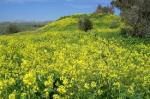
Today’s gospel is one such example. “The kingdom of God is like a mustard seed,” Jesus says. Now no Palestinian in their right mind would plant a mustard seed. Mustard was a common weed. It sprang up everywhere, spread like wild fire and was difficult to eradicate. The kingdom of God is like a weed – that must have brought a smile to those who were listening. But it doesn’t end there. Jesus goes on to suggest that this common, scrappy weed grows to be the greatest of all the shrubs with large branches that provide shade in which the birds can nest! No doubt Jesus’ audience laughed out loud at this point – the image is so absurd – birds sheltering under mustard – impossible! (Matt Skinner )

Why not compare the kingdom of God to the great cedar of Lebanon – that would have made more sense? Mustard – the kingdom of God is like a common mustard bush – that’s just ridiculous.

Jesus uses humour to grab the attention and to subvert the expectations of the listeners. The absurdity of the imagery will not only make them laugh, it will also serve to move them to a new way of viewing God’s kingdom. Contrary to their expectations, the kingdom of God will not come with a shout and a bang. Its coming won’t be dramatic and showy. Like an unwanted weed the kingdom will simply spring up all over the place and quietly and gradually it will take over. Before we know it, the kingdom will be everywhere.

Jesus pairs this parable with a second comparing the kingdom to another ordinary, unexceptional event – that of a seed growing. Just as mustard spreads and takes over without any help from us, so a seed once planted, quietly does its own thing with or without our interference. We don’t have to worry about the kingdom – God has it well in hand.

So you see, we don’t always have to take the gospels seriously, we don’t always have to find deeper meanings or make the texts fit our pre-conceptions.  Sometimes we can simply take the texts at face value – simple stories about simple facts. Mustard is a weed that grows prolifically; seeds have their own mechanisms for shooting and growing.

The point is this – the kingdom of God is not necessarily a grand affair heralded by trumpets, adorned with magnificent buildings and filled with important people. It is as ordinary and insignificant as a weed, quietly taking over, pushing its way into unlikely and unexpected places and growing inexorably until it spreads throughout the world and it does all this without our help.

We need to take our scriptures less seriously and perhaps more importantly we need to take ourselves less seriously.  The kingdom does not depend on us. God has it all in hand, we can relax, have a laugh and leave it all to God.

[1]A traditional tale, re-told by Jean Chapman in Tell me a Tale: Stories, songs and things to do. Hodder and Stoughton, Australia, 1974, 86-89.

How does your garden grow?

June 13, 2015

Pentecost 3 – 2015

Mark 4:26-34

Marian Free

In the name of God, Creator, Redeemer and Sanctifier. Amen. 

For at least the last forty-five years I have been involved in discussions about the future of the church. In particular, I have observed and been party to a lot of navel gazing in relation to declining attendance on Sundays and a variety of suggestions as to how we might halt that decline. Numerous reasons have been offered for this parlous state of affairs – women returning to the workforce, television, Sunday sport and Sunday trading – to mention a just a few. The liturgy has also been blamed for a downturn in attendance. In particular, there are those who express a concern that our form of worship doesn’t appeal to young people. As a consequence there have been a variety of attempts to address this problem, ranging from Folk Masses in the 60’s to Twitter Masses in the last decade.

Focus on the liturgy has not been the only response to this perceived crisis in the life of the church. Programme after programme has been rolled out, each with a degree of optimism that suggests that this time we have the right formula and one that will bring people back to the church. Sadly, over time, these programmes fall into disuse and distant memory as they fail to live up to their promise. Church attendance remains at best static and worse continues to decline.

The cynic in me wonders whether our concern with church attendance has more to do with maintaining the institution of the church than it does with spreading the gospel message, more to do with us and less to do with God. At the very least it implies that without our help God will simply fade into insignificance, that without the church there will be no God!

A perusal of the Gospels reveals that, unlike us, Jesus was not concerned with the religious practice of the people – how often they went to the Temple, or whether or not they attended the synagogue on a regular basis. Jesus seems to be more concerned that the crowds understand the liberating power of the gospel. The Gospels record that Jesus set people free from their diseases and infirmities; he released them from the power of evil spirits and he liberated them from a false understanding of the scriptures and from the misleading teaching of the leaders of the church. Above all, Jesus was concerned that the people fully understood the nature of the Kingdom of God (or heaven).

Jesus himself proclaimed that the Kingdom of God had come near (Mark 1:15) and when Jesus sent out the disciples, he gave them authority over unclean spirits. The disciples proclaimed repentance, cast out demons and anointed and cured the sick (Mk 6:6-13). They did not concern themselves with filling church (synagogue) pews.

Jesus’ primary concern was the Kingdom of God and most of the parables relate to this theme. These parables begin: “The Kingdom of God is like – a sower, a seed, a woman, a shepherd ..”. From all of these images, his listeners were able to build a picture of the kingdom of God in which the lost are sought and found, growth is secret and more abundant than expected, weeds will grow together with the wheat, debts are forgiven and the first will be last. Moreover, the kingdom will be worth more than everything that we own and we will give all that we have to possess it.

The parables do not say or even imply that the Kingdom of God will consist of full churches or of dioceses that are financially secure. The signs of the Kingdom are much more subtle and unexpected. More than that the Kingdom, according to Jesus, is not ours to build, but always God’s. It is the Kingdom of God, not the kingdom of the church and of church-goers. We seem to have convinced ourselves that the Kingdom is entirely dependent on the existence of the church and lost sight of whose Kingdom it is and that we expend far too much time concerned with the survival of the institution of the church and far too little time announcing the kingdom of God as an alternative to the kingdom of this world.

This morning’s parables are particularly challenging in a climate that is focused on church growth. The first, the parable of the sower, is a stark reminder that the growth of the Kingdom is entirely determined by God and not by human effort (‘the seed would sprout and grow, he does not know how’). The second, the parable of the mustard seed, confronts us with the idea that to an untrained eye the Kingdom might look like an insignificant herb or weed – nothing like the images that “Kingdom” usually calls to mind. In other words, whatever the Kingdom is, it will not be as we expect.

In the light of these parables, perhaps it is time that we, the church, stopped looking inwards, trying to tweak what we do on a Sunday morning so that it becomes more attractive to more people; time that we moved out from our beautiful buildings into the communities around us; time that, instead of trying to persuade people to come to us that, we found ways to set people free from the chains of individualism, consumerism, ambition, from oppression, injustice and violence.

Above all it is time to take a deep breath and to remember that it is God (not us) who will cause the Kingdom of God to grow and that in ways that we may not see or understand. It is time to recall that the Kingdom that will be unlike any other Kingdom that has preceded it. If we cannot imagine it, we certainly cannot build it. In other words, perhaps it is time to relax, to stop struggling for survival; to let go and let God and then to watch in amazement to see what God will do and then to go wherever God may take us.

Trusting God with our present and our future

October 26, 2013

Pentecost 23 – 2013

Luke 18:15-30

Marian Free 

In the name of God who loves us with an everlasting love and asks us only to place all our trust in him. Amen.

This morning I’d like to begin with two stories. They are both true, both autobiographical. The first is told by a Paul Villard who reports that when he was quite young, his family had one of the first telephones in their neighbourhood. He was too little to reach the telephone, but used to listen with fascination when his mother talked to it. Once she lifted him up to speak to my father, who was away on business. Magic!

He discovered that somewhere inside that wonderful device lived an amazing person: whose name was “Information Please” and there was nothing she did not know – someone’s phone number, the correct time. His first experience with this amazing person came one day while his mother was out. Amusing himself at the tool bench in the basement, he whacked his finger with a hammer. Though the pain was terrible, there didn’t seem to be any point in crying because there was no one to offer sympathy. He was walking around the house sucking he throbbing finger, when he saw the phone.

He grabbed a stool, climbed up, unhooked the receiver and held it to his ear. “Information Please” he said.

A click or two, then a small, clear voice spoke. “Information.”

“I hurt my fingerrr-“ he wailed into the phone. The tears came now that he had an audience.

“Isn’t your mother home?”

“Nobody’s home but me,”

“Are you bleeding?”

“No,” he replied. “I hit it with the hammer and it hurts.”

“Can you open the icebox?” she asked. “Yes.”

“Then take a piece of ice and hold it on your finger. That will stop the hurt.”

After that, Paul called Information Please for everything – help with geography and with arithmetic. He even called her when his pet canary died. Information Please listened and said all the things grown-ups say to soothe child, but he remained unconsoled. Sensing that, she said quietly, “Paul, always remember that there are other worlds to sing in.”

Thereafter, in moments of doubt and perplexity he would recall the serene sense of security he had when he knew that he could call Information Please and get the right answer[1].” (If you’d like to know the rest of the story, you can find it on-line.)

Unfortunately I didn’t record the author of the second story. I think it was American writer Charles Bayer[2]. He describes his visit to Mount Athos in Greece. There are no roads, only treacherous mountain footpaths. Even the sea route is fraught with danger so he set out over the mountains for the monastery of Stavranikita. It was a blazing hot day and carried all the things North Americans “need” for such an undertaking – several changes of clothes, camera, toiletries, extra shoes, books, paper, alarm clock and at least 5 kilos of other junk he never travelled without.

When he neared his destination, he was observed by a monk who had noted his state and burst into gales of laughter. He was so weary he was barely able to walk, but he made out a few words through the avalanche of merriment. “Baggage, baggage, look at the silly American with all that baggage! Why don’t you throw it in the sea? You are weighted down with all your impediments.”

Two very different stories about trust, or lack of trust. With the innocence of a child, Paul implicitly trusted “Information Please”, the adult on his way to the monastery, was afraid to trust that he could manage without his suitcase filled with life’s “necessities”.

In last week’s gospel Jesus told two parables about how to pray in the in-between time. In that time after he has come and before the world is perfected, Jesus urges us to persevere in prayer. This week, the theme of life in the in-between time continues with two stories which illustrate the attitude towards God that we are called to adopt while we wait. The attitude towards God that will allow us to receive the kingdom and will see us through to eternal life is one of complete dependence, one that does not allow anything to stand between ourselves and God.

For this reason, Jesus encourages us to develop the same sort of innocence, the same level of trust that the child Paul showed towards “Information Please”. Terrifyingly, this means abandoning our outer shell of independence and resourcefulness that has helped us to deal with a world and a society that is untrustworthy and that is not universally safe or secure. We spend so much of our lives trying to be grown up, to prove that we can look after ourselves, that we lose sight of the gifts of childhood – innocence, wonder and trust – gifts that along the way we willingly gave up. In this world that seems so little changed by the life, death and resurrection of Jesus, it is imperative that we continue to pray but also that we learn to trust or unlearn our suspicion. In both today’s world and that of Jesus, Jesus turns the social order upside down, It is not the old, the wise, the learned, or the experienced whose example we are to follow, but it is the young, the innocent, the untaught and the inexperienced who teach us not to trust in ourselves, but rather to place all our trust in God.

It is in this context that we have to understand the story of the ruler. It appears that the ruler is seeking something – he has come to Jesus. Despite his upright living, he is not satisfied, he is not confident that his relationship with God is all that it could be. Something has unsettled his quiet, obedient existence. Perhaps he has come to see that in the end, obeying the law is empty without relationship or perhaps he has been moved by Jesus’ teaching, Jesus’ freedom and he wants to know more about this different relationship with God. Jesus recognises his longing and identifies the one thing that he needs to do – he must give up his possessions. At the present moment the ruler needs his possessions more than he needs God. He is tied to life in this world more than he is drawn to eternal life. It is only if he can let go to the things that tie him down to this life that he will be truly free to inherit the life to come. He must again become like a child and trust in God to provide all that he needs.

The story of the ruler has little to do with money and everything to do with trust in God. Can we receive the kingdom of God as a little child or do we build up barriers and prevent God from breaking through our defenses? Does our security lie in God and the things that last forever, or do we rely on other, more ephemeral, more temporal things?

In this in-between time, this time of uncertainty, this time of longing for the kingdom to come, God is with us. Jesus assures us that in good times and in bad, God will never abandon us. All we need to do is to throw caution to the wind and toss our lot in with him, to become like a child and to trust God with our present and our future.


[1] The full story can be found at http://www.telephonetribute.com

[2] The book in which the account can be found is called A Guide to Liberation Theology.